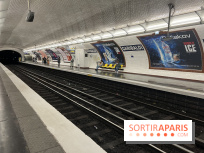
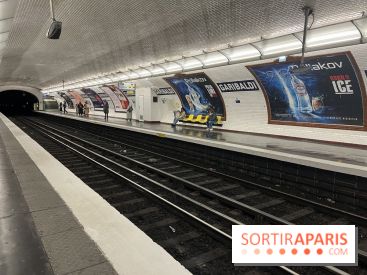
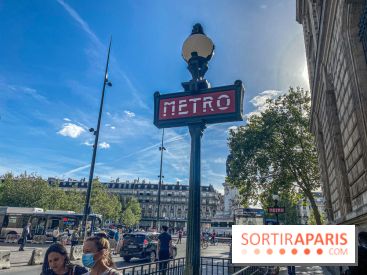
If you ride the line 13, you’ve surely noticed this station with its singular charm. With its ceramic murals and its platforms that face away from each other, the Liège station is a small historical and architectural curiosity. But did you know it was once called "Berlin"?
Opened in 1911, the station originally bore the name Berlin, in homage to the German capital (Europe’s emphasis on the central role of the city). But when World War I broke out in 1914, bearing the enemy’s name became unthinkable. On August 2, the station closed its doors. When it reopened a few months later, it was renamed Liège, to celebrate the heroic resistance of the Belgian city against the German invasion. A name change that did not go unnoticed at the time!
That is the most striking peculiarity when you descend: the two platforms do not face each other. If you’re waiting for the southbound metro, you won’t see the people waiting for the northbound trains. The reason is strictly technical: the Rue d'Amsterdam, under which the station sits, was too narrow to build two platforms opposite each other in the classical layout. The engineers of the "Nord-Sud" (the former operator) therefore had to décaler les deux demi-stations. It’s one of only two Paris stations to operate this way, along with Commerce on Line 8.
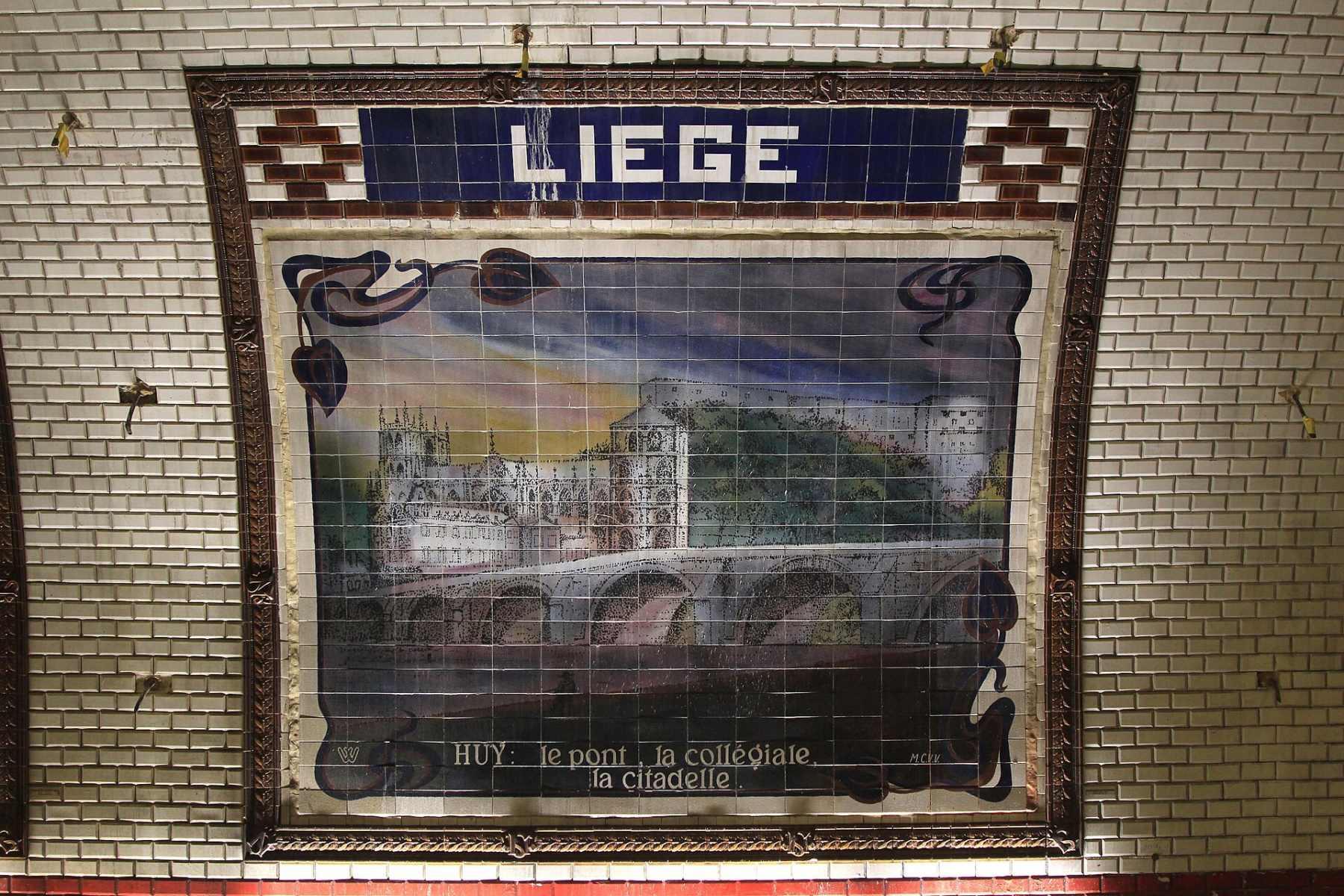
The station's real treasure lies in its 18 ceramic frescoes in ceramic by Welkenraedt. Installed in 1982 during a Franco-Belgian cultural exchange, they depict landscapes and monuments of the Province of Liège: Jehay Castle, the Perron, and the Spa-Francorchamps circuit. The frescoes are blue-toned on the southbound platform and in full color on the northbound platform. So you have to travel in both directions to fully appreciate the palette!
For a long time, Liège was Paris’s most "laziest" station. From the end of the Second World War until 2006, it closed every night after 8 p.m., as well as on Sundays and public holidays, all in the name of cost-cutting. It took a petition from local residents and a major mobilization for it to finally adopt the normal RATP hours.
Paris Metro: why was Liège station a ghost station for nearly 30 years?
Ghost stations are part of Paris metro legend, and many people want to explore them, or at least see what a ghost station looks like from the inside. While there are still a dozen or so in Paris, some of the stations that have reopened today were closed for decades in the last century. [Read more]
This page may contain AI-assisted elements, more information here.




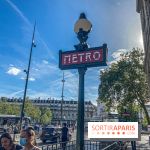 Paris Metro: why was Liège station a ghost station for nearly 30 years?