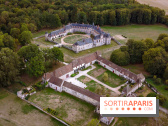
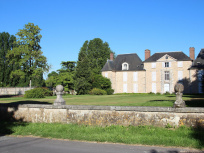
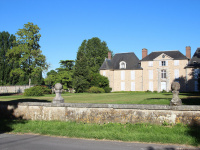
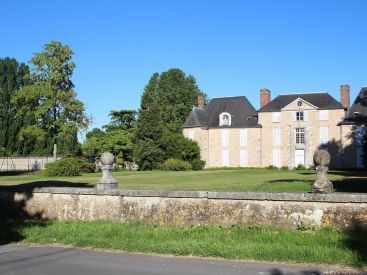
A seven-hectare park, cascading waterfalls, caves, water features and, at its heart, an elegant manor tied to Louis Visconti, the architect of Napoleon I’s tomb at the Invalides... The domaine de Montmanoir, in Montlignon in the Val-d'Oise, exudes the charm of properties revealed in fragments, a balance between cultivated landscape and local history.
Its name fuses two simple ideas: Montlignon, the village it belongs to, and the manor that overlooks the estate. Before becoming a country retreat, the site has lived many lives under several owners, among them the Montmorency family and the canons of the Sainte-Chapelle of Vincennes. In the 19th century, it gained a new look with the construction of the “Château blanc,” attributed to Louis Visconti.
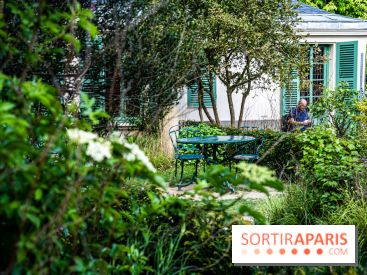
What makes the site compelling is precisely this dialogue between the house and its park. The residence, sober and elegant, doesn’t seek a monumental effect. It invites discovery through a setting laid out for strolling, with ancient trees, varied elevations, waters and landscape features. A property designated as Regional Heritage of Interest, where the architecture is understood just as well from the paths as from the façade.
Today, Montmanoir remains a private property, used for receptions, weddings and events. The estate, however, occasionally opens its doors for tours or during the Heritage Days, an opportunity to glimpse what makes it noteworthy: a discreet, somewhat timeless place where the 19th century has left its mark without erasing the older layers of the landscape.
This page may contain AI-assisted elements, more information here.