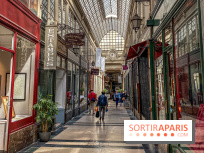
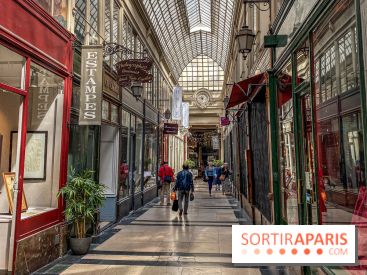
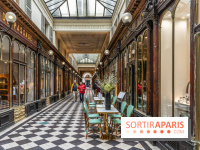
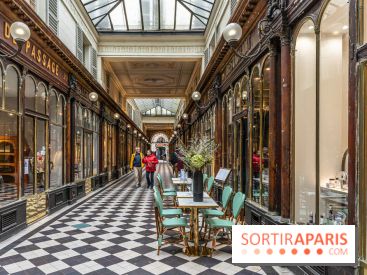
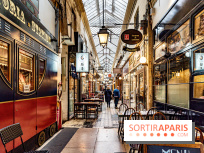
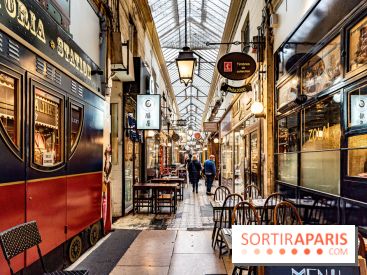
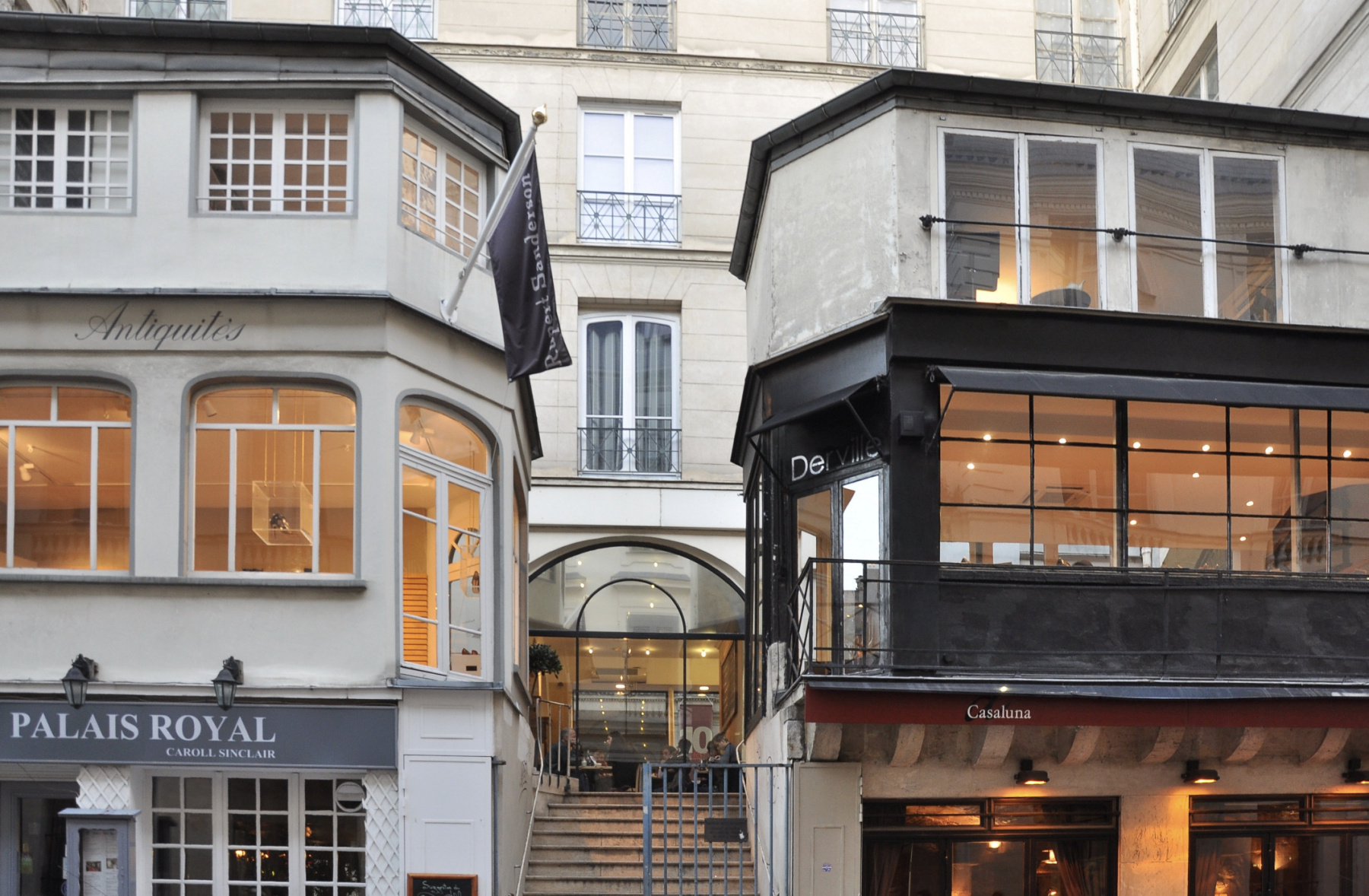
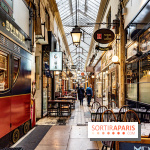
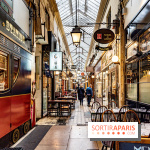
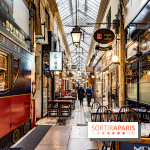
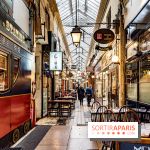
You have to know where to look to spot it. Between 5 rue des Petits-Champs and 6 rue de Beaujolais, the Passage des Deux-Pavillons threads through a 17th‑century building. At 33 metres long and roughly 2.20 metres wide, it ranks among the smallest covered passages in Paris. A mere few dozen steps separate the two entrances!
Its history begins around 1820, at the height of the boom in Paris's covered passages. The passage was then laid out on the ground floor of a much older building to create a pedestrian link between the jardins du Palais-Royal, the rue des Petits-Champs, and the future galleries in the area.
The Galerie Vivienne opens a few years later, in 1826, just like its neighbor, the Galerie Colbert. The Passage des Deux-Pavillons is thus integrated into a whole network of covered passages allowing people to move around sheltered in this bustling shopping district of the 19th century!
Despite its modest size, the décor is far from neglected. The original plaster ornaments echo a vocabulary close to that of the Galerie Vivienne, notably depictions of Fame and Victory. Its name simply stems from the two pavilions located at its entrance on the rue de Beaujolais. The passage nearly vanished, due to a project to extend rue de Valois to rue des Petits-Champs, which would have led to its removal. The widening was never realized.
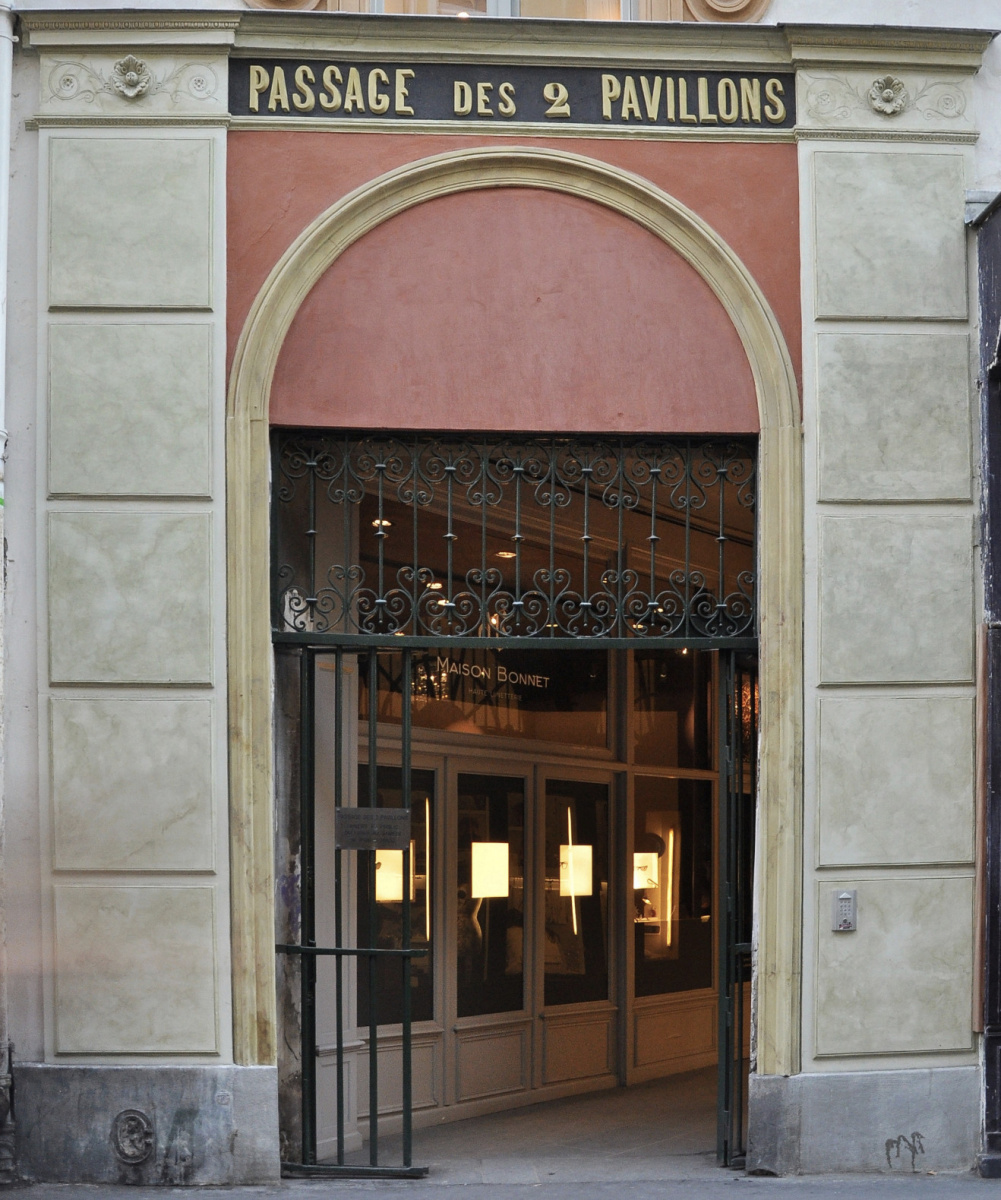
The site has left a lasting mark on the Parisian cityscape and has been documented since the 19th century. The Carnavalet Museum preserves, in particular, a drawing made in 1875 by Léon Leymonnerye, depicting its entrance at 5 rue des Petits-Champs. Photographer Eugène Atget also captured the passage from rue de Beaujolais from the late 19th to the early 20th century.
With its entrance façades, its interior façades, its floor and ceiling—all listed as Historic Monuments since October 7, 1986—the Passage des Deux-Pavillons is now open to the public!
Discover Paris' most beautiful covered passageways
Maybe you didn't know it, but Paris is home to many covered passageways. Discover the 12 most beautiful covered passageways in Paris! [Read more]
Location
Two-Pavilions Passage
6 Rue de Beaujolais
75001 Paris 1
Route planner





















 Discover Paris' most beautiful covered passageways