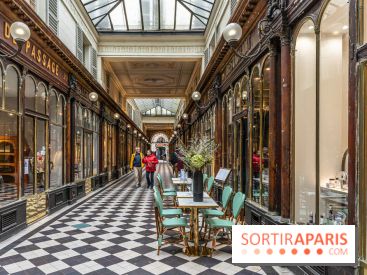
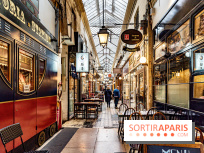
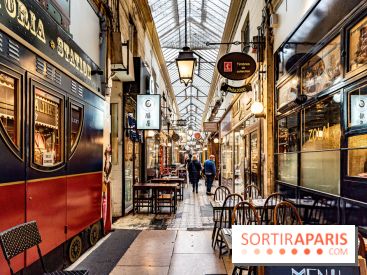
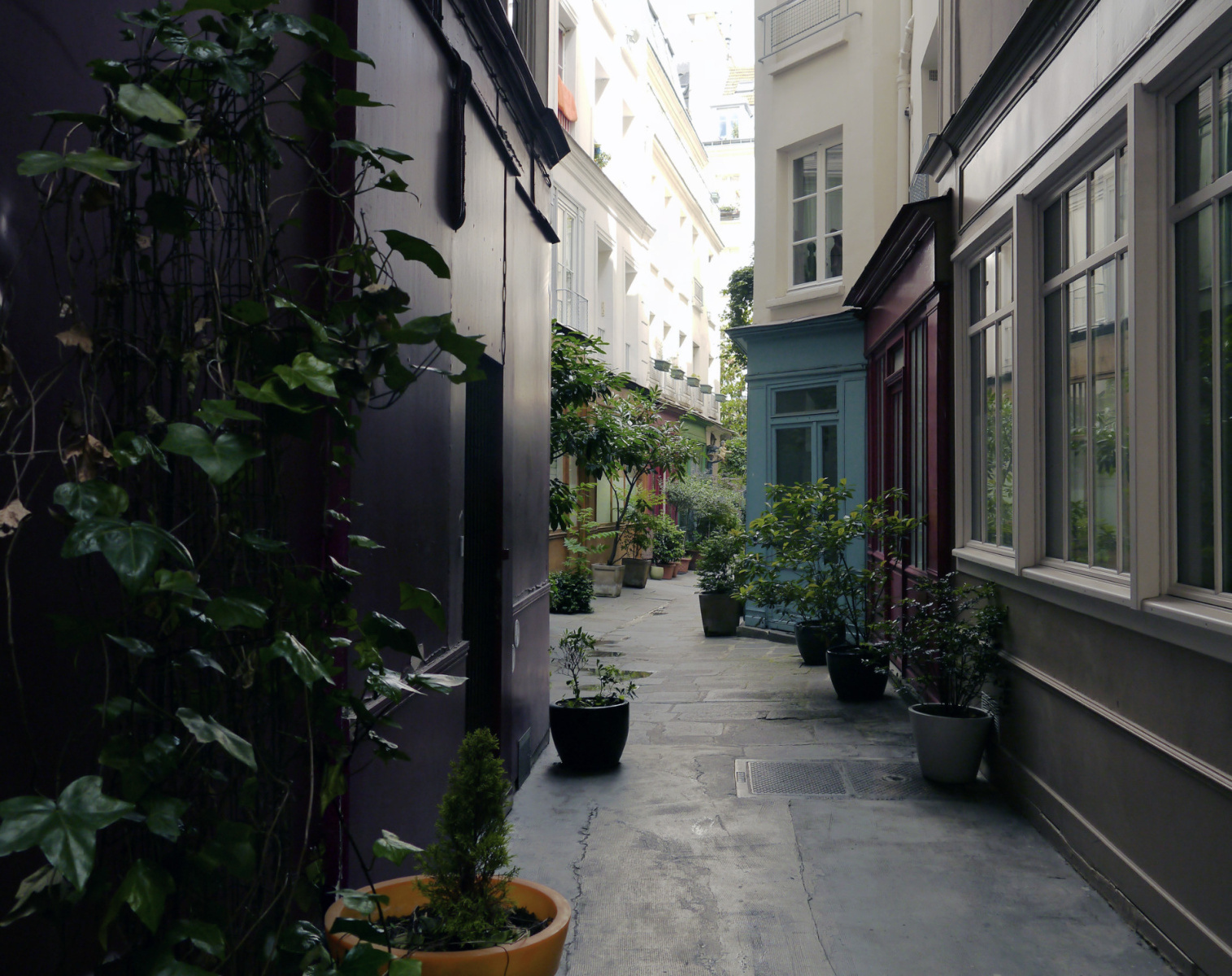
The Passage de l’Ancre stands out from the 19th-century covered galleries for its sober elegance. This open-air passage, about 68 meters long and just 2.5 meters wide, slips between 221 rue Saint-Martin and 30 rue de Turbigo, in the 3rd arrondissement.
Rows of small façades, workshops and colorful storefronts line up in a very lush setting. For a little history, its origins predate those of the famous Vivienne and Jouffroy passages, as its presence is documented as far back as the 17th century! In fact, before becoming the Passage de l’Ancre, the place is said to have been known as the Passage du Puits, then the Passage de l’Ancre Royale.
This name supposedly comes from an inn, Au Grand Saint-Pierre, identified by a sign depicting an anchor. During the French Revolution, the reference to the monarchy naturally disappeared, and between 1792 and 1805 the route became the Passage de l'Ancre Nationale.
The passage also holds a surprisingly prominent place in the history of Parisian transport. Around 1637–1640, Nicolas Sauvage, an official of the masters of coaches in Amiens, is said to have set up in the inn’s courtyard about twenty carriages available for hire. Passengers could hire a team-drawn carriage for a fee, a model regarded as one of the ancestors of the taxi.
Back then, the passage was wider than it is today and formed part of a network of small passages, notably including the Passage du Bourg-l'Abbé, located on the other side of the boulevard, which allowed traffic between Saint-Martin and Saint-Denis streets. But the opening of the Boulevard de Sébastopol in 1854 disrupted this arrangement and cut through its route.
The history of Passage de l'Ancre also has a much darker chapter. During the Second World War, several Jewish residents of the passage were deported in the wake of the Vel' d'Hiv roundup in July 1942.
Discover Paris' most beautiful covered passageways
Maybe you didn't know it, but Paris is home to many covered passageways. Discover the 12 most beautiful covered passageways in Paris! [Read more]
Location
The Anchor Passage
Passage de l'Ancre
75003 Paris 3
Route planner

























 Discover Paris' most beautiful covered passageways