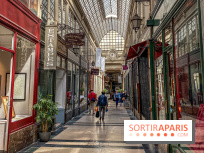
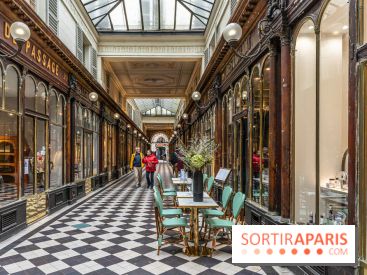
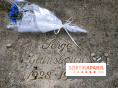
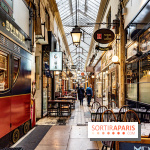
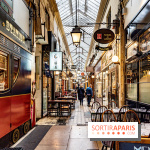
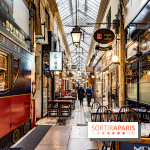
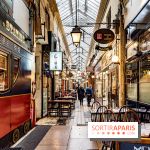
Today connecting 120 rue Saint-Denis to 3 rue de Palestro, the Passage du Bourg-l'Abbé was built in 1828 by architect Auguste Lusson, at a moment when these kinds of commercial galleries were multiplying across the capital. Its location is hardly incidental: it sits between the Passage du Grand-Cerf and the Passage de l'Ancre, forming part of a network of passageways that let the district be traversed sheltered from rain and the bustle of the streets.
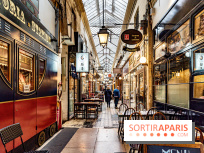
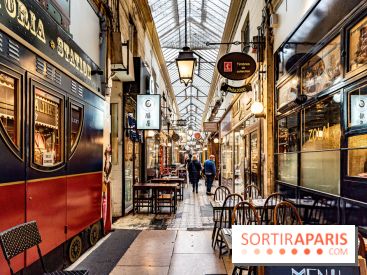
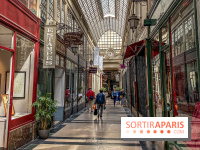
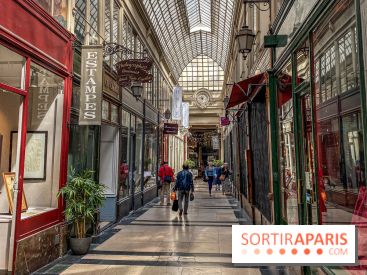
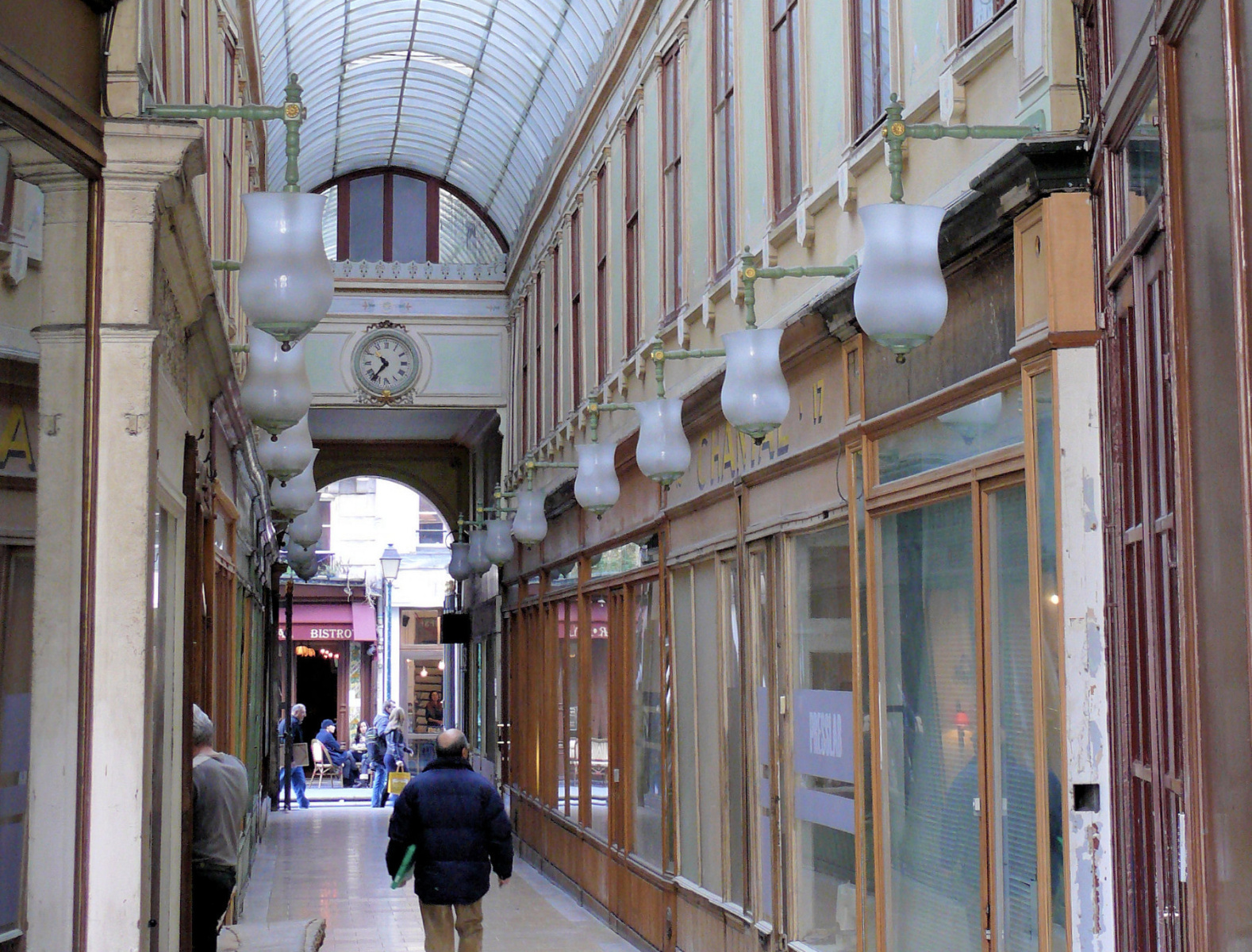
The passage we walk through today no longer retains its original dimensions. The great Parisian construction projects of the 19th century upended the area with the opening of Boulevard de Sébastopol and the laying out of new routes. The Passage du Bourg-l'Abbé was then shortened by several meters. It now measures only 47 metres long and about 3 metres wide, modest proportions that reinforce its intimate character. Its structure preserves a slightly bowed glass roof and façades rhythmically punctuated by ground-floor shops and the old mezzanine-level residences.
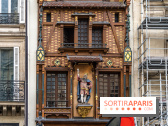
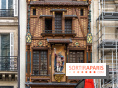
Look up along Palestro Street above all. The entrance, rebuilt by Henri Blondel, the architect behind the Bourse de Commerce, is flanked by two monumental caryatids carved by Aimé Millet. They’re not just decorative: one depicts Industry, complete with machine parts, while the other embodies Commerce, recognizable by its anchor evoking merchant shipping. Between them, a sculpted beehive sits at the keystone, another emblem of labor and economic activity.
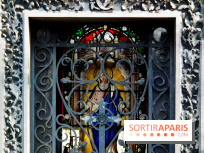
The passage has weathered the decades with a few scars. After being partly damaged by a fire, it underwent a restoration that notably brought back its friezes, paintings and mirrors, as well as the colors of its interior decoration. Its current appearance, however, remains far more restrained than that of the Galerie Vivienne or the Galerie Véro-Dodat.
Today, the Passage du Bourg-l'Abbé remains a private thoroughfare open to the public, housing a handful of shops and workshops. Its floor, its glass skylight, the interior façades located beneath it, and the street-facing façades have been listed as Monuments historiques since January 21, 1991.
Paris’s most beautiful covered passages, for a historic stroll sheltered from the elements
You may not know it, but Paris is home to numerous covered passages, some of them built centuries ago. Discover the most beautiful covered passages in Paris, their history, and their secrets! [Read more]
This page may contain AI-assisted elements, more information here.
Location
Bourg-l'Abbé Passage
120 Rue Saint Denis
75002 Paris 2
Route planner




















 Paris’s most beautiful covered passages, for a historic stroll sheltered from the elements