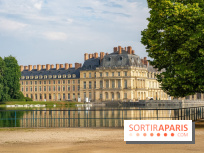
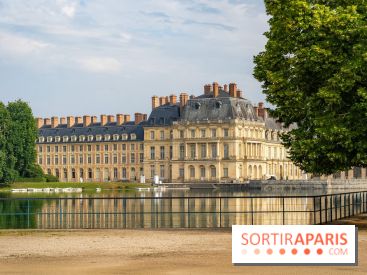
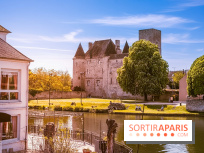
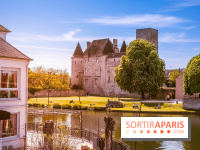
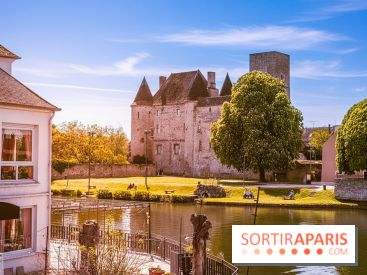
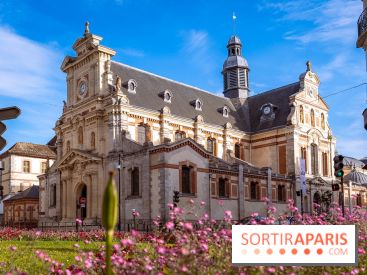
In Seine-et-Marne (77), about 60 kilometers from Paris and accessible by train with your Navigo pass, the Château de Fontainebleau is home to one of the most overlooked and generous landscaped grounds in Île-de-France. Listed as a UNESCO World Heritage Site and awarded the Jardin remarquable designation, its 130-hectare estate is especially enchanting in spring, when the rhododendron beds burst into colorful blooms along the shaded paths. And all of it is completely free to visit.
The rhododendrons are blooming a little earlier this year, and the season is already underway. Spring is the perfect time to stroll through the château gardens. The most striking display is in the Garden of Diana. This English-style landscaped garden, with the famous Fountain of Diana, dating from the time of Henri IV, at its center, is home to abundant rhododendron beds whose fragrance fills the shaded paths beneath towering purple beeches, spruces, century-old chestnut trees and tulip trees. Before long, you find yourself walking at a slower pace, looking up, as if the garden were inviting you to slow down.

Set on a 130-hectare estate, the château’s various buildings are arranged around four main courtyards, three gardens and a park. Three distinct areas can be made out, each with its own atmosphere.
Diane’s Garden, the queens’ private garden since Catherine de’ Medici, was transformed into an English garden under the First Empire, while retaining its intimate character. It is the most secluded of the three: visitors passing through generally don’t know about it, unlike Fontainebleau residents, who visit regularly. Here you’ll find the beautiful fountain featuring the hunting goddess, surrounded by four bronze stags signed by Pierre Biard—a sculpture that survived the grandeur of Henry IV’s reign.

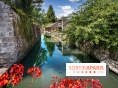
The English garden, created under Napoleon I between 1810 and 1812, is planted with rare species from around the world, laid out with narrow, winding paths, and crossed by a picturesque artificial river. Among its highlights are a majestic catalpa and a tulip tree, two trees well worth seeking out. It is also where the “Belle-Eau fountain” is tucked away in a little-frequented corner; the fountain gave the château its name.

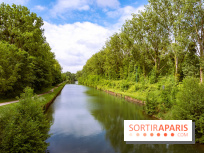
The Grand Parterre is on an entirely different scale. Created between 1660 and 1664 by André Le Nôtre and Louis Le Vau, it is the largest in Europe, covering 14 hectares. Its grand French-style vistas, two pools and four sandstone sphinxes sculpted under Louis XIV make for a very different walk, almost cinematic in the way the space unfolds. Beyond it, Henry IV’s Grand Canal, 1,200 metres long, invites you to stroll along the water toward the woodland park.

This outing is a great fit for families as well as enthusiasts of photography, botany and royal heritage. Children will enjoy the Carp Pond and its 6-hectare surface, while photographers will find natural compositions in Diane’s Garden, with rhododendrons in bloom in the foreground and the château’s façades behind them. For the more curious, the remarkable variety of buildings, reflecting the tastes of different eras, led an English visitor to describe Fontainebleau as a “meeting place of châteaux.”

A quick word of warning, though: the Diana Garden and the English Garden close half an hour and an hour before the stated closing times, respectively, and the gardens may be closed in bad weather. It’s best to plan your visit for a fine day. From May to September, the gardens are open from 9 a.m. to 7 p.m. The park, meanwhile, is open year-round, 24 hours a day. To include the château’s interior in your visit, you’ll need an admission ticket (€17 full price, €15 reduced price), but the gardens themselves are free. The château is located on Place du Général-de-Gaulle in Fontainebleau, about 40 minutes from Paris Gare de Lyon by Transilien Line R.
Also read on Sortiraparis:
This page may contain AI-assisted elements, more information here.
Dates and Opening Time
From April 22, 2026 to May 31, 2026
Location
Château de Fontainebleau
77300 Fontainebleau
77300 Fontainebleau
Route planner
Accessibility info
Prices
Free
Official website
www.chateaudefontainebleau.fr