The Fête de la Science is back all over France from October 3 to 13, 2025, with a series of events of all kinds, including experiments, shows, tours and workshops. Open to all, these events are also suitable for children, so you can enjoy the Fête de la Science with the whole family! The aim of this cultural event? To showcase French scientists and their work, while inviting visitors to become more open to the different disciplines of science.
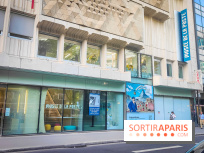
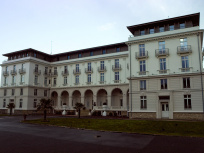
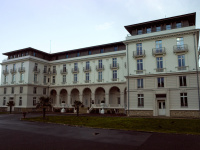
In Paris and the Île-de-France region, many establishments are taking part in the Fête de la Science, including theInstitut de Paléontologie Humaine. Located in the capital's 13th arrondissement, theInstitut de Paléontologie Humaine was founded in 1910 by Sovereign Prince Albert 1st of Monaco. For the first time, the opening of this institute has enabled researchers to benefit from permanent resources"to carry out their research on fossil man, from excavation to publication", as stated on the IPH's official website.
It was on part of a former horse market, not far from the Jardin des Plantes, that the establishment was built, designed by the architect, Emmanuel Pontremoli, and the sculptor, Constant Roux. Both were awarded the Prix Lheureux by the City of Paris, in 1913 and 1917 respectively.
This autumn, theInstitut de Paléontologie Humaine is taking part in the latest edition of the Fête de la Science. On this occasion, the Institute invites the curious to come and study animal bones in an archaeological context.
Studying animal bones is quite a science!
During archaeological digs, different types of remains can be found, such as tools or bones. Animal bones are very important in understanding ancient sites and environments, as they provide information on both the way of life of human populations and the particularities of the environment in which they evolved.
With Laëtitia Demay, archaeozoologist at the Museum National d'Histoire Naturelle, study animal bones, handle fossils, study illustrations, and discover all their secrets!
Become a true prehistoric artist!
How did humans represent animals in prehistoric times? Which ones did they choose to paint on cave walls, and why? That's what we'll find out in this workshop for toddlers!
With Laëtitia Demay, archaeozoologist at the Museum National d'Histoire Naturelle, learn to recognize the different animals on the frescoes of prehistoric caves, and create your own charcoal work, just like in the old days!
SOLD OUT!
Identify and understand fauna, past and present!
Long or short, thin or thick, straight or curved... Bones come in all shapes and sizes. Archaeologists can learn a lot about the environment of the last Ice Age simply by studying bones and their characteristics. But how do they do it? What questions do they ask?
In the company of Laëtitia Demay, archaeozoologist at the Museum National d'Histoire Naturelle, handle different bones from the Institute's collections, learn to identify the different species, and discover all their secrets!
Discover animals through the ages!
Discover ancient societies...
Come and discover the methods of archaeozoology, study animal bones preserved at the Institut de Paléontologie Humaine, and understand their place within prehistoric human societies. During the various workshops, handle fossils, identify ancient species... in short, become real archaeozoologists!
... and analyze our current society!
Ancient and modern societies are interconnected, and bones tell us a great deal about the evolution of species and their adaptation to their environment. Explore what we know today about the animals with which we coexist, discover their cognitive abilities and set off on a journey of discovery into animal intelligence!
Accompanied by Laëtitia Demay, archaeozoologist at the Museum National d'Histoire Naturelle, set off on a journey through time, and become real archaeologists!
How can we study animal intelligence?
Human societies have long sought to better understand their environment and the creatures that inhabit it. Systems of identification and classification have emerged, as have various disciplines. The ways of approaching cognitive abilities and their place in animals have varied over time, and according to geographical areas, cultures and scientific knowledge.
Many recent discoveries have raised new questions: do animals innovate? Do some of them use fire? Do they adapt to handicaps? What is the place of the deceased among them? and so many other questions...
Join Laëtitia Demay, archaeozoologist at the Museum National d'Histoire Naturelle, on a journey of discovery into animal worlds and their fascinating cognitive abilities!



 Science Festival 2025: The Event Schedule Across Paris Boroughs
For the 2025 Science Festival, Paris is opening its doors to curious minds of all ages, offering free opportunities to meet scientists and take part in interactive activities and workshops across the city’s museums and cultural institutions from October 3 to 13, 2025. Explore the full lineup of events by district in the heart of the capital! [Read more]
Dates and Opening Time
On October 4, 2025
Location
Institute of Human Paleontology
1 Rue René Panhard
75013 Paris 13
Official website
www.fondationiph.org
More information
Reservations recommended