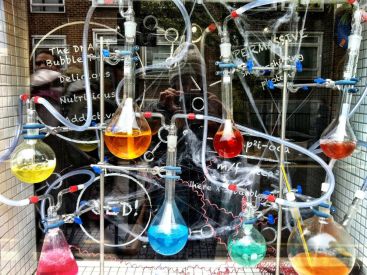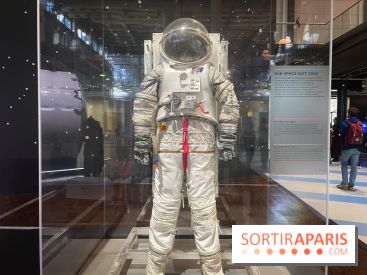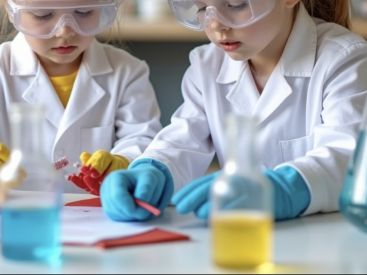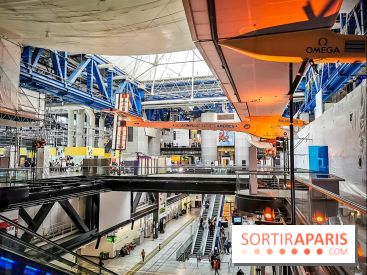
One of the major annual events in October is the Science Festival. Held every year across France, it aims to introduce the public to the diverse fields of science, showcase French researchers and scientists, and highlight their latest discoveries.
Science Festival 2026 in Paris and Île-de-France: the lineup of free events
La fête de la Science is back from October 2 to 12, 2026 for its 35th edition! The idea? A week dedicated to science culture you can experience through a wealth of free events across France. Experiments, shows, open days, tours and a multitude of workshops—open to all and suitable for children—await you on the four corners of Paris and the Île-de-France region! [Read more]
This 32nd edition of the Science Festival will take place from October 6 to 16, 2023, across museums, libraries and media centers, schools, and universities, cultural centers, research laboratories, institutes, and scientific hubs. These numerous venues open their doors free of charge to all curious minds, offering a wide range of engaging activities, fascinating encounters, and hands-on workshops that are both educational and fun.
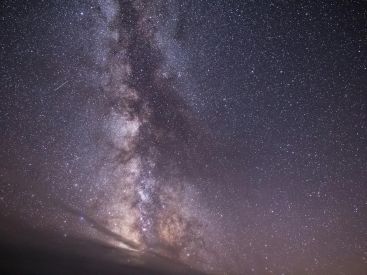
There's no age limit when it comes to learning and getting excited about chemistry, astronomy, physics, medicine, or biology. That's why the Science Festival welcomes audiences of all ages, from the youngest children to seniors. Even teenagers can have a blast with the many outings and activities available across Paris and throughout Île-de-France. Take a look at our special section just for teens!
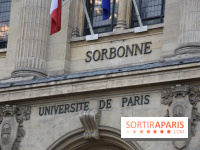
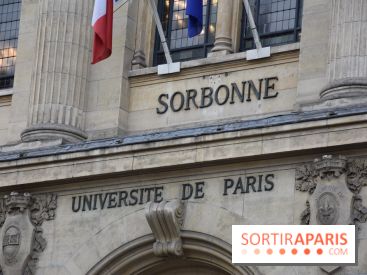
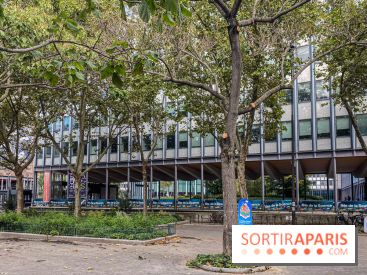
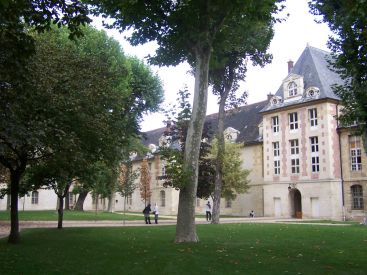
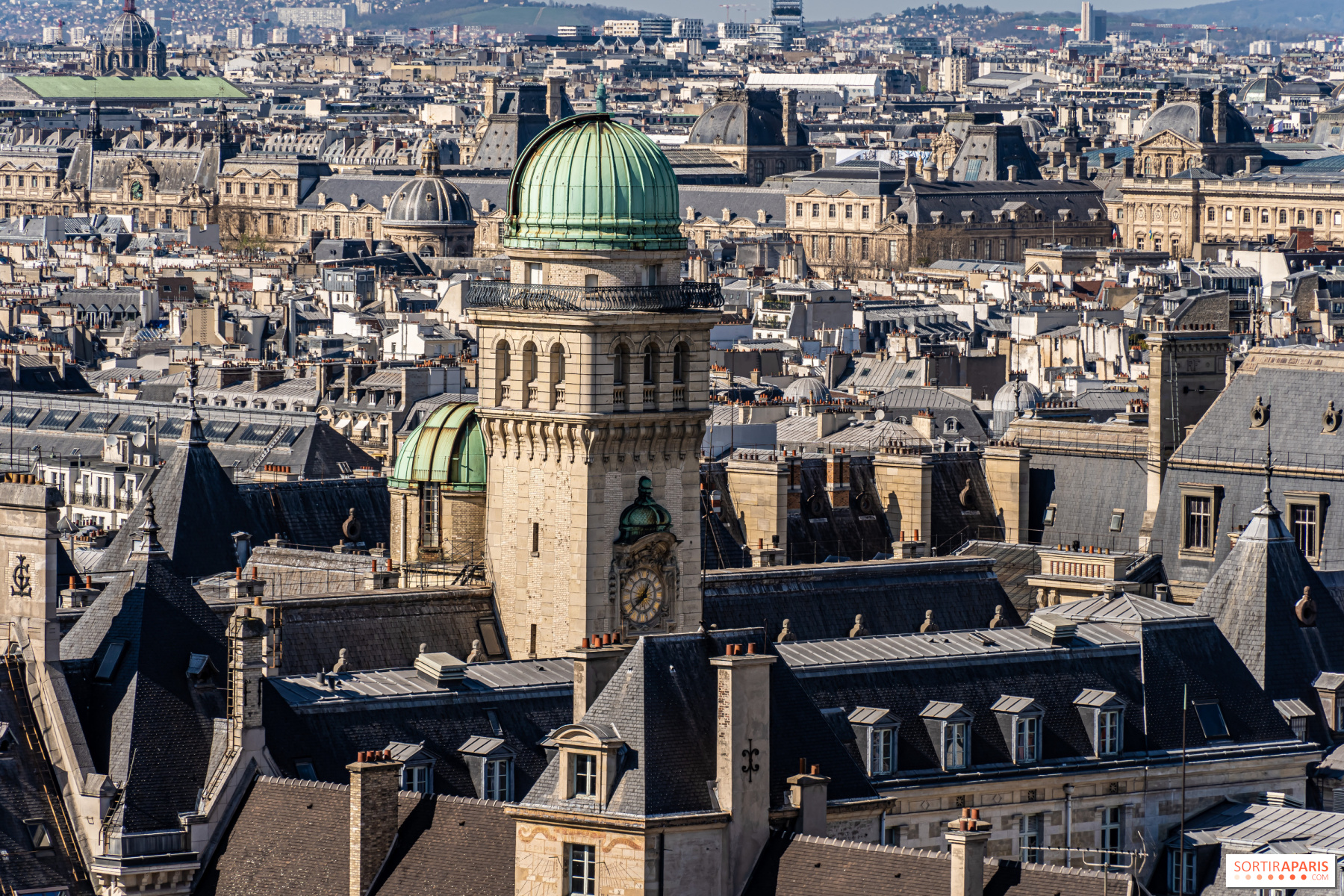
Sorbonne University in Paris 5th District
Biological invasions: the blue crab as a case study
Biological invasions are today the second leading cause of global biodiversity loss, with major ecological, economic, and social impacts. A Mediterranean example studied at the Banyuls-sur-Mer Oceanological Observatory: the blue crab!
Participation requirements:
• Target audiences: 3–6 years, 6–11 years, 11–15 years, 15–18 years, 18–25 years, 25+
• Conditions: Booking recommended
Hours: Saturday, July 11 — 12:00 to 18:00
Sunday, July 12 — 12:00 to 18:00
Mission Mars: pilot a planetary rover and unlock the secrets of the Red Planet!
Martian rovers, such as NASA's Perseverance or ESA's Rosalind Franklin, are true mobile laboratories—highly advanced scientific workhorses that deliver crucial data about the environments they study and photograph far-off worlds for us. You can even check Mars weather in real time, well, with about a 10-minute delay! They can also determine the chemical makeup of a rock 220 million kilometers away as if you were in a laboratory on Earth, and they can even search for traces of extraterrestrial life.
On the occasion of Science Festival 2026, we invite the public (students and visitors) to pilot a real exploration rover in realistic Martian settings to carry out a scientific exploration mission that will also highlight the limits of rover instrumentation and the importance of bringing samples back to Earth!
Together, let's uncover the secrets of the planet Mars!
Participation requirements:
• Eligible audiences: 11–15, 15–18, 18–25, 25 and up
• Admission: Free
Hours: Saturday, October 10 — 10:00–17:00
Sunday, October 11 — 10:00–17:00
Cold Case: The Mystery of the Lost Landscapes Beneath Paris
Become geo-experts at ISTeP and run your own investigation. By analyzing clues hidden in rock and sand, discover how a tropical sea and vanished beaches helped shape our monuments!
Participation requirements:
• Target audiences: 11-15 years, 15-18 years, 18-25 years, 25 years and over
• Conditions: Booking recommended
Hours: Saturday, October 10 — 2:00 PM to 6:00 PM
Sunday, October 11 — 2:00 PM to 6:00 PM
RoMarin: mini-drones for exploring the seafloor
The Romarin project invites you to discover the robots of the RoMarin fleet designed by the mechanical engineering students at Sorbonne University. These prototypes are meant to probe the seabed and shed new light on marine environments that are still little known but full of promise.
In this booth, you’ll learn how these mini-drones operate and about the sensors they carry (a crucial step toward earning a pilot’s license) and you’ll get to admire the original designs put forward by the Class of 2026!
At the end of this introductory tour, a hands-on piloting session will be offered to the bravest scientists.
Participation requirements:
Target audiences: 3–6 years, 6–11 years, 11–15 years, 15–18 years, 18–25 years, 25 years and up
Conditions: Free admission
Hours: Saturday, October 10 — 12:00–18:00
Sunday, October 11 — 12:00–18:00
Views and scents of Egypt: a photographic expedition in 1851. Félix Teynard’s calotypes.
Through multidisciplinary, hands-on workshops, journey to the banks of the Nile in the heart of the 19th century. An Egyptologist and a chemist are waiting for you at their booth.
From extraordinary views traced back to the origins of photography, watch, touch, experiment, and recreate an Egypt and Nubia that have vanished. Savor the delights of science.
As a keepsake, leave with your own reconstruction of an antique photograph.
Participation conditions:
• Target audiences: 6–11 years, 11–15 years, 15–18 years, 18–25 years, 25 years and up
• Requirements: Booking recommended
Hours: Saturday, 10 October — 12:00 to 18:00
Light and Atoms
Understanding how atoms interact with light and turning that knowledge into technological advances is one of the defining aims of quantum physics. It sits at the core of the research conducted at the Kastler Brossel Laboratory. We will present several demonstration experiments: the open-transition laser; rubidium optical resonance; photon interference; and laser radar.
Participation requirements :
• Target audiences: 6–11 years, 11–15 years, 15–18 years, 18–25 years, 25 years and up
• Conditions: Free admission
Hours: Saturday, October 10 — 12:00 PM to 6:00 PM
Sunday, October 11 — 12:00 PM to 6:00 PM
SCIENCE PATHWAYS: EXPLORE, PLAY, LEARN!
Join a playful, interactive journey to discover how innovations come to life! Grab your scientific passport and tackle the challenges at our workshops. Questions, experiments and discoveries await at every turn. Complete your route to win a goodie!
Discover the TRL hopscotch, an original game that helps you grasp the key stages that turn a lab idea into an innovation ready to change the world.
Awaken your senses with the “Savants’ Flavors” workshops: colors, tastes, smells and perceptions will hold no secrets for you!
Learn, experiment, play… and head home with plenty of memories!
Participation requirements :
• Target audiences : ages 3–6, 6–11, 11–15, 15–18, 18–25, 25 and up
• Conditions : Free admission
Hours: Friday, October 9 — 12:00 to 18:00
Saturday, October 10 — 12:00 to 18:00
Sunday, October 11 — 12:00 to 18:00
SOCIETY: INNOVATIONS SHAPING EVERYDAY LIFE
When technology takes care of us!
Discover astonishing innovations to live better, move more freely, and protect our planet.
Breathe freely, without breaking the bank
An active respiratory protection visor, light, easy to produce and affordable. A small jewel of ingenuity to protect yourself… without encumbering you.
A crutch like no other
Walk with a free hand? It's possible thanks to this innovative crutch designed to simplify daily life.
Miniature sensors to monitor the air
How to measure the gases warming our planet? Ultra-sensitive, small and portable sensors help researchers better understand pollution and imagine more pleasant cities to live in.
Participation requirements:
• Target audiences: 3–6 years, 6–11 years, 11–15 years, 15–18 years, 18–25 years, 25 years and older
• Conditions: Free admission
Hours: Friday, 9 October – 12:00 to 6:00 PM
Saturday, 10 October – 12:00 to 6:00 PM
Sunday, 11 October – 12:00 to 6:00 PM
Quantum exploration: behind the scenes at the Kastler Brossel Laboratory!
The Kastler Brossel Laboratory is one of the leading players in quantum physics. Its research spans a broad range of topics, from fundamental tests of quantum theory to practical applications. For Science Festival, we invite you to tour our laboratories. Four themes will be explored: What is light? How can we detect gravitational waves? How far can we cool matter? High-precision measurements in quantum physics
For each topic, a researcher will present an overview followed by a tour of their manipulation room. A visit to the laboratory's mechanical workshop will also be offered.
Participation terms:
• Target audiences: 11–15, 15–18, 18–25, 25 and up
• Requirements: Free admission
Hours: Saturday, October 10 — 12:00 to 18:00
Sunday, October 11 — 12:00 to 18:00
Mom Scientist: science told through stories and illustrations
Is research too complicated? Are the sciences reserved for men? Maman Chercheuse proves otherwise! Through engaging, visually appealing videos, explore scientific topics led by women researchers. In the format of a mother-daughter dialogue, these episodes make science accessible to everyone. Come and discover their stories!
https://www.youtube.com/@MamanChercheuse
Participation criteria :
• Target audiences : 11–15 years old, 15–18 years old
• Conditions : Reservation recommended
Hours: Saturday, October 10 — 10:00 AM to 6:00 PM
Sunday, October 11 — 10:00 AM to 4:00 PM
How tastes have evolved over time
Reactions change with age!
Whether through the diversification of a child's diet in the early years or through experience… taste isn’t fixed: it depends on many factors you’ll discover with us. That’s why we can grow to enjoy foods like vegetables over time!
What feelings do you associate with sweetness? With bitterness? Come and explore at our stand and discuss which evolutionary biases may have steered these preferences. A child’s eating habits are the primary driver of these complex adaptations… but in the end, our perceptions explain it all! So we can finally answer the most famous question: How do you get a child to eat green vegetables?
If you stop by, you’ll also be able to take part in our other workshops “Colors, attraction and toxicity in food” and “Which organs are in the digestive system”!
Participation requirements:
• Target audiences: 6–11, 11–15, 15–18, 18–25, 25 and up
• Conditions: Reservations recommended
Hours: Friday, October 9 — 9:00 a.m. to 4:00 p.m.
Saturday, October 10 — 12:00 p.m. to 6:00 p.m.
Sunday, October 11 — 12:00 p.m. to 6:00 p.m.
Quantum imaging: one photon at a time!
Dive into the history of photography with researchers who will introduce three fundamental concepts: the pinhole, the classic camera, and finally the quantum camera, which opens up new horizons. You’ll get to take part in live experiments and discover how these three types of cameras are made.
Participation requirements:
• Target audiences: 15–18 and 18–25 years old
• Conditions: Free admission
Hours: Saturday, 10 October — 12:00 to 18:00
Sunday, 11 October — 12:00 to 18:00
Alliance 4EU+
Sorbonne University is part of 4EU+—and so are you. The eight partner universities behind the 4EU+ Alliance are opening up innovative opportunities for students at every level and in every discipline, for researchers and administrative staff, across Europe. Through an exhibition and interactive games, discover the scientific themes at the heart of the 4EU+ Alliance. These themes address major societal challenges: urban health, European identity, the digital realm, climate, and the environment.
Participation requirements :
• Target audiences : 18–25 years old, 25 and up
• Requirements : Free admission
Hours: Friday, October 9 — 9:00 AM to 5:00 PM
Which organs are part of the digestive system?
Digestion starts the moment you lay eyes on food… It’s then guided by the brain, often without you noticing. In fact, you might be surprised to learn that you don’t know even half of the organs actually involved in digestion. As hinted, the digestive system is complex, and digestion is the coordinated action of many organs you’ll discover with us. In this workshop you’ll learn the positions and roles of the different digestive organs and the various stages of how food is assimilated. No matter your age or prior knowledge, you’re guaranteed to learn something! The session is easily approachable for everyone, with multiple reading levels. If you visit us, you can also take part in our other workshops “Colors, attraction and toxicity in food” and “The evolution of tastes over time.”
Participation requirements:
• Target audiences: 6-11 years, 11-15 years, 15-18 years, 18-25 years, 25+ years
• Requirements: Booking recommended
Hours: Friday, 9 October — 09:00 to 16:00
Saturday, 10 October — 12:00 to 18:00
Sunday, 11 October — 12:00 to 18:00
The Art of Gourmet Advertising: Imagery and the Food Industry in the Belle Époque
From the 1870s onward, both big names and smaller players in the food industry rode the wave of chromolithography, a printing method that made large-scale color imagery possible and fueled new forms of advertising. Among them, the "cartes réclames" — small collectible cards, often educational or playful in content, distributed to children and now the subject of this exhibition.
Participation requirements:
• Target audiences: 11–15 years, 15–18 years, 18–25 years, 25 and up
• Conditions: Reservation recommended
Hours: Friday, October 9 — 9:00 AM to 5:00 PM
Saturday, October 10 — 12:00 PM to 6:00 PM
Sunday, October 11 — 12:00 PM to 6:00 PM
Molière's Lemonade
Discover excerpts from plays, sources, and recipes from Molière’s era, as well as the surprising links between food and the theatre. Try your hand at acting, pronunciation, and the flavors of the 17th century, alongside the actors of the Théâtre Molière Sorbonne troupe and researchers who are bringing the era’s stage practices back to life.
Participation conditions:
• Target audiences: 15–18, 18–25, 25 and over
• Conditions: Booking recommended
Hours: Sunday, October 11 — 12:00 p.m. to 6:00 p.m.
Detecting and Understanding: Medical Imaging at the Service of Medicine and Rehabilitation
Join us to understand the full range of physical principles and image‑processing techniques that let us see inside the human body: X‑rays, ultrasound, MRI, radioactivity, and even light (near‑infrared). Discover (both big and small) how sound signals can boost rehabilitation after a brain injury. Come discuss the future of diagnostic methods in neurology or cardiology.
Participation requirements :
• Target audiences : 6–11, 11–15, 15–18, 18–25, 25 and up
• Conditions : Free admission
Hours: Saturday, October 10 — 12:00 to 18:00
Sunday, October 11 — 12:00 to 18:00
SATT Lutech: a deep dive into innovation
SATT LUTECH serves as a bridge between researchers and the business world.
Its mission is to help turn discoveries from public laboratories into concrete innovations that benefit society. SATT LUTECH brings researchers' ideas to life, in any field, so they become innovative solutions for our daily lives.
Participation requirements:
• Target audiences: 3 - 6 years, 6 - 11 years, 11 - 15 years, 15 - 18 years, 18 - 25 years, 25 years and up
• Admission: Free admission
Hours: Friday 9 October — 12:00–18:00
Saturday 10 October — 12:00–18:00
Sunday 11 October — 12:00–18:00
DIMenSciences
What common thread links tangible and intangible heritage, eco-friendly materials, neuroscience, health and biotechnologies? The Major Research and Innovation Domains (DIM) of the Île-de-France region invite you into their scientific worlds. On the program: meet researchers, mingle, and try out experiments and games!
DIM MaTerRE (Friday–Saturday–Sunday)
Discover research on eco-responsible materials and their stakes, engage in conversations, and put your senses and memory on alert with three interactive games!
DIM OneHealth 2.0 (Friday–Saturday)
What if your health depended as much on animals and the planet as on you? Dive into the fascinating realm of One Health and collaborative research!
DIM ITAC (Friday–Saturday)
Meet researchers to learn how immunotherapies work in treating cancers and autoimmune diseases.
DIM BioConvS (Sunday)
Dive into the industry of the future with pioneering synthetic biology projects applying microorganisms to health and food.
DIM PAMIR (Sunday)
Handle ancient materials, uncover their composition, play, experiment... and let their stories surprise you!
Participation requirements :
• Target audiences : 6–11 years, 11–15 years, 15–18 years, 18–25 years, 25 years and up
• Admission : Free
Hours: Saturday, October 10 — 12:00–18:00
Sunday, October 11 — 12:00–18:00
Environment: ecological transition underway as science puts theory into action
Welcome to the future of useful science! Come discover five game-changing innovations for the environment, agriculture, and everyday life.
On display at our booth:
Leeks against fungi!
Yes, you read that right — a natural antifungal solution based on leek extract to protect crops without polluting.
Insects doing the cleaning!
By using pheromones, we guide soil-dwelling collembolans to cluster together and feast on harmful fungi. Natural and effective!
Listening to bees to better protect nature
What if bees could tell us about their day? A software analyzes their sounds, movements and activity, letting scientists monitor these precious pollinators and safeguard biodiversity.
Water under close supervision
Meet our automated systems that can monitor water quality in real time. A technology dedicated to the health of our rivers and taps.
A paint that protects boats… and the oceans!
Mussels, algae and other organisms love to cling to hulls. This project is developing an innovative coating that prevents their attachment without releasing harmful substances into the marine environment.
Microalgae to replace plastic
Turning tiny algae into biodegradable plastic: that’s the aim of this innovative project! A greener alternative to cut our petroleum dependence and curb plastic pollution.
A GPS for the energy transition
Are you a municipality or a business? Our software helps you make the right choices to reduce your environmental footprint.
Participation criteria:
• Target audiences: 3–6 years old, 6–11, 11–15, 15–18, 18–25, 25 years and up
• Conditions: Free admission
Hours: Friday, October 9 — 12:00 PM to 6:00 PM
Saturday, October 10 — 12:00 PM to 6:00 PM
Sunday, October 11 — 12:00 PM to 6:00 PM
Color, Appeal and Toxicity in Our Food
Some colorful foods carry a “message” for the consumer: they attract us or repel us. Our color-based eating choices vary widely depending on what we’re looking at or what we know—they’re tied to our experiences! During this workshop you’ll explore the evolutionary mechanisms behind this learning and the selection of such colors in nature. We’ll introduce the notions of aposémantism and episémantism, that is, using vivid colors to deter or entice consumption. The goal is to test your knowledge! Will you fall for the lure of an appealing color? If you come to visit, you can also take part in our other workshops “The Evolution of Tastes Over Time” and “Which Organs Are in the Digestive System”!
Participation conditions:
• Target audiences: 6–11 years, 11–15 years, 15–18 years, 18–25 years, 25 years and up
• Conditions: Reservation recommended
Hours: Friday, October 9 — 9:00 AM to 4:00 PM
Saturday, October 10 — 12:00 PM to 6:00 PM
Sunday, October 11 — 12:00 PM to 6:00 PM
Heart Disease: From Genetics to Diet
On the Pierre and Marie Curie campus, come discover our booth, in the human body section, between Towers 53 and 54, to observe the heart and understand its diseases.
We’ll explain our research on acquired or hereditary heart conditions, the biology of the heart, and the links between the heart and nutrition.
We invite you to explore how your heart works, how diseases develop, and how to take care of it by crafting tailored menus.
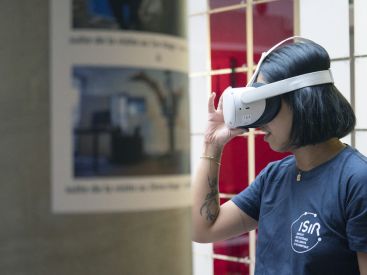
Come touch, observe, and open a real heart and wander inside it in virtual reality.
Learn, in a playful way, the rules of hereditary trait transmission and expand your knowledge of nutrition.
As a bonus: come prepare your own DNA!
Participation eligibility:
• Target audiences: 6–11 years, 11–15 years, 15–18 years, 18–25 years, 25 years and up
• Conditions: Free admission
Hours: Saturday, October 10 — 12:00 to 18:00
Sunday, October 11 — 12:00 to 18:00
Let's not hide!
Because sometimes we stay on the surface, we miss deeper issues—like plankton! A fundamental pillar of aquatic ecosystems, this bustling underwater life is still not fully understood. Ready to dive in?
Through three dexterity games, discover the role of plankton, the threats weighing on its ecosystem, and the possible alternatives for a future that respects all life.
Participation guidelines :
• Target audiences : 6–11 years, 11–15 years, 15–18 years, 18–25 years, 25 and up
• Requirements : Booking recommended
Hours: Saturday, October 10 — 10:00 AM to 6:00 PM
Sunday, October 11 — 10:00 AM to 6:00 PM
INNOVATION WALL: FROM LABS TO START-UPS
Meet the startups born out of academic labs and backed by SATT Lutech. This wall shines a light on projects that have crossed the line into commercialization to become innovative startups across multiple sectors (BodyCap, Alifert, Abimed...), illustrating how research can deliver tangible benefits for our society and economy.
Participation requirements:
• Eligible age groups: 3–6 years, 6–11 years, 11–15 years, 15–18 years, 18–25 years, 25 years and up
• Conditions: Free admission
Hours: Friday, October 9 — 12:00 PM to 6:00 PM
Saturday, October 10 — 12:00 PM to 6:00 PM
Sunday, October 11 — 12:00 PM to 6:00 PM
Health: Innovative Solutions for a Better Life
Welcome to the health of tomorrow!
What if artificial intelligence could help doctors save lives? If new treatments could better tackle obesity, addictions, or depression? Explore the innovations shaping tomorrow's medicine!
An AI that plays detective
During a colonoscopy, some polyps can go unnoticed. With artificial intelligence, our tools help physicians spot them more easily to better prevent colorectal cancer.
Depression, addictions: new paths to better care
Researchers are developing small, innovative molecules to treat conditions that affect millions. See how tomorrow’s medicines are born.
Obesity: could our microbiome hold part of the solution?
Bacteria naturally present in our bodies could help fight obesity and metabolic diseases more effectively. A promising new therapeutic avenue!
When images speak to researchers
Automatically counting tiny aquatic organisms or analyzing the shape of zebrafish embryos: AI becomes a powerful new tool to accelerate biomedical research.
An alarm to detect respiratory distress
Our technologies monitor patients’ vital signs in real time and can alert caregivers quickly when a situation turns critical.
A robot to ease workers’ loads
Lifting heavy objects all day can wear down the body. Meet a mechanical exoskeleton designed to reduce effort and prevent musculoskeletal disorders.
Participation requirements:
• Target audiences: 3–6 years, 6–11, 11–15, 15–18, 18–25, 25 and up
• Conditions: Free admission
Hours: Friday, October 9 — 12:00 p.m. to 6:00 p.m.
Saturday, October 10 — 12:00 p.m. to 6:00 p.m.
Sunday, October 11 — 12:00 p.m. to 6:00 p.m.
Understanding nature: exploring the systems that sustain life on our planet
Four workshops to explore insect ecology: how they sense the world (smell and taste), the social organization of ant colonies, the relationships between pollinators and flowering plants, and the methods scientists use to monitor populations. A hands-on scientific immersion to understand biodiversity, ecological interactions, and the impacts of climate change.
Participation conditions:
• Target audiences: ages 6–11, 11–15, 15–18, 18–25, 25 and up
• Requirements: Booking recommended
Hours: Saturday, October 10, 1:00 PM to 6:00 PM
Sunday, October 11, 1:00 PM to 6:00 PM
Microbes and Humans
Discover the world of microbes.
The medical research teams at the Paris Center for Immunology and Infectious Diseases (Cimi-Paris) invite you to join a series of interactive workshops.
Microscope observations of bacteria, fungi and parasites, mosquito breeding, hands-on experiments, exhibitions and games.
Public workshops shared across four independent yet complementary modules.
The world of microbes: exploring viruses, fungi and bacteria, microscope observations, growth on agar
Mosquitoes and parasites: their life cycle, microscope observations
The body's defenses: Exhibition on vaccination and the science game "Clash Antibodies" (Cimi©) ·
Hands-on activities: DNA extraction, pH testing, chromatography, blood groups
Participation conditions:
• Target audiences: 6 - 11 years, 11 - 15 years, 15 - 18 years, 18 - 25 years, 25 years and up
• Conditions: Free admission
Hours: Saturday, October 10 — 1:00 PM to 6:00 PM
Sunday, October 11 — 1:00 PM to 6:00 PM
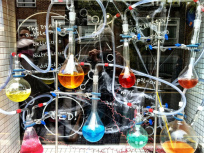
Redox in all its forms
Discover redox chemistry through visually striking — and even audible — experiments such as:
Cleaning silver without rubbing—it's aluminum!!
Powdered sugar
Schrtoumpfen fenêtre
The sound of corrosion
Participation requirements :
• Target audiences : 11–15, 15–18, 18–25, 25 and up
• Conditions : Free admission
Hours: Saturday, October 10 — 12:00–18:00
Sunday, October 11 — 12:00–18:00
Magnetism and superconductivity: from attraction to levitation!
Magnetism can seem pretty mysterious! Fun experiments using permanent magnets and electrical circuits, or a superconducting train, will show why some materials stick to the fridge while others don’t, the links between superconductivity and magnetism, and even how to create a magnetic field and “see” the magnetization.
Participation requirements:
• Target audiences: 6–11 years, 11–15 years, 15–18 years
• Access: Free admission
Hours: Saturday, October 10 — 12:00 to 18:00
Sunday, October 11 — 12:00 to 18:00
Light and matter: unveiling the mysteries of quantum physics
What is quantum physics? How does it work? The QuanTiP research network in Île-de-France invites you to meet, play with and experiment alongside PhD students and researchers to grasp the inner workings of quantum technologies. Hands-on experiments and collaborative games will be on the agenda!
Participation requirements:
• Target audiences: 6–11 years, 11–15 years, 15–18 years, 18–25 years, 25 years and up
• Conditions: Reservation recommended
Hours: Saturday, October 10 – 12:00 to 18:00
Sunday, October 11 – 12:00 to 18:00
The hunt for knowledge
Join a treasure hunt of a kind you’ve never seen before! Guided by a scientific-philosophical question you’ll pose to the Savant Mélange improv troupe, set off with them on a stroll through the Village of the Science Festival. Between poetry, humor, and encounters with genuine experts at the booths, dive into this interactive, offbeat adventure!
Participation requirements:
• Target audiences: 11–15, 15–18, 18–25, 25 and up
• Conditions: Reservation recommended
Schedule: Saturday, October 10 — 1:00 PM to 2:00 PM
Saturday, October 10 — 4:00 PM to 5:00 PM
Sunday, October 11 — 1:30 PM to 2:30 PM
Sunday, October 11 — 3:00 PM to 4:00 PM
The neuroscience of flavors
How do we perceive food? Why does it often taste bland when our nose is blocked? Through a series of fun, hands-on experiments, you’ll discover that what we call “flavor” is actually the blend of several senses processed by our brain.
Participation requirements:
• Requirements: Reservation recommended
Hours: Saturday, 10 October – 12:00 to 18:00
Sunday, 11 October – 12:00 to 18:00
When Art Meets Science
Participants dive into astronomy and mathematics by manipulating, observing, and experimenting. They create and decorate planets, then assemble them into a solar system while uncovering the unique traits of each planet. Next, they test their knowledge with a constellation game: pressing a switch lights up dots to reveal a constellation to identify. Finally, they study nature images to spot fractals, the Fibonacci sequence, and other regular patterns. They come away with the realization that the patterns we find harmonious often follow mathematical rules. This activity invites learning through play, connecting observation, astronomy, and science.
Participation requirements:
• Target audiences: 3–6 years, 6–11 years, 11–15 years, 15–18 years, 18–25 years, 25 years and up
• Conditions: Free admission
Hours: Saturday, October 10 — 12:00 to 17:00
ClimaTicTac
The ClimaTicTac game invites you to craft a strategy against the threats weighing on the planet. You’ll need to act collectively, adapting to climate hazards and the tools at your disposal. But will the mounting disasters leave you any time left? Gather friends or family and dive into ClimaTicTac. This game has earned the CNRS Medal for Scientific Mediation.
Participation requirements:
• Target audiences: 11–15 years, 15–18 years, 18–25 years, 25 years and over
• Conditions: Booking recommended
Schedule: Saturday, 10 October – 2:00–4:00 PM
The forgotten women of science
He For She will present, as part of the science festival, an interactive activity designed to be accessible to all, spotlighting the great women scientists who have been forgotten throughout history.
Our aim is to raise public awareness about the role of women in science, the gaps in recognition, and the substantial body of work by women that has long been overlooked or attributed to others.
The main feature will be a playful, participatory quiz titled “Who Really Shouldered This Discovery?” Participants will match various discoveries, inventions, or scientific breakthroughs to the rightful female researchers. Through this engaging format, we want to highlight how many major advances were achieved or co-authored by women scientists who are frequently missing from traditional historical narratives.
To keep the activity dynamic and accessible to diverse audiences, we will offer several supports: game cards, explanatory posters, scientific anecdotes, discussions with association members, and potentially mini-challenges or symbolic rewards for participants. We also aim to showcase scientists from a variety of fields to illustrate the breadth of women’s contributions across the sciences.
The He For She association will run this activity on Thursday afternoon for visiting school groups on the campus as part of the science festival. This format will enable direct engagement with students and provide a playful way to raise awareness about equality and representation in scientific environments.
Participation requirements:
• Target audiences: 3–6 years, 6–11 years, 11–15 years, 15–18 years, 18–25 years, 25 years and up
• Conditions: Free admission
Hours: Saturday, October 10 — 12:00 to 16:00
Sunday, October 11 — 12:00 to 16:00
Introduction to Computing
Introduction to Programming
All Levels
With an increasingly connected world, teaching youngsters how devices around them work is becoming essential. In this activity, ALIAS offers beginner-friendly programming exercises that can be adapted for any audience. The aim is to learn the basics of Python through fun, engaging tasks. Scratch programming for younger participants.
Turing Test
All Levels
The Turing test, proposed by Alan Turing—the grandfather of computing—in 1950, imagines a blind verbal exchange between a human and a computer (versus another person), with the evaluator trying to tell which is which. We will recount the test’s history and its impact on AI research, then have students try it themselves using open-source AI tools, with increasing challenge tailored to their abilities.
Logic Exercises
All Levels
Activities that translate natural language into mathematical expressions (and back into French), adaptable to different media and skill levels.
Cryptography Exercises
All Levels
Tasks focused on deciphering phrases using various schemes and techniques used in the cybersecurity field.
Introduction to AI Biases and Flaws
All Levels
A series of playful exercises that spotlight the biases and vulnerabilities currently found in generative artificial intelligences.
Introduction to Large Language Models
All Levels
As the world increasingly relies on AI, many people still don’t know how these systems work. This module demystifies the mechanisms behind LLMs and explores their impacts. ALIAS offers an accessible introduction to how these AIs operate, suitable for all audiences.
Introduction to Cybersecurity
All Levels
Hands-on exploration of common attack techniques and defense mechanisms.
Cooklang
All Levels
Introducing a programming language for recipes, plus tools to automate grocery lists and timers. A platform with its own app and a lively community of home cooks.
Participation guidelines:
• Eligible audiences: 3 - 6 years, 6 - 11 years, 11 - 15 years, 15 - 18 years, 18 - 25 years, 25 years and up
• Conditions: Reservation recommended
Hours: Saturday, October 10 — 12:00 to 18:00
Sunday, October 11 — 12:00 to 18:00
Science and the eyes of children
We invite you to view artworks—paintings drawn by the students of the Square des artistes—inspired by scientific studies and images. The scientific theme this year is: "From the infinitely large to the infinitely small." The scientific images that inspired the students will also be presented. Students from the workshop will be on hand to explain their work and their interpretation of the scientific images, alongside a researcher and the art teacher.
Participation conditions:
• Target audiences: 3–6 years, 6–11 years, 11–15 years
• Conditions: Free admission
Hours: Saturday, 10 October — 09:00–18:00
Science and Video Games
Discover a range of video games created by the national consortium Ikigai - Games for Citizens.
Learning while having fun, effectively, thanks to varied and original gameplay mechanics developed by multidisciplinary teams—that is the ambition of ikigai.games.
Ikigai Games for Citizens brings together universities, grandes écoles, research laboratories, associations, and professionals in the video-game sector. Together, we are developing a new generation of educational video games, designed by teachers, for teachers and students, but also for culture, scientific outreach, public education, citizen science... and above all for your greatest pleasure.
Participation guidelines:
• Target audiences: 6–11, 11–15, 15–18, 18–25, and 25 and up
• Requirements: Reservations recommended
Hours: Saturday, October 10 — 12:00 to 18:00
Sunday, October 11 — 12:00 to 18:00
Your body, your lab
Heart rate, sweat, reflexes, balance... your body is a true laboratory! In this workshop, you’ll run simple experiments on yourself to grasp what happens inside your body when you work out. Open to everyone, with no prior knowledge required.
Participation requirements:
• Target audiences: 11–15, 15–18, 18–25, 25 and up
• Requirements: Free admission
Hours: Saturday, October 10 — 2:00 PM to 4:00 PM
Sunday, October 11 — 12:00 PM to 2:00 PM
We’re fed up with the ducks!
Wetlands are teeming with surprising partnerships among living beings and play crucial roles for both nature and human communities. True allies, they are nevertheless under threat around the globe... Your move! Can you protect them?
Participation requirements:
• Target audiences: 6–11 years, 11–15 years, 15–18 years, 18–25 years, 25 years and over
• Conditions: Reservations recommended
Hours: Saturday 10 October – 9:00 a.m. to 5:00 p.m.
Sunday 11 October – 9:00 a.m. to 5:00 p.m.
Molecules Across the Cosmos
When molecules interact with light, their properties change. We can then study these molecules across a broad range of scales, from the Earth's atmosphere to the interstellar medium. You'll learn about some of the research activities at the MONARIS Laboratory, including demonstrations of diverse physics and chemistry experiments.
Participation requirements:
• Target audiences: 6–11 years, 11–15 years, 15–18 years, 18–25 years, 25 years and up
• Conditions: Reservation recommended
Hours: Saturday, October 10 – 12:00 to 18:00
Sunday, October 11 – 12:00 to 18:00
Using physics to explain crowd movements: from cells to birds
Have you ever been swept along by a crowd, even though you didn’t intend to move in any particular direction? If that happens to people (without any communication!), what about flocks of birds or collections of cells? We’ll show how a physicist can study different kinds of collective motion using digital tools.
Participation requirements:
Target audiences: 6–11 years, 11–15 years, 15–18 years, 18–25 years, 25 years and up
Notes: Booking recommended
Hours: Saturday, October 10 — 12:00 PM to 6:00 PM
Mineral Daydreams — a Sonic Nap
Stone organs carved from limestone, marble, and volcanic rock are activated live: struck, brushed, and coaxed to resonate. The voice sometimes joins in, a breath inviting the rocks to tell their story. These stones, formed over millions of years, speak to you for just a few minutes. Let yourself be carried by the deep resonances of the Earth.
In collaboration with Erwan Martin, geology professor and researcher at Sorbonne University.
Participation requirements:
• Target audiences: 15–18, 18–25, 25 and up
• Conditions: Free admission
Schedule: Sunday, October 11 — 4:00 PM to 4:30 PM
Rummaging pays off!
Plemo 3D, PRETROP and a new generation of researchers invite you to a specially crafted archaeological journey.
Discover the new excavation trays to uncover traces of the kitchens of the past and try 3D modeling by photogrammetry of the remains!
This year, explore three aspects of the craft:
• The main stages of an excavation
• Methods for reconstructing ancient kitchens
• 3D modeling by photogrammetry of the remains
Reservations will be taken directly at the booth on the day.
Participation conditions:
• Target audiences: 6–11 years, 11–15 years, 15–18 years, 18–25 years, 25 years and up
• Conditions: Booking recommended
Hours: Sunday, October 11 — 12:00 to 17:30
Faculty of Medicine, Sorbonne University, Paris 13th
Gustave Eiffel University in Champs-sur-Marne Aucun événement annoncé à ce jour, le programme est mis à jour en fonction des annonces officielles.
Versailles Saint-Quentin-en-Yvelines Observatory in Guyancourt
The Science Festival at OVSQ on Saturday, October 10 and Sunday, October 11
- Thursday, October 8 and Friday, October 9 are reserved for schools with prior registration, 40-minute workshops
- Saturday, October 10 is set aside for children aged 6 to 12 with prior registration, from 1:30 p.m. to 5 p.m.
- Sunday, October 11 is a public day, no booking required, from 10 a.m. to 6 p.m., 40-minute workshops
> Public workshops on October 11:
- SQY Amateur Radio Club
- Lidar and Space
- Launching a rocket
- The Inuits
- The Astro Meal
- Space exploration of nearby planets, in search of life, water and the rest!
- Spectroscopy, the Swiss Army knife of planetary research
- How climate works?
- Planetarium
- Community garden
- Bacteria
> Children's workshops on October 10, in detail :
- 1:30 p.m. Welcome of children accompanied by their parents
- 2:00 p.m. First workshop
- 2:45 p.m. Second workshop
- 3:30 p.m. Third workshop
- 4:15 p.m. Fourth workshop
- 5:00 p.m. Afternoon snack offered by the Observatory and end of the science afternoon
Learn more +
> OVSQ site
Contact and registrations: communication.ovsq@uvsq.fr
Participation requirements :
• Target audiences : 6–11 years, 11–15 years, 15–18 years, 18–25 years, 25 years and up
• Conditions : Free admission
Hours : Saturday, October 10 — 1:30 PM to 5:30 PM
Sunday, October 11 — 10:00 AM to 6:00 PM
Gérard de Nerval Library in Vauhallan Aucun événement annoncé à ce jour, le programme est mis à jour en fonction des annonces officielles.
François Mitterrand Media Library in Ulis
Exploring scents and aromas
Many people think taste lives only on the tongue. In reality, most of what we perceive as flavor comes from our sense of smell. On the palate, we only detect basic tastes—sweet, salty, sour, bitter—plus temperature and texture. The aromas come alive, though, in the nose. Through a guided sensory experience, we explore how tasting works and sharpen your perception.
Nez en Herbe is an association dedicated to weaving olfactory awareness into educational programs, promoting smelling education from nursery and early elementary levels.
Note: two sequential groups of 8 children, 1 hour per session
Participation guidelines:
• Target audiences: 3–6 years, 6–11 years, 11–15 years, 15–18 years
• Requirements: Reservation required
Schedule: Saturday, October 3 — 10:00 to 11:15
Saturday, October 3 — 11:15 to 12:15
Eating is transformation
Along the thread of transformation, dive into immersive, participatory workshops grounded in current scientific research to explore food in its biological, sensory, ecological, historical, and cultural dimensions. Among other things, observations will be made under microscopes, with the images projected on a large screen.
Participation requirements :
• Target audiences : 6 - 11 years, 11 - 15 years, 15 - 18 years, 18 - 25 years, 25 years and up
• Requirements : Reservation required
Timings: Saturday, October 10 – 10:30 to 12:00
Neuilly-sur-Marne Marina
A tour of radio in all its facets, organized by the Neuilly-sur-Marne Radio Club F6KGL/F5KFF
On the occasion of the 2026 Science Festival, the Neuilly-sur-Marne Radio Club will welcome visitors and curious minds on Saturdays, October 3 and 10, near its premises along the Neuilly-sur-Marne Port de Plaisance promenade (93 330), from 11:00 a.m. to 6:00 p.m.
Slots for school groups can be reserved during the week of October 5–9 (morning or afternoon: reserve by email).
The Haute Île Radio Club is a ham radio association. Our activity is to explore all techniques related to radio and electronics in general, and to decode all types of radiocommunications, from the simplest to the most modern. The Science Festival is the opportunity to showcase the club’s installations and activities, as well as a few simple experiments for all audiences, with a focus on younger visitors for whom the world of radio is often a discovery.
For the 2026 edition, the overarching theme is “Savory Science.” We’ll offer some spicy experiments, such as the vinaigrette pile (white vinegar + salt). We have also planned:
- demonstrations of HF radio contacts and satellite links
- a full-scale 1:1 model of a pico-satellite that is fully operational
- a team-based geocaching game (enabled by radioguidance)
- a presentation of a Mesh network for crisis situations
- a demonstration of a satellite weather image decoding station
We hope these lines inspire you to come meet us and chat with fellow enthusiasts. After your visit, you’ll know a little more about a field we’ve been involved with for over a century—radio in all its forms—the foundation of modern technology.
Participation requirements:
• Target audiences: 6–11, 11–15, 15–18, 18–25, 25 and over
• Conditions: Free admission
Hours: Saturday, October 3 — 11:00 a.m. to 6:00 p.m.
Saturday, October 10 — 11:00 a.m. to 6:00 p.m.
Elsa Triolet Media Library in Villejuif
Ultra-processed foods: what’s true and what’s not, with Sylvie Davidou
In France, ultra-processed foods account for 46% of children's diets. Obesity, diabetes and other chronic diseases are closely tied to nutrition, particularly the consumption of ultra-processed foods. Assessing and limiting the intake of these foods is a public health imperative.
Sylvie Davidou, lecturer and researcher at CNAM.
Participation conditions:
• Target audiences: 11–15 years old, 15–18 years old, 18–25 years old, 25 years and up
• Conditions: Free admission
Schedule: Saturday, October 3 — 11:00 a.m. to 12:00 p.m.
Dine with Frédéric Wallet tomorrow
Meet Frédéric Wallet, an economist and researcher at INRAE exploring the challenges of processed foods — what lies behind convenience meals, what we’re eating today, and how different generations will shape their food choices tomorrow.
Participation requirements :
• Target audiences : 15–18 years, 18–25 years, 25 years and up
• Conditions : Free admission
Schedule: Saturday, October 10 — 3:00 PM to 4:00 PM
Notre-Dame Church in Vétheuil Aucun événement annoncé à ce jour, le programme est mis à jour en fonction des annonces officielles.
L'Aumône, the cultural hub of Saint-Ouen Aucun événement annoncé à ce jour, le programme est mis à jour en fonction des annonces officielles.
Make sure to book your visit in advance. Take advantage of the 32nd edition of the Science Festival happening in the capital and its surrounding areas.
Dates and Opening Time
From October 4, 2024 to October 14, 2024
Prices
Free
Official website
www.fetedelascience.fr














 Science Festival 2026 in Paris and Île-de-France: the lineup of free events