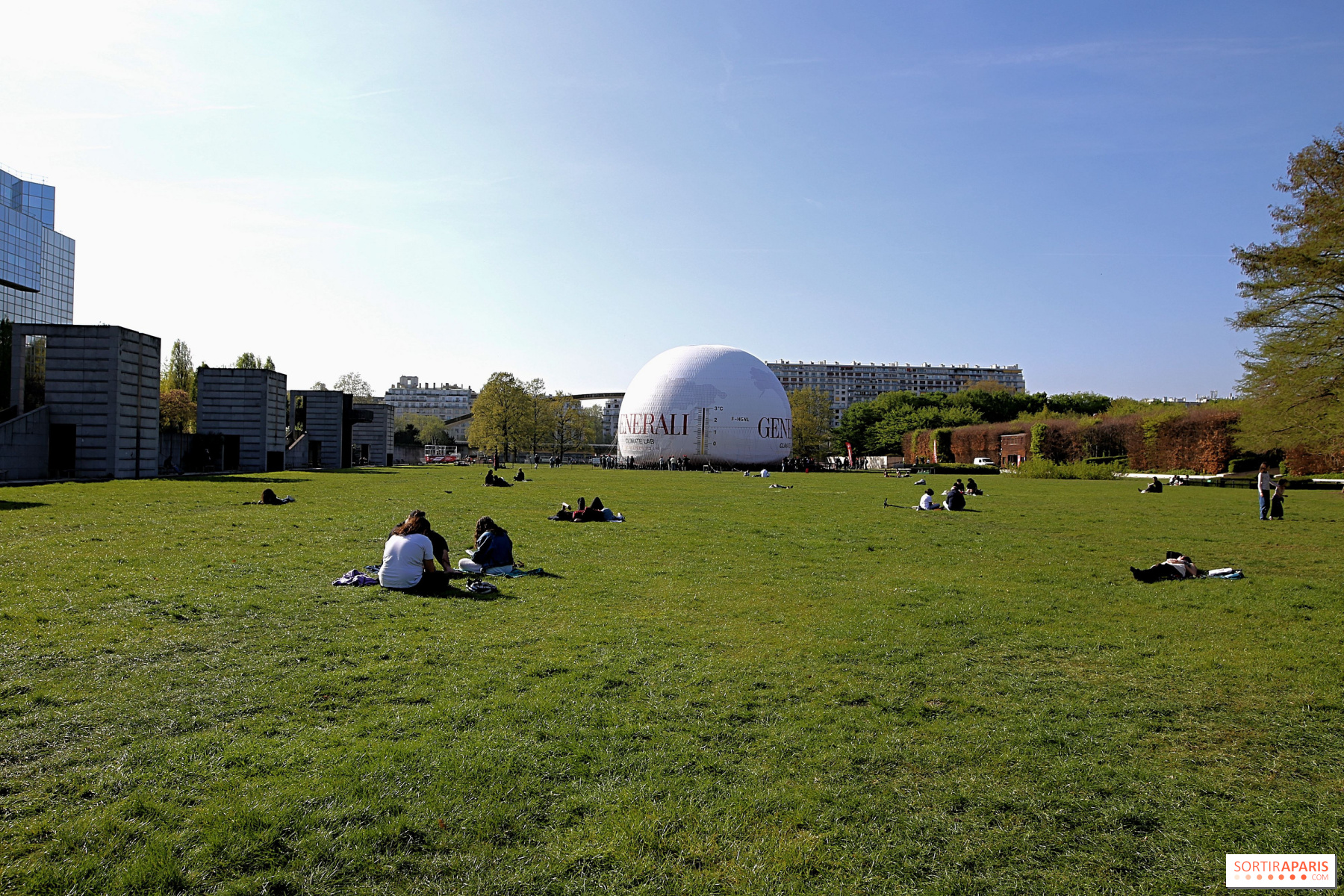
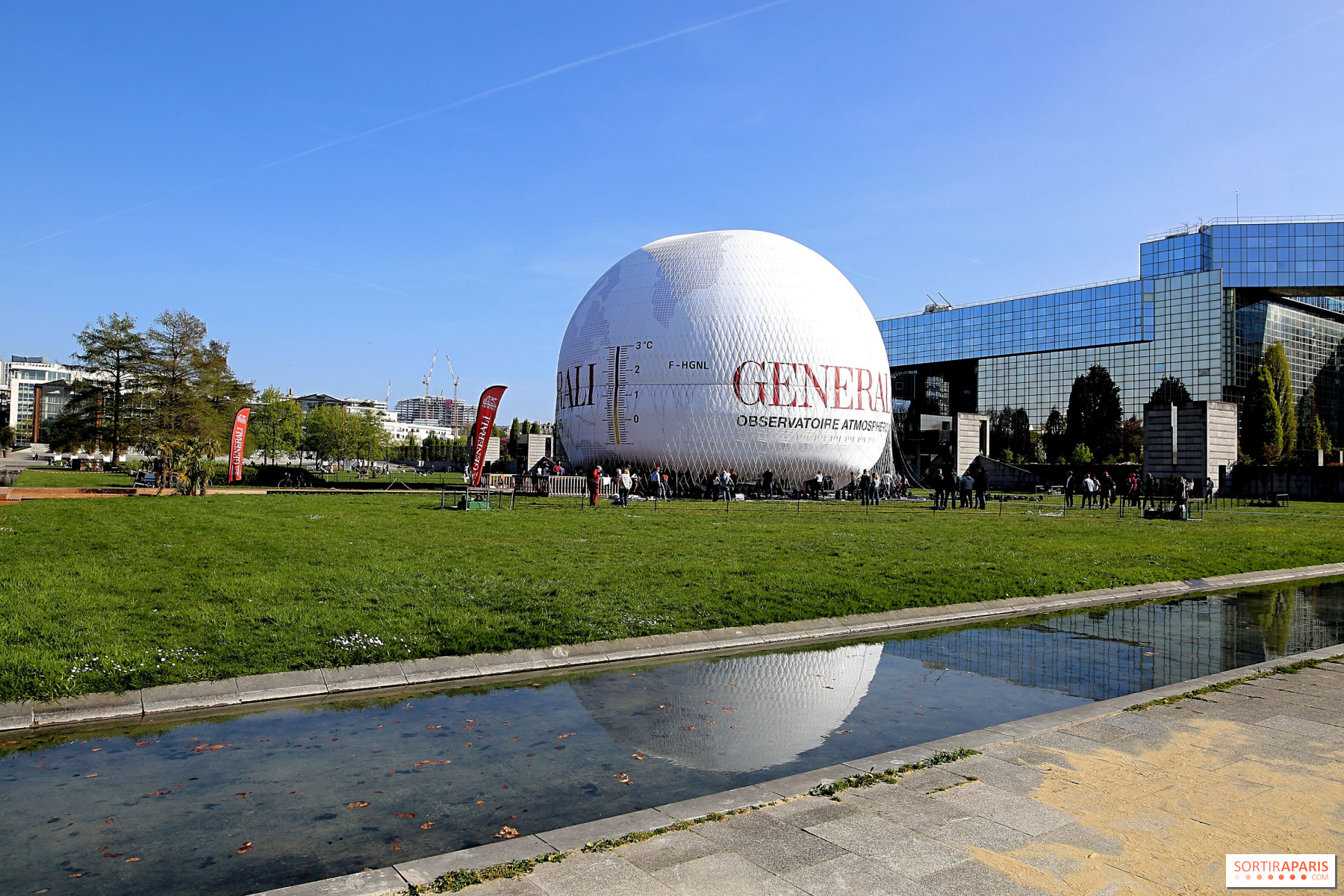
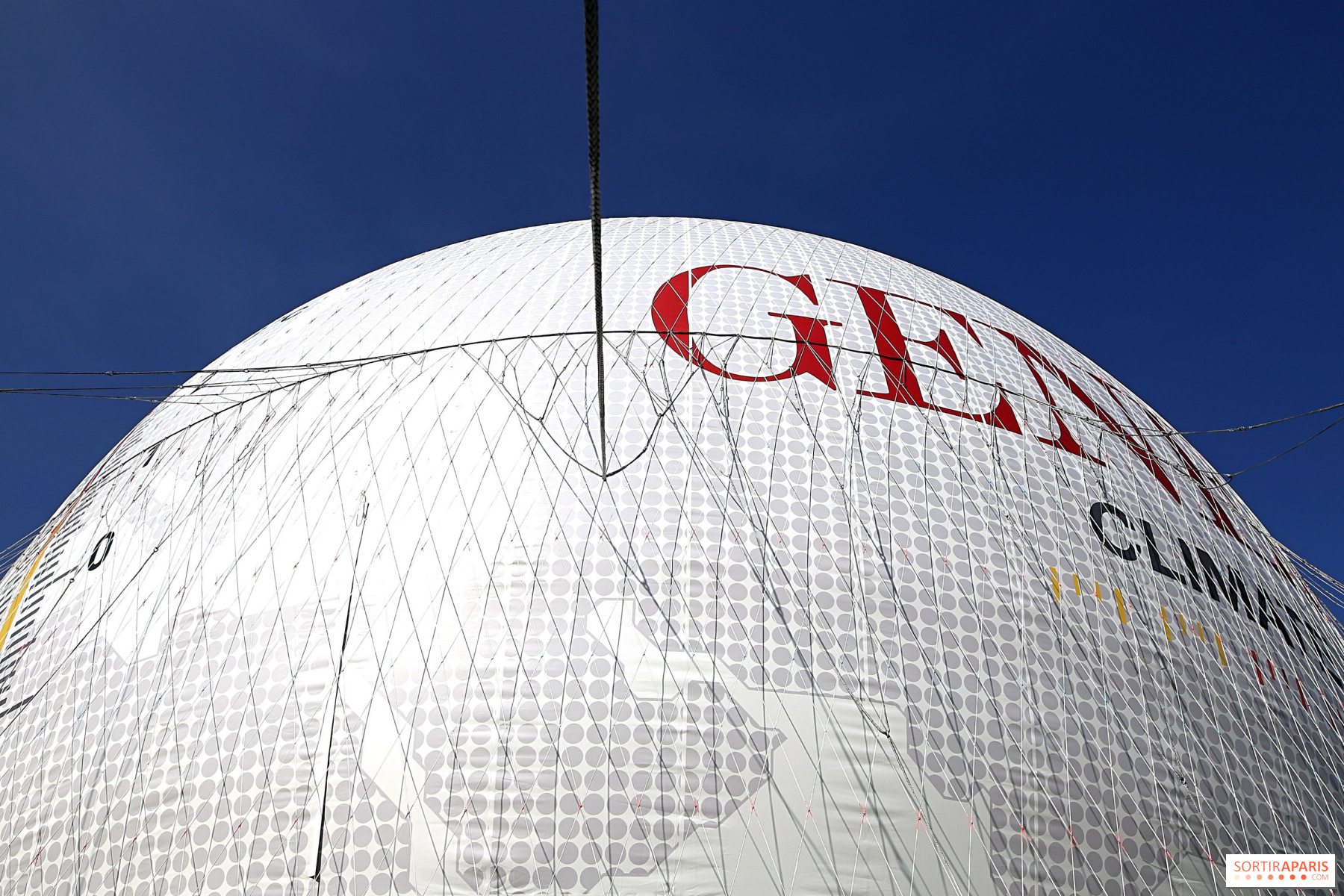
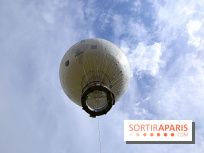
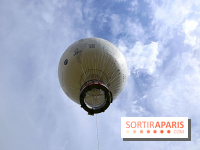
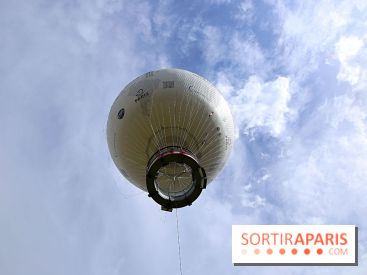
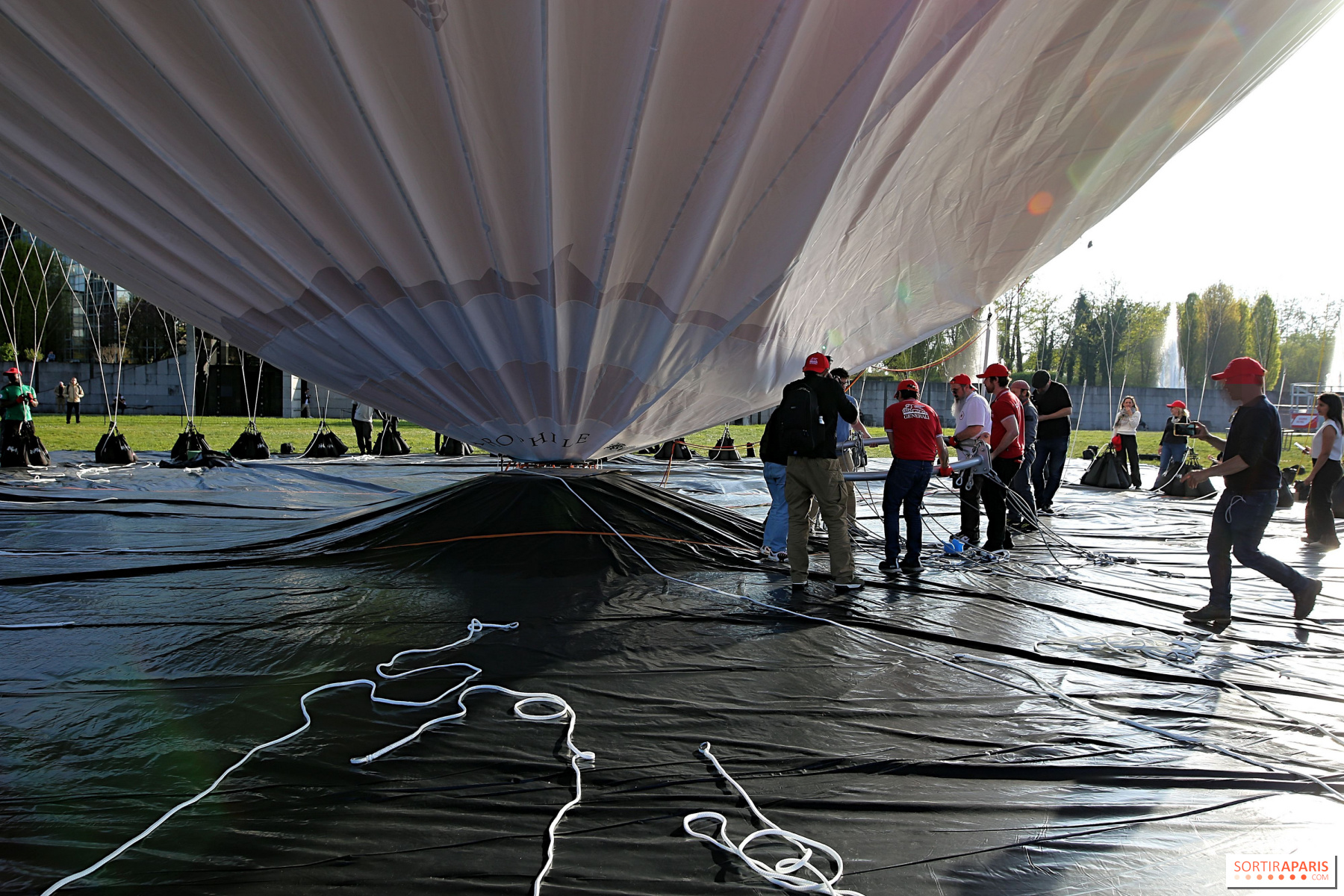
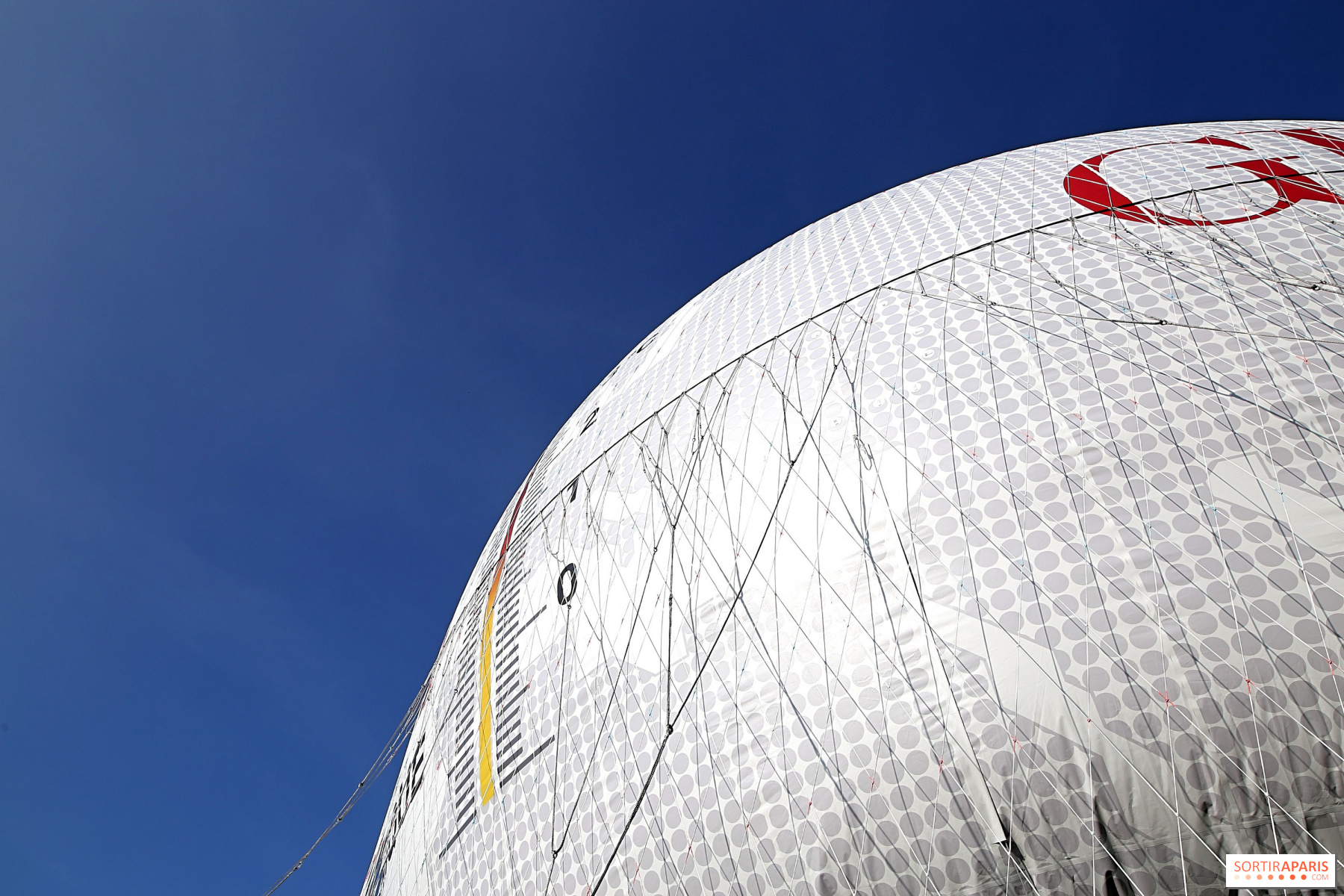
On this Thursday, April 10, 2025, while some were enjoying a sunny break on the grass, others were hard at work in the Parc André-Citroën. Their mission? To help inflate the new Generali balloon in Paris. Absent since mid-January, the new structure is back in the capital's 15th arrondissement. But before it can take to the skies again and welcome passengers from mid-April 2025, the famous Paris balloon has had to be inflated. A lengthy operation requiring the mobilization of 50 people. And the maneuver was impressive. Led by Matthieu Gobbi, co-founder of Aérophile alongside Jérôme Giacomoni, the operation was delicate, but perfectly timed. As the balloon gradually fills up with 6,000 m3 of helium, the little hands have been busy since 2 p.m. lifting ballast bags with every whistle. In spite of everything, good spirits were the order of the day on this sunny afternoon.
It's fair to say that everyone is proud to be involved in inflating the new Paris Generali balloon. Almost ten years after theParis ClimateAgreement, the new structure is something of a symbol. It aims to become an"environmental and health watchdog in the face of global warming". To this end, the balloon - a veritable"flying scientific laboratory" - will join forces this year with the Climate and Atmosphere departments of Copernicus, the European Commission's Earth observation program. Implemented by ECMWF (European Centre for Medium-Range Weather Forecasts), these services join the Paris balloon's select circle of scientific partners, already comprising CNRS andICOS.
Through this new partnership, the balloon in the Parc André-Citroën aims to serve the climate and provide information about global warming. The aim? To raise awareness of climate change, while developing a culture of prevention among future visitors. Thanks to the new balloon, researchers from the LSCE laboratory (CNRS) will be able to measure CO2 and CH4 levels in the atmosphere, and thus better analyze greenhouse gases in the city.
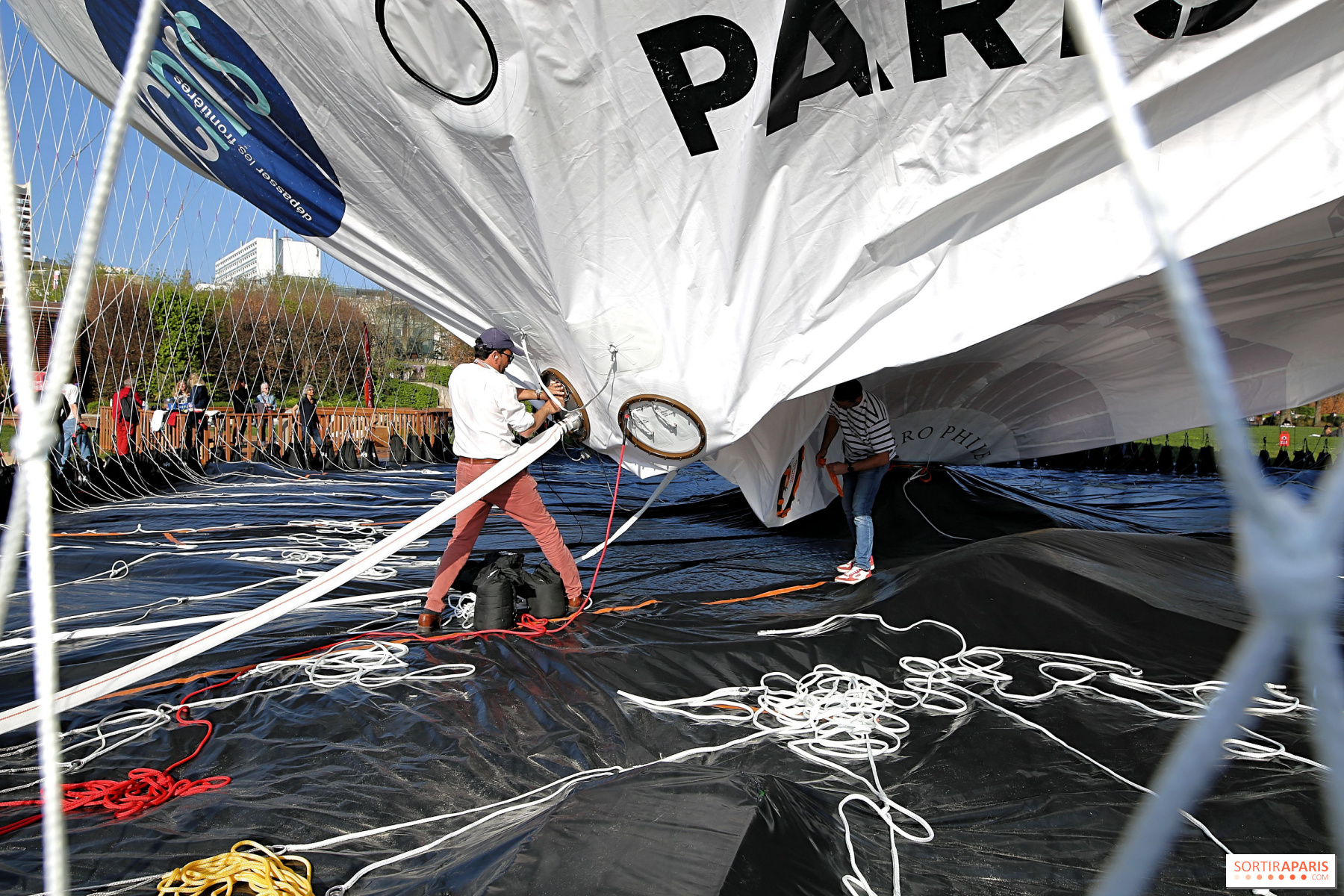

"So watch out, it's going to get a little tougher," Matthieu Gobbi told the teams at the Parc André-Citroën on Thursday afternoon. Shortly before 6pm, the sphere is now fully inflated. A large part of the balloon's new image can be seen. Northern Canada, Russia and northern Europe can be seen, as well as France, Italy and the African continent. While the old balloon featured some of the capital's most famous landmarks, the new structure reveals a planisphere. The insurer's name is still visible, as are those of the City of Paris and its various partners.
The primary mission of the famous hot-air balloon is to enable scientists to analyze air quality. For over 10 years now, a state-of-the-art instrument installed on the gondola has been measuring the quantity of fine particles in the air at altitudes of up to 300 metres, as well as ozone and pollen, 24 hours a day.
But Parisians can rest assured that the new balloon in the Parc André-Citroën will continue to offer flights over the capital. As a reminder, the aircraft can soar up to 150 meters above the ground (and up to 300 meters for certain scientific flights) and can accommodate up to 30 people for flights lasting around ten minutes.
The Paris balloon was launched in July 1999 by Aérophile, the world leader in tethered balloon flights. Proof of its renown, Aérophile was behind the famous balloon installed at the Tuileries during the Paris Olympic Games.
Today, the Paris balloon is the world's least polluting aircraft. Over the years, the helium-filled balloon has become one of the capital's star attractions, carrying 60,000 curious passengers every year. What's more, since its launch, 1,500,000 passengers have tested the experience and climbed aboard! So, as of mid-April, you can take to the skies aboard the new Paris balloon - weather permitting, of course.
Location
Parc André Citroën
Rue de la Montagne de la Fage
75015 Paris 15
Official website
ballondeparis.com