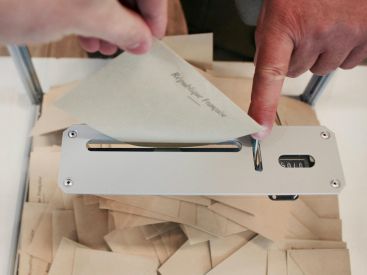
On March 15 and 22, 2026, Parisians will head to the polls for the municipal elections. Several key issues and themes will be on the agenda, with environmental concerns taking center stage. To help you navigate the candidates' positions, here’s a comparative summary of their proposals on this vital topic. So, who stands where? We’ve got all the details!
While some are already eyeing the 2027 presidential race, upcoming elections are set to make headlines sooner: the 2026 Municipal Elections in Paris. Scheduled for Sunday, March 15 and 22, these municipal votes will elect district councilors and the City Council of Paris for the next six years. However, this year’s elections come with a significant change in the voting process. Voters will now need to cast two ballots—instead of just one—to participate. The first will select the district councilors, while the second will choose the members of the Paris City Council.
Before the name of the next leader of Paris is announced—someone who will take over from Anne Hidalgo, who has led the city for the past 12 years—the candidates vying for the position must first present their proposals to voters. Several key issues will be at the forefront, such as housing, cleanliness, animal welfare, culture, and even education.
The environment and ecology, which are increasingly dominating public debates, will also be a key topic among the various candidates. In fact, most French voters are eager to see continued efforts on ecological transition at the upcoming municipal elections, according to a poll reported by our colleagues at Le Parisien on January 15. The survey by Ifop revealed that 53% of respondents believe that ecological and social transition efforts should be maintained. The newspaper notes that this desire is especially strong in cities with over 100,000 residents (64%) and among residents of working-class neighborhoods (60%).
In Paris, the focus extends beyond just creating green spaces; it encompasses biodiversity, water cleanliness, sustainable agriculture and food, climate change, energy, noise pollution, and air quality. These issues directly impact Parisians and visitors alike, shaping the experience of the City of Light. To help you better understand where candidates stand, we’ve compiled a list of their commitments regarding environmental issues ahead of the 2026 Municipal Elections.
Environmental Initiatives Proposed for the 2026 Paris Municipal Elections
Please note that these proposals are regularly updated as new programs are released and candidates are announced. In some cases, detailed measures have not yet been specified in publicly available sources; these gaps are acknowledged accordingly.
Pierre-Yves Bournazel (Horizons – Backed by Renaissance)
- For a greener capital, say no to more concrete in Paris (Source)
- Encourage ecological transition by enabling low-income residents to switch their transportation or purchase eco-friendly vehicles (Source)
Blandine Chauvel (NPA)
As of January 22, 2026, the candidate's official website still offers no concrete proposals or measures specifically dedicated to environmental issues.
Sophia Chikirou (La France Insoumise - New Parisian Popular Movement)
- Decarbonize and green 40% of Paris’s territory by 2032 (Source)
- Introduce a new municipal green regulation: no more land will be artificially developed (Source)
- Undertake large-scale renaturalization by creating extensive green spaces and opening up currently restricted parks for public access, aiming to deliver over 300 hectares of accessible parks and reach 10 m² of green space per resident (Source)
- Bolster staffing and bring public management back in-house at the Green Spaces and Environment Department by ending outsourcing (except in specific cases like social integration programs) and increasing recruitment efforts (Source)
- Cut the amount of concrete used in new construction projects financed or managed by the city in half by 2032 (Source)
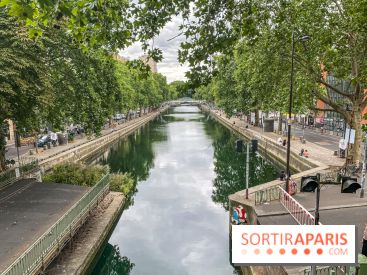
- Speed up and expand programs to partially open and renaturalize the Bièvre River and the Saint-Martin Canal (Source)
- Accelerate urban greening efforts, prioritizing the cooling of heat islands in densely paved neighborhoods like Opéra or République, and in underserviced districts (Source)
- Enhance citizen-led greening initiatives by increasing shared gardens, easing permits for community planting projects, and expanding rooftop greenery (Source)
- Make oasis-themed courtyards a standard in all Parisian schools and middle schools, aiming for 100% adoption by 2040 (Source)
- Support community groups fighting against unnecessary land development projects across Paris and Île-de-France, such as the Gonesse Triangle, Aubervilliers Garden, and Saclay Plateau (Source)
- Protect and enhance Paris’s natural heritage by safeguarding existing trees (except in cases of disease or risk) and promoting diverse species (Source)
- Strengthen heatwave preparedness plans: systematically conduct heat prevention drills and open cooling centers at level 2 alert (Source)
- Improve accessibility to Vincennes and Boulogne woods for Parisians by creating a green corridor for pedestrians and cyclists connecting the two parks (Source)
- Establish a long-term "urban forest mission" contract with the National Forestry Office (ONF) to preserve ecosystem services—such as climate regulation, water purification, and carbon storage—and prioritize ecological management over timber profit (Source)
- Aim for a "net zero land degradation" target in forest soils by implementing anti-compaction measures and restoring degraded areas (Source)
- Develop a clear zoning plan that designates biodiversity sanctuaries, peaceful walking areas, and zones for more intensive use like recreation lawns and the existing Hippodrome (Source)
- Implement strict regulations and effective monitoring for events held in wooded areas through a comprehensive charter (Source)
- Collaborate with Île-de-France through inter-municipal agencies or partnerships to share land, logistics, and economic opportunities for local food projects (Source)
- Coordinate efforts among all stakeholders around a Territorial Food Plan (PAT) to promote sustainable urban food systems (Source)
- Launch a public mushroom cultivation initiative leveraging Paris’s local potential (Source)
- Enhance urban agriculture by strengthening existing training programs like École Du Breuil and supporting research collaborations such as AgroParisTech (Source)
Rachida Dati (The Republicans/MoDem/UDI)
- Expand green spaces (Source)
- Improve traffic flow (Source)
- Make Paris a city with cleaner, healthier air (Source)
Emmanuel Grégoire (Leftist Coalition: PS – Socialist Party, PCF, Green Parties, Place Publique, L'Après)
- Transforming the ring road into an urban boulevard and turning the gates of Paris into true piazzas of Greater Paris, connected by a large green, cultural, and sports belt (Source)
- Grand Banks of the Seine: 25 km of continuous, greened promenade accessible along the left and right bank (Source)
- Continuing the development of the Petite Ceinture with an additional 10 km of walking paths (Source)
- Reviving the Bièvre River and extending the green corridor along its course (Source)
- Adding 300 hectares of public gardens, with extended park hours throughout the year, especially during heatwaves (Source)
- Creating 10 new parks by repurposing traffic lanes on certain Parisian boulevards, featuring playgrounds, kiosks, cafes, lawns, and dog parks (Source)
- Enhancing urban comfort with a goal of having at least one shaded sidewalk in every street, to better cope with increasingly frequent and intense heatwaves (Source)
- Implementing climate-safe measures for municipal buildings and housing through window shading plans and heat-resistant, accessible, and green roofs (Source)
- Creating 1,000 pedestrian streets and new green, accessible, vibrant pedestrian zones in every neighborhood (Source)
- Birds protection plan: systematically safeguard biodiversity and bird habitats, particularly during building renovations, and support animal protection associations involved in monitoring and caring for Parisian birds (Source)
- Changing our dietary model to eat better and treat our land with care, by promoting organic and sustainable food practices (Source)
- Transforming building rooftops into shared, accessible, and eco-friendly spaces for all residents of the capital (Source)
Sarah Knafo (Reconquête)
- Reopen the quayside lanes to cars and build a pedestrian and cyclist promenade above (Source)
- Allow highway speeds of up to 80 km/h on the ring road (Source)
- Ease traffic flow by managing traffic lights with artificial intelligence (Source)
- Enhance the Vélib' bike-sharing service (Source)
- Expand freight delivery via waterways (Source)
Thierry Mariani (National Rally - UDR)
- Establish a green belt by partially covering the ring road (Source)
Marielle Saulnier (Lutte Ouvrière)
As of January 22, 2026, there are no concrete proposals or specific environmental measures featured on the candidate's official website.
To help clarify the key issues concerning the management of Paris ahead of the upcoming municipal elections, we've put together a thematic summary. You can find all these topics below!



 2026 Paris Municipal Elections: Candidate Program Proposals by Theme
The municipal elections are just around the corner, and you're eager to learn more about the candidates’ platforms for the Paris city hall? We've got you covered. Explore their proposals by theme—security, housing, environment, education, culture—and see where each candidate stands! [Read more]


























 2026 Paris Municipal Elections: Candidate Program Proposals by Theme