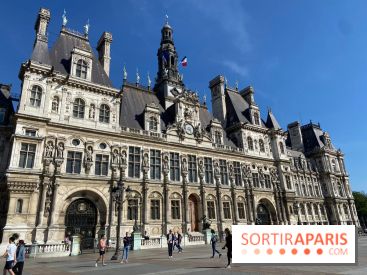
In Paris, culture and tourism are key priorities for the city government and are now taking center stage in the 2026 municipal campaign. Support for cultural players, management of municipal venues, preservation of heritage, and boosting tourism—what proposals are candidates for the Paris mayoralty putting forward on these fronts? Here's a roundup of the measures they've announced.
As Paris prepares for the 2026 municipal elections, cultural policy is increasingly in focus among the issues highlighted in the platforms of the declared candidates. Access to cultural activities, support for institutions and artists, management of municipal venues, and the promotion of Parisian heritage are all key areas under city jurisdiction that could see shifts depending on the priorities set by the next municipal team.
The Paris municipal elections will take place in two rounds, on March 15 and 22, 2026, marked by a significant institutional change: voters will cast ballots using two separate ballots—one for the arrondissement councilors and another for the members of the Paris City Council. Against this backdrop, several local issues are shaping the campaign, notably the role of culture within public policies.
Culture is a key area of focus for the Paris City Hall. It goes beyond just hosting events, encompassing a range of ongoing responsibilities managed by the municipality. Notably, the City is responsible for:
- Overseeing the management and funding of numerous municipal cultural facilities,
- Supporting artists and cultural creators,
- Preserving and promoting Paris’s historic heritage,
- Implementing initiatives to improve public access to culture.
These responsibilities are carried out by municipal services, particularly the Department of Cultural Affairs, operating under the strategic guidance set by the Mayor and the Paris City Council. Budget decisions, support priorities, and cultural access policies are entirely within the jurisdiction of the local government.
Beyond cultural initiatives, the city also plays an active role in tourism, a key factor in Paris’s appeal. The municipality promotes the Paris destination, works on expanding the tourist offerings, and ensures a warm welcome for visitors—all in collaboration with institutional and industry stakeholders. It supports cultural and heritage events that can draw both national and international crowds, enhances tourist information services, and strives to balance tourism with residents’ quality of life and the preservation of the city’s heritage.
In this context, we provide an overview of the proposals made by candidates for the Paris mayoralty regarding culture and tourism, based on current programs and publicly available statements.
This article will be updated as candidates make announcements and share their positions throughout the campaign.
Paris 2026 Municipal Elections: Candidates' Views on Culture and Tourism
Pierre-Yves Bournazel (Horizons – supported by Renaissance)
- Revitalizing key areas such as Boulevard Saint-Michel, Rue d’Avron (20th arrondissement), Avenue du Général-Leclerc (14th), and other neighborhoods across Paris by shifting the pre-emption rights—initially assigned to private apartments—to tackle neglected buildings and vacant commercial spaces.
Budget: €35 million
- Limiting short-term rentals to 30 days a year and updating control measures (Airbnb)
- Opening the night services for lines 1, 4, and 14 starting with Friday evenings and weekends from late 2026, then extending to all days of the week. Plans include extending these hours to lines 7, 8, and 9 once automated.
- Banning non-electric tourist buses from Paris to support ecological transition
- Closing Bercy bus station and establishing a modern peripheral terminal in Saint-Denis, directly connected to public transport
- Renovating green spaces, cultural venues, and sports routes along the Petite Ceinture. New walking trails will be accessible from 2027.
Investment: €15 million
- Launching the "Nouvelles Berges de Seine" project to develop quays with family-friendly areas, sports zones, bike paths, and dog parks (secured by surveillance and 24/7 municipal police): including Quai des Enfants from Pont d’Arcole to Pont Louis-Philippe, Quai Olympique from Pont Neuf to Pont au Change, and Quai Canin between Pont Marie and Pont de Sully.
- Merging Paris, regional, and suburban tourism offices into a unified Grand Paris Tourism Agency
- Establishing Creative Business Zones—cultural production hubs linked to Grand Paris Express infrastructure and ongoing urban projects—initially along canal de l’Ourcq (19th/Pantin), Seine-Amont area (13th/Ivry), and Clignancourt-Montmartre (18th/Saint-Ouen)
- Implementing a 1% Culture initiative: any development project over €10 million within Grand Paris will allocate 1% of its budget to a major local cultural program
- Creating a LGBTQIA+ arts center featuring temporary exhibitions, artist residencies, performances, debates, educational projects, a public-access library, and an archives space
- Launching "Villa Niki," a flagship contemporary arts residence inspired by Rome’s Villa Medici
- Modernizing governance of museums (Paris Musées) and municipal theaters to foster greater investment in creation, outreach, and accessibility to culture. Nearly €30 million will be allocated over six years.
- Providing 500 artist apartments with limited leases within the social housing sector, prioritizing emerging or developing artists.
Budget: €18 million over the entire term—€15 million for renovations and €3 million for management, coordination, and cultural support—funded by savings from the integration and streamlining of Paris’s social housing providers (€540 million over the mandate).
- Ending random auditions at conservatories and creating 3,000 additional places
- Building three new conservatories between 2029 and 2030 in under-served boroughs
- Introducing a "cultural pathway" in Paris primary schools to ensure children have access to art and creativity
- Extending library hours to 10 p.m. (from current closing times of 6 or 7 p.m.) and opening them on Sundays
- Offering Parisians unrestricted access to municipal sports and cultural facilities—gyms, pools, conservatories, cultural centers, and community houses—through free reservation slots
- Reviving the Paris Carnival as an annual event
- Launching a multi-year program for restoring and safeguarding historic urban furniture—benches, fountains, lampposts, fences, old signs, facades, and outdoor metro stations
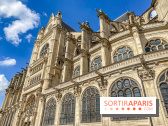
- Implementing a ten-year renovation plan for Paris’s 96 municipal churches and cemeteries.
Budget: approximately €200 million for churches and €100 million for cemeteries over a decade, involving the City, State, Region, religious associations, and private sponsorship
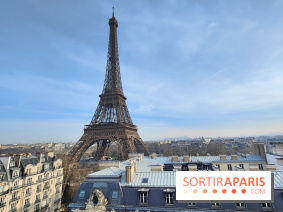
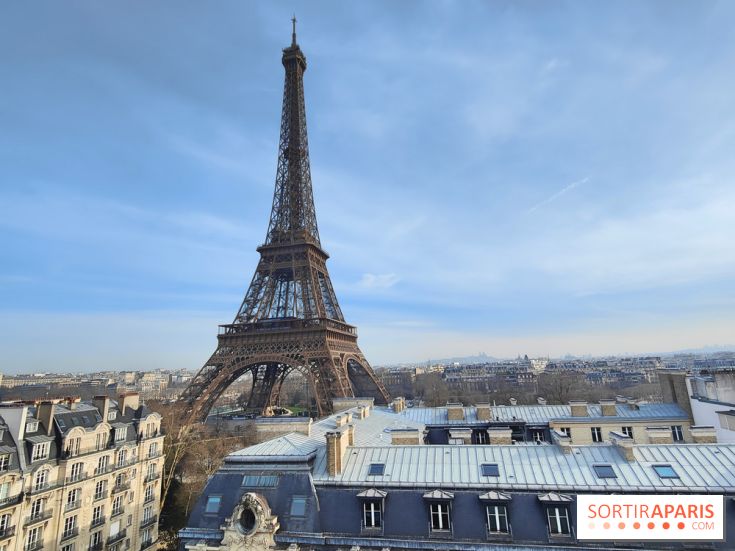
- Seeking to have the Eiffel Tower classified as a historic monument for permanent protection
- Enhancing heritage along the Seine with light exhibitions and nighttime staging inspired by the successful lighting displays during the 2024 Olympic and Paralympic Games
Blandine Chauvel (NPA Revolutionaries)
As of March 9, 2026, there are still no concrete proposals or measures explicitly dedicated to culture.
Sophia Chikirou (La France Insoumise – New Popular Paris)
- Establish a municipal intervention fund aimed at preserving cultural spaces threatened by real estate speculation, as well as independent bookstores
- Create a "Publisher Incubator" with municipal facilities and affordable rents to support young Parisian publishers
- Declare independent bookstores as "essential commerce" and provide them with support
- Mobilize a legal aid fund of €100,000 annually specifically for bookstores
- Support Parisian independent cinemas and take action to prevent closures
- Implement the 1% Artistic Policy: commission artworks in the construction and renovation of public buildings without requiring artists to front the costs of design and execution
- Empower organizations supported by the municipality to purchase, produce, and co-produce performances
- Move away from project-based calls for proposals and instead ensure artists' work is sustained through multi-year programming, gradually increasing the budget allocated to artistic creation
- Expand the number of affordable housing workshops and studios
- Create a rent guarantee fund for non-employed artists
- Provide vacant spaces for artists to use
- Engage artists in various aspects of municipal life, such as festivals and urban planning
- Promote free access and social pricing for cultural venues
- Develop arts education from early childhood through middle school
- Enhance conservatories: increase enrollment to end lottery-based admissions, provide equipment loans, and implement social pricing
- Create and support community-based educational venues and artistic practice spaces
- Open new local media libraries and art resources centers
- Encourage the creation of self-managed Night Houses to strengthen the link between culture and social life
- Strengthen financial and technical support for existing alternative cultural spaces
- Establish community halls as spaces for creative activities and collective celebrations, as well as for rental during private events (birthdays, weddings, etc.) at affordable rates
Rachida Dati (Les Républicains – MoDem – UDI)
- Create a large, beautiful heritage urban park: renovate and widen sidewalks, replace street furniture with iconic Parisian fixtures, plant more greenery...
- Designate the lower quays exclusively for pedestrians and the upper quays for bicycles
- Establish a “Children’s White Night” in each district, running from 6 p.m. to midnight twice a year, featuring performances and interactive installations for ages 5-12
- Launch a Parisian middle school orchestra composed of students from all 17 districts, forming a permanent municipal band to perform three times annually at the Philharmonie and Bastille Opera
- Revitalize the city’s non-strategic heritage assets
- Stop accepting applications to convert residential units into full-time Airbnb rentals
- Implement a “Paris of Beauty” charter focused on enhancing the city’s aesthetic appeal
- Reactivate the City’s “Urban Furniture Commission” to oversee the consistent application of the “Paris of Beauty” standards
- Develop an emergency plan to safeguard Paris’s heritage, particularly its churches
- Create a “Villa Médicis” of design on the site of the former City Hall in the 1st arrondissement, hosting evening cultural events accessible to all Parisians
- Revamp Place de la République with new greenery and restore its two dolphin fountains
- Adopt sustainable landscaping choices for plazas and open spaces
- Initiate an architectural competition to enhance the city’s gateways and entrances
- Install tax-refund points at major tourist hotspots for immediate duty-free shopping
- Enhance multilingual signage across Paris and its public transit networks
- Make the “Made in Paris” label more prominent to promote local consumption
- Introduce a “Paris Business” label to boost professional tourism
- Open all libraries and media centers on Sundays and extend weekday hours
- End the lottery system for conservatory admissions by creating 2,000 new places by 2027, prioritizing the 15th, 16th, 18th, and 20th districts
- Establish a “reachable conservatory”: weekly classes held in schools within underserved neighborhoods
- Equip each Paris square with a contemporary artwork for six months through a rotating program
- Organize weekly evening openings in Paris’s major museums
- Create a popular festival celebrating performing arts— theater, film, dance, and choir
- Convert 20 public rooftop terraces into free summer cultural spaces
- Open an immersive cultural space to complement the Carnavalet Museum
- Highlight Parisians from overseas territories with an annual cultural program at the Cent-Quatre arts center
(Source)
Emmanuel Grégoire (Left-wing coalition: PS, Ecologists, PCF, Place Publique, L’Après)
- 1,000 pedestrianized streets and new vibrant, accessible pedestrian zones in every neighborhood
- Introduction of a temporary pedestrian permit, allowing communities to organize local cultural, sporting, festive, or family events
- Beauty in all districts with the “Manifesto for a New Parisian Aesthetic,” and appointing an artistic director of Paris dedicated to enhancing the city’s beauty, coherence, and heritage preservation
- Transforming the périphérique into an urban boulevard and turning Paris's gateways into true venues of the Greater Paris, linked by a vast green, cultural, and sports belt
- The Grand Seine Banks: 25 kilometers of continuous, green, and accessible promenade along the river on both the left and right banks
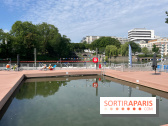
- A new recreational and swim site in the Arsenal port: the Bastille Beach
- Expanding the Petite Ceinture with an additional 10 km of walkable pathways
- Opening 300 hectares of new public gardens, extending park hours throughout the year, especially during heatwaves
- Replacing some traffic lanes with ten new parks on Parisian boulevards, featuring playgrounds, kiosks, cafes, lawns, and dog parks
- More public restrooms, notably by making municipal facilities accessible to all and equipping them with changing tables
- An annual, lively solidarity flea market to energize neighborhoods and promote circular economy practices
- Prioritizing public investments in underprivileged districts: new cultural venues, improved sanitation, and street beautification
- Extending hours for municipal libraries and museums
- Automatically issuing library cards to all Parisian children and teenagers
- Developing a network of suburban Amateur Artistic Practice Houses to promote and support amateur art across Greater Paris
- Launching Paris Culture, a portal and app showcasing cultural institutions’ offers at negotiated, affordable prices for all audiences
- Creating a Feminist Arts and Cultures Center
- Designing a large public park dedicated to culture and art, stretching from the Champs-Élysées to the Tuileries and Place de la Concorde
- Designating a day each year when the Eiffel Tower is reserved exclusively for schoolchildren from Paris and Île-de-France
- Ensuring affordable rents and establishing a support fund for independent bookstores, publishers, cinemas, clubs, and cultural businesses
- Building a network of workshops, rehearsal spaces, and creative hubs
- Promoting cultural diversity, especially by strengthening support for hip-hop culture across Greater Paris
- Hosting resident artists in every neighborhood, particularly in underserved districts
- Organizing an international showcase of image arts, digital arts, and video games that combines trade fairs with festive, free events throughout Paris
- Hosting an annual major cultural festival at the Gates of Paris
- Making nightlife venues accessible to the widest possible public
- Implementing “safe spaces” at all Paris events, serving as refuges for individuals facing violence or discrimination
- Offering a welcome pack with discounts at museums and monuments for visitors arriving by train or other sustainable transport modes
- Promoting francilian cycle tourism, including the “Great Green Loop” from Paris to Le Havre
- Mandating tour buses to park only in designated lots
- Transforming the Parc des Princes and Saint-Cloud gate into vibrant, green, community-oriented neighborhoods—expanding the stadium, adding nearby sports facilities, and establishing a museographic space
- Accelerating efforts to improve gender balance and cultural diversity in Paris streets and avenues, including renaming avenues like Léopold II in the 16th arrondissement and Lamoricière in the 12th
- Collaborating with UNESCO to host an international Education Week featuring conferences, meetings, and public events
- Supporting press freedom through the shelter and protection of exiled journalists
- Creating an International Paris City Prize to honor efforts defending human rights
Sarah Knafo (Reconquête)
- Restore the city’s historic street furniture—park benches by Davioud, vintage lampposts, newsstands, and Guimard metro entrances. Budget: €32.5 million annually
- Make urban planning serve beauty. Revoke the current bioclimatic local urban plan (PLUb), requiring new buildings to blend seamlessly into the Parisian landscape with façades that reflect the neighborhood’s identity.
- Implement a comprehensive plan to protect Paris’s religious heritage.
Budget: €300 million over the term of the current administration
- Enhance and extend the hours of historic lighting—up to midnight instead of 10 p.m.
Budget: €2 million per year
- Shift from a grant-based system to a procurement approach favoring local artisans, ensuring high-quality craftsmanship and revitalizing the city’s economy.
- Increase street lighting during the Christmas season.
Budget: €1 million annually
- Highlight the booksellers along the Promenade des Gens Heureux: boost traffic, recognition, and restore the area’s charm.
- Enhance security around the museum vicinity by increasing patrols and clearing squatters causing public disturbances.
- Restore the city’s major museums.
Additional annual budget: €6 million
- Expand opening hours for main museums and libraries.
Budget: €8 million per year
- Offer collective music classes across all Paris conservatories—no auditions or prerequisites required.
- Acquire more musical instruments and establish a citywide shared instrument lending system.
- Revive municipal marching bands and amateur ensembles across all districts of Paris.
- Utilize municipal school facilities in evenings and on Wednesdays to provide young artists with dedicated spaces for learning and rehearsals.
- Conduct a comprehensive review of cultural grants.
- Ensure high standards for temporary exhibitions in public spaces.
- Bring back the spirit of the Fête de la Musique by focusing on instruments and singers.
- Reauthorize heated outdoor terraces using environmentally friendly electrical devices.
Thierry Mariani (National Rally)
- Enhance the development of the Western Petite Ceinture (16th, 17th, 18th districts) and the overall Petite Ceinture (12th, 13th, 14th, 15th districts)
- Introduce a new urban planning and aesthetic charter to ensure Paris's architectural beauty and coherence while preserving our historic heritage (Davioud benches, Wallace fountains, Guimard metro entrances…)
- Launch a major preservation plan for Parisian churches
- Prioritize cultural grants for associations that promote French and Parisian cultural heritage
- Conduct an audit of all cultural venues to guarantee high-quality services and address existing shortcomings
- Increase funding for the renovation and maintenance of municipal museums, libraries, local cultural facilities, and monuments
- Create annual cultural and event seasons in each district to showcase local talent across music, dance, and theater
- Establish a Seine Festival, a cultural event designed to celebrate the river and its banks
- Introduce new live performances, collaborating with local cultural initiatives and French businesses
- Extend library hours to 9 p.m. and foster community engagement to enhance these spaces
- End random selection processes in conservatories and implement a more equitable admission system based on age-appropriate pedagogical testing
Marielle Saulnier (Lutte Ouvrière)
As of March 9, 2026, there are still no concrete proposals or measures explicitly dedicated to culture.
To help you better understand the key issues concerning the management of Paris, we’ve compiled a comprehensive overview organized by topics. You can find all these themes below.



 2026 Paris Municipal Elections: Candidate Program Proposals by Theme
The municipal elections are just around the corner, and you're eager to learn more about the candidates’ platforms for the Paris city hall? We've got you covered. Explore their proposals by theme—security, housing, environment, education, culture—and see where each candidate stands! [Read more]
This page may contain AI-assisted elements, more information here.





 2026 Paris Municipal Elections: Candidate Program Proposals by Theme