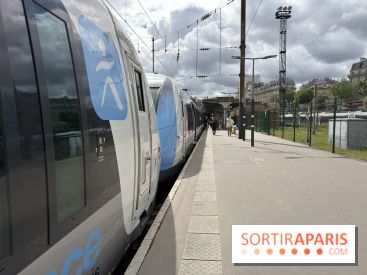
SNCF Voyageurs continues to expand, now leveraging its low-cost subsidiary, Ouigo, and has announced several new routes set to launch in 2026. Whether in Île-de-France or regional areas, the railway operator remains focused on budget-friendly travel, aiming to capture 30% of the high-speed market by 2030. If you're on the lookout for an affordable way to travel by train, these expanding Ouigo services might catch your attention—though some passenger groups criticize this strategy, claiming it gradually encroaches on the traditional Inoui offerings.
The operator has a clear goal: to strengthen its Ouigo network in order to attract budget-conscious travelers and counter the growing competition on the French railways. Following the launch of the Lyon-Bordeaux and Paris-Hendaye routes, SNCF is rolling out new connections that are reshaping the French rail landscape. Let’s take a sneak peek at what’s coming up in the months ahead.
Starting December 2026, a new Ouigo TGV service will run daily between Strasbourg and Marseille, completing the journey in around six hours. This route will traverse France from east to west, with stops at Colmar, Mulhouse, Belfort-Montbéliard TGV, Besançon Franche-Comté TGV, Dijon Ville, Lyon Part-Dieu, Avignon TGV, and Aix-en-Provence TGV. The connection is expected to significantly increase the number of available seats compared to current options, a welcome development for travelers in the Grand Est and Provence-Alpes-Côte d’Azur regions.
Meanwhile, the TGV Inoui service is also changing: a new route from Nancy to Marseille will be available on weekends and during summer and Christmas holidays. However, the current Nancy-Nice TGV Inoui service is being discontinued. Regular travelers on this route will now need to adapt to these new options. The Ouigo Nancy-Paris connection, which has already been reintroduced, fits into this broader plan to redeploy rail services along the Eastern corridor.
Starting in spring 2026, a new Ouigo Classic Train route will connect Paris to Bordeaux via a different itinerary from the usual TGV lines. The train will pass through Les Aubrais, Saint-Pierre-des-Corps, Futuroscope, Poitiers, and Angoulême, with a journey time of approximately 5 hours and 30 minutes. While this route takes a bit longer than the traditional TGV, the significantly lower fares are expected to make up for the extra travel time.
The trains will run on Fridays, Saturdays, and Sundays, offering two round trips per day. The operator estimates that around 100,000 passengers will use this new route in 2026. This service arrives just in time before the introduction of the new Velvet operator, scheduled for 2028 on the Paris-Bordeaux line. Whether in Gironde or Île-de-France, this additional option significantly expands travel choices for weekend getaways and short breaks.
Starting in December 2026, Ouigo TGV will launch a third daily round-trip service between Paris and Strasbourg, complementing the existing two services. The train will also stop in Metz, Nancy, and Champagne-Ardenne TGV, boosting connectivity across the Grand Est region from the capital. For residents of Île-de-France who commute or have family in Alsace, this increased frequency will make travel much more convenient.
To support this expansion of services, SNCF plans to increase the number of Ouigo trains from 38 to 50 by 2027. The operator assures that these trains won’t be taken from the Inoui fleet, which will soon be boosted by the new TGV M models. The first of these high-speed trains are set to operate on the Paris-Marseille route starting July 2026.
While the expansion of Ouigo appeals to budget-conscious travelers, it also faces its share of criticism. The National Federation of Transport User Associations argues that low-cost options are占ng too much of SNCF's overall offering and are becoming increasingly expensive. "Most routes operated by Ouigo have replaced services previously run by TGV Inoui," laments the federation, which points out that the 4.5 million Advantage cardholders are encountering fewer trains compatible with their subscriptions.
According to the federation, the Inoui offering has seen a 24% decline in seats-kilometers over the past decade. "Ouigo has become a stopgap solution used by SNCF to hide the shortage of trains and its inability to meet rising demand," they argue. On the other hand, the railway company counters that a significant portion of Ouigo customers wouldn’t have traveled by train at all without this affordable option. "One in two customers wouldn’t have taken the train without Ouigo," emphasizes Jérome Laffon, CEO of Ouigo.
In short, the Ouigo model is stirring debate—balancing the drive to democratize train travel with the ongoing transformation of traditional services. Nonetheless, for affordable journeys between Paris, Bordeaux, Marseille, and Strasbourg, these new routes present promising options. To score the best fares, be sure to book your tickets as soon as sales open on the Ouigo website or through the SNCF Connect app.
Recommended age
For all