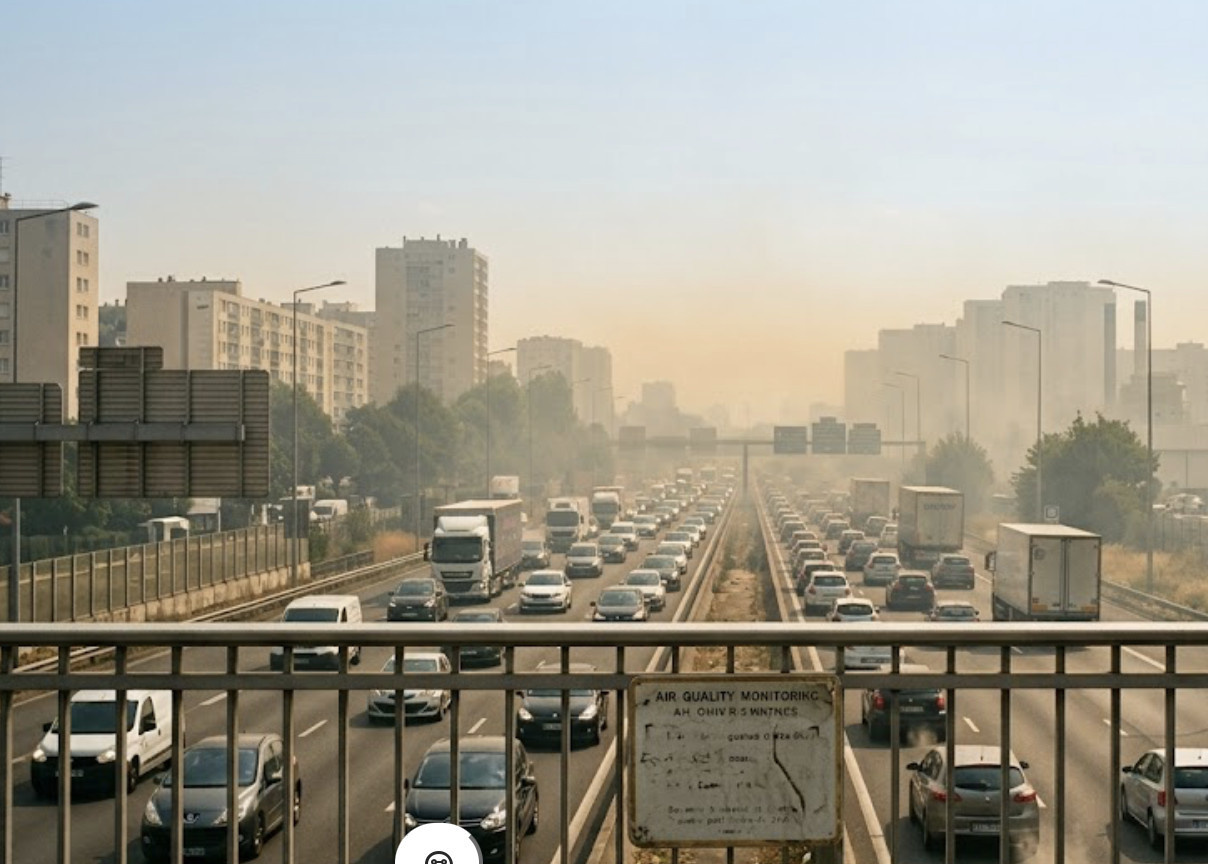
Poor air quality, heatwave and ozone pollution: the Île-de-France is facing a new pollution episode this Friday, July 10, 2026. According to the Police Prefecture, Airparif expects a probable breach of the information and recommendation threshold, set at 180 µg/m³, due to rising ozone levels. In response to this episode, authorities advise adjusting travel plans and certain activities, especially for the most vulnerable groups.
The air quality decline expected this Friday, July 10, 2026 is mainly due to higher ozone concentrations. Unlike fine particles, ozone is not directly emitted by cars or industries. It forms in the atmosphere when certain pollutants react under the sun and heat.
Airparif foresees a likely breach of the information-and-recommendation threshold in Île-de-France. To track developments by the hour, residents of the region can consult the live pollution map in Île-de-France.
During ozone spikes, authorities’ guidance focuses on both shielding vulnerable populations and cutting pollutant emissions that can aggravate the episode.
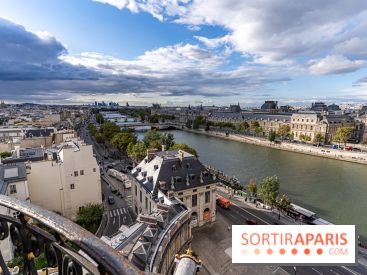
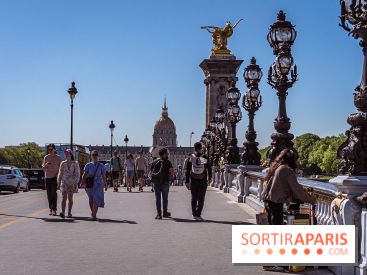
The entire Île-de-France region is affected by this episode of ozone pollution. Paris, along with its inner and outer suburbs, could experience high concentrations, especially during warm, sunny spells.
The Police Prefecture has activated its information and guidance system in response to ozone pollution for this Friday, July 10, 2026. At this stage, these are recommendations rather than a mandatory differentiated traffic scheme.
In Paris, the City of Paris also decided to make residential parking free for Friday, July 10, 2026.
Ozone is an irritating gas. When it concentrates near the ground, it can irritate the eyes, nose, and throat, trigger coughing, cause breathing difficulties, or a sensation of chest tightness. The effects are usually more pronounced during physical activity, as breathing becomes faster and deeper.
The Police Prefecture reminds the public that ozone can cause eye irritation, coughing and respiratory problems, particularly in children and asthmatics.
The Ministry of Health also cautions that vulnerable groups should exercise special vigilance during pollution episodes. This includes children, the elderly, pregnant women, people with asthma, and those with respiratory or cardiovascular conditions.
People who are sensitive don’t necessarily have to stay indoors all day, but they should limit their exposure. The ARS Île-de-France recommends avoiding prolonged outdoor activities during the hottest parts of the day, especially in the afternoon when ozone levels tend to be highest.
If you experience breathing difficulties, wheezing, an unusually persistent cough, palpitations or abnormal fatigue, you should seek medical advice. People already undergoing treatment for a chronic condition should continue taking their medication as usual, unless advised otherwise by a health professional.
The answer depends on the level of effort. A gentle walk or a short outing remains achievable for most people. However, sustained exertion is not advised, especially in the middle of the afternoon.
The Ademe advises postponing intense physical activities during ozone peaks, favoring the least-exposed time slots, especially in the morning or evening. Running, competitive cycling, group workouts, or races can lead to higher inhalation of pollutants.
For children, it’s best to avoid very physically demanding outdoor play during the hottest hours. Schools, leisure centers, and sports clubs can adapt activities, prioritizing moderate exertion.
Several simple precautions can help reduce risks during a pollution episode:
Contrary to a common belief, you don’t need to eliminate ventilation in the home altogether. Indoor air can also contain pollutants from cleaning products, cooking, scented candles, or building materials. It’s therefore advisable to air out the home early in the morning or late in the evening, when heat and ozone levels are lower.
During this episode, the Police Prefecture urges, where possible, to postpone road travel in Île-de-France, and to prefer the least-polluting vehicles, notably electric-powered ones, while prioritizing carpooling, public transport, walking, or cycling.
Motorists are also urged to slow down across the entire region: 110 km/h on motorway sections normally limited to 130 km/h, 90 km/h on sections typically capped at 110 km/h, and 70 km/h on sections usually restricted to 90 km/h, as well as on national and departmental roads with limits of 80 or 90 km/h.
Transit heavy goods vehicles with a gross vehicle weight exceeding 3.5 tonnes are urged to bypass the urban area via the Île-de-France ring road. Companies are also encouraged to use commuter-oriented arrangements, such as telework, flexible hours, or mobility plans.
To stay abreast of real-time conditions, residents can check Airparif’s forecasts for Île-de-France, Atmo France’s national map, or the bulletins from regional air-quality monitoring associations.
These tools let you plan around the peak exposure hours, adjust your travel, and postpone certain activities. In heat waves, this monitoring becomes especially valuable, as ozone levels can climb quickly as the day progresses.
Ozone pollution episodes are tightly linked to hot, sunny spells. The higher the temperatures, the more favorable the conditions for forming this pollutant. With heat waves arriving earlier and more frequently, these episodes could become more common in spring and summer.
As air quality remains uncertain, officials are sticking to straightforward guidance: scale back intense physical activity, protect vulnerable populations, heed official alerts, and adjust travel plans. These steps don’t eliminate pollution, but they help limit exposure and reduce health risks.
This page may contain AI-assisted elements, more information here.
Dates and Opening Time
On July 10, 2026
Location
Paris and the Île-de-France region
Paris
75 Paris
Route planner