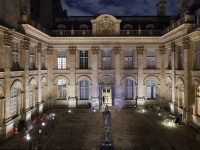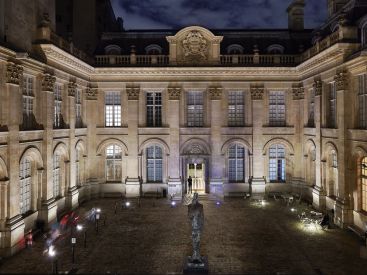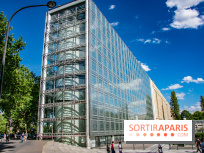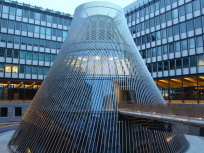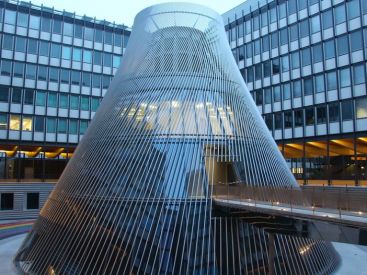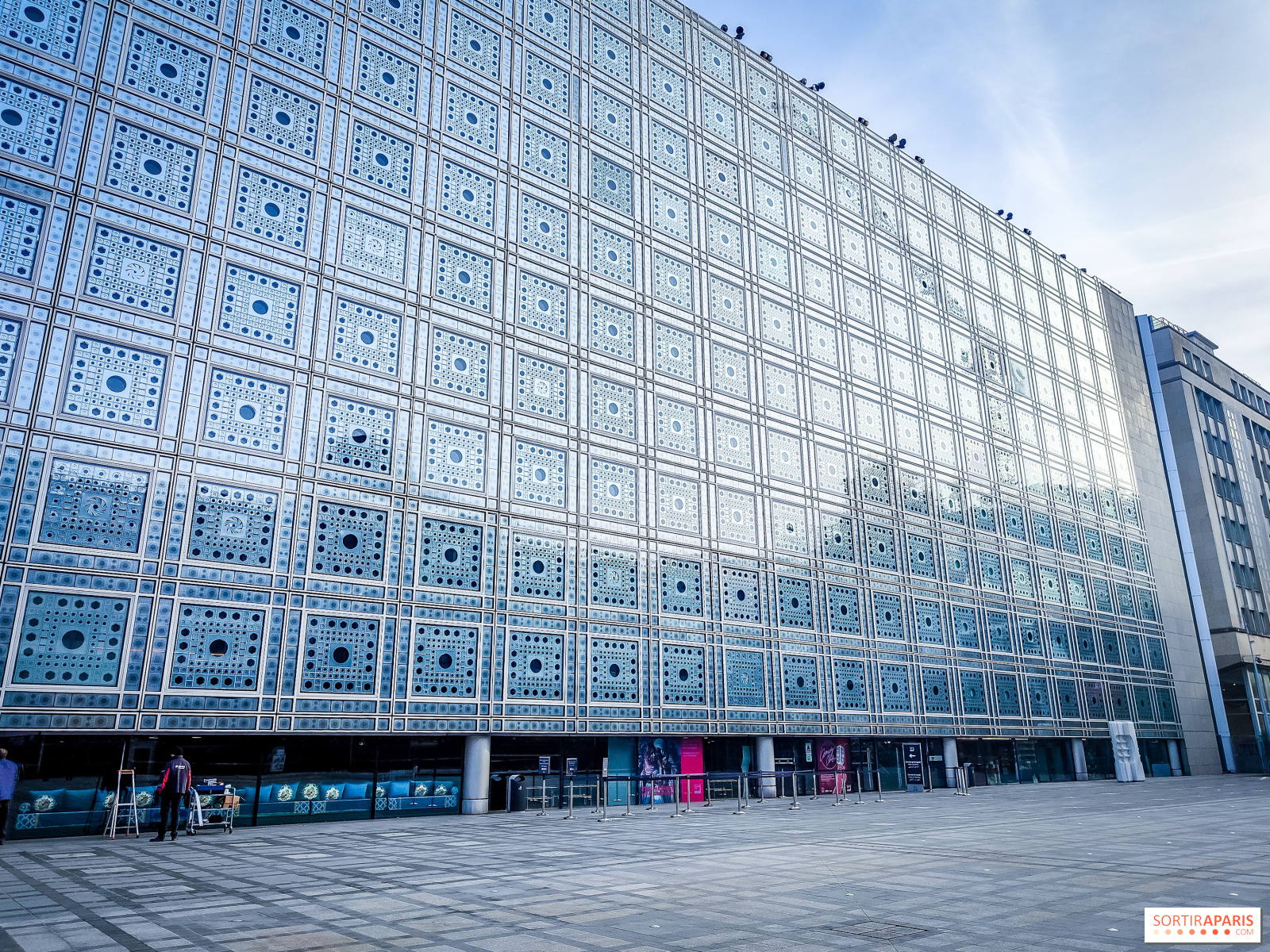
La Nuit des Musées, it's your chance to discover a host of museums and monuments you might not know well, or to rediscover places you thought you knew inside out. Throughout the evening, numerous cultural temples swing open their doors for free, to showcase their collections and riches. The Institut du Monde Arabe doesn’t break with the rule and invites us to explore its treasures and program this Saturday May 23, 2026.
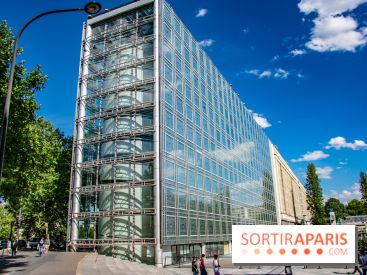
Inside theInstitut du Monde Arabe, visitors can wander through the museum's permanent collections, learning more about the history and cultures of Arab countries. In less than 40 years, the museum, which opened in 1987, has become a key venue for gaining a better understanding of the Arab language and culture, thanks to its educational and topical exhibitions. This multi-disciplinary venue puts the spotlight on artists from the Arab world, and creates a cultural bridge between Europe, France and the Arab world.
The IMA invites everyone to a special evening on May 23, 2026, marking the 22nd edition of the Night of Museums. It’s a chance to enjoy free updates from the venue and spend a memorable cultural evening!
In 2021, the musée de l’Institut du monde arabe receives a generous donation: a collection of archives, painted ceramics, and numerous gouache drawings created in the late 1960s during social-therapy workshops at Blida-Joinville Psychiatric Hospital (HPB), an Algerian institution shaped by the iconic figure of Frantz Fanon.
Here is this donation spotlighted within its historical context.
Blida-Joinville Psychiatric Hospital (HPB) was founded in 1933. Frantz Fanon (1925-1961), a psychiatrist and a leading figure in anti-colonial thought, served there as chief medical officer from 1953 to 1956; the hospital would bear his name after independence. In breaking with colonial psychiatry, Fanon renewed the psychiatric approach by adapting it to the local cultural and social realities of the residents. He built, with them and the medical staff, a social fabric within the institution, including activities such as manual crafts, music therapy, and sport, to encourage patient expression as a path toward possible healing and reintegration into society.
By the late 1960s, Fanon’s successors expanded this practice of social therapy. Evidence lies in the drawing workshops that produced this rich body of gouache paintings. Drawing became a genuine means of expression for the patients.
The exhibition examines the contents of these paintings by highlighting the human dimension of the residents who created them; and, drawing on the donation’s archives, it illuminates the historical context in which the contributions of the hospital’s artistic workshops took shape.
Come spend Night of Museums 2026 at the IMA!
For the occasion, the Institute will exceptionally open its doors after hours, offering an immersive dive into its collections and its major exhibitions.
On the program: free, self-guided visits to the permanent collection, to the exhibitions “Trying Art to Heal” and “Libya: Revealed Heritage”, and to the two major current shows: “Byblos: the Millennia-Old Lebanese City” and “Slaves in the Mediterranean, 17th–18th centuries.” There will also be activities, guided mediations, and artistic interventions for an even more immersive experience!
The exhibition Slaves in the Mediterranean. 17th–18th centuries focuses in particular on the presence and often-forgotten testimonies of North Africans and some West Africans who were enslaved in Europe. Centered on the ports of France, Italy and the island of Malta from the 17th century through the 1830s, it highlights the experiences and representations of these people forced to work as galley slaves, servants, translators, musicians and assistants to artists.
It reveals the deep impact of this history on Europe’s material cultures by presenting a wide range of remarkable and rarely shown artworks: a life-drawing of a Muslim enslaved person by Louis XIV’s chief painter Charles Le Brun; works of art depicting or inspired by the emblematic monument by Pietro Tacca known as the “Quattro Mori”; paintings portraying the suppression of a slave revolt in Malta in 1749; an exceptional album of Fabroni drawings showing galley slaves at work and at rest; and other notable objects such as maritime weapons, ship sculptures, talismans and letters written by Muslim and Christian captives, which will be read aloud.
Finally, a new, unpublished contemporary artwork, Suspended in Time, by artist Kevork Mourad, will offer new perspectives on what this long history has become: from its neglect after the French took Algiers in 1830 to contemporary debates about artworks that have represented slavery, including the Quattro Mori.
The exhibition Slaves in the Mediterranean. 17th–18th centuries focuses in particular on the presence and often-forgotten testimonies of North Africans and some West Africans who were enslaved in Europe. Centered on the ports of France, Italy and the island of Malta from the 17th century through the 1830s, it highlights the experiences and representations of these people forced to work as galley slaves, servants, translators, musicians and assistants to artists.
It reveals the deep impact of this history on Europe’s material cultures by presenting a wide range of remarkable and rarely shown artworks: a life-drawing of a Muslim enslaved person by Louis XIV’s chief painter Charles Le Brun; works of art depicting or inspired by the emblematic monument by Pietro Tacca known as the “Quattro Mori”; paintings portraying the suppression of a slave revolt in Malta in 1749; an exceptional album of Fabroni drawings showing galley slaves at work and at rest; and other notable objects such as maritime weapons, ship sculptures, talismans and letters written by Muslim and Christian captives, which will be read aloud.
Finally, a new, unpublished contemporary artwork, Suspended in Time, by artist Kevork Mourad, will offer new perspectives on what this long history has become: from its neglect after the French capture of Algiers in 1830 to contemporary debates about artworks that have depicted slavery, including the Quattro Mori.
**Discover the library's selection around the exhibition**
Come celebrate the 2026 Night of Museums at the IMA!
For the occasion, the Institute will exceptionally open its doors for an evening, offering an immersive look into its collections and major exhibitions.
On the program: free, self-guided tours of the permanent museum collections, the exhibitions “Tenter l’art pour soigner” and “Libye, patrimoine révélé,” and the two current flagship shows: “Byblos, ancient city of Lebanon” and “Slaves in the Mediterranean, XVII–XVIII centuries.” There will also be activities, guided sessions, and artistic interventions for an even more immersive experience!
For almost fifty years, the French archaeological mission in Libya has been uncovering and promoting an exceptional heritage, from prehistory to the medieval era, across the Libyan territory. The exhibition illustrates and documents their work.
Among the sites featured:
Măsak: The Măsak expedition marked Libya’s first preventive archaeology campaign, conducted from 2001 to 2005 in the NC191 oil concession in the heart of the Sahara. About sixty archaeologists surveyed 4,000 km of seismic lines laid out during hydrocarbon explorations. The results are substantial: 3,596 archaeological units uncovered, renewing knowledge of this hard-to-reach region.
Bu Njem and Syrtique: The first mission, led by René Rebuffat (1967–1976), focused on studying Roman fortifications and excavated the ancient fortress of Gholaia, now Bu Njem. André Laronde, with Mohamed Fakroun and Monique Longerstay, directed a second mission (1990–1999) across five valleys in the Syrte region, revealing an antique settlement mainly composed of farmsteads and dry-stone enclosures that managed water and soil, delineating plots for cultivation and grazing.
Leptis Magna: Founded by Phoenicians in the 7th century BCE, Leptis Magna flourished under the Roman Empire, buoyed by thriving trade and the city’s native emperor Septimius Severus. In 1993, Laronde identified baths he termed “Levantine” for their location within the Roman city, the second-largest in Tripolitania after Hadrian’s at Leptis Magna. Adorned with mosaics, marbles, painted plaster and stucco, these rooms functioned until the mid-3rd century. The site is also notable for its water-supply system, still withholding secrets for future missions…
Abou Tamsa: The rock shelter of Abou Tamsa in Cyrenaica was occupied between the 7th and 5th millennia BCE by small groups of pastoralist-foragers, among the first in North Africa to produce ceramic vessels and to rear domesticated goats imported from the eastern Mediterranean. The archaeological material gathered sheds light on the activities of these Neolithic communities.
Apollonia: The ancient port of Cyrene, founded in the 7th century BCE, gained autonomy around 100 BCE under the name Apollonia. Broadly open to the Mediterranean, its existence is attested for more than a millennium, from the archaic period to late antiquity; it then took the Christian name Sôzousa and became the capital of Cyrenaica. Ground and maritime excavations at Apollonia have helped us better understand the city—the fortifications, the double harbor now submerged, the baths, and the stadium beyond the walls. Since 2002, Jean-Sylvain Caillou has continued work on the Acropolis.
Latrun: Located by the sea, east of Apollonia and at the foot of Jebel el Akhdar, Érythron-Latrun reveals the history of a prosperous Cyrenaican settlement, attracting sailors, merchants and pilgrims since antiquity and today standing as an archaeological and natural site with exceptional potential, offering a unique window into the evolution of Cyrenaican villages from the Hellenistic era to their eventual abandonment after the Arab conquest.
Western Marmarique: In 2010, a Franco-Libyan team explored a little-known region: the Western Marmarique, tasked with cataloging sites along seismic zones for Total Libye. The result: 56 archaeological sites identified, spanning from the Neolithic to the present. Between Egypt and Cyrenaica, nomadic tribes left forts, mausoleums, ancient habitations, and ingenious irrigation systems. Greek, Roman and Byzantine influences blend with local traditions, painting a portrait of a crossroads region, a passageway land or a military stronghold.
Surt: Situated at the center of coastal Libya, in the desert separating Tripolitania from Cyrenaica, Surt was the first Islamic site excavated in Libya in 1963. From 2007 to 2010, five campaigns led by Jean-Michel Mouton documented a topo-archaeological map outlining the city’s general layout and allowed the delineation of several excavation sectors: defensive works (southwest fort and north gate), religious buildings (ziyādas of the mosque), and a housing district. These digs pushed back the latest occupation date to the 14th century.
Underwater surveys of the Apollonia port: Apollonia, now partly submerged, hosts some of the Mediterranean’s most remarkable underwater architectural remains. MAFL notably explored a sunken ancient ship within the front harbor and traced the topographical evolution of port structures and their surroundings from their origins in the 6th century BCE. This scientific progress is complemented by a rich underwater assemblage now housed in Apollonia Museum: pottery, coins, bronze, stone and marble works—including a fine portrait of Ptolemy III and a statue of Dionysus.
Underwater excavations at Leptis Magna and Sabratha: At Leptis Magna, the study focused on the foreport, yielding an unexpected finding: the channel was flanked by a second jetty protecting the entrance from eastern swells. At Sabratha, shoreline excavations revealed warehouses, basins and stone eroded silos, while opposite, the water-exposed rock supported a breakwater sheathed in stone, smoothed by the waves.
Fighting illicit trafficking in archaeological goods: Libya’s heritage faces threats from trafficking. Since 2011, thefts, clandestine digs, and illegal exports have accelerated, driven by strong international demand. Since 2012, the MAFL, with Morgan Belzic, Camille Blancher and Vincent Michel, has been battling this phenomenon alongside law enforcement and the DOA: identifying laundered works, analyzing networks and looted sites. More than 250 objects have been identified, fueling investigations, arrests and 29 seizures in 9 countries, with 19 restitutions to Libya.
Come celebrate the 2026 Night of Museums at IMA!
On this occasion, the IMA will open its doors for a rare after-hours visit, offering an immersive dive into its collections and flagship exhibitions.
Highlights include free, self-guided access to the museum’s permanent collection, the exhibitions “Attempting Art as Healing” and “Libya, Revealed Heritage,” as well as the two major current shows: “Byblos, Ancient Libyan City” and “Slaves in the Mediterranean, 17th–18th centuries.” Expect a program of activities, guided interactions, and artistic interventions for an even richer experience!
As Lebanon’s patrimony and the transmission of cultural legacies face pressing challenges, the Institute for Arab World Studies is dedicating a special exhibition to Byblos, Lebanon’s ancient city and one of the world’s oldest continually inhabited sites.
Step back into the history of the world’s first international maritime port: Byblos, a pivotal hub in Mediterranean history that linked the Lebanese coast to Egypt, Mesopotamia, and the Aegean, forged unique ties with the pharaohs, and played a key role in spreading the Phoenician alphabet.
Obelisk of Abishemou, the mosaic of Europe’s abduction…: 400 remarkable pieces, staged in a spectacular scenography, plunge you into the saga of one of Lebanon’s oldest cities, a UNESCO World Heritage site. A story that began over 8,900 years ago, whose protagonists were sailors and merchants, kings and pharaohs. Discover, exclusively, the latest port excavations and the most recent dig results, including the discovery of the city’s South Gate and a Bronze Age necropolis remarkably preserved to this day.
Le programme est mis à jour en fonction des annonces officielles.
A wonderful program highlighting artists from the Arab world, and allowing us to (re)see the museum's temporary exhibitions from a new angle. In short, a not-to-be-missed event during this Nuit des Musées! So, shall we go?
Dates and Opening Time
On May 23, 2026
Location
Arab World Institute
1 Rue des Fossés Saint-Bernard
75005 Paris 5
Access
Metro Jussieu line 7, line 10
Prices
Free
Official website
www.imarabe.org