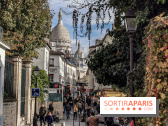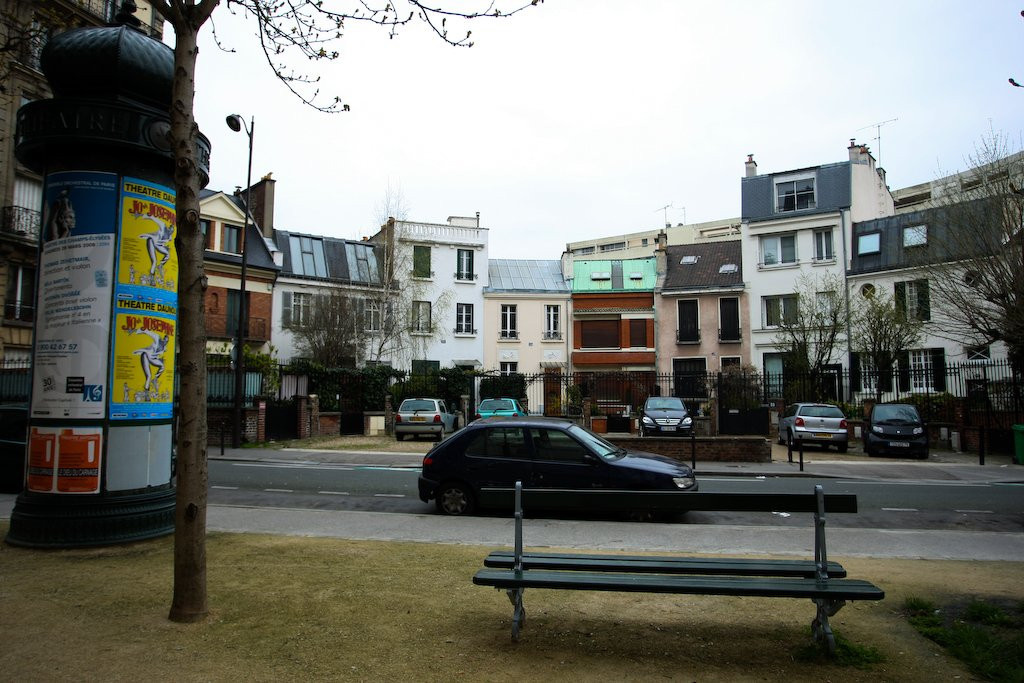
Today, a handful of artists have chosen to settle in the backstreets of the district, where hidden houses and alleyways teem with life. You’ll love the family-friendly, convivial atmosphere and the calm that radiates from every corner of the street.
MONTPARNASSE
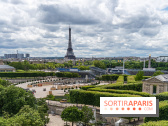
Arriving at Montparnasse Station, don’t be intimidated by the 64-storey glass-and-steel tower. But if you’re tempted to rise above it all, the rooftop terrace on the top floor promises a panoramic view with a restaurant and multimedia setup to learn a bit about Paris’s history. Between Breton crêperies, bars and artist-and-poet studios that filled the early 20th century, and the theatres, cabarets and other new “rejoicings” of Rue de la Gaîté, the neighborhood retains its charm and its lively mix.
Heading up Rue d’Odessa, Edgar Quinet Square offers a few welcoming bistros’ terraces. The bohemian spirit of the era lives on along Boulevard Montparnasse, but it’s mostly carved into the memories on the walls of La Coupole, Le Dôme, La Rotonde, Le Select and a little farther afield at La Closerie des Lilas.
These legendary spots became haunt after haunt for Cocteau, Brassaï, Man Ray and Modigliani, and later Hemingway, Miller and Fitzgerald. They aren’t the cheapest places, especially as the American vibe has over time eclipsed the Parisian “titi” charm.
Sinking into a zinc bar at Le Tournesol increases your odds of rubbing shoulders with the neighborhood’s late-night crowd in a warm, original setting. For a sudden shopping urge, head to Rennes’s Tournesol street. Heavily trafficked on Wednesdays and Saturdays, its sidewalks run down toward Saint‑Germain-des‑Prés and host major textile brands and numerous shops. One quirky note: it’s one of the streets in Paris with an impressively high number of shoe stores.
A few steps away, Montparnasse Cemetery, stamped “arts and letters,” gathers the greats of literature in a quiet stroll. Be sure to drop by to greet Gainsbourg the artist, perhaps with a metro ticket or a cigarette on his grave. The cemetery is separated from Rue Émile Richard, the only Parisian street with no buildings. Depending on which exit you take, several circuits let you soak up the bucolic atmosphere behind the 14th arrondissement.
When you reach Boulevard Raspail, you’ll encounter the wonderfully airy building of the Cartier Foundation, completed in 1994 by Jean Nouvel. A major patron of the arts worldwide, the Foundation supports contemporary creation through rotating exhibitions and a varied program tied to each event. Every Thursday, “Nomadic Evenings” offer concerts, performances or original readings. After you emerge from an exhibition, if the weather cooperates, I recommend a quick stop in the garden where the Lebanon cedar planted by Chateaubriand in 1823 stands tall.
DENFERT-MONTSOURIS
Before you dive into the Catacombs, take a look at the Lion of Belfort, Bartholdi’s impressive sculpture that presides serenely over Place Denfert-Rochereau amid the constant traffic. A pleasant detour through Rue Daguerre is worth considering. Pedestrian and lively, it’s lined with bars, restaurants and small shops. But it’s up Rue René Coty, toward the water reservoir, that you start to leave the city’s intensity behind.
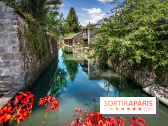
Think you’ve seen the countryside in Paris? Step onto the cobblestones of the Montsouris area’s winding lanes, villas and dead-ends, look up, and you’ll be green with envy… Charming little standalone houses line the stretch between Avenue Reille and Rue Nansouty, forming a tiny, unexpected village. This green enclave smells of spring and bursts into color in autumn as ivy reddens.
Just across, the park hides a thriving flora. In fine weather you’ll see picnic blankets, coolers and kids racing or lounging on the park’s rolling lawns.
An artificial lake, a bandstand, sculptures and a bridge over the RER tracks punctuate the little pathways. And for a summer dinner, Pavillon Montsouris, the park’s restaurant, is pure delight.
A bit less crowded, crossing Boulevard Jourdan, the International University Campus also offers shady nooks and quiet spots for a nap or a friendly picnic. It hosts more than 5,000 students and researchers from all corners of the globe. That mix is reflected in every building. A stroll through the park is a chance to discover an extraordinary blend of architectural styles. Built between 1923 and 1969, each house or pavilion mirrors the country or region it represents. The Dutch, Belgian houses, the Italian pavilion and Le Corbusier’s Swiss pavilion are particularly remarkable.
This open-to-the-public little city boasts a theater, a conference hall, a library and an affordable university restaurant.
ALESIA-PLAISANCE
To descend back toward this part of the 14th, you can ride the new tram, fast and quiet after months of noisy construction. The Alésia street section between the (polluted) Victor & Hélène Basch Square and Didot Street used to stock unsold haute couture leftovers, a chance to bag a bargain outside of sales. Today, some shops remain, but the street’s main merit is its circulation: it cuts across the arrondissement from end to end, linking easily to neighboring 13th and 15th districts.
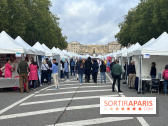
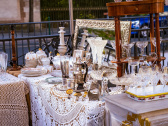
Villa d’Alésia, villa Duthy, and Rue des Thermopyles as you descend toward Plaisance Metro are charming lanes like many others worth discovering in the neighborhood, if you’re brave enough to crack a few carriage doors or wander off the main routes. The Raymond Losserand street redesign is reviving local neighborhood spirit. In a small side street with the long name, you’ll find L’Entrepôt, one of the area’s cultural and social hubs. It houses a bar space with concerts, a restaurant, a gallery and a cinema, often followed by debates. And if you’re still energized and you’ve timed your wandering for the weekend, take the chance to hunt for bargains at the Vanves Flea Market.
Montparnasse also means trains to Versailles Castle depart from the station.
Places
La Closerie des Lilas
171 Bd du Montparnasse
75006 Paris 6
Route planner
Mix
Tour Maine Montparnasse, 24 rue de l´ Arrivée
75015 Paris 15
Route planner
The Postal Museum
34 Boulevard de Vaugirard
75015 Paris 15
Route planner
Accessibility info
Access
Metro lines 4, 6, 12 and 13 "Gare Montparnasse" station
Bourdelle Museum
16/18, rue Antoine Bourdelle
75015 Paris 15
Route planner
Redlight
36, rue du Départ
75015 Paris 15
Route planner
Smoke
29, Rue Delambre
75014 Paris 14
Route planner
Rosebud
11bis, Rue Delambre
75014 Paris 14
Route planner
Accessibility info
Le Petit Journal Montparnasse
13, rue du Commandant-Mouchotte
75014 Paris 14
Route planner
Le Café Tournesol
9, Rue de la Gaîté
75014 Paris 14
Route planner
Accessibility info
Le Café de la Place
21/25 , Rue Balzac
75008 Paris 8
Route planner
La Coupole
102 Boulevard du Montparnasse
75014 Paris 14
Route planner
Accessibility info
Tout le Monde en Parle
4 Rue du Départ
75015 Paris 15
Route planner
Accessibility info
Félicie
174, Avenue du Maine
75014 Paris 14
Route planner
Accessibility info
Patchanga
8, rue Vandamme
75014 Paris 14
Route planner
Le Plomb du Cantal - Gaîté
3, rue de la Gaité
75014 Paris 14
Route planner
Accessibility info
La Régalade
49, avenue Jean Moulin
75014 Paris 14
Route planner
Le Bistrot des Pingouins
79, rue Daguerre
75014 Paris 14
Route planner
The Artists
60, rue Didot
75014 Paris 14
Route planner
L'Entrepôt
7 Rue Francis de Pressensé
75014 Paris 14
Route planner
Accessibility info
Access
Metro 13 - Pernety
Cana'bar
22, rue Raymond Losserand
75014 Paris 14
Route planner
La Brasserie du Dôme
108, boulevard du Montparnasse
75014 Paris 14
Route planner
Accessibility info