Mickey 17, the sci-fi film written and directed by Bong Joon-ho, is headed to HBO Max on August 6, 2026. Adapted from Edward Ashton’s novel Mickey7, the movie assembles Robert Pattinson, Naomi Ackie, Steven Yeun, Toni Collette and Mark Ruffalo.
Following the success of Parasite, Bong Joon-ho continues, with Mickey 17, his exploration of dehumanization, power dynamics, and the class struggle. The South Korean director shifts this satire into a space-colonization mission, where a disposable employee is regularly reprinted after death.
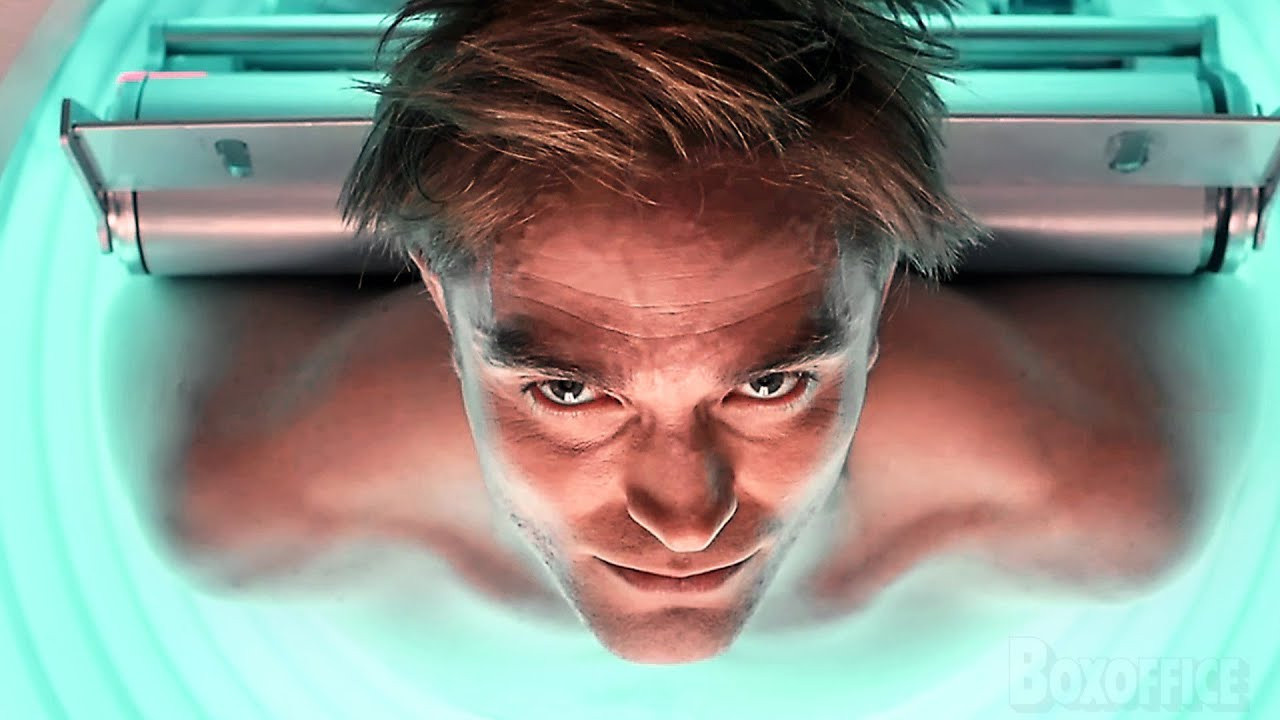
The film follows Mickey Barnes, an “expendable” recruit hired to tackle the expedition’s riskiest missions. When he dies, his body is reprinted and his memories are uploaded into a new version of himself. But after surviving a mission deemed a loss, Mickey returns to the ship and discovers that his successor, Mickey 18, has already been created.
The coexistence of the two Mickeys breaches mission protocol and puts both men in immediate danger. Through this setup, the film probes questions of identity, the value of a human life, and the consequences of a system that renders workers entirely interchangeable.
Mickey 17 blends science fiction, dark comedy, and political satire. Robert Pattinson plays two markedly different versions of the same character, while Mark Ruffalo and Toni Collette portray the leaders of this space colony with authoritarian ambitions.
Our take on Mickey 17
The film follows Mickey Barnes, an expendable recruited for a space-colonization mission, whose job is to die and be regenerated to complete the most dangerous tasks. This endless loop of deaths and resurrections underscores the futility of his condition and the crew’s growing numbness to his sacrifices.
South Korean director Bong Joon-ho keeps up his critique of oppressive systems and class struggle, a thread he began with Snowpiercer and Parasite. Through Mickey, the archetype of the exploited, interchangeable worker, Mickey 17 becomes a scathing satire of the modern workplace. The film poses a troubling question: if we’re all replaceable, do we still have any real value?
Mickey 17 is also a political satire that targets capitalism, workplace dehumanization, and creeping authoritarianism. Supporting characters embody different facets of power and oppression. Mark Ruffalo, playing the mission’s narcissistic leader, slants at a grotesque political figure clinging to authority despite repeated failures. Toni Collette, obsessed with power and image, embodies elite hypocrisy. Conversely, Naomi Ackie, portraying Mickey’s girlfriend, is a capable soldier who challenges the status quo and offers a form of resistance to the absurd system.
Robert Pattinson reaches one of the peaks of his career here. He commits fully to the action scenes, delivering a Mickey who is at once awkward, endearing, and stubbornly determined. His physical performance is striking, fluidly moving from sheer panic to a stoic resignation.
His voiceover, punctuated by dry humor, heightens the film’s satirical edge. Despite the thankless, expendable role, Mickey maintains a touching naïveté that makes his misfortunes both funny and poignant. Pattinson delivers a nuanced performance, balancing comedy and tragedy, once again showing his chameleon talent.
What starts as a deliriously funny sci‑fi romp gradually deepens into a more reflective tone. As Mickey realizes he’s merely a cog in a machine, the film grows melancholic and existential, probing identity and the fear of being replaced. This shift from absurdity to existential dread recalls works like Severance or Edge of Tomorrow.
The film’s design alternates between high‑octane action sequences and moments of dark comedy, striking a balance between dramatic tension and biting satire. The plot advances through Mickey’s repeated deaths and resurrections, illustrating the monotony and absurdity of a disposable worker’s life.
The confrontations with Mark Ruffalo’s character add another layer of cynicism and power critique. In a memorable scene, he taunts the doctor Arkadi: “Arkadi, stay proud in failure, like me.” A line as absurd as it is revealing of a narcissistic leader clinging to power amid escalating chaos.
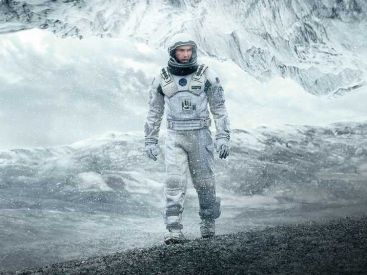
Visually, most of the film unfolds in space and on a hostile planet blanketed in perpetual snow and battered by brutal storms. The crew navigates a frozen, mountainous landscape, filled with deadly crevasses where survival is a constant challenge. During excursions, they also encounter unknown life forms they name Creepers.
At the heart of the story is the meeting between Mickey 17 and Mickey 18, his own successor. Stranded for dead after a mission, Mickey 17 is rescued by the planet’s creatures, who prove less hostile than the crew anticipated. But upon returning to the ship, he discovers his re-impression has already occurred.
So who is the “real” Mickey? The line, “Before, when I died, I came back to life and kept living my life. Now, if I die… you’ll take my place.”, perfectly captures the film’s existential vertigo. How far can a copy truly be the same person? Bong Joon-ho plays with this idea with biting irony, exploiting identity confusion and the absurdity of a system where human life becomes a tradeable commodity.
Mickey 17 will mainly appeal to fans of satirical science fiction and stories that blend dark humor with existential reflection. Viewers who enjoyed works like Severance, Edge of Tomorrow, or Starship Troopers should find familiar themes. Bong Joon-ho demonstrates once again his knack for exposing modern absurdities through punchy sci‑fi concepts, delivering a film that is as funny as it is razor‑sharp.
Those seeking a pure action movie or a strictly linear plot may be unsettled. Mickey 17 takes time to explore its protagonist’s dilemmas and leans into deliberately absurd humor that won’t suit every viewer.
For those who enjoy films that make you laugh while you think, Mickey 17 offers a singular experience. Bong Joon-ho delivers a funny, dizzying piece where science fiction becomes a lens for examining the faults of our society.
Part satirical comedy, part psychological thriller, and part existential fable, the film stands out thanks to a brilliant Robert Pattinson, a richly textured script, and a cold, incisive mise en scene that matches its icy setting. Mickey 17 emerges as a modern fable about the value of life and the absurdity of progress without conscience.
Released in theaters in France on March 5, 2025, Mickey 17 will be available on HBO Max starting August 6, 2026. This move to the platform offers a fresh opportunity to rediscover this science-fiction satire anchored by Robert Pattinson’s dual performance.
To go further, also check out our guide to the new releases to watch on HBO Max in August 2026, our pick of the month’s releases on streaming platforms, and our guide What to Watch Today on Streaming?