The acronym DCP, for Digital Cinema Package, refers to a set of files intended for digital cinema projection in theaters. It bundles the movie’s components with the information needed to read them. The technical guide for the digital cinema booth published by CST describes this copy as a sequence of files that can be saved on a hard drive or delivered digitally.
Images, sound, and any subtitles are organized using a composition playlist, known as the CPL. This specifies which elements to use and how to synchronize them. The Digital Cinema Initiatives specification provides a separate list for each version or language track of a work. A single delivery can thus combine several compositions: selecting the right version is part of preparing the screening.
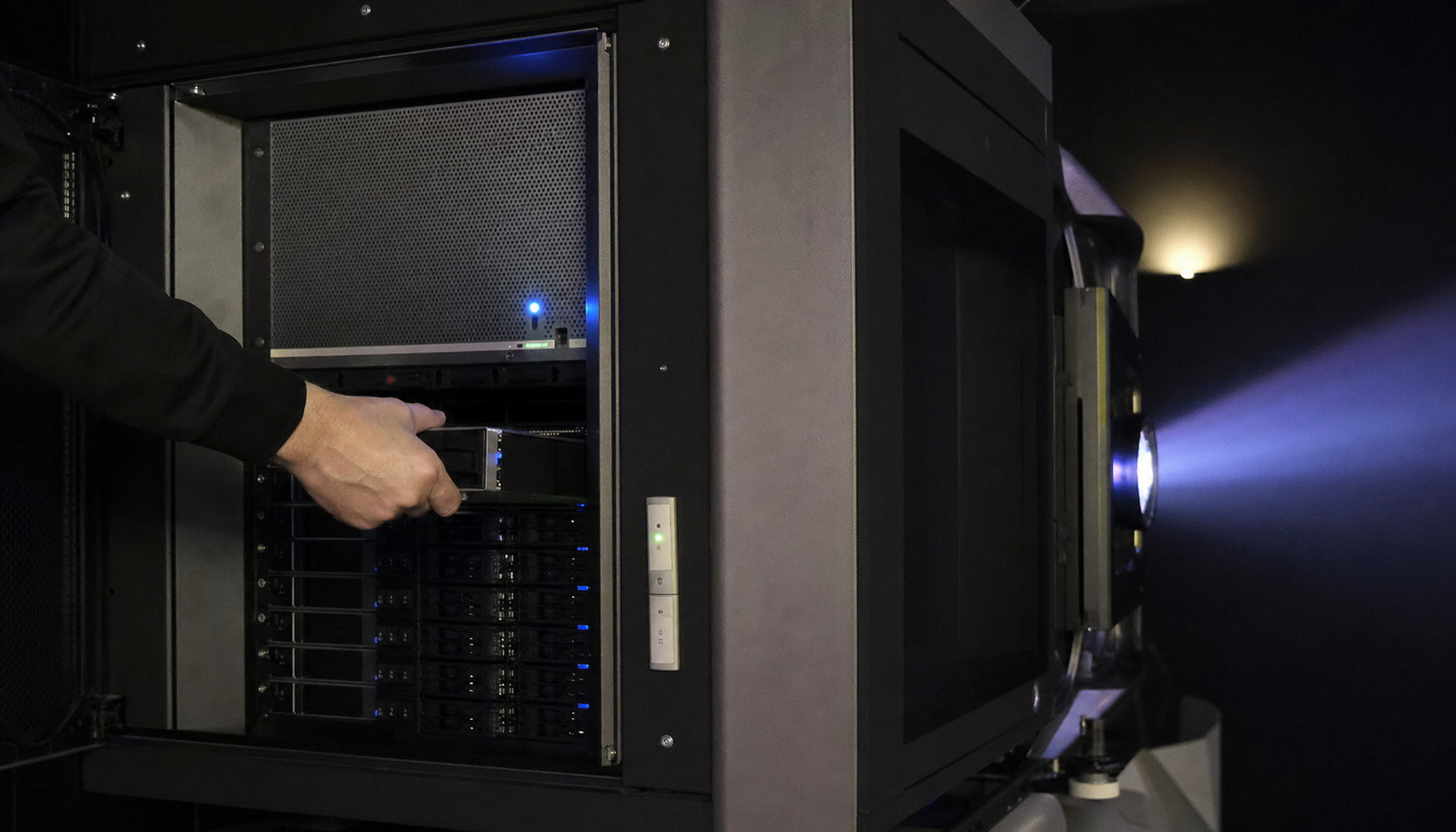
Once the copy arrives, its contents are uploaded to the cinema's storage system. Industry insiders refer to this loading step as ingest. A hard drive or digital transmission is used to carry the data; the film is then projected from the loaded content by the screening equipment.
For encrypted content, having the files alone isn’t enough. There must also be a KDM, or Key Delivery Message: a file that carries the information needed to decrypt it. This key is linked to authorized devices and to a defined validity window. A copy may therefore exist in the cinema without being readable on the intended equipment, or at the planned time.
Encryption, however, is not a mandatory feature of every DCP. The CST itself also provides non-encrypted control frames in the form of DCPs. It is important to distinguish the packaging of the image and sound, handled by the DCP, from any protection of their playback.
Preparation continues with the session’s playlist. It can string together several items, such as trailers followed by the feature. It organizes the program actually shown, while the CPL outlines the film’s composition. Behind the start of the screening lie several distinct steps: loading the elements, selecting the version, verifying the key when required, and arranging their sequence.
This page may contain AI-assisted elements, more information here.