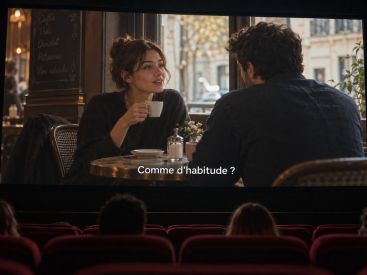
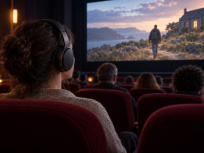
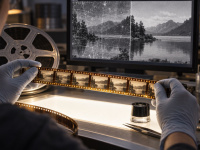
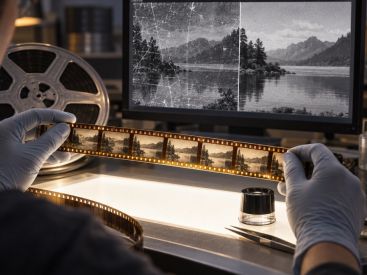
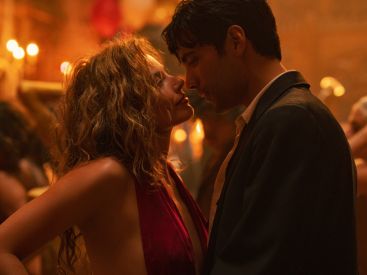
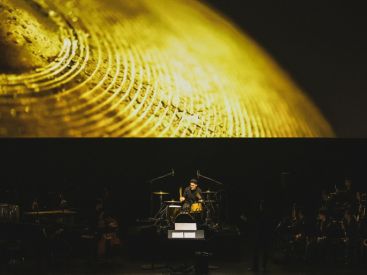
A film unfolds on the screen as musicians perform in the hall: the film-concert brings together a screening and a live musical interpretation. Its challenge is to synchronize two timelines—the already-edited imagery and the tempo of the concert.
The setup isn’t limited to silent cinema. The CNC explains that talking pictures and musicals can also be presented in this format. For many of these performances, the studio provides a soundtrack from which the music has been removed, while the dialogue remains. Instrumentalists perform the score live during the screening.
To follow the film, the conductor may rely on a tempo-signal, called “click”, or on video feedback with a time code. Rehearsals lay the groundwork for this coordination. The required precision depends on the work: a musical demands especially tight alignment between gestures, imagery and music.
This constraint leaves room for interpretation. Sticking to the tempo doesn’t prevent you from exploring nuances, lyricism, or the articulation of the score. Freedom takes a different form when the performance rests on improvisation or on a new composition, rather than on a reprise of the film’s familiar music.
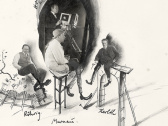
Silent cinema offers several ways to accompany a screening. In an interview by the CNC dedicated to Dans la nuit, the Institut Lumière explains that it asked various festivals to compose their own music for this film that has no official score. The proposals ranged from piano and accordion to a fusion rock group.
The same work can be experienced in a variety of very different accompaniments. A film-concert program sheds light on this dimension: the original score performed anew, a fresh soundtrack, or even improvisation—by a soloist or an ensemble. These choices are part of the spectacle, just as much as the film itself being shown.
This page may contain AI-assisted elements, more information here.