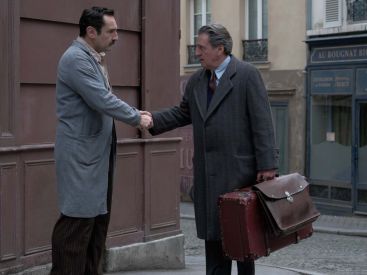
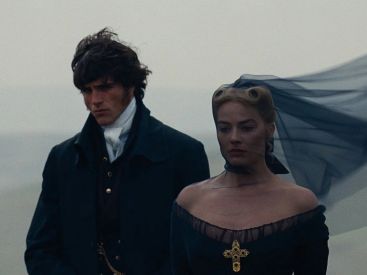
In this new adaptation of Les Misérables, the storytelling moves forward like a sprint: a race against hunger, against the law, against shame, against the established order. Fred Cavayé doesn’t shoot Hugo as a static monument, but as a still-burning dramatic force, propelled by social anger, bursts of faith, and human contradictions that strongly resonate with our era.
Directed and written by Fred Cavayé, Les Misérables hits French cinemas on October 14, 2026. This fresh adaptation of Victor Hugo’s novel brings together Vincent Lindon as Jean Valjean, Tahar Rahim as Javert, Noémie Merlant as Fantine, with Camille Cottin and Benjamin Lavernhe portraying the Thénardiers. The challenge is huge: to condense the sweeping grandeur, moral weight, and political resonance of Hugo into a nearly three-hour epic without leaving the audience behind.
For our part, this is precisely where the film delivers its most pleasant surprise. Despite its imposing running time, Les Misérables never feels like it’s settling in or slowing down for prestige. Cavayé hails from the thriller world, and you can feel it in the way he tightens the tension, recalibrates the power dynamics, and endows each encounter with almost a physical dimension. The film moves with a clear, populist readability, not chasing formal experimentation, but with a genuine commitment to dramatic effectiveness.
The other achievement lies in how the story stays alive even when you know the plot inside out. After so many adaptations for cinema, television, or the stage, one might fear a series of predictable beats. Yet the film repeatedly manages to shift the spotlight: not by betraying the material, but by infusing familiar scenes with a new interpretive energy, a moral tension, or a contemporary resonance that makes them feel alive again.
Cavayé seems especially careful to prevent Hugo's sweeping lines from turning into mere heritage quotations. The questions of misery, charity, institutional violence, justice, and redemption run through the film with a clarity that can be blunt at times. Some lines about the poor, order, or laziness gain particular force in today’s political chaos. The film doesn’t hide its intention to give Hugo a voice today, even if that means prioritizing clarity of argument over the novel’s infinite complexity.
That clarity of purpose is also what could divide audiences. Viewers hoping for a radical adaptation—politically abrasive or boldly experimental in form—may find the proposition too traditional. Les Misérables leans into a grand, heritage-style spectacle, with expansive movements, sharply drawn contrasts and a relish for sweeping, romanesque storytelling. But within this framework, the film shows genuine generosity: it seeks less to dismantle Hugo than to pass him along, to make him instantly accessible and emotionally legible.
Casting plays a crucial role in this balance. Vincent Lindon gives Jean Valjean a gravity that feels almost mineral—earthy and weighty in a way that suits a man shaped by guilt, redemption, and dignity. Tahar Rahim infuses Javert with a hardness that isn’t just a caricature of the enforcer: his obsession seems driven by a private, almost tragic logic, intensifying the clash between law and conscience.
But the real stunning surprise comes from the pairing of Camille Cottin and Benjamin Lavernhe as Thénardier. Their presence injects the film with a sharper, almost carnivalesque energy, without ever tipping into gratuitous farce. They’re unsettling, funny, odious, yet fully incarnated. The relish in their performance is evident, and this appetite gives their scenes a distinctive bite, a venomous breath within the sweeping epic.
The film is aimed more at viewers who relish sweeping French literary adaptations, redemption narratives, accessible historical epics, and a solid, ensemble cast. It can also serve as a compelling gateway to Hugo for those who know the story only from afar, or who want to rediscover Les Misérables in a expansive, dynamic, and emotionally charged form.
It won’t appeal to viewers hoping for a groundbreaking, ultra-modern rethink, a bold directorial approach, or an adaptation that embraces the full political, philosophical, and narrative heft of the source material. Purists may lament certain simplifications, while those not drawn to sprawling three-hour historical epics might stay at a distance—even with the film’s brisk tempo.
This adaptation of Les Misérables doesn’t pretend to exhaust Hugo, and perhaps that’s what makes it appealing: it leans into momentum, embodiment, and transmission. Fred Cavayé delivers a populist, classic yet vividly alive rendition, capable of surprising even those who know the story. A generous film, powered by highly committed performances, reminding us that great narratives endure when they find fresh bodies to carry them.
With this adaptation, Fred Cavayé continues his exploration of characters facing moral choices in a historical setting, following Adieu Monsieur Haffmann. The director taps into the long tradition of cinematic adaptations of Victor Hugo's work, while placing at the heart of the story the inner dilemmas of Jean Valjean and Javert.
The film is built around an ensemble cast and a period reconstruction designed to convey the scale of the original story. The costumes are by Pierre-Jean Larroque, the sets by Pierre Quéfféléan, and the cinematography by Denis Rouden.
To explore a different angle on the Hugo character, our review of Jean Valjean, featuring Grégory Gadebois, revisits a film that centers on the early stages of his redemption. Fans of sweeping literary adaptations can also read our take on The Count of Monte Cristo.
To extend your in-theater experience, check out the October movie releases, the films to watch right now, and our selection of historical films.
This page may contain AI-assisted elements, more information here.