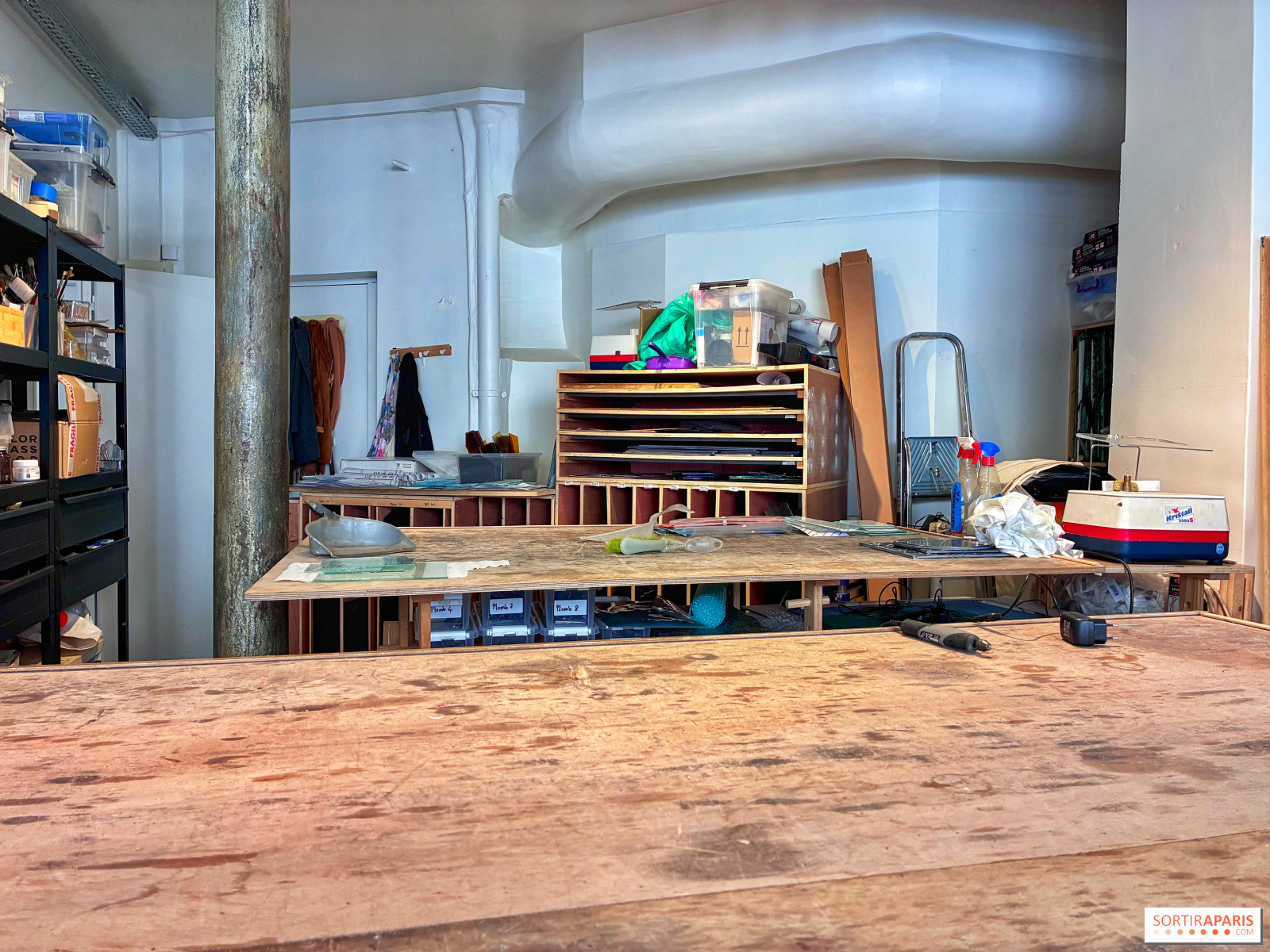
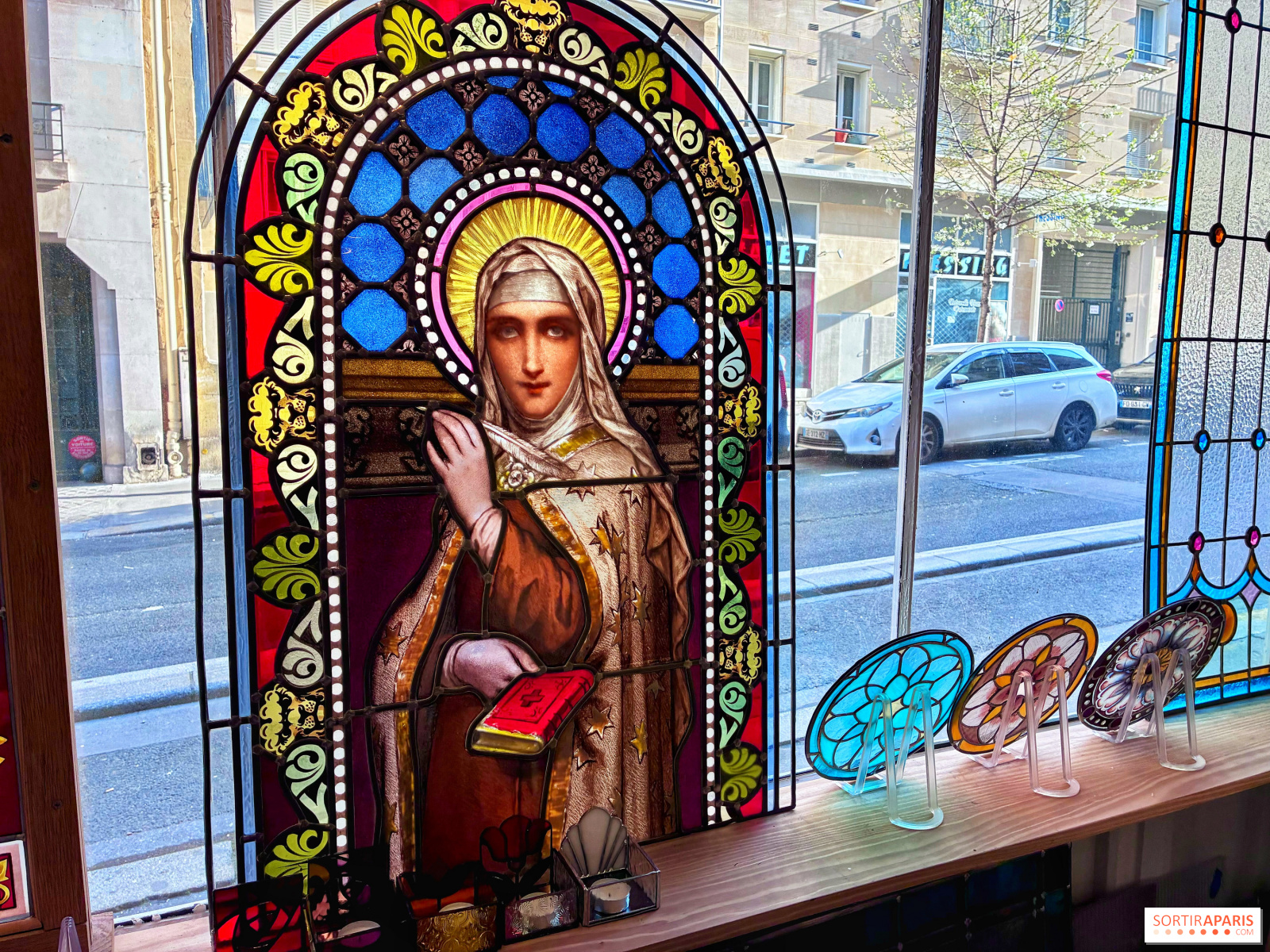
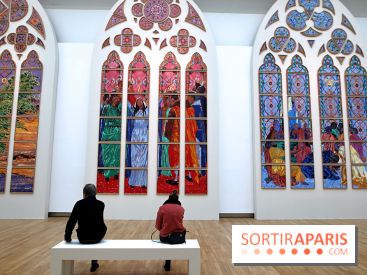
In the 18th arrondissement of Paris, behind a sun-drenched storefront showing off its beautiful vitraux, lies the Justine Dablanc workshop. While Justine has worked on stained glass for some of the most prestigious sites (Notre-Dame in the emergency after the fire, the Sacré-Cœur, Saint-Eustache or on the stained glass for Claire Tabouret), today it’s Zoé who leads us through a three-hour introductory workshop. The aim? To craft your own stained glass piece, balancing ancient technique with contemporary creativity.
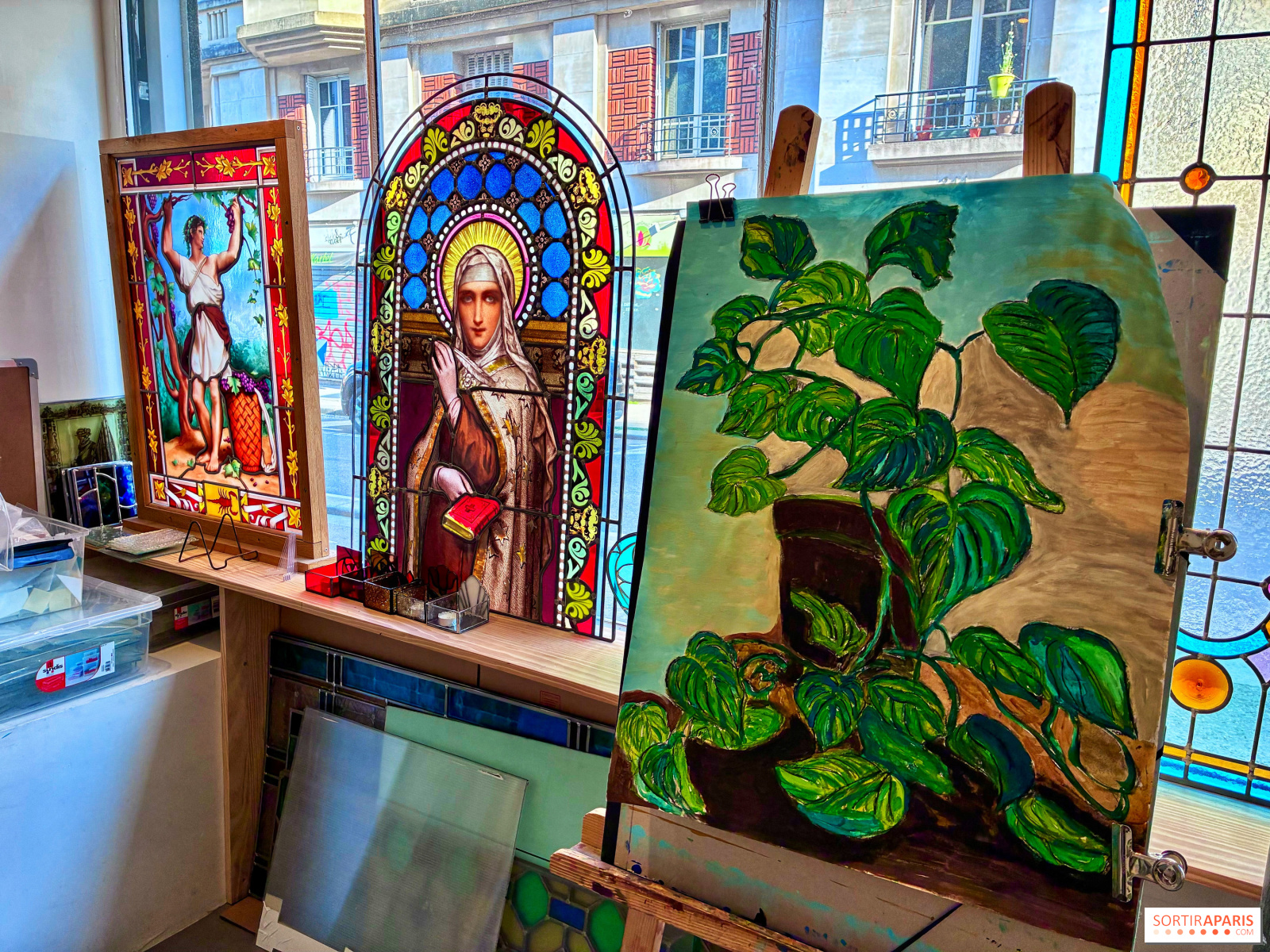
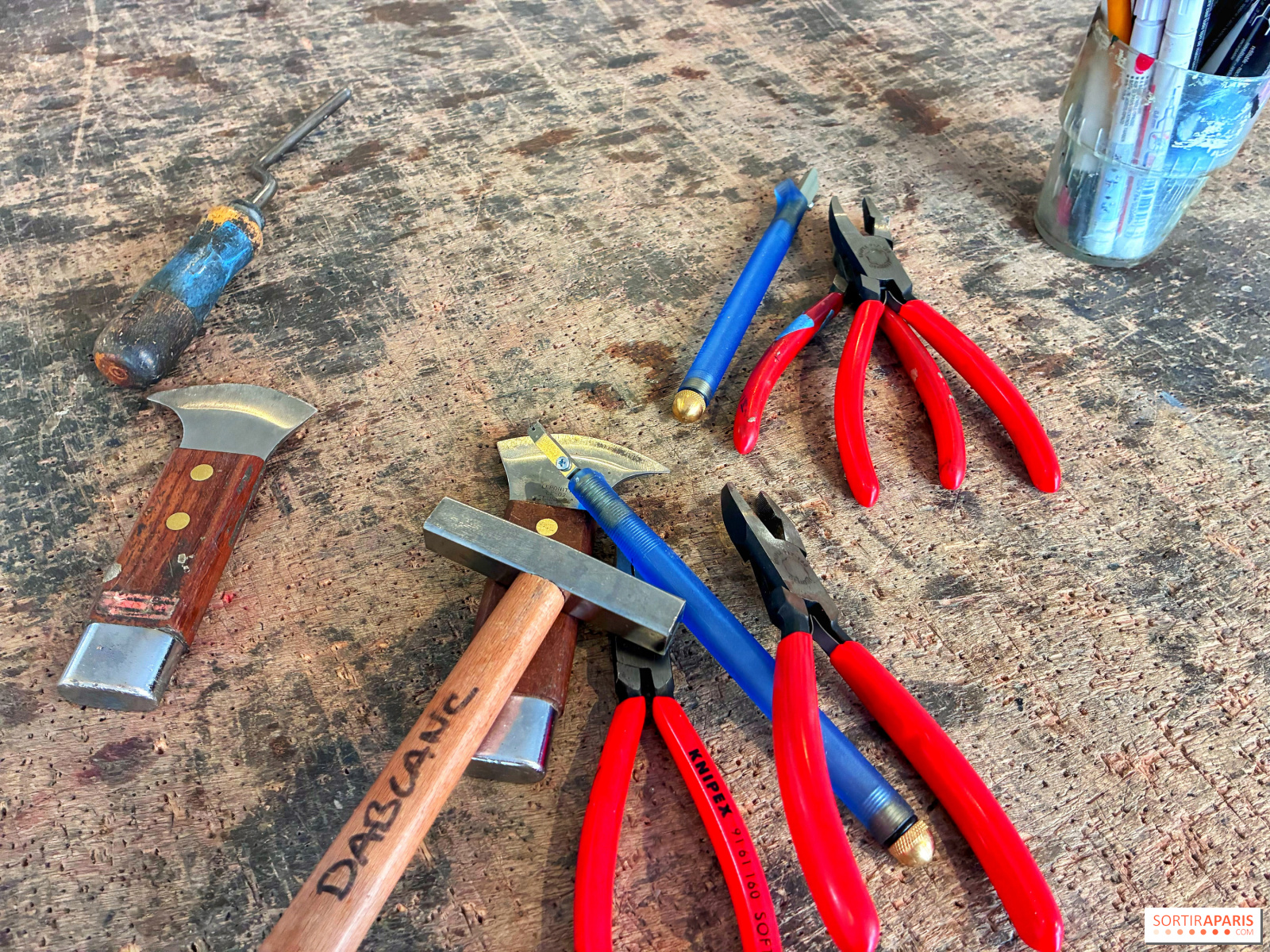
Obviously, don't expect to walk away with a two-meter rose window: in three hours you mainly learn patience and precision on a small 15 × 15 cm format, time flying by as soon as you touch the glass cutter. The class begins with the presentation of the tools: you learn that diamond has given way to tungsten carbide to cut glass, even though the motion has remained the same since the 9th century.
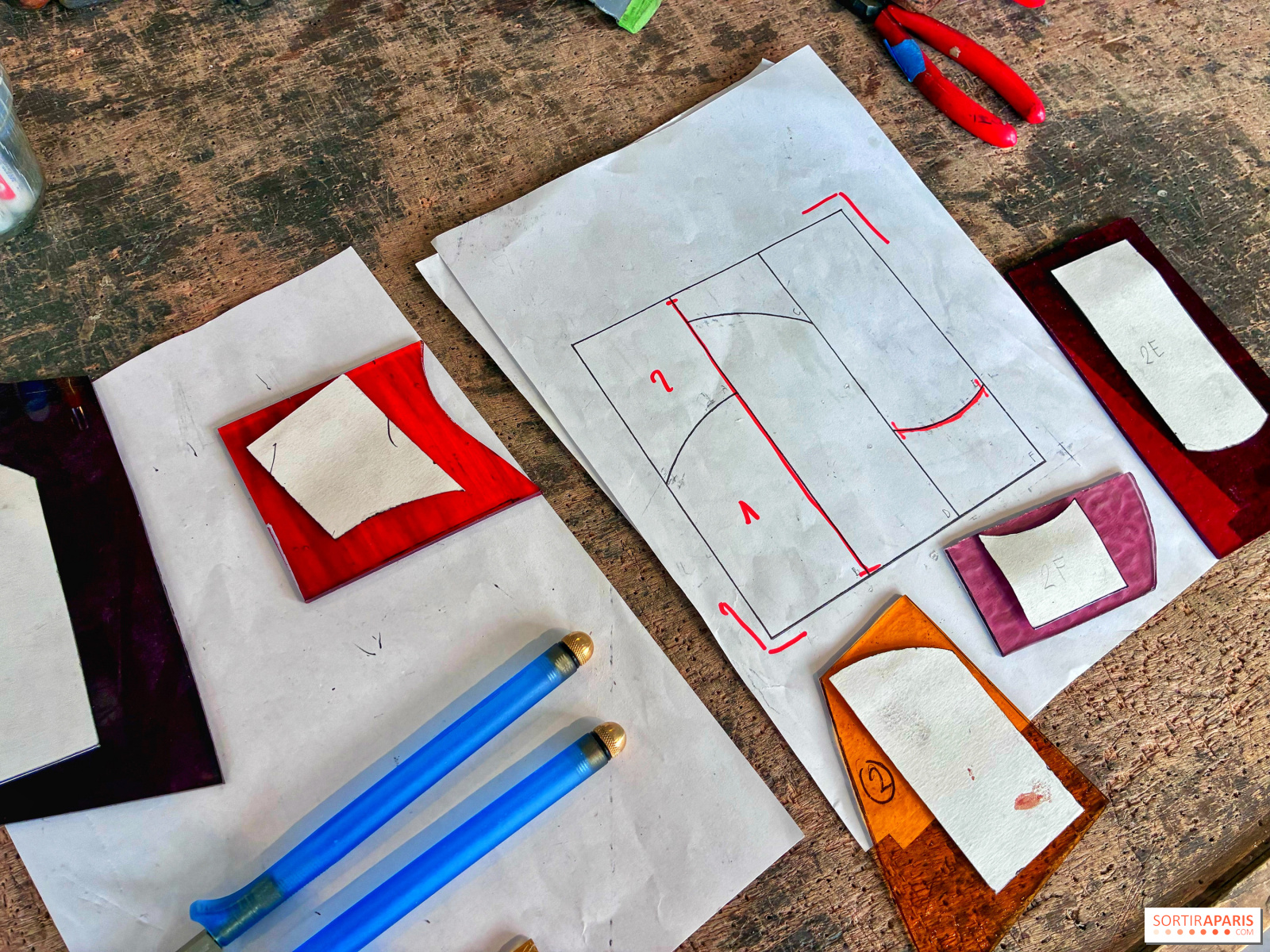
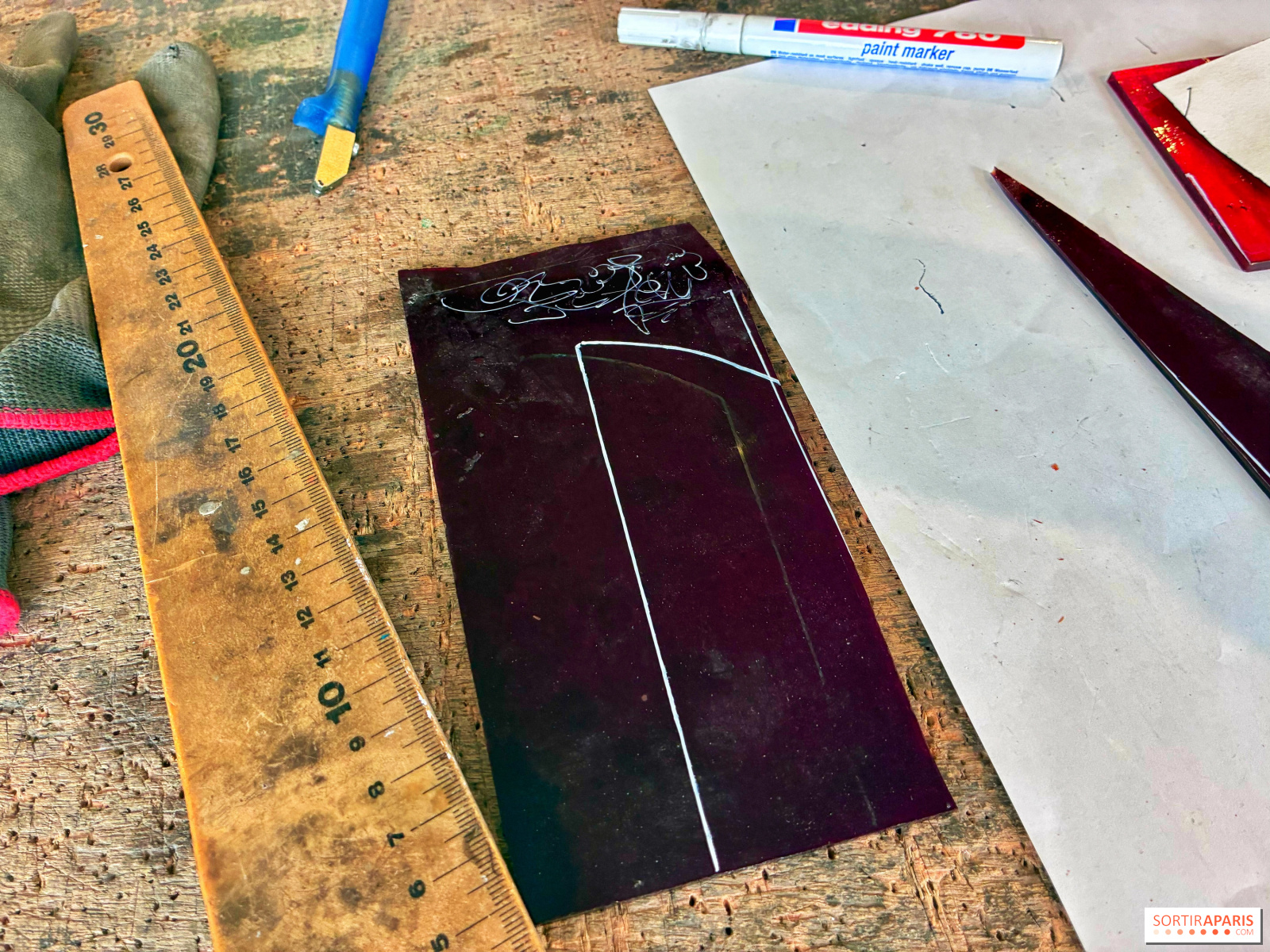
We pick our preferred small square model from the five on offer, and opt for the one with rounded edges. Call it the prettiest in our view, but you’ll see later that curves are harder to cut than straight lines! Six gauges are required to cut the glass into a precise shape.
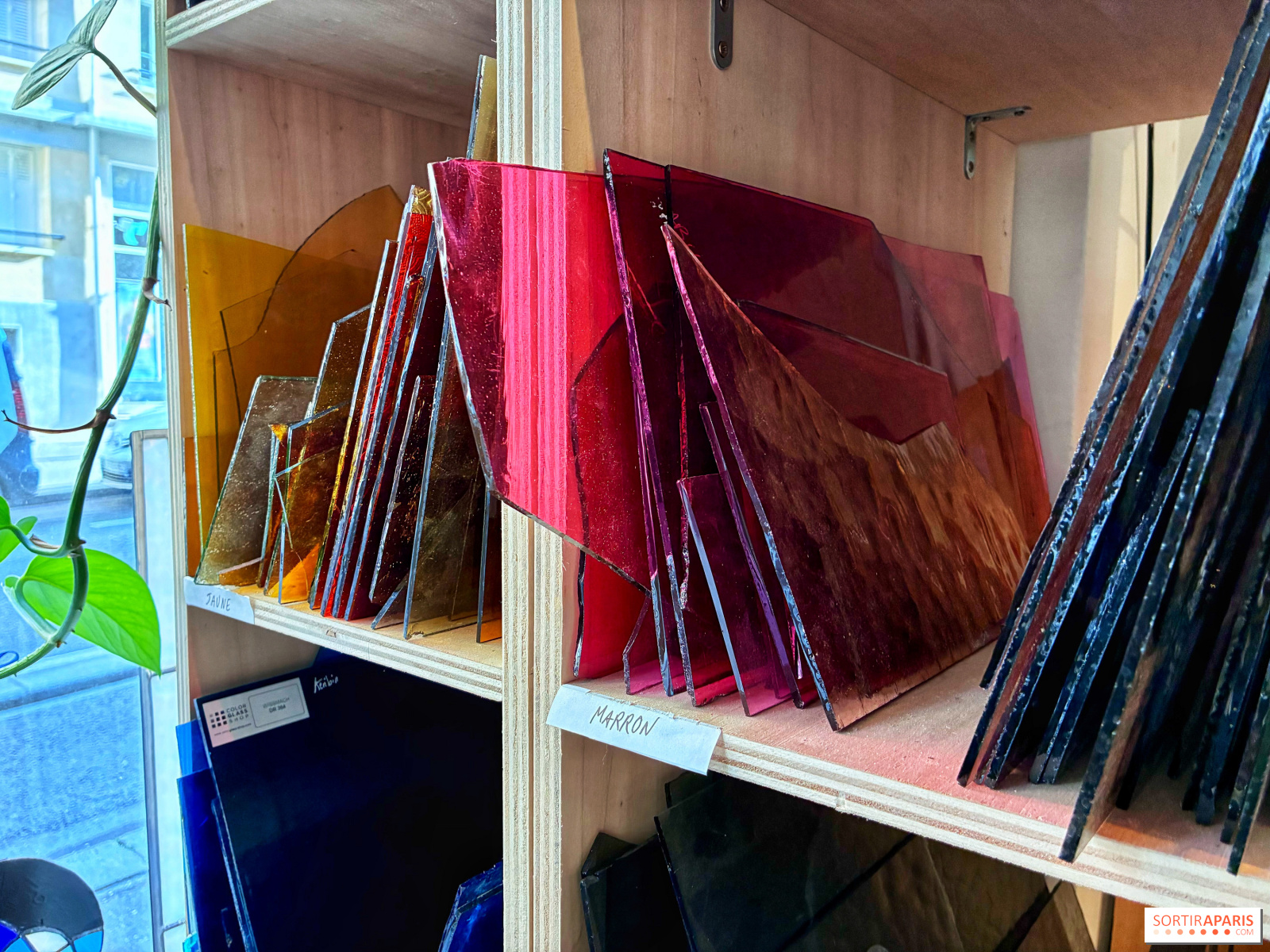
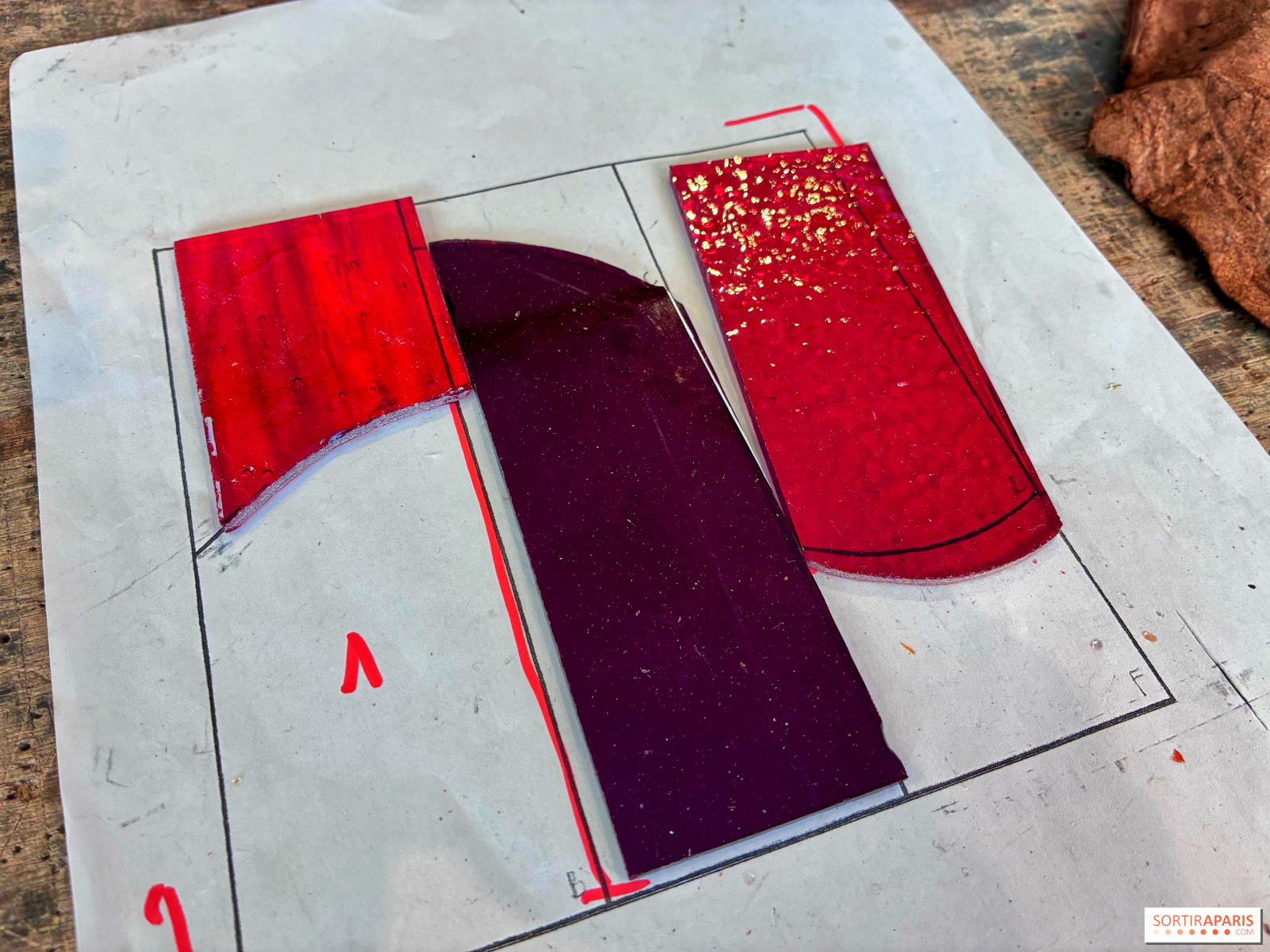
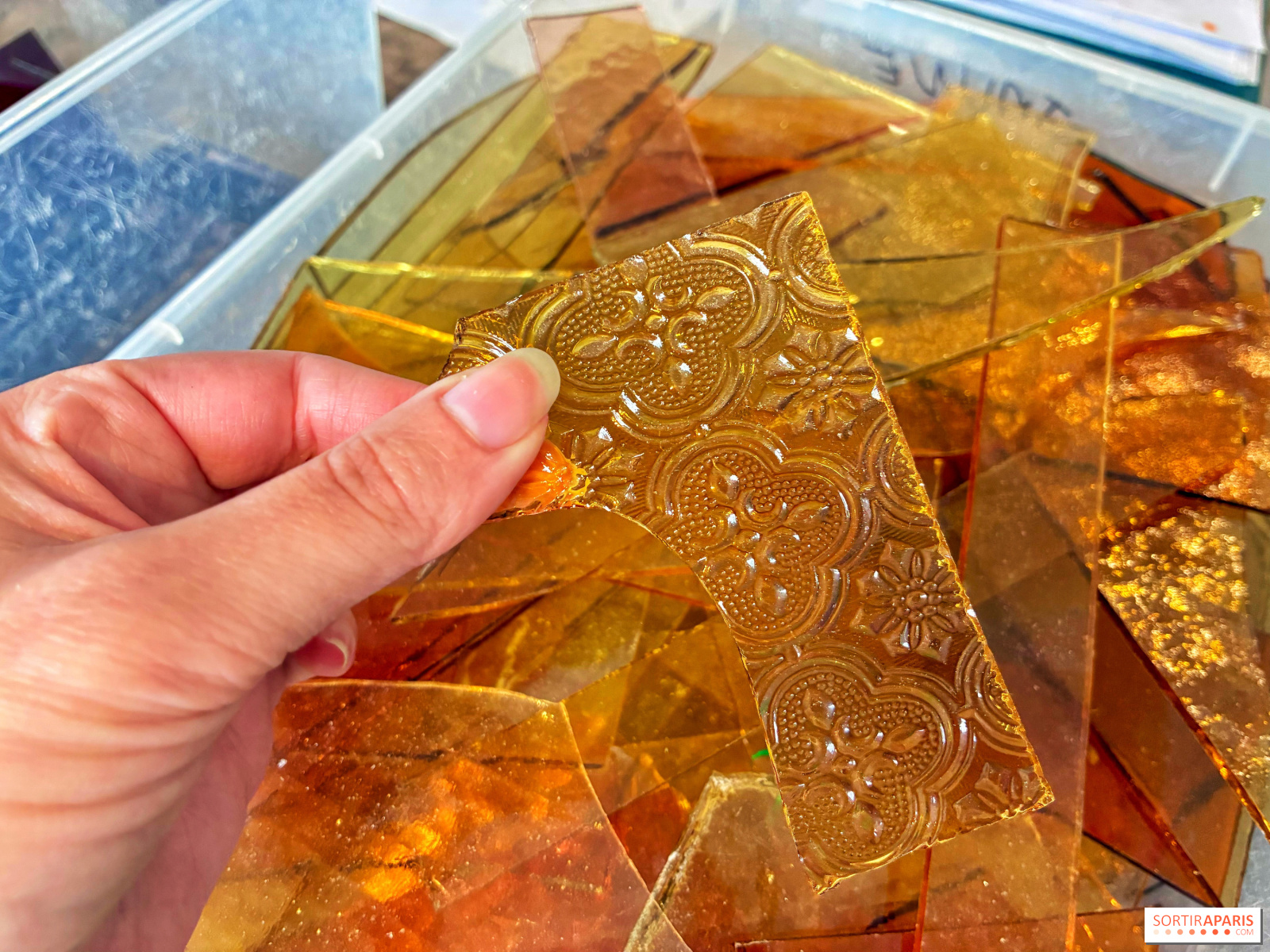
All that’s left is to freely pick from the bins of pieces of glass in every color to imagine our future stained-glass window, with purple and yellow hues for us, and one piece in particular that stands out for its exceptional texture.
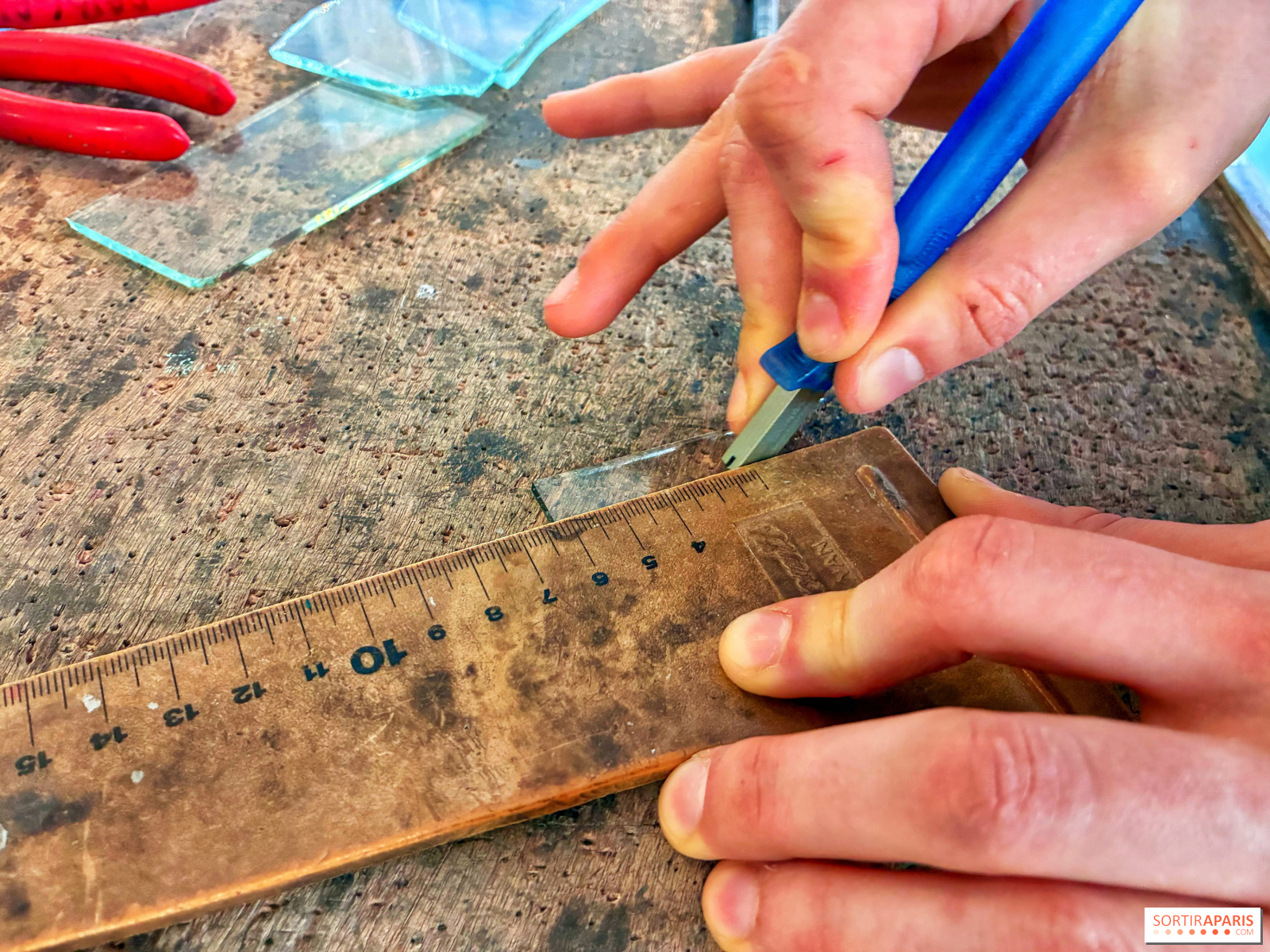
Next you take on the glass cutting, and it takes a bit to master the glass cutting with the glass cutter! You need to press hard enough to hear that telltale crack, but above all you must follow quite precisely the lines drawn with a marker on the glass according to the gauge, straight with the ruler when it's straight, with a touch of flair when it's curved. A tip: better to cut a little wider and refine the glass than to have to start over on a new piece because you cut it too short!
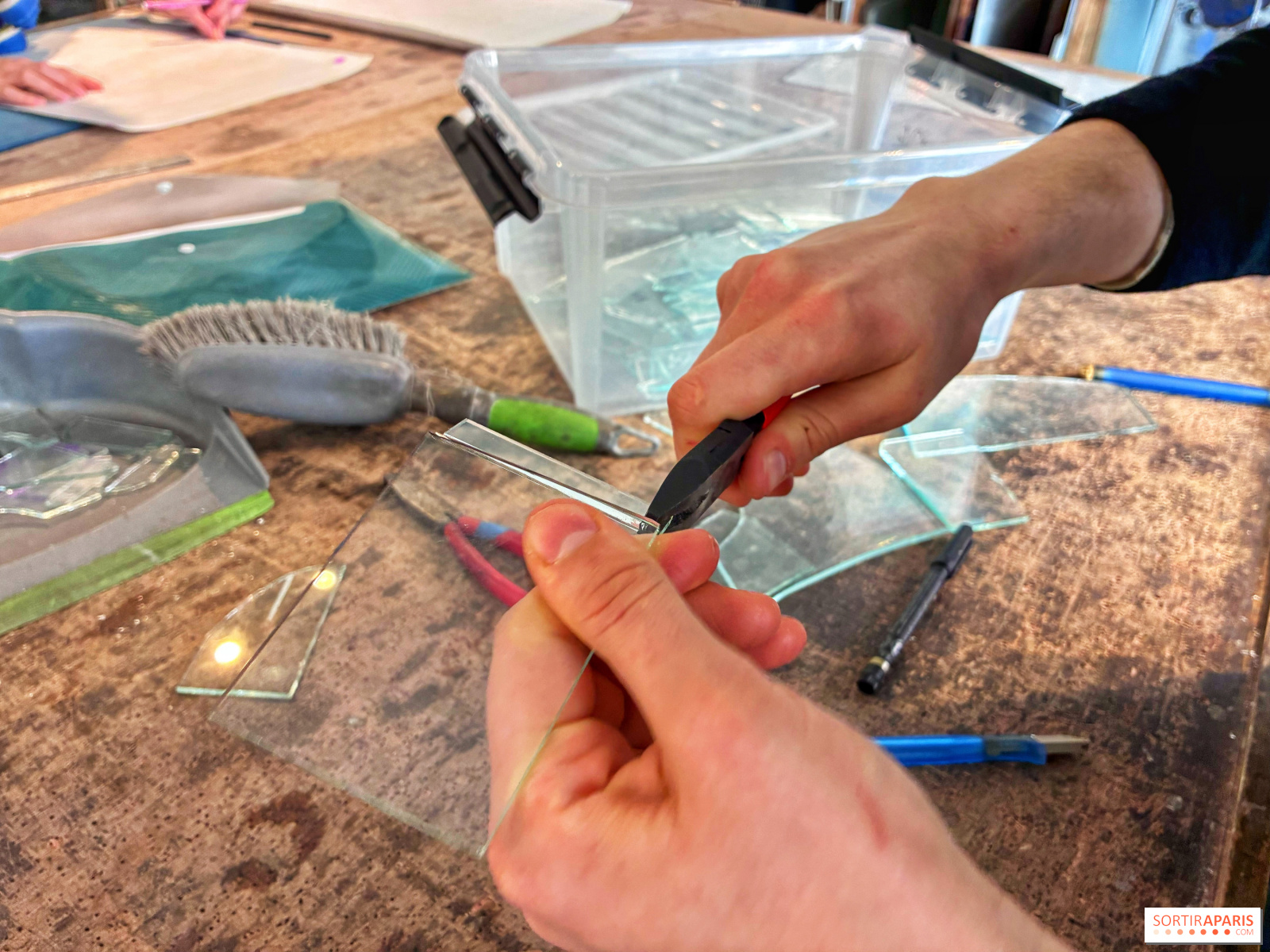
Once the glass is scored, you have to break it! You can try with your hands, but if it won’t separate, use the other end—the head of the glass cutter and tap gently to help it split—or a detach-pliers. You can then use another pair of pliers, a bit less curved, to deburr, i.e., shave off the slightly sharp edge of the glass or trim away pieces that don’t fit.
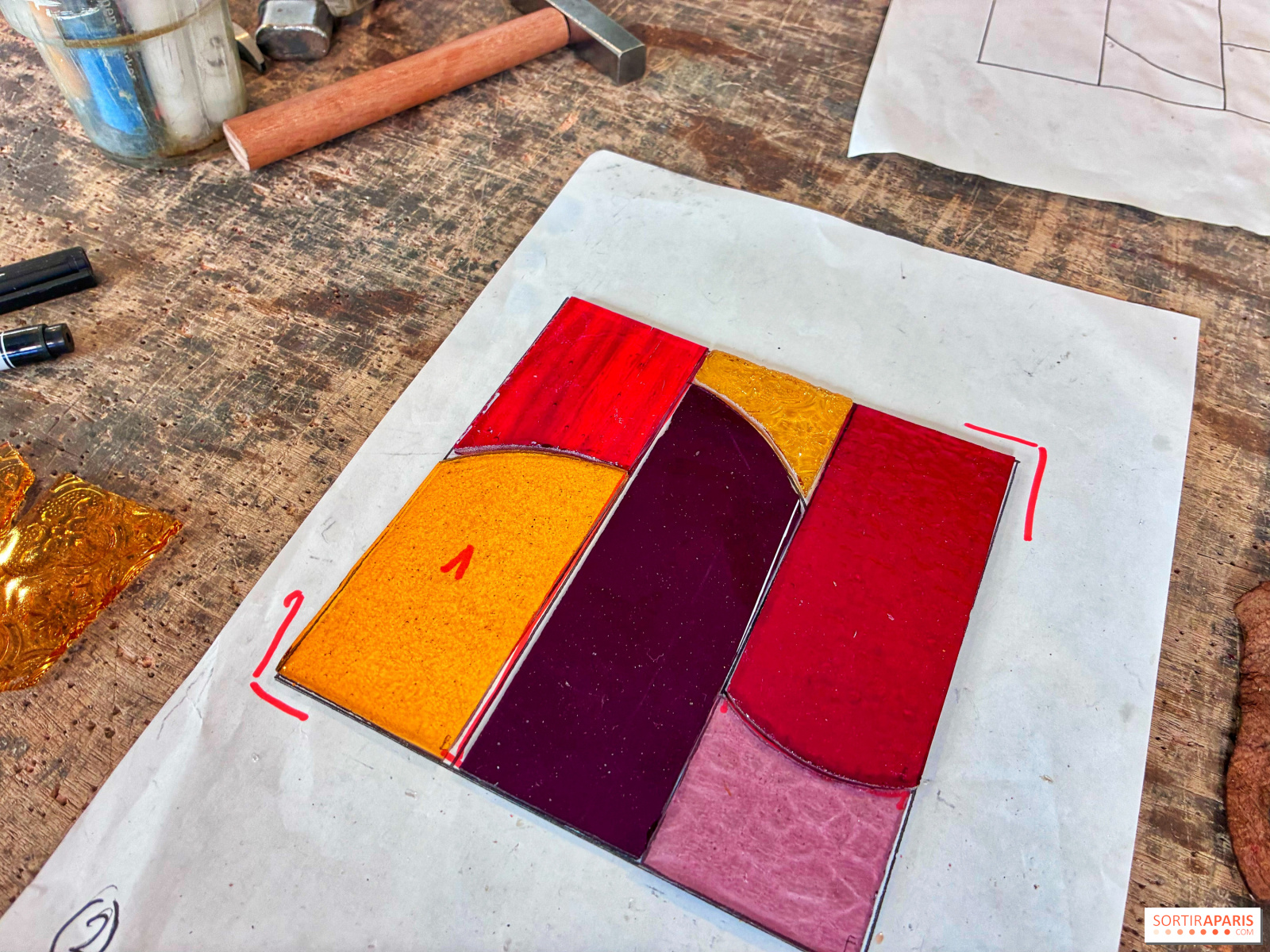
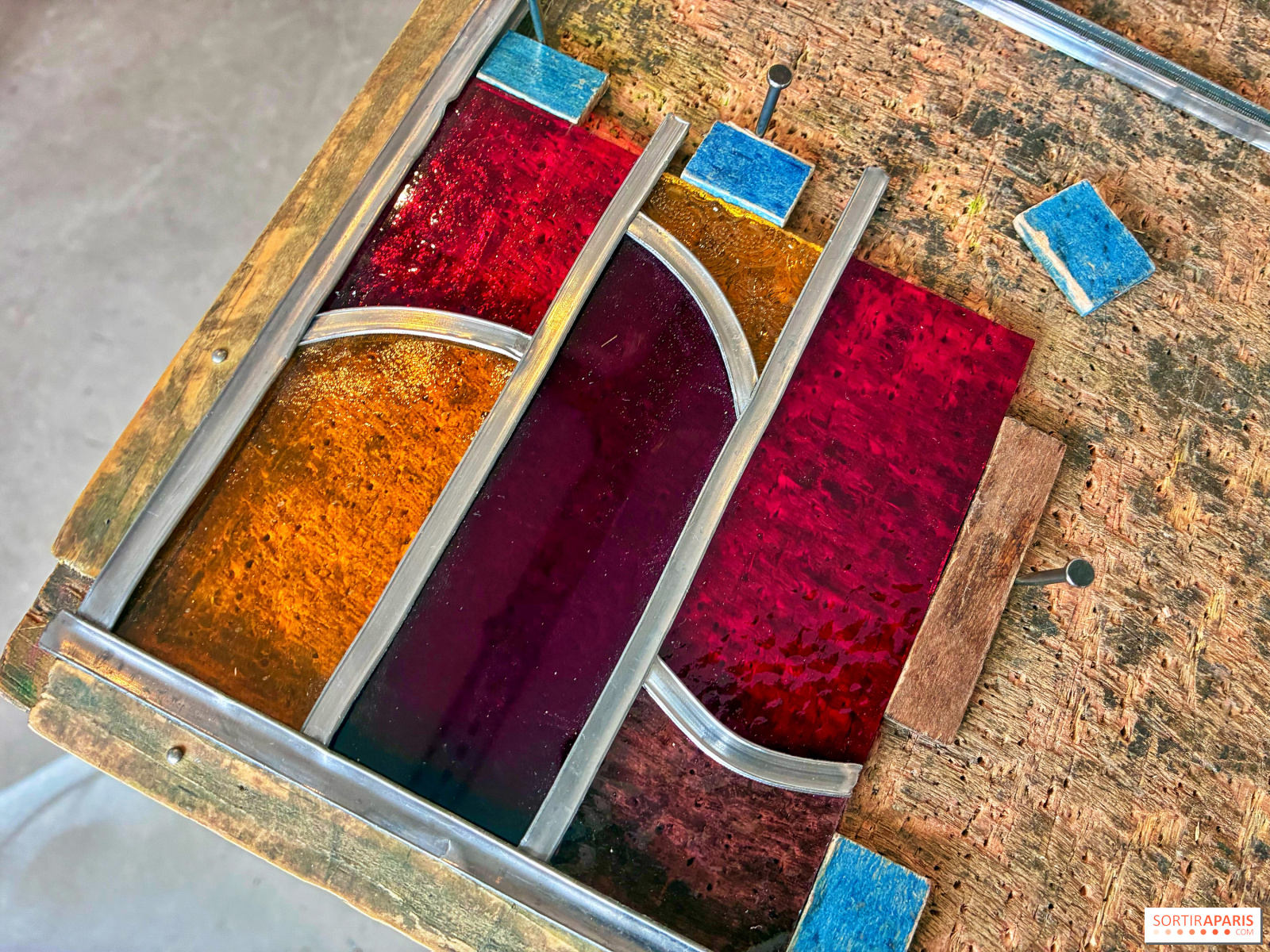
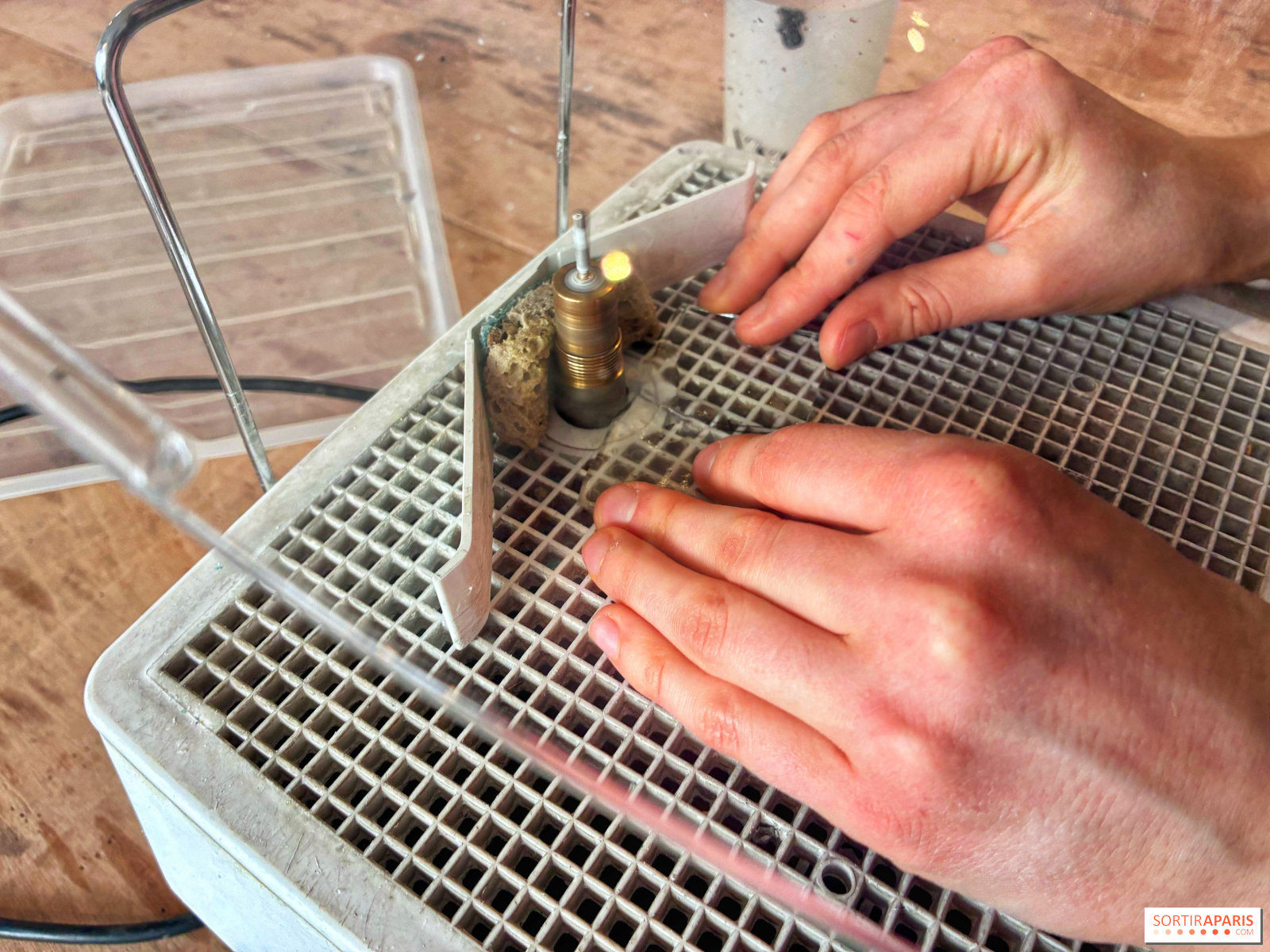
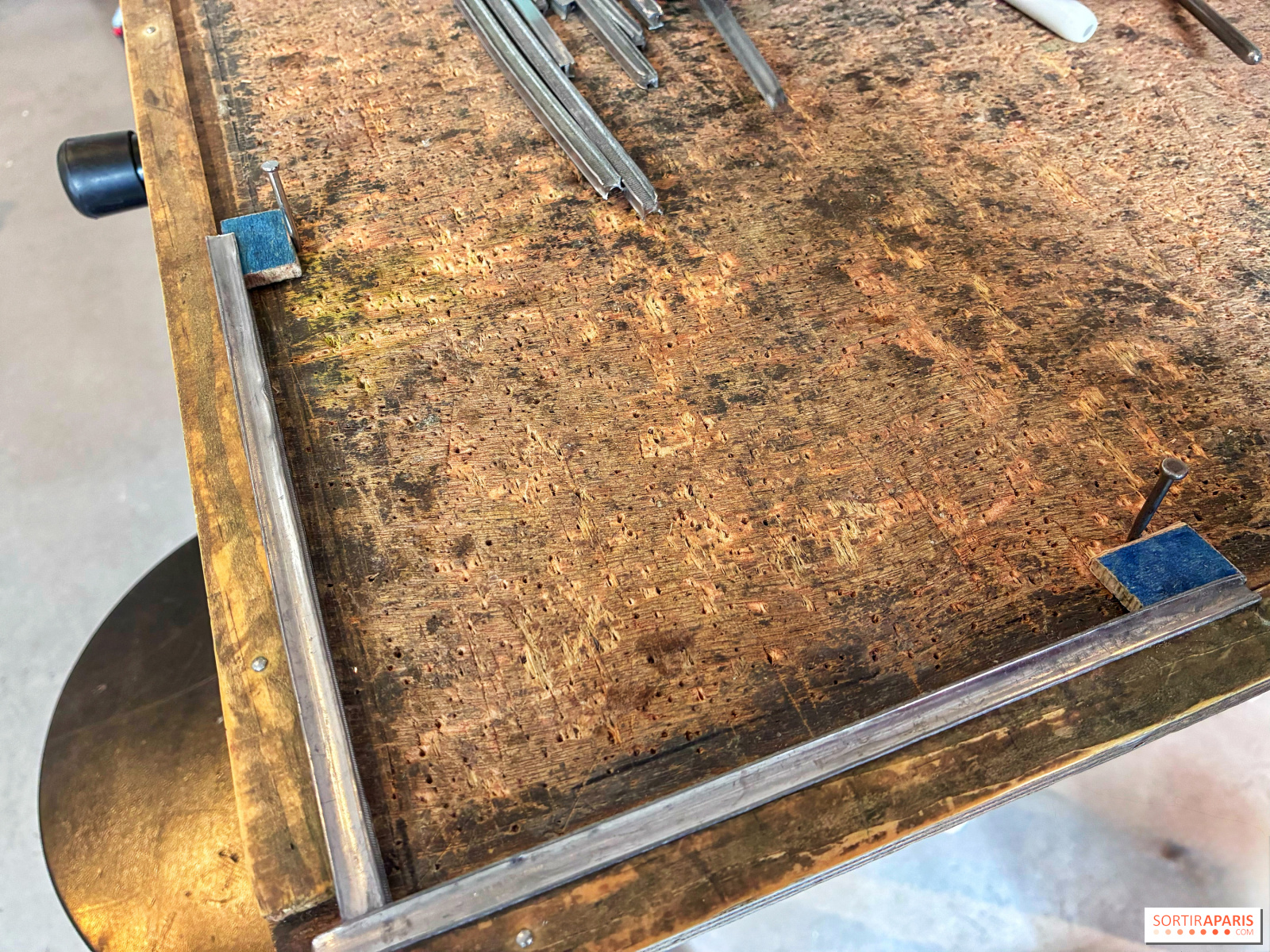
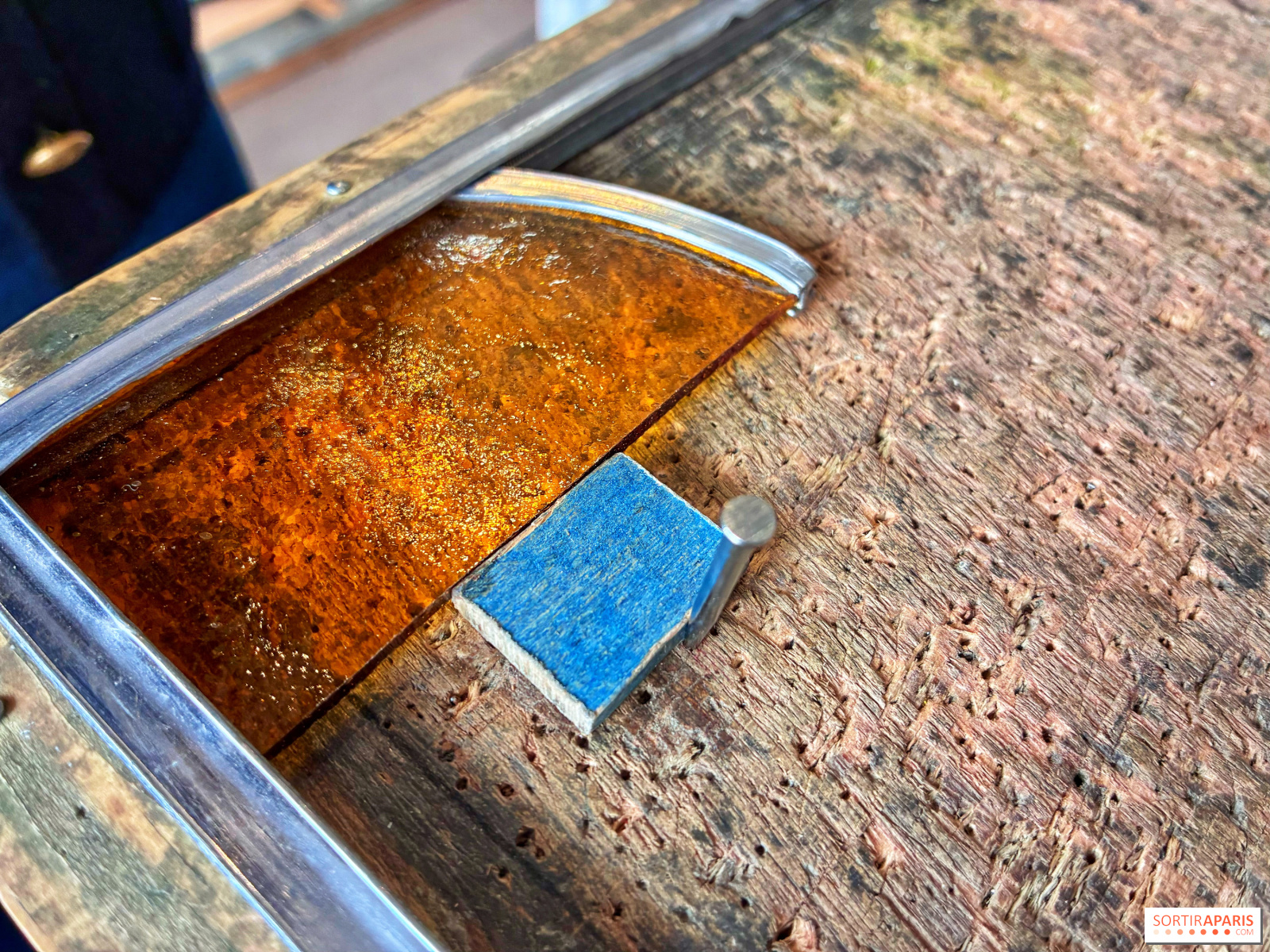
And if that isn’t enough, you can also run it through a grinder to get it perfect! We repeat for every piece, with varying degrees of ease, to build the whole. Next comes the crimping, the step where the pieces fit together and the work comes to life. Little by little, we open the lead with a special knife that lets us slide the glass pieces in one by one and hold them in place, using shims and tiny screws to keep everything steady while we wait to add the next pieces.
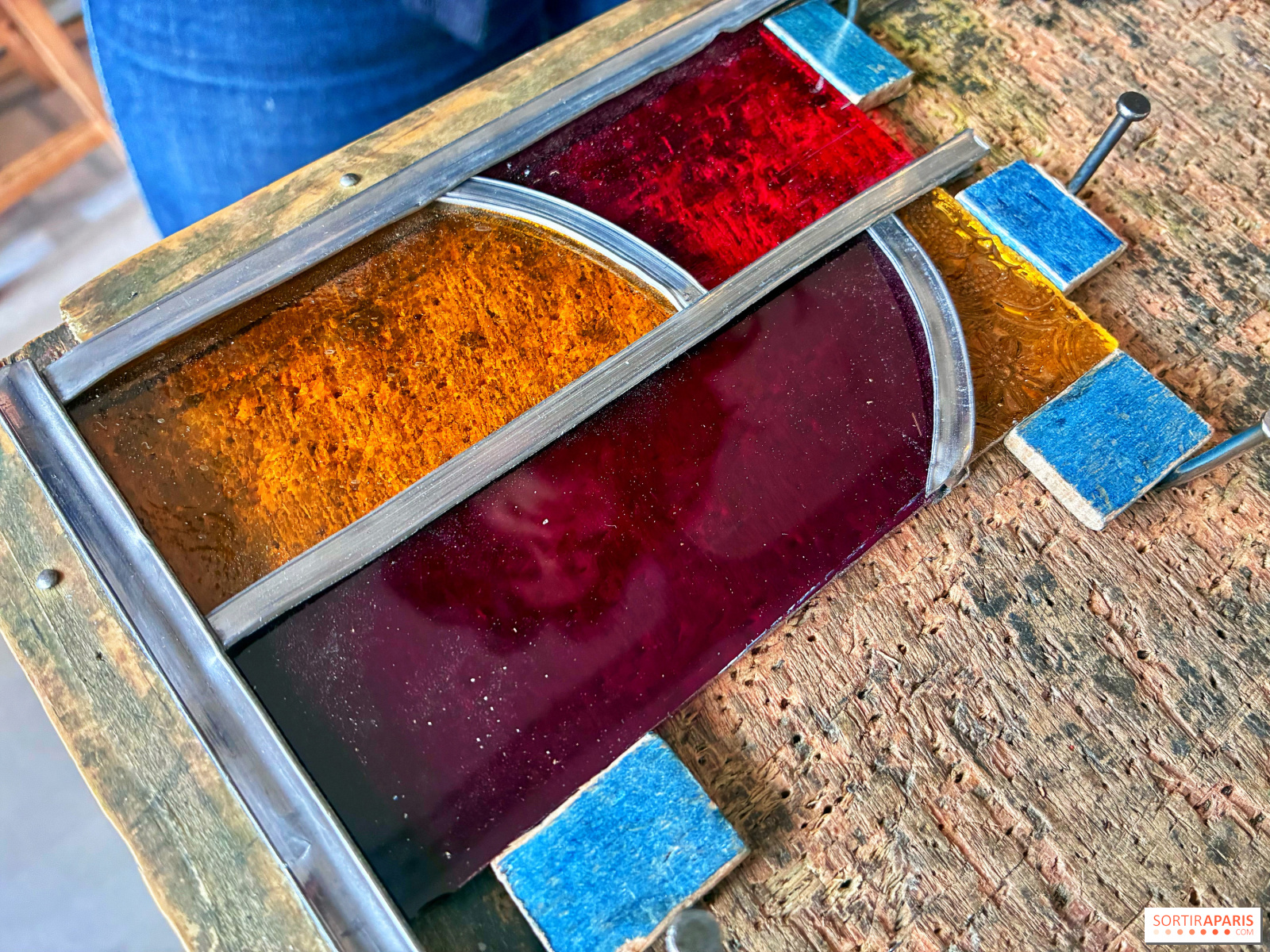
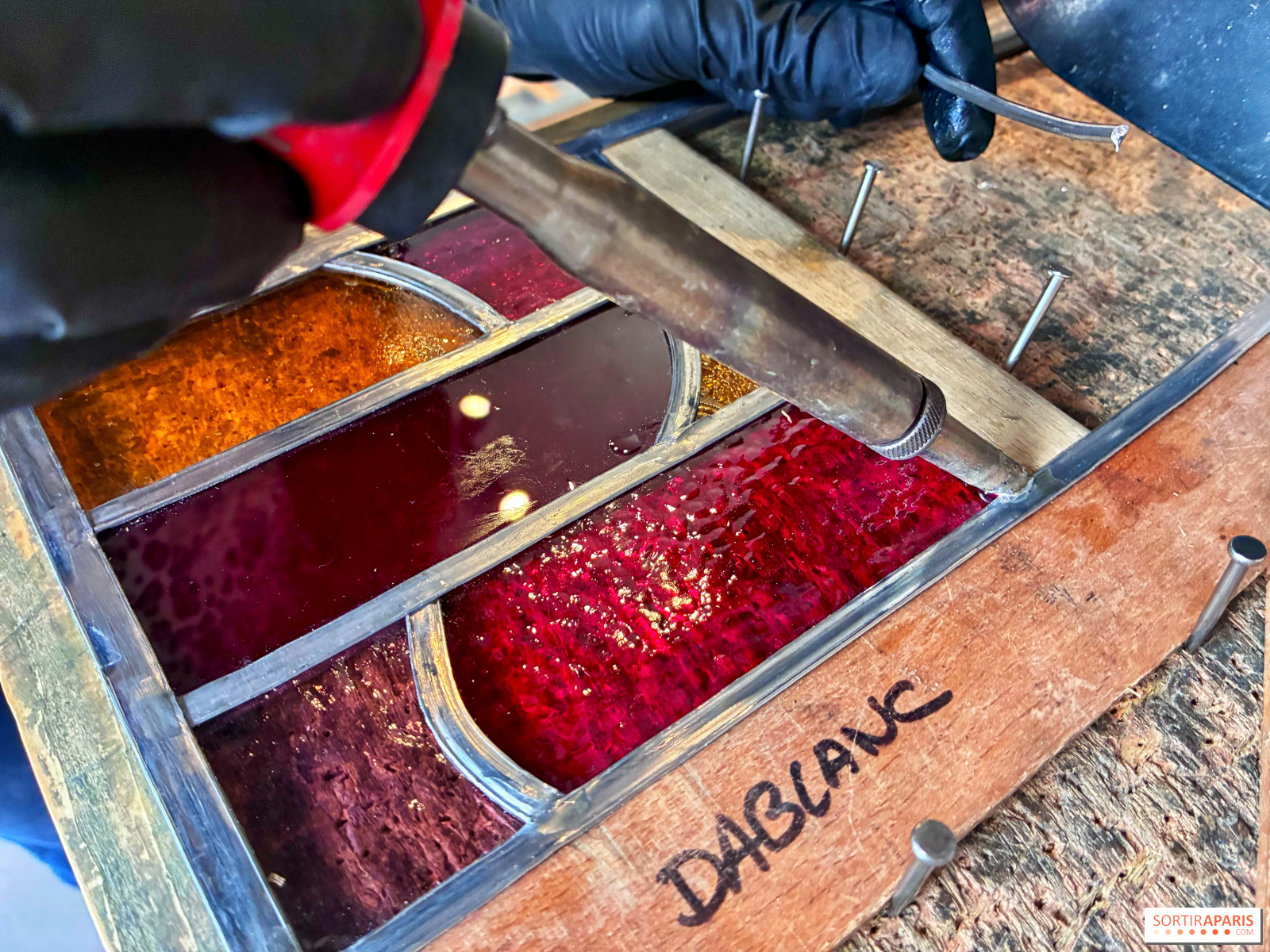
A step that demands precision and a bit of hammer work, to gently flatten the lead without cracking the glass, so that it clamps down on it. That’s why the pieces must fit together perfectly, because if you miss the space the lead needs between them, they won’t fuse properly! Once the pieces are seated, you bend the lead into place before you solder each joint with tin for a neat and durable result!
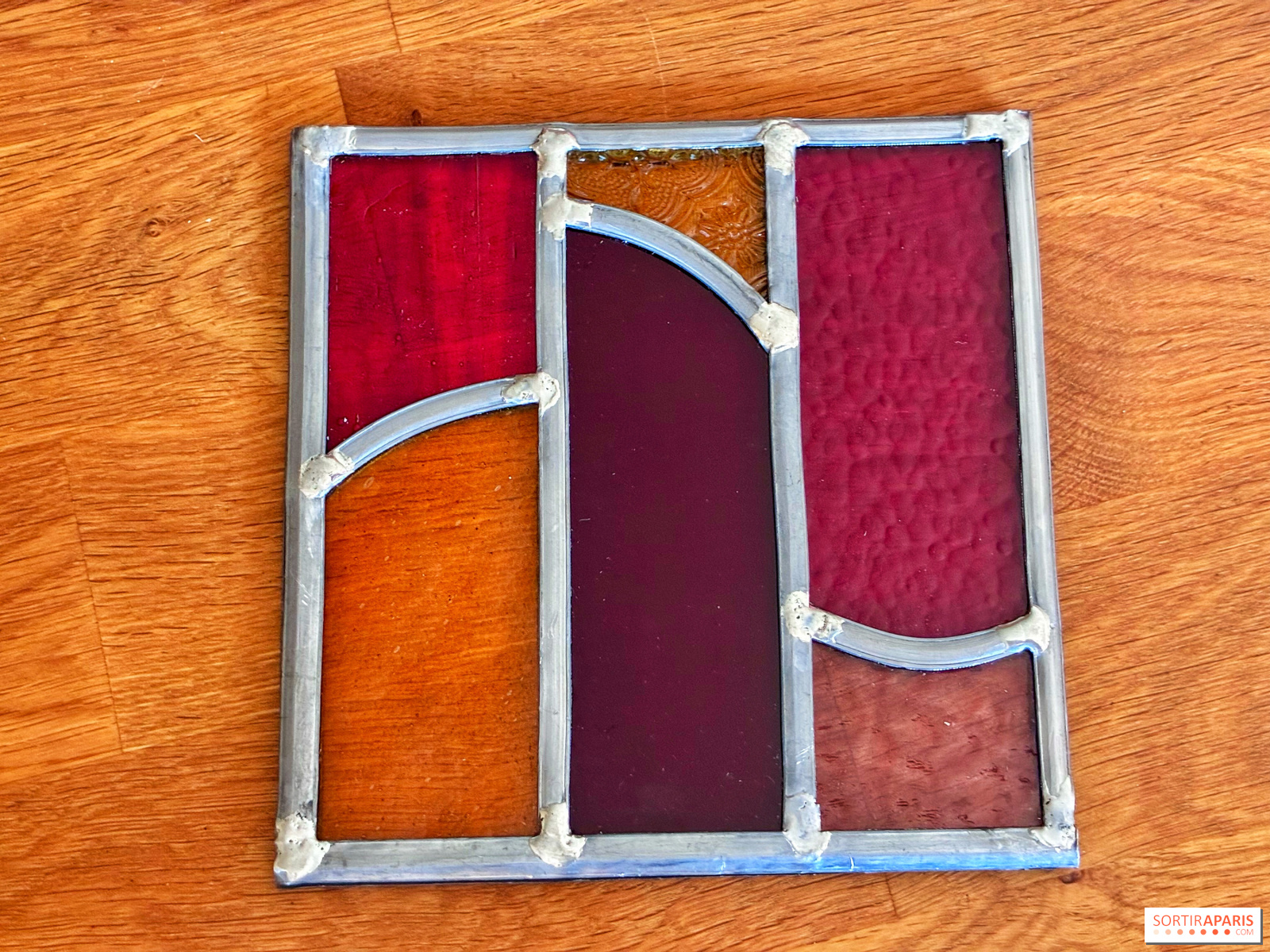
It's nothing short of magical to see this light work completed between our hands after hours of from-scratch effort, a genuine dose of pride well earned! For experience reveals the complexity of this exceptional craft, one notices it every time you step into a church (and we'll now look at its stained glass in a whole new light!).
But it isn’t for everyone—the art of stained glass can be hazardous at times, so the workshop is open only to older teens and adults. With the glass’s sharp edge that can cause tiny cuts and the handling of lead, it’s not a place for a child.
Of course you wear gloves when working with lead, but that isn’t the case with glass. You also need a bit of strength to press hard enough on the glass or to break it, then work the lead with the various tools. It’s also a meticulous job that requires patience, even if you don’t get it right on the first try.
Obviously, Zoé is on hand to lend a hand if you’re struggling with something, especially so you can push ahead with the rest and not waste too much time. Note that we stay in station debout for most of the workshop, although you can sit down to rest your legs.
The atmosphere is studious, and you can share the class with others, six élèves maximum per session. If you want to come as a group, don’t bring too many people, it makes it harder to finish on time! Also budget an extra half-hour just in case, ne soyez pas pressés par un autre rendez-vous afterward—better to take your time and finish nicely than rush and not be proud of your stained glass.
Classes are held on Fridays only, with three time slots to suit you: 9:30–12:30, 14:30–17:30 or 18:00–21:00. You’ll need to shell out 90 euros for this course, but you can also sign up for additional sessions later if you enjoyed it and want to work on your personal project with solid guidance!
This test was conducted as part of a professional invitation. If your experience differs from ours, please let us know.
Dates and Opening Time
Next days
Friday:
open
Location
Dablanc Workshop
233 Rue Marcadet
75018 Paris 18
Prices
€90
Official website
atelier-dablanc.com