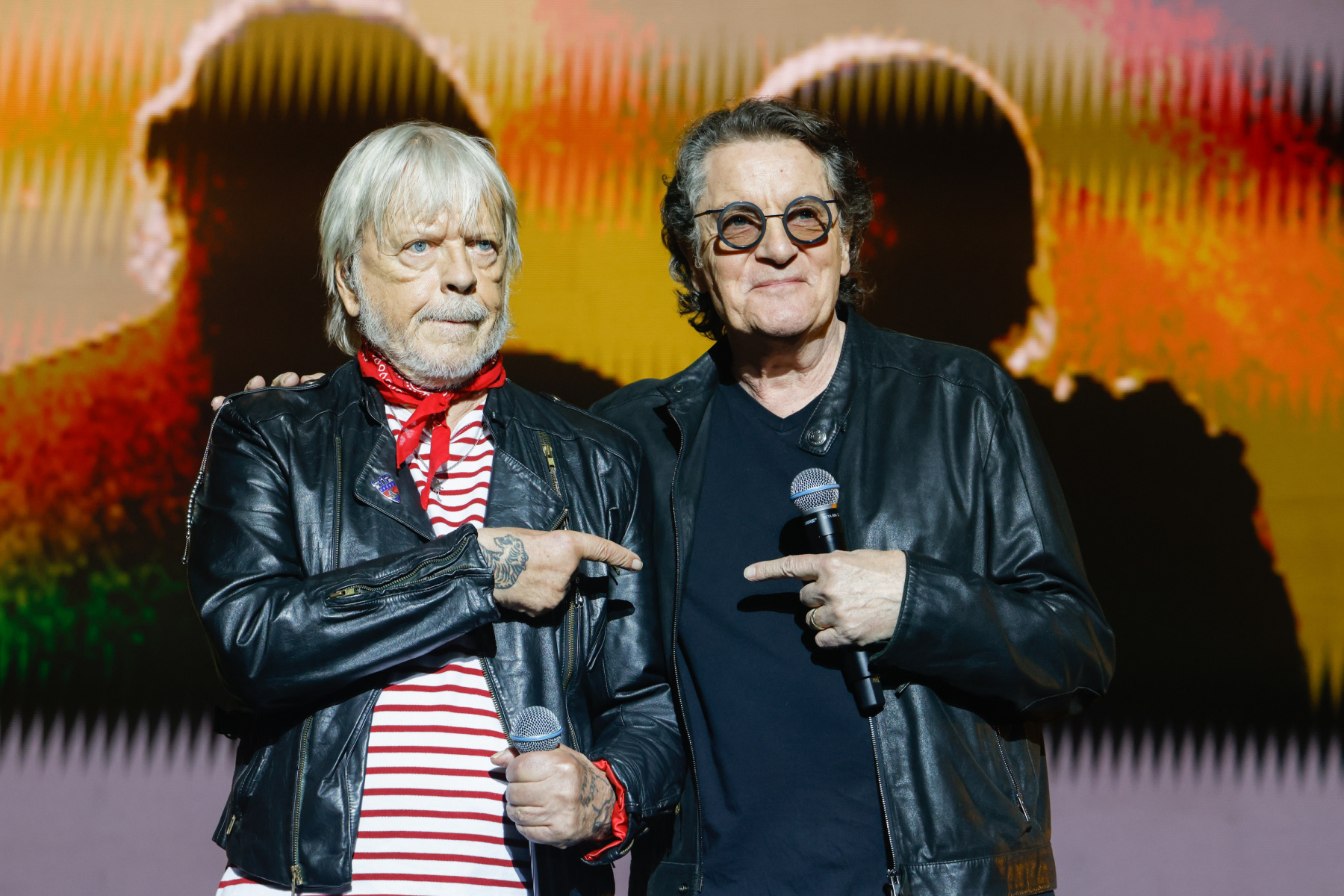
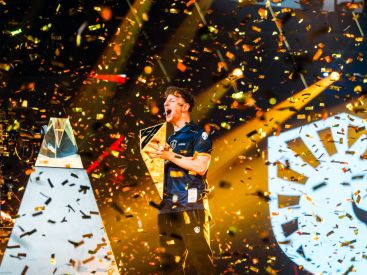
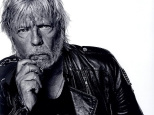
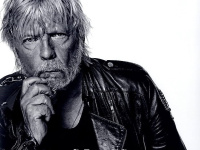
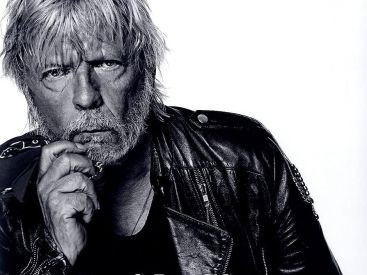
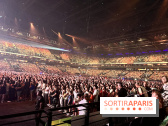
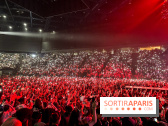
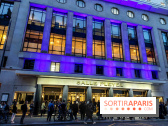
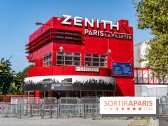
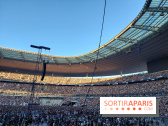
There are concerts that leave you with the sense you’ve witnessed a moment out of time. This Saturday, May 16, 2026, at the Paris-La Villette Zenith, Renaud capped off his three Paris anniversary shows, following two earlier nights on May 14 and 15 with different guests. This recap focuses exclusively on that final evening, the one we attended.
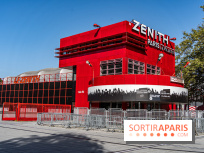
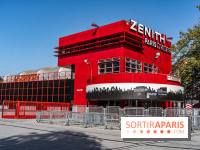
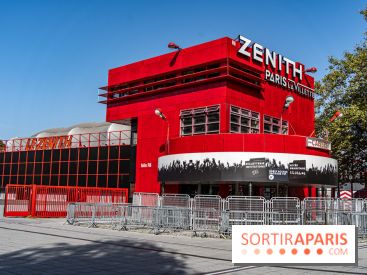
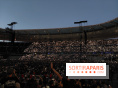
Fifty years after his debut, and forty-two years after becoming the very first artist to grace the Zénith stage at its January 1984 opening, Renaud returned to the venue with his band, his songs, and a host of guests. From the first notes, a large portion of the audience rose to their feet and joined in, as his repertoire often prompts—choruses that have generations of listeners singing along by heart.
This Saturday, May 16, on the Zénith stage, the lineup included Hugues Aufray, Francis Cabrel, Alain Souchon, Ours, Pierre Souchon, Bénabar, Vianney, Pascal Obispo, Axelle Red, Renan Luce, Élodie Frégé, Gauvain Sers, Noé Preszow, Anne Sila, Benoît Dorémus, Mentissa, Emily Loizeau, Leïla Huissoud and Youssef Swatt’s. The guests varied by date: this list specifically covers the May 16 show.
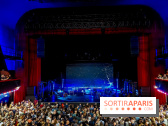
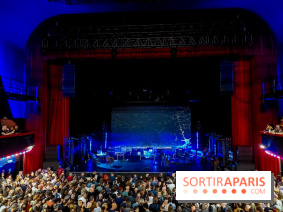
In the middle sits Renaud. In a Parisian street-scene where, on the garden side, a bar called "My Favorite Bistro" towers, the singer welcomes his guests flanked by his faithful band, including the legendary guitarists Jean-Pierre Buccolo and Michaël Ohayon. The staging also plays with imagery: between certain songs, interview archives and TV clips recall different eras of his career, while backstage projections set a different mood for each track. Right from the start, Renaud smiles at the audience and warns: “Tonight, it’s a concert by me... and my guests. I’ll sing six songs.” The line brings a smile to the room, yet it neatly captures the night’s premise: his songs will pass from voice to voice.
The opening set is entrusted to Noé Preszow and Gauvain Sers, who quickly have the Zénith on its feet with an electrified version of Où c’est qu’j’ai mis mon flingue ?. Noé Preszow doesn’t just make an appearance: he keeps coming back throughout the night, sings a lot, takes part in several group moments, and becomes one of the most visible figures on this final evening.
First real thrill: Francis Cabrel teams up with Renaud on La Pêche à la ligne. Two voices, two guitars, almost nothing else. The song unfolds in a starkly simple arrangement, giving pride of place to the lyrics and the meeting between the two artists. A few minutes later, Pascal Obispo takes hold of Miss Maggie in a bolder, more direct rendition, driven by a powerful voice and a high-energy stage presence.
Then arrives Alain Souchon, flanked by his sons Ours and Pierre Souchon, to perform Ma gonzesse. All three sit side by side, weaving a tender, familial moment as the Zénith belts out with full-throated energy. In the hall, the words are everywhere: this isn’t a quiet, attentive listen, it’s a massive, communal chorus.
Vianney then takes the stage on Marche à l’ombre, bounding about, electric, instantly in tune with the audience. He belts the song out with real energy, and the Zénith follows suit, chorus after chorus.
Later, Élodie Frégé, deeply moved as she starts Il pleut, has to pause for a moment, her voice suddenly catching. She goes to take a glass of water, returns to face the audience with a smile and says: It’s the emotion. The hall erupts in applause, as if giving her time to catch her breath. That small on‑stage hiccup also gives the evening its liveliness, far from a too-polished tribute.
Another high point: Hugues Aufray. At 96, the singer arrives with astonishing energy. He commands the stage, sings with gusto, moves, lives the song—a true force of nature. On Morts les enfants, he’s not content to be merely a symbolic presence; he still brings something intensely physical to the performance. At the end of the track, Renaud stands up, crosses the stage and embraces him for a long moment. The gesture speaks for itself: it signals Renaud’s admiration for one of his elders and the essential role of transmission in this evening.
On Son bleu, backed at the piano by Alain Lanty, Renaud returns to the spotlight alone. His voice is worn, sometimes barely a whisper, but the audience stays with him, listening intently to every line. That night, the room isn’t seeking a pristine vocal performance: it’s come to reconnect with an artist, with his words, his silences, and what they still tell us about him.
The duo with Axelle Red on Manhattan-Kaboul follows as one of the night’s anticipated high points. Carried by Jean-Pierre Buccolo's guitar, the song immediately regains its melancholic charge. Axelle Red brings her gentleness, Renaud his fragility, and the track reasserts itself in the concert.
Pascal Obispo returns to the stage with C’est quand qu’on va où ?. His rendition gives the track real weight, without softening the fury in the lyrics. In the hall, the words still ring out strongly, carried by an audience that sings along at times.
Renaud follows up with Le Marchand de cailloux, supported by his violinist and Noé Preszow. The contrast hits its mark: Renaud’s weathered voice, the violin lending the song its melancholy, and Noé Preszow stepping in to lift the piece without crushing it. The track thus becomes one of the true, defining moments of the night.
Noé Preszow, very much on display throughout the concert, also delivers Docteur Renaud, Mister Renard, while Gauvain Sers sings Amoureux de Paname. Benoît Dorémus meanwhile takes on Pochtron !, in a vibe that fits well with his singer‑songwriter universe.
Leïla Huissoud lends her voice to Je suis une bande de jeunes, before teaming up with Gauvain Sers and Youssef Swatt’s on Société tu m’auras pas. The track then takes on a more direct energy, fueled by three distinctly different voices.
Anne Sila moves the crowd with Petite, then also performs Manu. She also reunites with Renaud for Mistral gagnant, the two of them sitting on a bench in a very tender rendition. The song, as one would expect, is carried by the entire room with that particular intensity of songs the audience knows by heart.
Morgane de toi brings together Vianney and Mentissa, in a live rendition performed at the Zénith. For the occasion, the fan club handed out heart-shaped balloons to inflate. In the venue, some wear them proudly, letting them swing to the rhythm as the lyrics echo all around us: on this track too, the crowd sings as much as it listens.
Anne Sila, Mentissa and Fredo bring Germaine to life, another shared moment around a beloved track from Renaud’s repertoire. The voices answer each other, the crowd follows, and the evening keeps straddling faithful homage and distinctly reimagined renditions from each artist.
Renan Luce brings his folk elegance to the Déserteur. Francis Cabrel returns to join forces with Youssef Swatt’s for Chanson pour Pierrot, in an unlikely meeting of two generations and two very different approaches to delivering the text. Bénabar, for his part, makes Laisse béton ring out, one of the most instantly recognizable titles in Renaud’s repertoire.
Renaud returns with En cloque. Again, his voice wobbles, but the crowd stays with him at every line. There’s a hush in the room, as if everyone is guiding the piece without pushing it. The track, already tender on the record, here assumes a more fragile, nearly shy form.
Emily Loizeau serves up one of the night's funniest moments with It Is Not Because You Are, tackling it with a distinctly assured sense of humor. The track, already a standout in Renaud's repertoire, becomes a light, refreshing breath in the middle of a concert that is often heavy with emotion.
The set takes on a more political edge with Hexagone, led by Renaud, Renan Luce, Emily Loizeau, and Noé Preszow. Vintage TV images projected on the giant screen accompany the track, recalling its 1970s roots. Once again the audience belts out the lyrics, in a moment that's more collective than demonstrative.
With only a handful of songs left in the set, The Northern Irish Ballad is performed for the first time, sung by a large portion of the audience. The piece will return for an encore, ending the concert in a notably collective finale.
Dans mon HLM brings together Pascal Obispo, Gauvain Sers, Benoît Dorémus and Bénabar, for one of the great choral moments of the late-night set. The crowd belts out the verses and the refrains, buoyed by the energy of the band on stage.
Finally, Dès que le vent soufflera opens with Renaud, Noé Preszow and Pascal Obispo before the rest of the guests join the stage. The Zénith bursts into the chorus, carried by the performers and the audience.
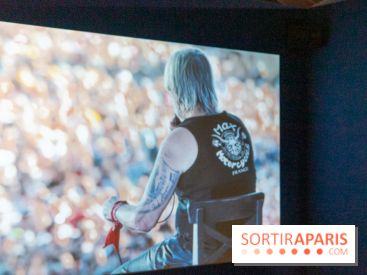
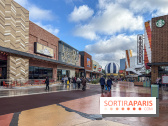
Around thirty artists, with Renaud standing center stage in a leather jacket and a red-and-white bandana, and a crowd singing louder than the performance. After the final notes, the house lights come up. No one moves much. The singing carries on inside the hall, then spills out onto the esplanade, edging back toward La Villette.
Dates and Opening Time
On May 16, 2026
Location
Zenith Paris - La Villette
211 Avenue Jean Jaurès
75019 Paris 19
Route planner
Accessibility info
Access
M° Porte de Pantin