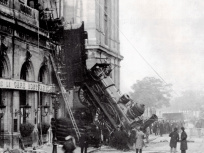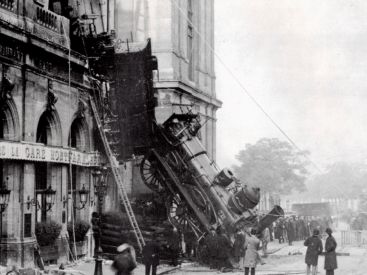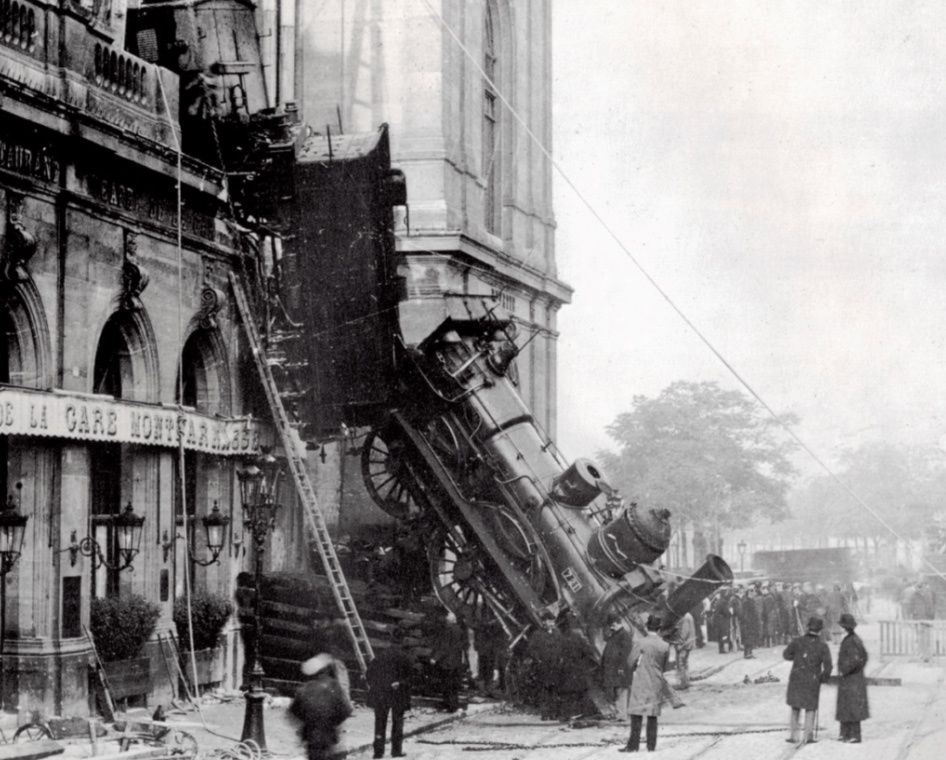
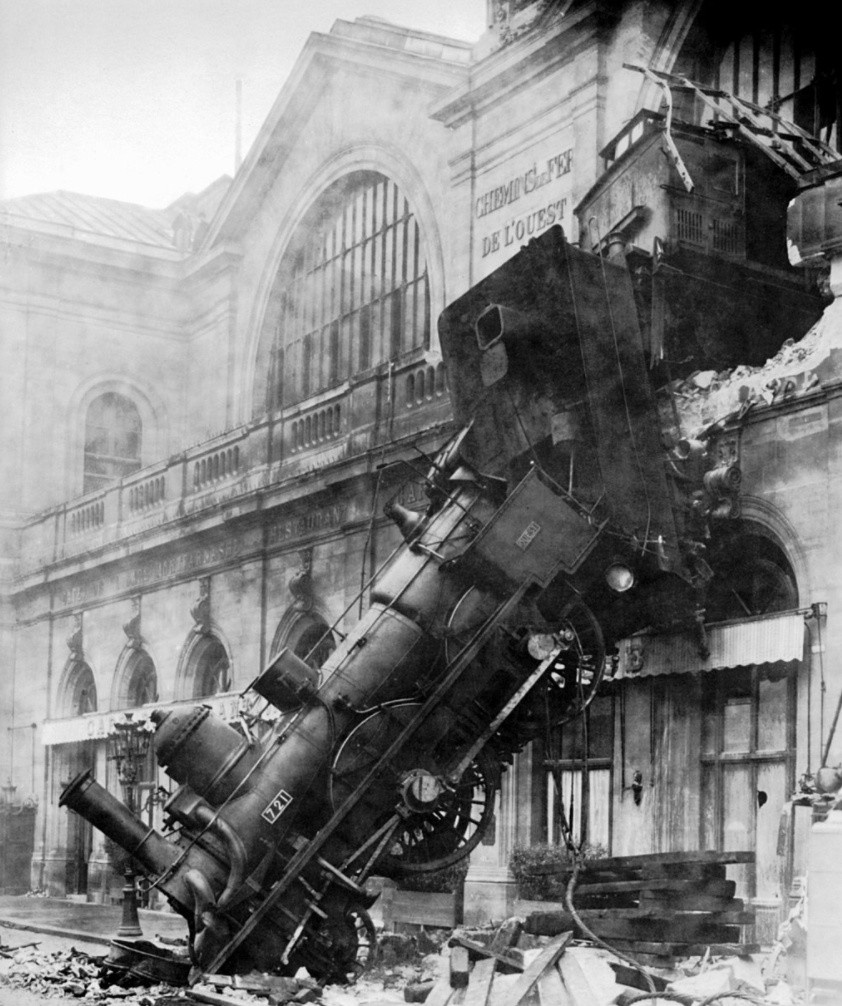
On Tuesday, October 22, 1895, a spectacular railway accident occurred at the Montparnasse station, then still known as the Gare de l'Ouest. Traveling at 40km/h, the Paris-Granville train, packed with passengers, failed to stop at the terminus and sped on, smashing the building’s façade before coming to rest on the Place de Rennes, just below.
Even today, this event remains one of the most sensational and well-known rail accidents in the annals of the French railways, largely thanks to the photos taken shortly after the crash and widely carried by the French and international press. The disaster, fortunately, claimed only one life despite extensive material damage.
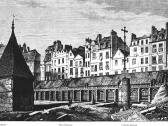
Originally built by the Compagnie des chemins de fer de l'Ouest, Montparnasse Station—formerly known as the Gare de l'Ouest—has, since the mid-19th century, been the departure point and terminus for numerous western lines, bound for Versailles-Rive-Gauche, Granville, Le Mans, and on to Nantes, Saumur, Niort, and Bordeaux. At that time and until 1970, the station stood on Place du 18 Juin 1940 (formerly Place de Rennes), at the site of the shopping center that now sits beside the tower.
Once entering Paris from the neighboring towns of Vanves and Malakoff, the trains reach Gare de l’Ouest via a route that cuts through numerous streets of the capital, crosses several level crossings, and, after crossing the viaduct over Avenue du Maine and Boulevard Edgar-Quinet, ends in a two-bay hall whose six dead-end tracks rise nine meters above the intersection of Rue de Rennes and Boulevard du Montparnasse.
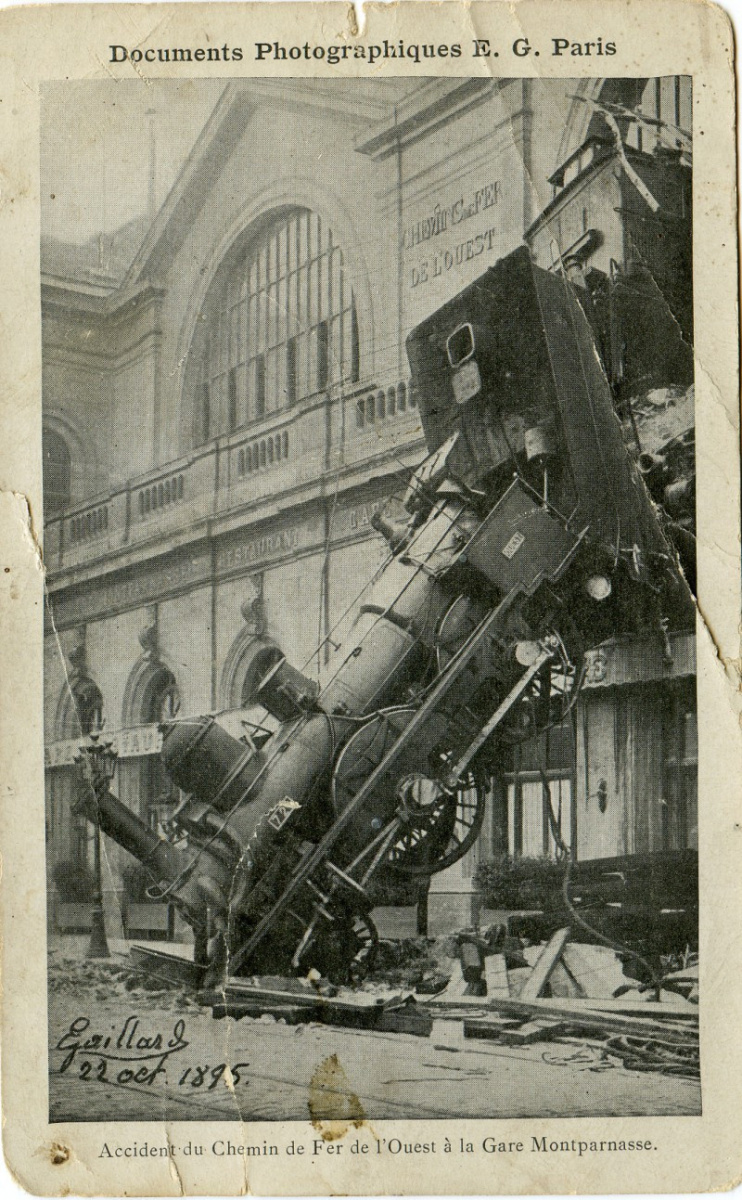
But there you have it. On Tuesday, October 22, 1895, Express No. 56, which departed Granville at 8:45 a.m. toward the Western railway terminus, is already running late. Hauled by the 120 N locomotive No. 721, driven by engineer Guillaume Marie Pellerin and fireman Victor Garnier, the Paris-Granville already shows a seven-minute delay as it passes Versailles-Chantiers.
The convoy, made up of 10 cars carrying 131 passengers, including 3 deputies, along with 3 baggage wagons and a postal wagon, must at all costs make up for its delay to reach, as planned, at 3:55 p.m. Paris-Montparnasse.
Upon arriving at Montparnasse station, the locomotive clawed back two minutes of its delay, but, hurtling forward at full speed, it cannot bring itself to a stop in time at the platforms. Despite several desperate attempts by the engineer to slow down by applying the brakes, the train slams into the station hall at 40 km/h, as Parisians watch in horror. The engineer and his fireman barely have time to leap clear from the moving train before the collision.
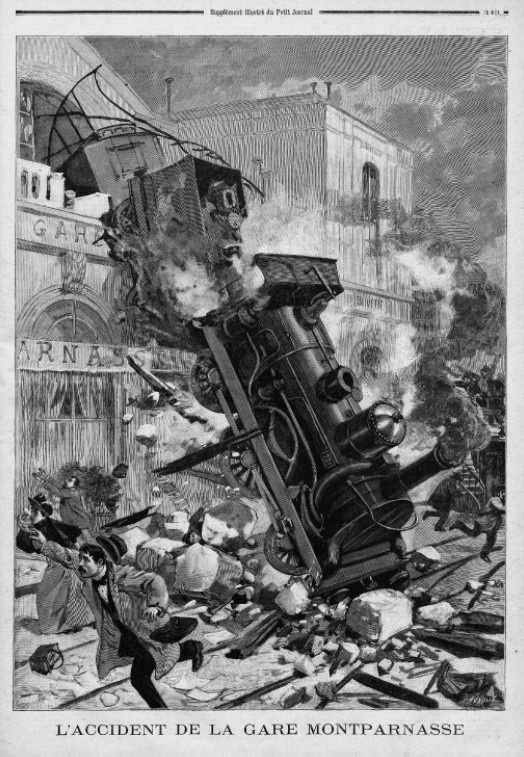
On 22 October 1895, just after 4 p.m., the Paris-Granville express plows through the wooden bumper, tears through the station hall and rips up the concrete of the central area, shattering the building’s glass-roofed façade and bringing its run to an end at the far end of the station terrace. The train’s speed tips the locomotive into the void, plunging ten metres down onto the place de Rennes, destroying a tram stop and a shelter kiosk in its fall, while the tender remains suspended in the air.
The accident, which could have had dramatic consequences given the heavy footfall at the West station, mainly caused material damage. Passengers inside were stunned but alive, and only five people were more or less seriously injured, including a firefighter and the two operators of the infernal machine. Still, the death toll includes Marie-Augustine Haiguillard, a 39-year-old mother and newspaper seller based at the tramway station, who was killed when a block of masonry detached from the station façade.
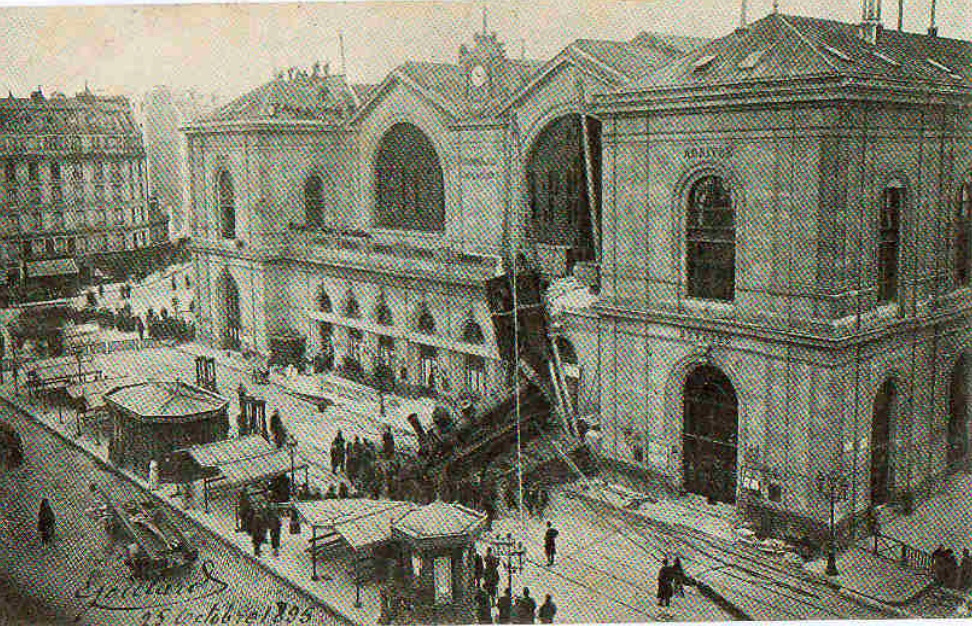
Onlookers, some armed with cameras, flock to the outskirts of Montparnasse station to witness the catastrophe. To control the crowd, 20 mounted municipal guards and 100 on-foot officers are dispatched to the scene, while the locomotive remains in place for four days, waiting to be cleared. To get a closer view of the spectacle, some curious souls even buy a ticket to an affordable destination so they can access the platforms blocked off by the authorities.
On October 25, the machine was hoisted using a system of winches and hydraulic rams onto a trolley drawn by 25 horses and transported to the Cail works at Javel for inspection by Lévy, the mining engineer designated by the examining judge as the expert. The tender, for its part, was brought back into the station and set back on the rails, aided by a locomotive pulling it from the platforms.
Widely reported by the French press and international outlets as well, the incident led to a conviction: two months in prison and a 50-franc fine for the locomotive engineer Guillaume Marie Pellerin, who had worked for the railways for 19 years, and a 25-franc fine for the driver Victor Garnier, though the two men maintain that the accident was caused by a Westinghouse-type air brake failure that ceased functioning at the level crossing on Rue du Château.
To go further:
La Gare Montparnasse, l'histoire de la gare qui a fait entrer l'Ouest dans l'ère moderne Montparnasse Station, the story of the station that ushered the West into the modern age
Famed for its tower, its vast concourse, and departures to Brittany or the Southwest, Montparnasse Station today stands as one of Paris’s principal gateways to the outside world. Yet its history is also the story of a spectacular crash, a complete rebuild, and a revolution in travel with the arrival of the TGV Atlantique. [Read more]
Dates and Opening Time
On October 22, 2026
Location
Montparnasse station
Place Raoul Dautry
75015 Paris 15
Route planner
Accessibility info






















 La Gare Montparnasse, l'histoire de la gare qui a fait entrer l'Ouest dans l'ère moderne
Montparnasse Station, the story of the station that ushered the West into the modern age
La Gare Montparnasse, l'histoire de la gare qui a fait entrer l'Ouest dans l'ère moderne
Montparnasse Station, the story of the station that ushered the West into the modern age