The distribution of Paris's arrondissements can sometimes be a bit confusing. Articulated like a snail, these 20 districts each share a different spirit, vibe and heritage, bearing witness to the evolution of the capital which, as it expanded, integrated neighboring villages to form the Paris we know today. But did you know that the assignment of numbers was not always as we know it, and was even the subject of debate when the capital was enlarged in 1860? Thecurrent 16th arrondissement of Paris, known for its beautiful neighborhoods, firmly refused to become the 13th arrondissement as originally planned. Why was this?
One obvious assumption would be superstition: the 13th is reputed to be a number that can bring bad luck. Yet this is not the reason behind the dispute, but rather a popular expression. To understand this case, we need to go back to the time when Paris was made up of 12 arrondissements, which are not the same as those of today. In those days, a couple living together was said to have "married at the 13th arrondissement town hall". The latter didn't exist at the time, so the same applied to their marriage.
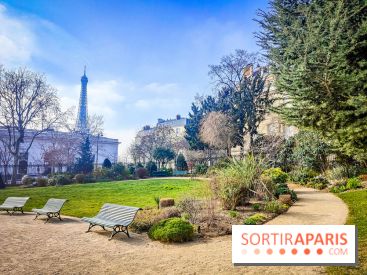
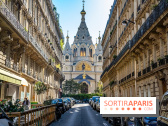
When the capital was enlarged in 1860 to create 8 new arrondissements, the number 13 was assigned to the area to the west of Paris on the right bank of the Seine, where the villages of Passy, Chaillot and Auteuil were located. However, the inhabitants refused to be assimilated to an expression evoking a shameful situation for the time. As a result, the 16th arrondissement was finally assigned to them, while the 13th arrondissement found itself in the south of Paris. A new numbering system for Parisian districts was born, and this is the one we still know today.