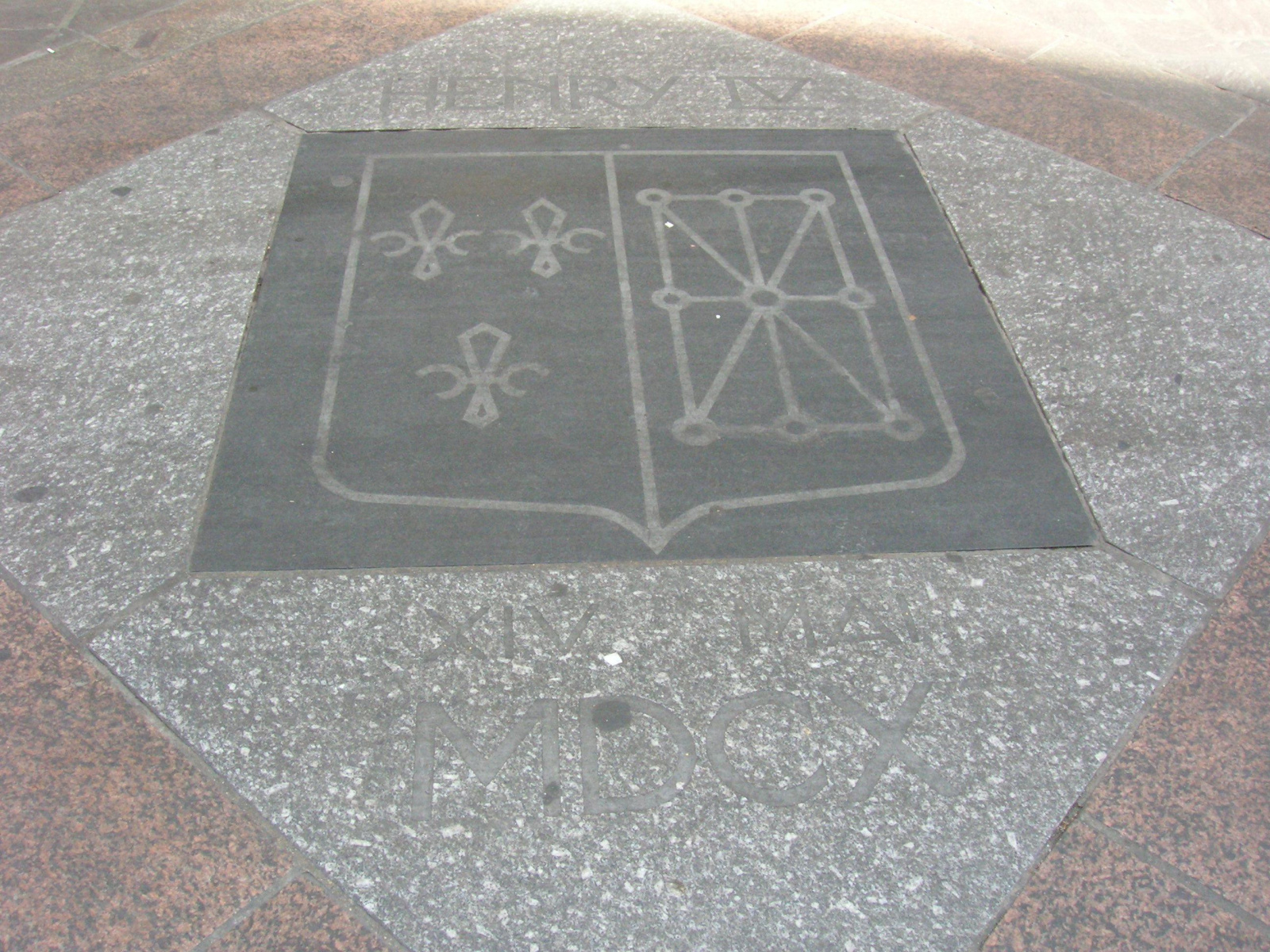
It is easy to miss, as it blends in with the pavement. In fact, thousands of passersby walk over it without even noticing. And yet, in the heart of the Les Halles district, a discreet plaque embedded in the pavement marks one of the most memorable places in the capital: the site ofthe assassination of King Henry IV. There, opposite number 11 Rue de la Ferronnerie, a small metal ornament sealed in stone silently recounts a decisive moment in French history.
On May 14, 1610, Henry IV was on his way to visit his minister Sully, who was ill. He left the Louvre Palace by carriage and took this narrow alleyway. A cart was blocking the way, slowing down the procession. That's when François Ravaillac, a religious fanatic convinced he was acting for a divine cause, appeared. He climbed into the royal carriage and stabbed the king twice. The attack proved fatal.
The scene took place in broad daylight, in one of the busiest districts of the city. And the emotion was equal to the stature of the man who fell. For Henry IV was not a king like any other. He remains one of the most popular monarchs inFrench history. A former Protestant who converted to Catholicism to unite a kingdom torn apart by religious wars, an architect of peace with the Edict of Nantes, a king of compromise and great works, he had won the affection of his people. Legend has it that he wanted "every farmer to be able to put a chicken in the pot every Sunday" – a powerful symbol of his desire for social justice.
His death sent shockwaves throughout the kingdom. In Paris, some were arrested for expressing their joy—or even simply approving of the assassin. The popular emotion was immense, mixed with anxiety. The idea that a king, even a beloved one, could fall in an ordinary street, among his subjects, shook the image of monarchical power. The memory of this tragedy has not faded, even though today many people pass by the very site of the assassination without knowing it.
This cobblestone in the pavement, adorned with two coats of arms—those of the royalty of France and Navarre—is there to remind us that here, in the heart of Paris, a king fell. It is not a statue or a grand monument. Just a detail on the ground, at foot level, as if to better anchor itself in the collective memory.
This page may contain AI-assisted elements, more information here.