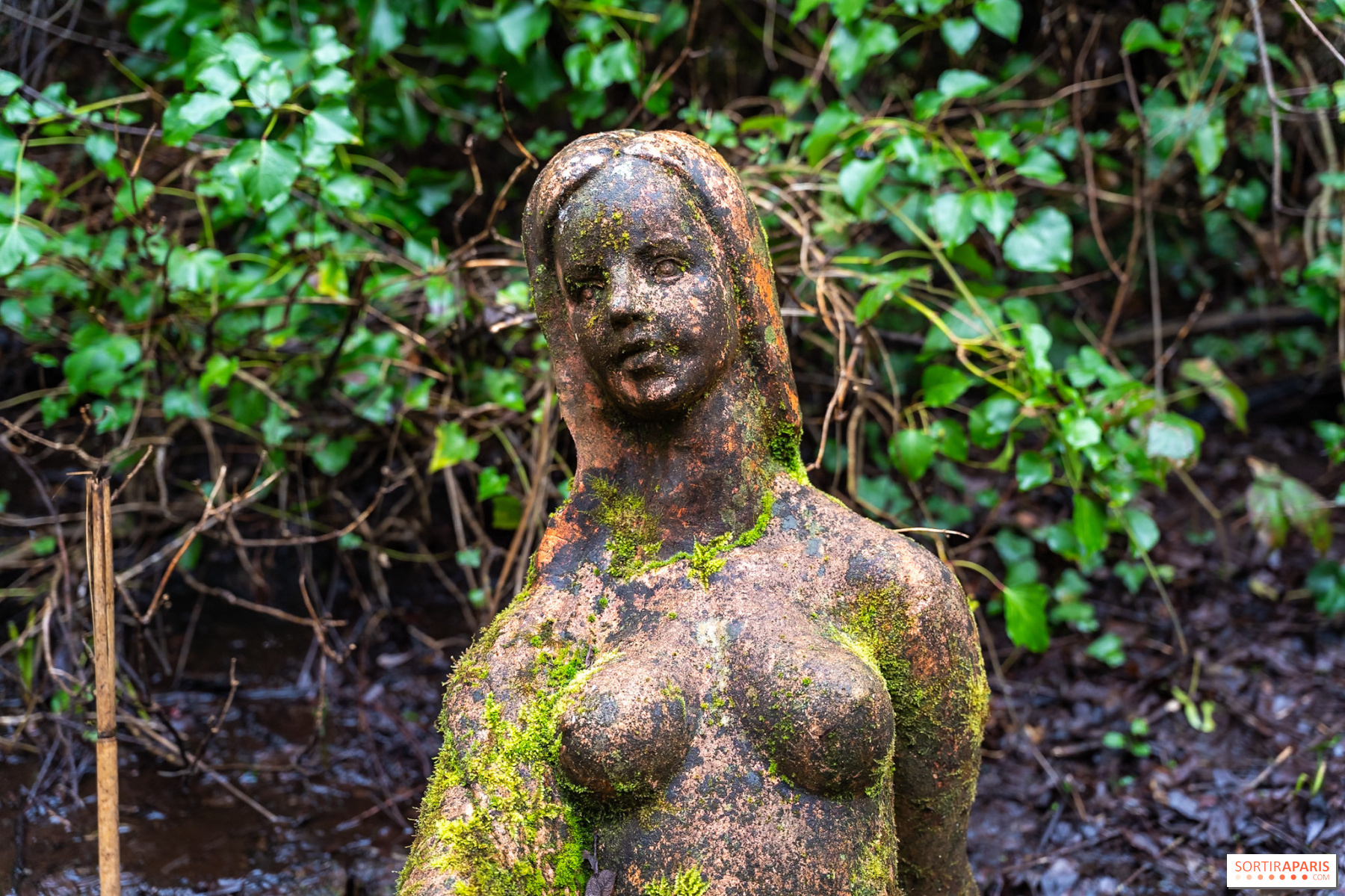
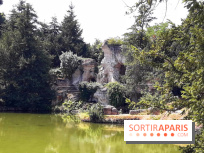
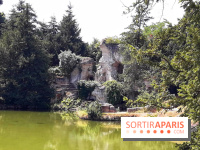
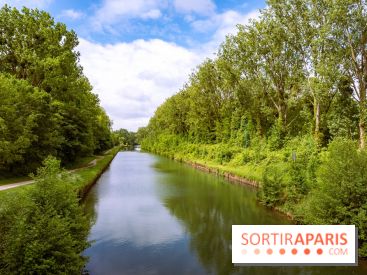
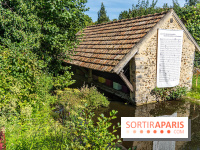
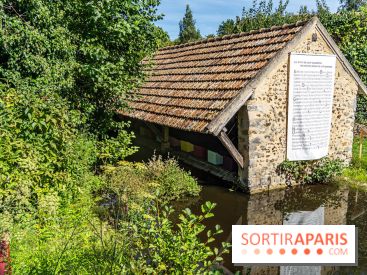
If you're looking for a great hiking spot in the Yvelines, head to Essarts-le-Roi to discover a little-known gem: the statue symbolizing the source of the Yvette. Hidden just below the Vaujoyeuse farm, at an altitude of 135 meters, this sculpture of a nude woman stands as a guardian of the small watercourse—spanning 39.3 kilometers—that flows through the Yvelines and Essonne departments before joining the Orge River at Épinay-sur-Orge.
The piece we examine today remains anonymous, but it draws inspiration from an original marble statue created by Léon Charles Fourquet, a sculptor born in 1841 in Saint-Forget, in the Yvelines. A close friend of Rodin, Fourquet crafted a 'Source of the Yvette,' which can now be admired at the Dole Museum in Jura. The version installed at the spring site stays true to the spirit of the original work, celebrating the birth of the river that has lent its name to many surrounding towns.

The origin of the name Yvette captivates both linguists and local history enthusiasts. Several theories emerge, each as compelling as the last. The first suggests it derives from the Gaulish word "ivos," meaning "yew tree," thus giving rise to "petit yew" or "little yew." Another hypothesis traces it back to the Latin "equa" (mare), mentioned in the 11th century as "villa nomine Equata," which may have evolved into "ive" or "little mare" in Old French. There's also the connection to "l'ivette," a plant typical of wet environments, or the Old French roots for water, "ove" or "eve," which could have led to the form "evette," meaning "small watercourse."

Historians like Pierre Gérard also link the Yvette to the Gaulish "Epita," which gave rise to the Epte, a tributary of the Seine. The root "equa" can be found in the name of the vast Yvelines Forest, "Aquilina silva," of which the Rambouillet Forest is only a fragment. Between mare, yew tree, small stream, or Gaulish heritage, the mystery remains, adding to the charm of this francilian river.
To visit this hidden gem, head over to 24 Yvette Street in Essarts-le-Roi, nestled within the Yvelines. Just a few steps on foot bring you to the sculpture, now easily accessible thanks to a carefully crafted platform of wooden planks. This discreet walkway preserves the site’s integrity while allowing visitors to get close without getting their feet wet, especially during the high-water winter months.

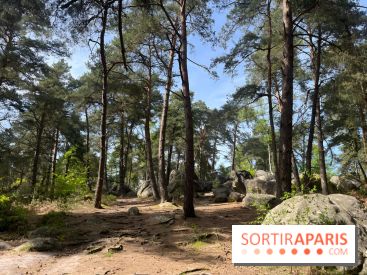
But why settle for a quick round trip? Hiking enthusiasts will enjoy extending their exploration with a loop walk that winds through the surrounding area. The site is also part of the GR11 Île-de-France trail, a major trek that encircles the region and provides stunning panoramic views of the Chevreuse Valley.
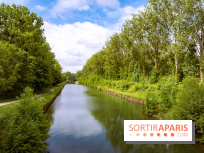
The Yvette swells to high waters during winter, fed by numerous springs that draw from the limestone underground of the Beauce plateau. Yet, it never fully dries up in the summer. Its watershed covers an area of 286 km², creating a vibrant ecosystem worth exploring. Strollers often encounter herons, ducks, and a diverse aquatic flora along its course.
In short, this Yvette River source statue offers a delightful escape into nature just under an hour from Paris—perfect for a relaxing Sunday outing or a refreshing hike. Visitors come here to enjoy the heritage, delve into history, and reconnect with the outdoors, which does so much good. It’s a spot worth exploring, especially if you're already discovering the stunning Chevreuse Valley and its many hidden gems.
Location
Yvette River Source
24 Rue de l'Yvette
78690 Essarts le Roi (Les)
Route planner
Prices
Free
Recommended age
For all