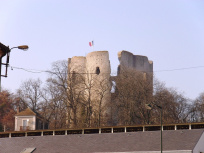
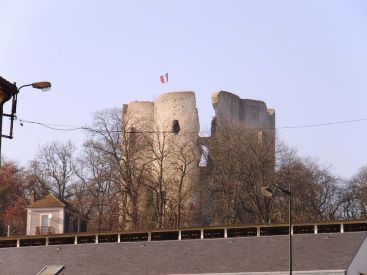
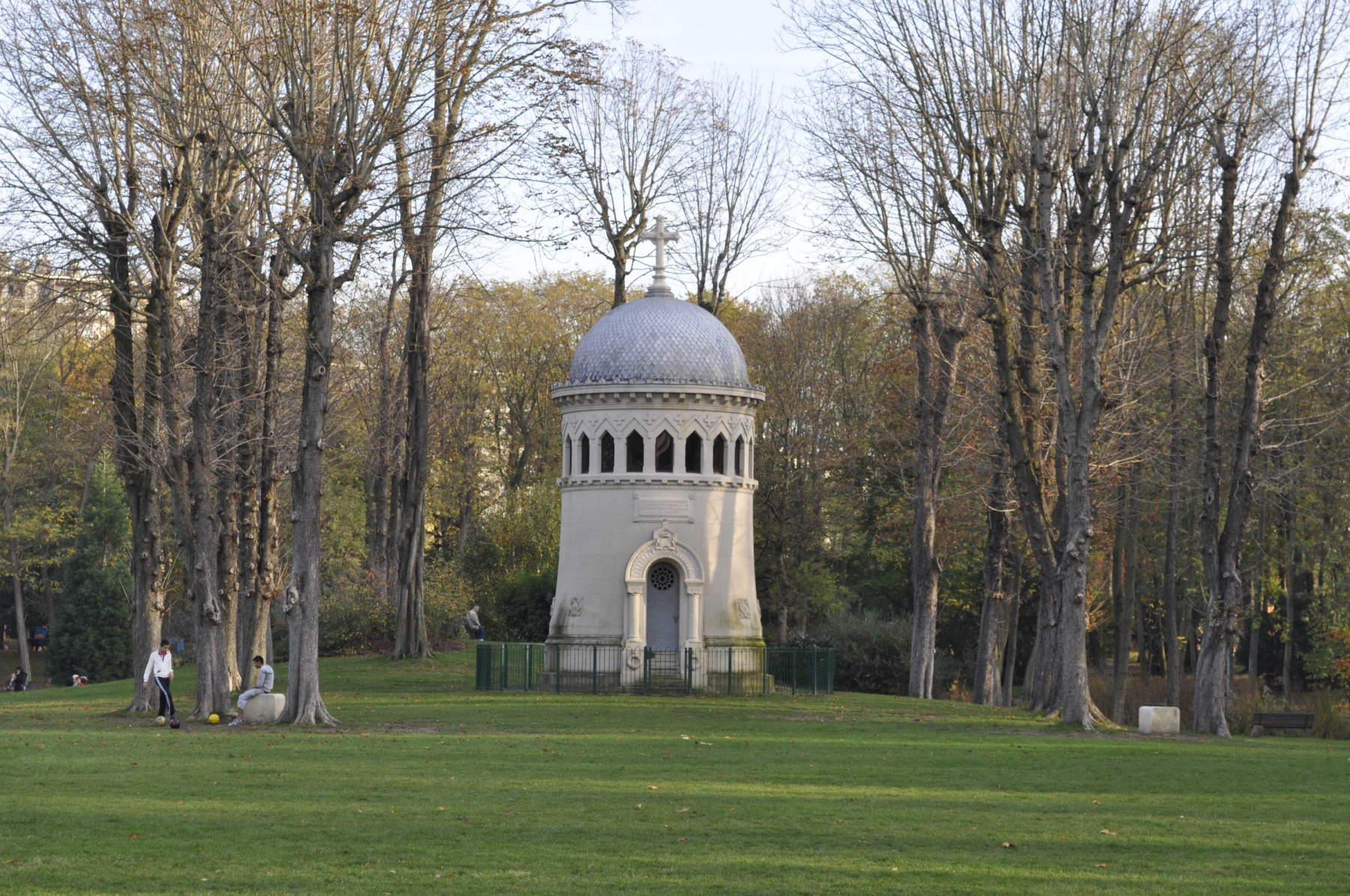
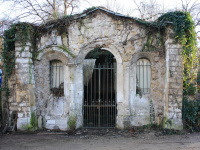
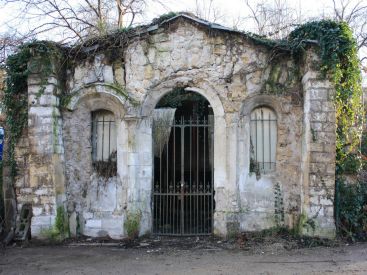
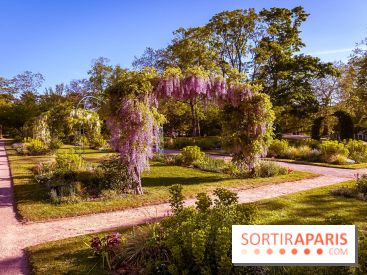
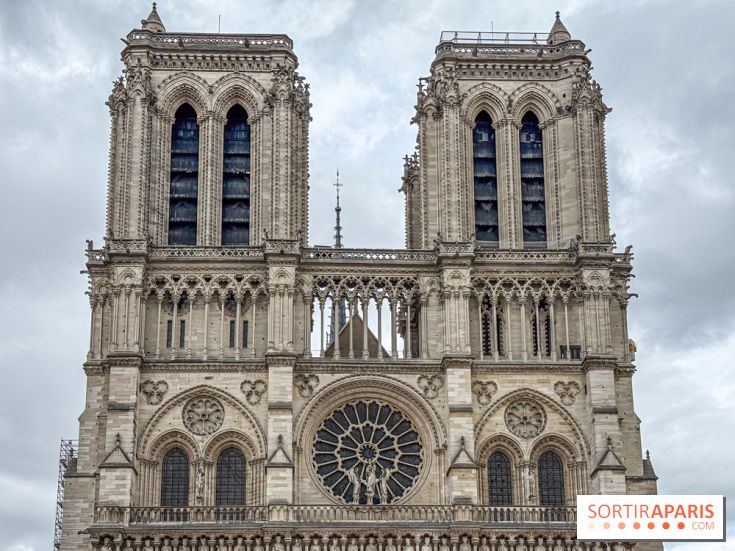
In Ladoucette Park, a spacious green area cherished by families and walkers in Drancy, you might be surprised to come across a circular building tucked away from the tree-lined paths: the Mausoleum of Lady Ladoucette. This small, enigmatic monument, almost unobtrusive next to the castle and the educational farm, nonetheless tells a captivating story that dates back to the second half of the 19th century.
This rounded stone monument, topped with a scaly slate dome and crowned with a cross, was built on an old mound — a remnant of an ancient fortification — to house the remains of the Baroness of Ladoucette. A prominent figure in the local community, she was born Émilie Victorine Thibaul and became a baroness through her marriage to Charles Loetitia de Ladoucette. She was renowned for her social and charitable commitment in Drancy, founding a shelter and supporting numerous initiatives dedicated to children and education.
The inscription above the mausoleum’s entrance still echoes a solemn moment in history: it commemorates the crowning of the statue of Notre-Dame de Drancy in 1874 by an apostolic nuncio — a significant event that the baroness is said to have actively supported, two decades before her death.
The mausoleum features three architecturally distinct levels, each accentuated by intricate detailing:
A foundation featuring small sash windows
A middle level adorned with sculpted quadrilobed designs and a fleur-de-lis, symbol of nobility
An upper section with lancet windows in the shape of mitres, framed by crosses and topped with carved gargoyles
Initially, the Baroness was laid to rest in this mausoleum. However, when the park was turned into a public space in 1976 and opened to visitors, her remains were removed from the mausoleum and reinterred at the Parisian cemetery in Drancy, in line with modern funeral customs.
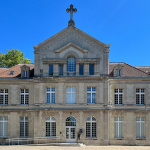
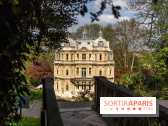
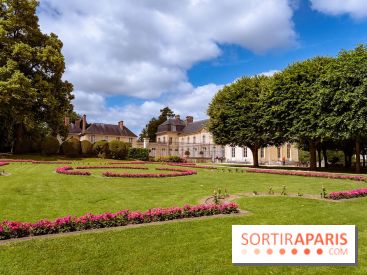
 This historic château in Seine-Saint-Denis, now serving as a cultural venue, has been designated as a regional heritage site.
Discover the Château de Ladoucette in Drancy, a historic and cultural gem of Seine-Saint-Denis. This 16th-century castle, rebuilt in the 19th century, reflects the lesser-known heritage of Île-de-France. Today, it serves as a vibrant cultural hub, hosting exhibitions, workshops, and events amidst a park designated as a regional heritage site. [Read more]
This page may contain AI-assisted elements, more information here.
Dates and Opening Time
Next days
Tuesday:
from 08:00 a.m. to 08:00 p.m.
Wednesday:
from 08:00 a.m. to 08:00 p.m.
Thursday:
from 08:00 a.m. to 08:00 p.m.
Friday:
from 08:00 a.m. to 08:00 p.m.
Saturday:
from 08:00 a.m. to 08:00 p.m.
Sunday:
from 08:00 a.m. to 08:00 p.m.
Monday:
from 08:00 a.m. to 08:00 p.m.
Location
Parc de Ladoucette
Rue Ladoucette
93700 Drancy
Route planner