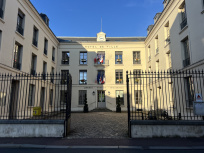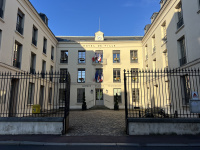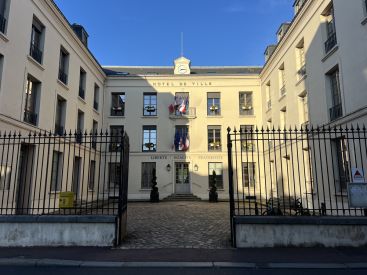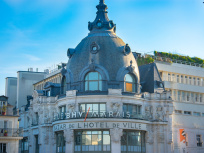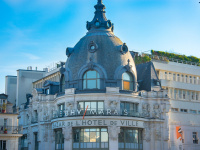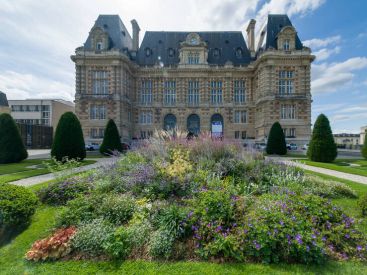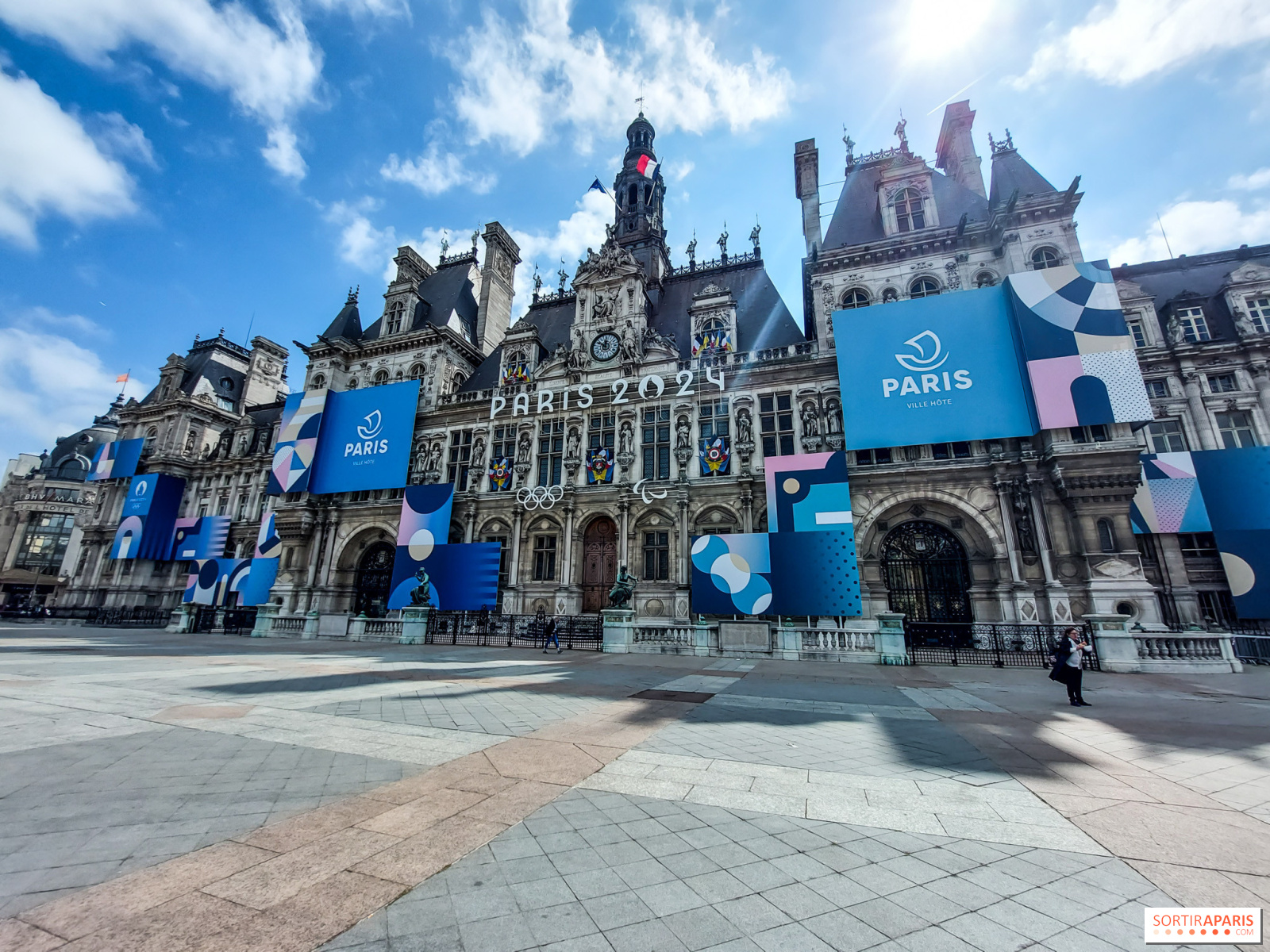
Before taking on the appearance you see today, the City Hall looked quite different! On May 24, 1871, amidst the turmoil of the Paris Commune, the City Hall was set ablaze by the Communards as Versaille’s troops advanced through the city. Within hours, flames consumed the entire building, destroying both its structure and contents: municipal archives, the historic library, and a significant portion of Parisian civil records all vanished in the fire.
The loss was significant, affecting both administrative functions and cultural heritage. Located at its current site since the 14th century on City Hall Square, the building has changed dramatically over time. The structure underwent a complete reconstruction between 1874 and 1882, adopting a Neo-Renaissance style inspired by the former palace, though it used different materials and foundations from the original.
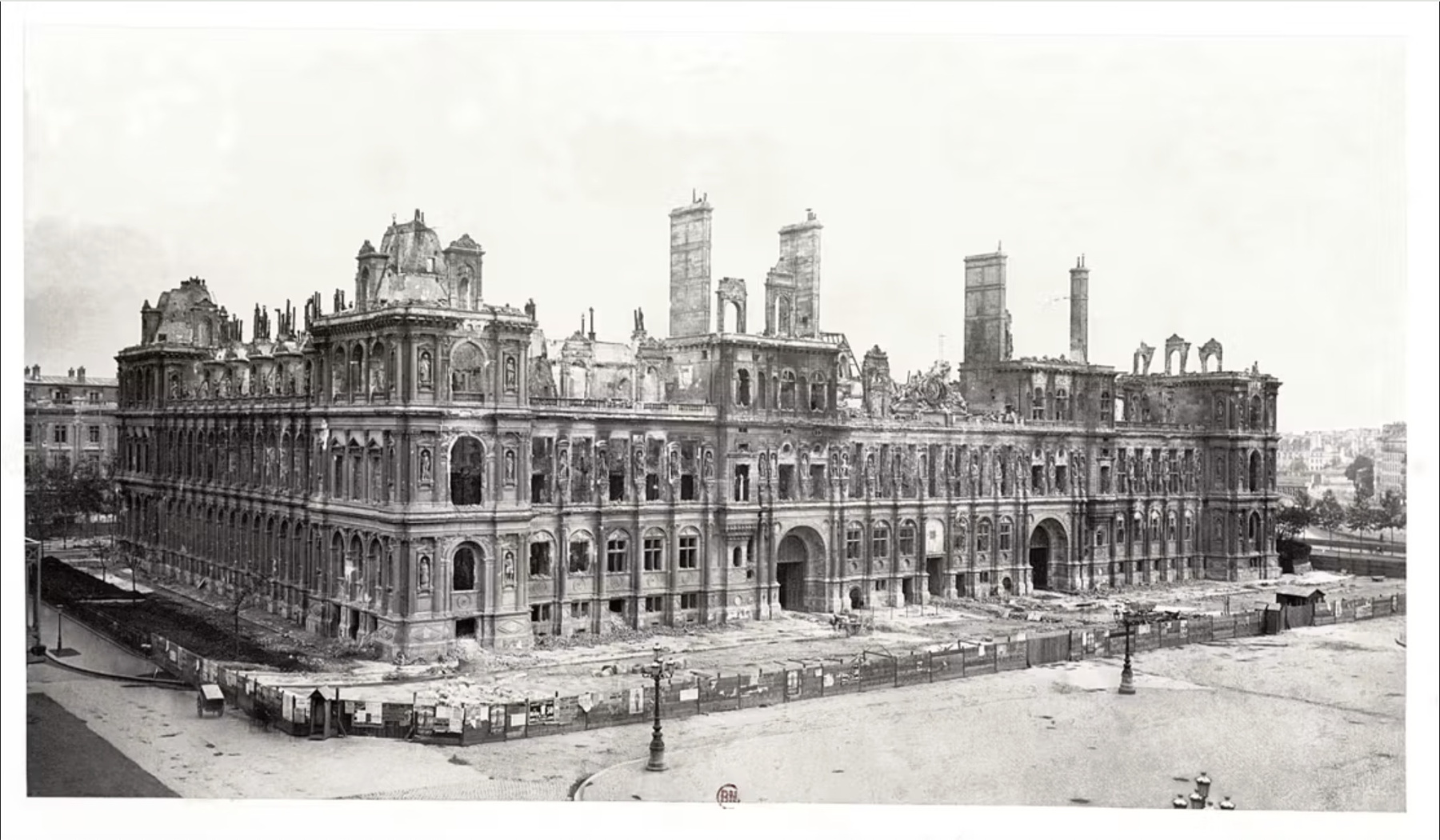
Before its destruction, the City Hall showcased a striking architecture rooted in French Renaissance design. Its origins date back to 1357, when the so-called "Pillared House"—a municipal residence located along the banks of the Seine—came into being. This initial structure was replaced in the 16th century, under the direction of King Francis I, by a grand palace crafted by the architect Domenico da Cortona, known as Boccador.
Completed in 1628, the building featured a facade adorned with pilasters, hipped roofs, and sculpted ornaments characteristic of Late Renaissance aesthetics. At the time, it served as a pivotal hub of Parisian political life, hosting successive bodies such as the Committee of Public Safety, revolutionary authorities, and, in 1830, the provisional government. Its central role in city affairs made it a symbolic target amid a period of civil unrest.
The fire of May 1871 completely destroyed the building. Nothing structural could be salvaged from the flames. Only a few decorative pieces survived. Today, visitors can find remnants of it at the Carnavalet Museum in the Marais district, which houses an original carved door, along with models and engravings depicting the building's appearance before its destruction.
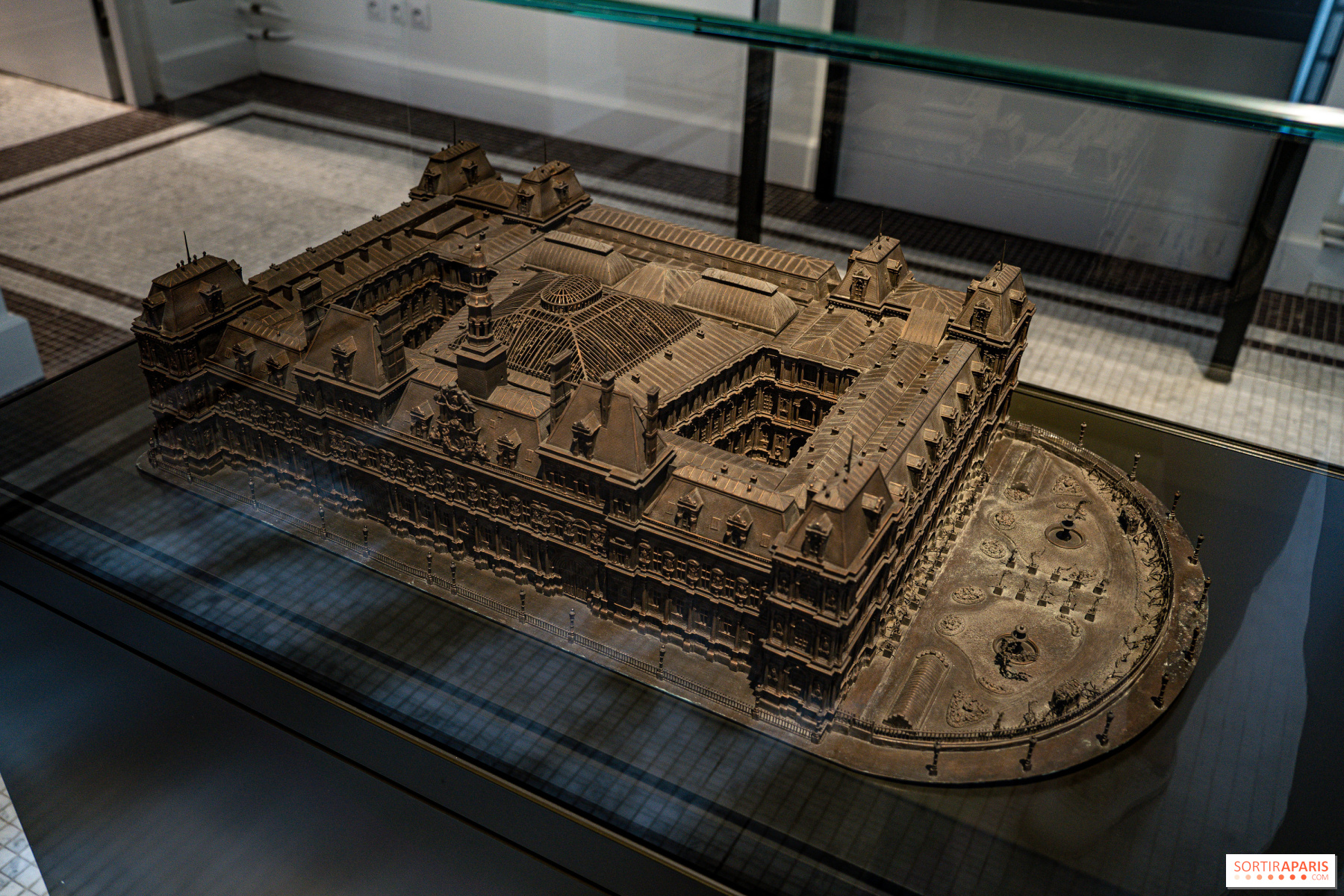
These objects provide a glimpse into what the City Hall looked like before the devastating fire: a building that was both grandiose and ornamental, embodying the historical and administrative heart of Paris. The reconstruction of the City Hall's past is based on preserved documents, artistic testimonies, and period artifacts. Together, these elements preserve the memory of an iconic site lost in flames — a silhouette that still looms large in the heritage stories of the capital.
This page may contain AI-assisted elements, more information here.