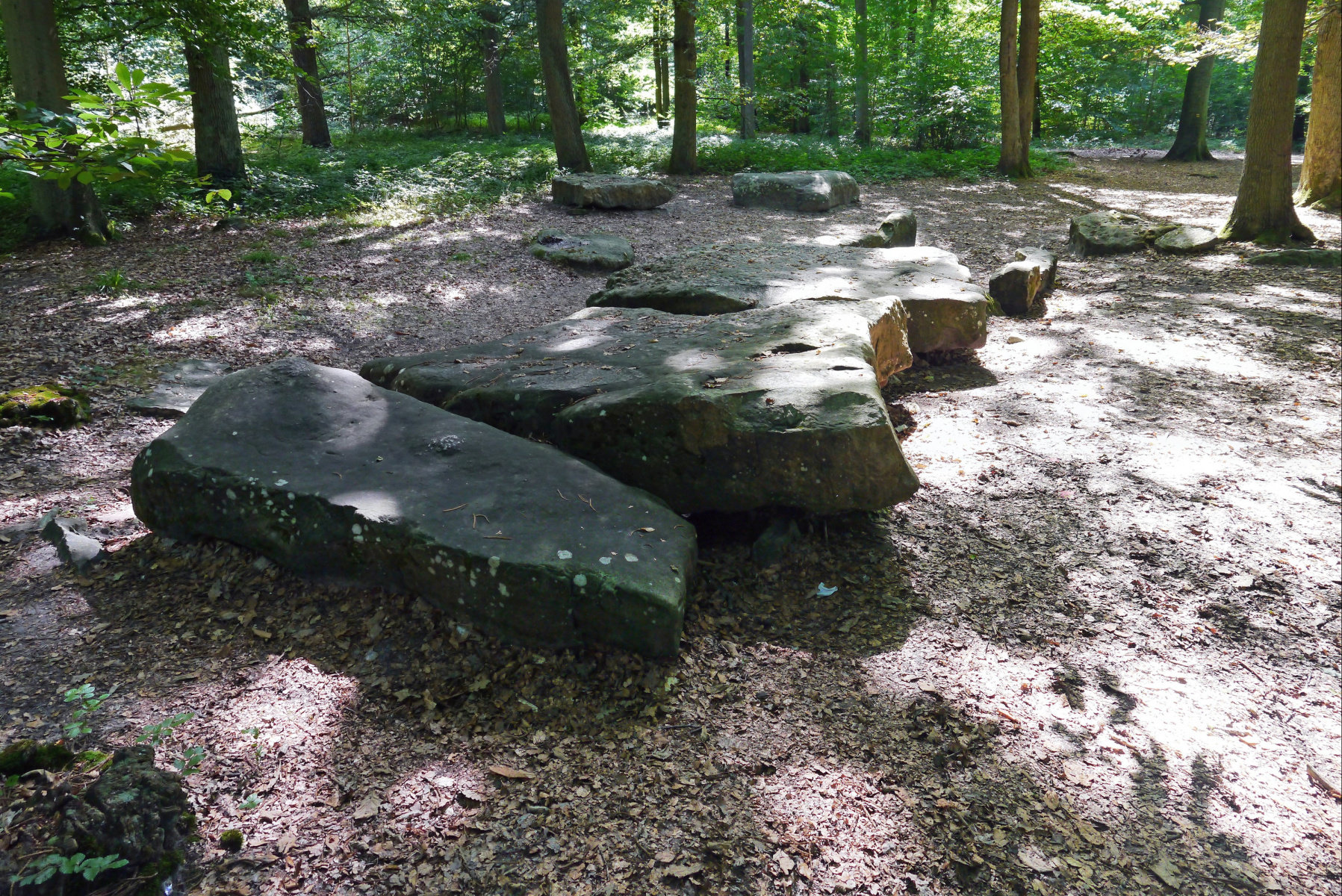
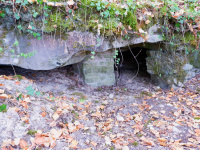
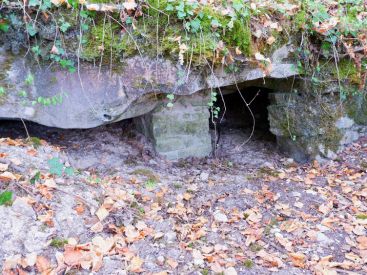
Could the most significant witness of Prehistoric Ile-de-France be lying just beneath your feet, along a quiet trail in the Val-d’Oise? Few walkers are aware, but Île-de-France is home to a megalithic monument of extraordinary importance: the Turquoise Stone, often regarded as the region’s largest megalith.
The Turquoise Stone— sometimes spelled Pierre Turquoise in old texts — is a menhir, which means a large upright standing stone erected by Neolithic peoples. Today, it lies horizontal on the ground and is located in the Val-d’Oise department, within the commune of Saint-Martin du Tertre.
unprecedented size in the region: approximately 5 meters long, nearly 2 meters high, and an estimated weight of over 100 tons. When it comes to Île-de-France, no other known megalithic structure matches this mass, earning it the frequent title of largest megalithic monument in Île-de-France.
Like many prehistoric monuments, the true purpose of the Turquoise Stone remains a matter of debate. Archaeologists generally agree that it dates back to the Neolithic period — several millennia before our era — a time when the first agricultural communities began to establish themselves permanently in the region.
The Turquoise stone is now regarded as the archetype of burial sites associated with the Seine-Oise-Marne (SOM) culture, a Neolithic culture that flourished between 3500 and 2800 BCE in the Paris Basin.
This culture is notably characterized by:
Mass graves,
Imposing stone funerary monuments,
A highly organized social structure centered around funeral rites.
The slab visible today is believed to have once covered a collective tomb chamber, where multiple individuals were buried over time. While its funerary purpose is now well-established, details about the tomb’s exact layout, the number of those interred, and how long the site was in use remain uncertain, as surrounding structures have long since disappeared with the passage of time.
Good news for history enthusiasts and heritage lovers: the Turquoise Stone is now open to visitors. Nestled in the heart of nature, it’s best explored during a walk, often away from the well-trodden tourist paths. However, the site remains raw and undeveloped: there are no signage or guided trails, so visitors should come prepared with sturdy shoes, respect the monument— which is protected and classified—and help preserve the peaceful setting.
This page may contain AI-assisted elements, more information here.
Location
Pierre Turquaise
pierre turquaise
95270 Saint Martin du Tertre