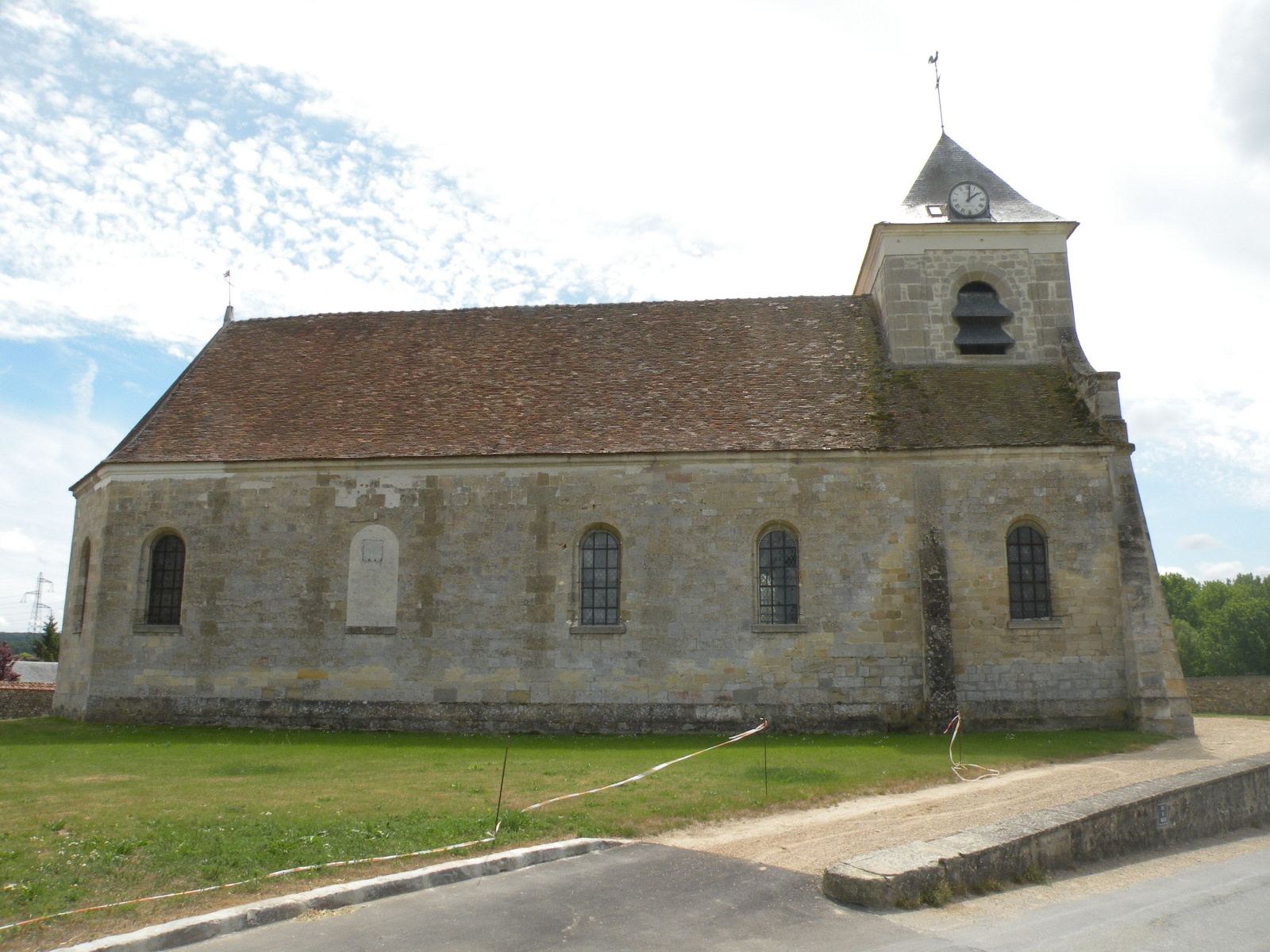
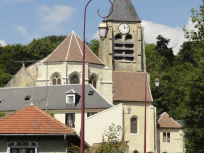
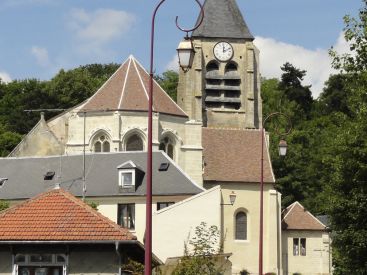
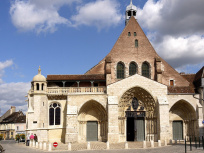
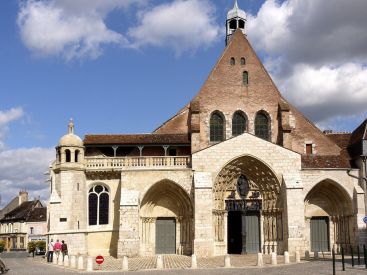
On the edge of the town of Sagy, in the rural setting of the Vexin français, in the Val d'Oise, the église Saint-Sulpice stands out for its austere silhouette and its position just beyond the village’s core. Today, the site bears the Patrimoine d’intérêt régional label, a designation created by the Région Île-de-France to signal buildings not protected as Monuments historiques but deemed representative of the Francilian heritage.
The name points to the vocation of Saint Sulpice, a Bourges bishop from the 7th century nicknamed The Pious, whose cult spread across numerous French parishes. In Sagy, there is said to have been a first church as early as the 12th century. The medieval building was destroyed by a fire in the 18th century, and the current church was rebuilt starting in 1740 and inaugurated in 1741, in a much simpler design than many of the old Vexin churches.
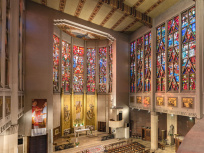
This church labeled Regional Heritage of Interest catches the eye precisely for its architectural restraint. The building features a single nave, a polygonal three-sided sanctuary, a square bell-tower-porch topped with slate, and a façade rhythmically broken by pilasters and a plain triangular pediment. This sparseness, both outside and inside, is part of its patrimonial appeal, just as its integration into the built landscape of a village in the Vexin region. The site also preserves at least one statue of the Virgin and Child protected as a heritage object.
The Saint-Sulpice Church thus tells a story of continuity and reinvention: born in the Middle Ages, rebuilt in the 18th century, it has withstood the test of time and even suffered damage during the storm of August 12–13, 2020, when part of its roof collapsed. Yet it remains a Catholic parish church, linked to the Diocese of Pontoise and to the Avernes-Marines parish, signaling ongoing liturgical use. Its recognition by the Île-de-France Region was formalized on January 25, 2023, since which time it has been officially labeled Regional Heritage of Interest.
This page may contain AI-assisted elements, more information here.
Location
Saint-Sulpice Church
1 Rue du Moulin
95450 Sagy
Route planner