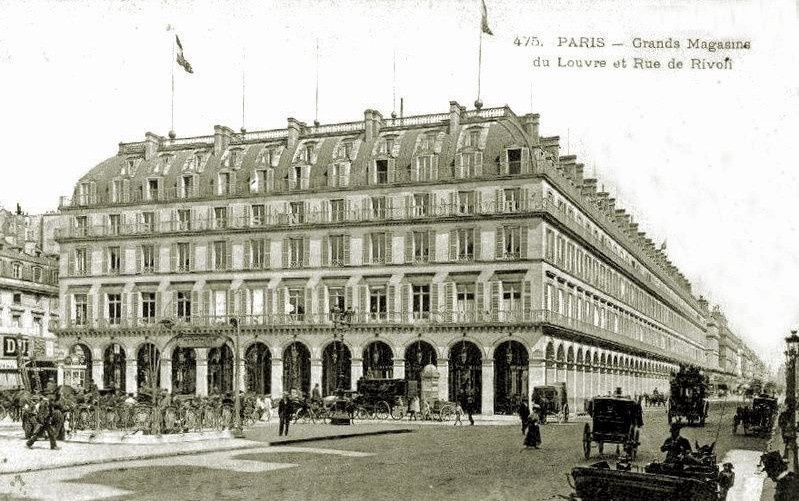
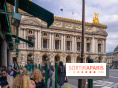
In the 19th century, the Louvre district was not just a magnet for art lovers and fashionable strollers: it was also at the heart of Parisian commerce. Along the Rue de Rivoli, the Grand Magasins du Louvre symbolized the revolution of the department store, where visitors came not only to shop but also to marvel at, compare, and be captivated by modernity. Behind their grand façade, an entire Parisian way of life was taking shape.
The story begins in 1855, when Alfred Chauchard, Auguste Hériot, and Charles Eugène Faré open the Galeries du Louvre on the ground floor of the Grand Hôtel du Louvre. By 1857, the establishment is renamed Grands Magasins du Louvre. Its location, just steps from the Louvre and the Palais-Royal, quickly made it a premier destination in a Paris undergoing rapid change. Their success mirrors a profound shift in shopping habits. The department store is no longer just a larger shop—it becomes an experience. Visitors no longer come merely for quick errands but to browse, discover, and even indulge in a bit of dreaming.
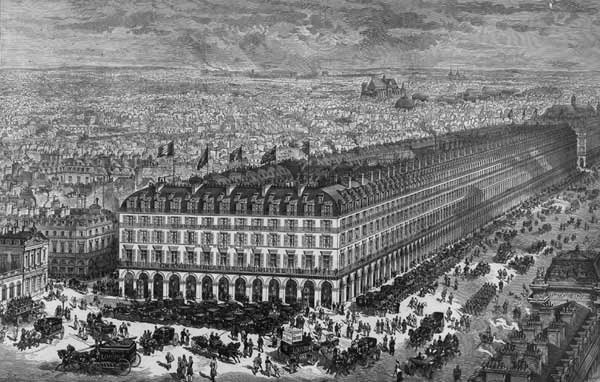
After several expansions, Les Grands Magasins du Louvre offered no less than 52 departments and counters: silk fabrics, shawls, hosiery, toys, Parisian souvenirs, and even watercolors. This wide assortment drew in an increasingly large clientele eager for new finds, cementing the store’s reputation as a symbol of Parisian commerce. These stores didn’t just sell objects: they created an experience that sparked desire. Everything was carefully designed to catch the eye, appeal to taste, and inspire customers to take home a piece of modern Paris.
During the night of September 23 to 24, 1943, a Royal Air Force bomber, hit over Paris, crashed into the building, which was nearly completely destroyed apart from its façades. This event left a lasting mark on the neighborhood’s memory.
After being rebuilt, the shops never quite regained their former sparkle. As consumer habits changed and competition grew fiercer, the establishment ultimately closed for good in 1974.
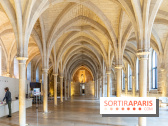
The building then brought about a new life. After extensive renovations, it became in October 1978 the Louvre of Antiquaries, shifting its focus from everyday novelties to antiques, artworks, and vintage objects. The venue changed its audience, atmosphere, and purpose, all while maintaining its prestigious status. Over time, this Louvre of Antiquaries also lost some of its shine and closed gradually during the 2010s. The site was subsequently transformed once again. Since late 2025, it has been home to the Cartier Foundation, housed in spaces redesigned by Jean Nouvel.
Today, the Louvre district is primarily associated with museums and heritage. However, in the 19th century, it was also one of Paris’s most vibrant hubs of commerce. In front of the Louvre, visitors didn’t just come to marvel at masterpieces—they also came to indulge in the thrill of discovering the latest novelties.
Location
Place du Palais Royal
8 Rue de Montpensier
75001 Paris 1