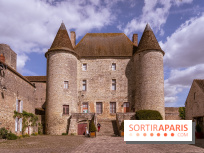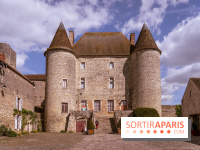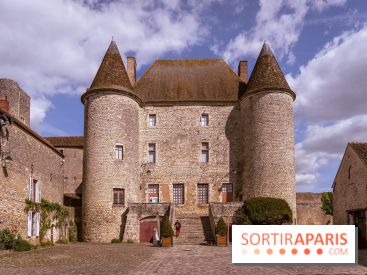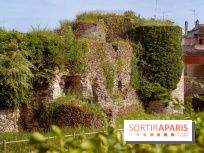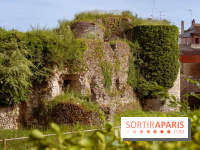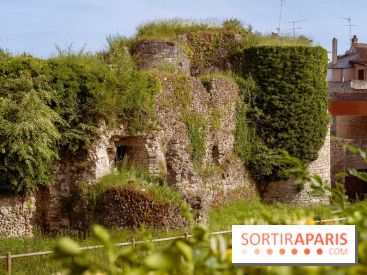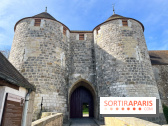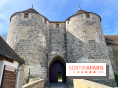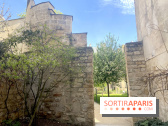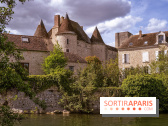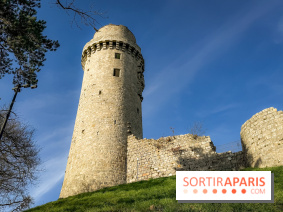
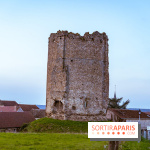
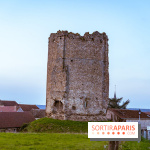
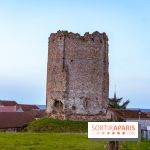
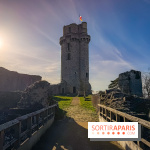
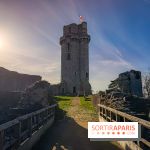
In Seine-et-Marne, about 90 km east of Paris, the medieval city of Provins houses one of Île-de-France’s most singular monuments. The César Tower, also known as the Grosse Tour, is a 12th-century keep whose scale and shape are striking. Classified as a historic monument since 1846 and inscribed on the UNESCO World Heritage List along with the whole town, it can be visited year-round, on Rue de la Pie in the upper town. A symbol of the feudal power of the Counts of Champagne, it is also a striking medieval architectural oddity: the only octagonal keep built on a square base known in France. Between dungeon cells plunged into darkness, siege lore, and bells that still toll today, the visit offers far more than beautiful stone.
A local tradition attributes the tower's construction to Julius Caesar himself, but no historical source confirms this tale, as the Archives départementales de Seine-et-Marne remind us. The name should be read as a symbol of power. Moreover, the Temple Tower, built in a similar style, bore the same nickname. The historical reality is just as fascinating: it was Count Henry the Liberal, Count of Champagne from 1152 to 1183, who had this keep erected in Provins to assert his authority over the town and the county. The tower carried other, more evocative names: the King’s Tower, the Great Tower, or even the Prisoners’ Tower.
What is less well known is just how brightly Provins shone at that time. The town was then the third in the kingdom of the Franks, behind Paris and Rouen. Under the reign of Henry the Liberal, the foires de Champagne reached their zenith, drawing Italian, Flemish, Iberian and German merchants year-round. Building an imposing keep atop the upper town was therefore simultaneously a military act, a political symbol, and a demonstration of the city’s judicial power over a mercantile metropolis riding high on the crest of its glory.
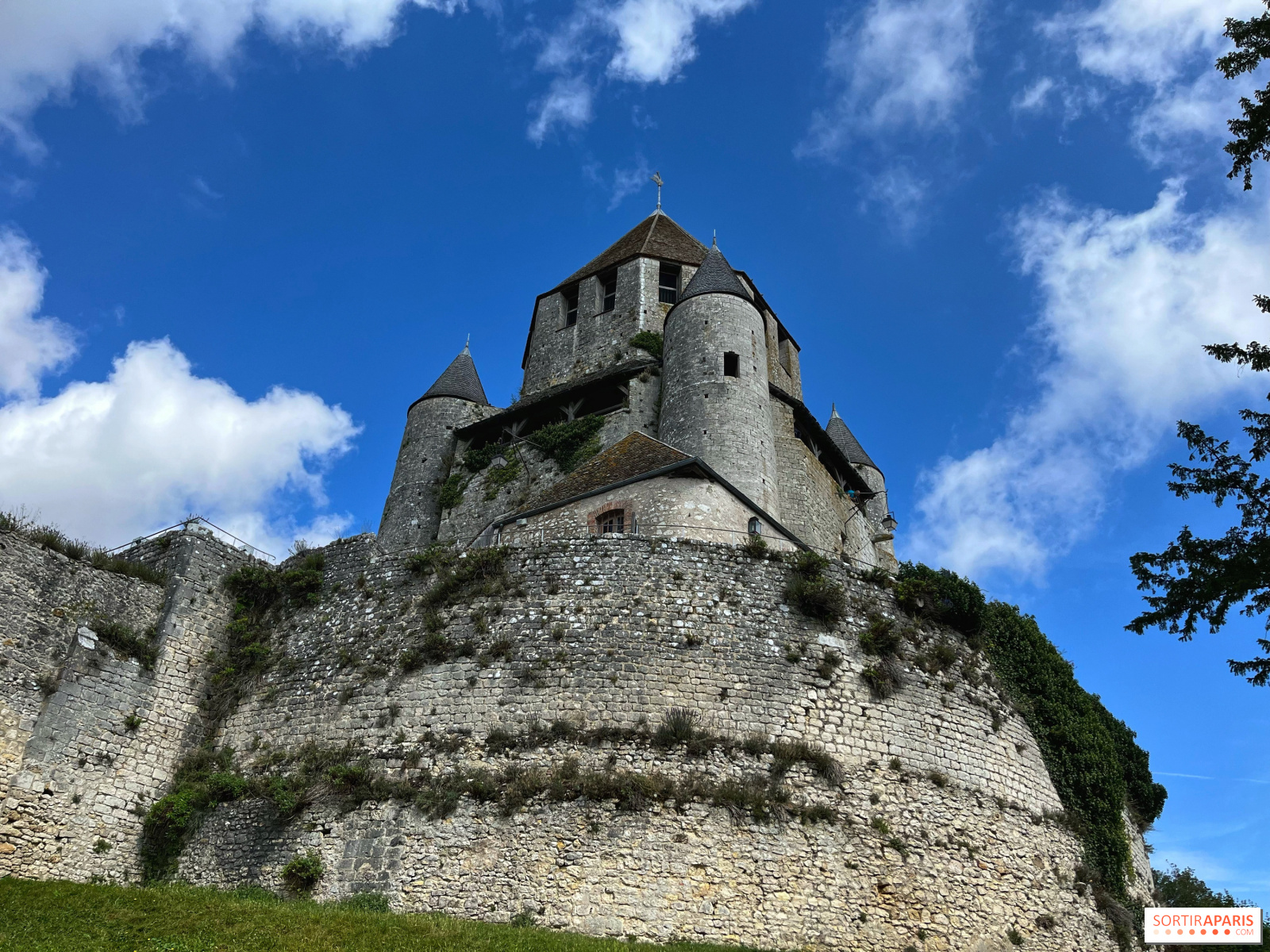
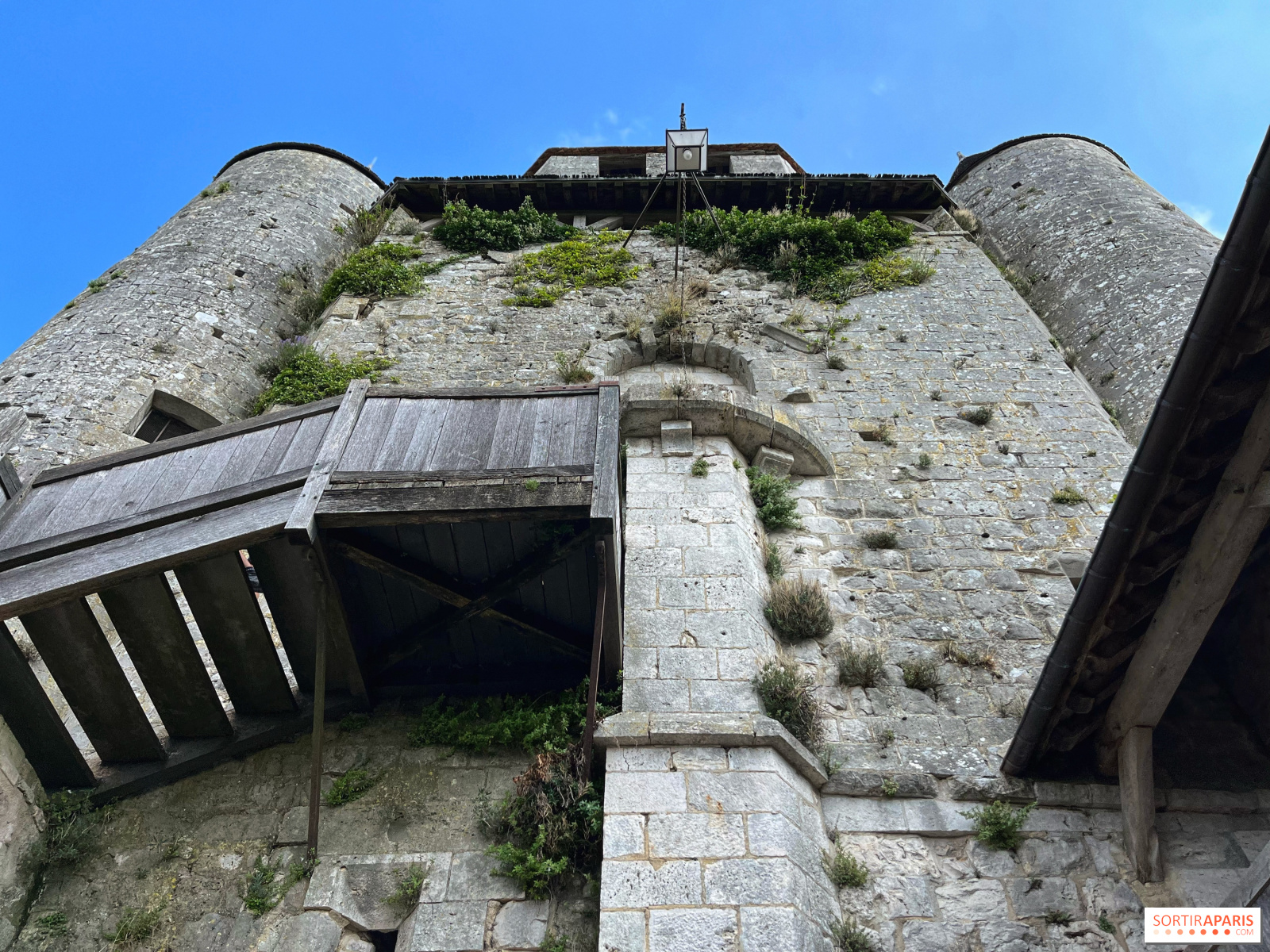
What sets César Tower apart from so many medieval keeps is that its role as a prison was not an accidental byproduct of history but a deliberate aim from the very beginning. The construction carried a clearly declared political purpose: to showcase the economic and judicial might of the Count of Champagne. The dungeons were built in from the outset, and the great hall probably served, more as an ancillary function, as a courtroom. The accused were judged in a room often adjoining the dungeons, as was the practice of the time. Prisoners were locked away in the turrets and the dungeons, narrow spaces that could plunge into total darkness. Today, access is through narrow passages carved into the thickness of the walls, not without a certain frisson.
The César Tower also bore witness to a dramatic episode of the Hundred Years’ War, with traces still visible today. In October 1432, the English entered Provins by treachery, scaling the walls above the Porte au Pain. The town’s rulers then let loose the worst excesses, looting and mistreating the inhabitants, twelve of whom were butchered in Saint-Ayoul Church. To cement their grip, English captain Thomas Guérard ordered the construction of an additional defensive wall at the base of the tower, financing it by taxing residents already ruined by years of war. Unable to fund the project, the city had to borrow the missing sum from Saint-Quiriace and Saint-Pierre, even surrendering its silverware. The space filled between the rampart and the tower has remained in the collective memory under the rather unflattering nickname Pâté aux Anglais, an anecdote that children tend to remember first on the visit.
Across the centuries, the César Tower has taken on many roles. At first it wasn’t roofed and ended in battlements. The current roof and timberwork date from the 16th and 17th centuries. In 1689, the tower also became a bell tower after the collapse of the church of Saint-Quiriace’s bell-tower, whose bells were installed here. It still tolls today twice: five minutes before the hour and then on the hour. Of the six original bells, five were melted down in 1793 and 1798 to cast cannons and coins. The largest, the one that survives, bears the inscription: In the year 1511, having been melted / From Quiriace I was given my name, / I reign in the air and drive away the gloom, / Devil, thunder and hail by my name. Standing just a few centimeters from this 3-ton bell on the top floor is a moment that lingers.
The visit is self-guided, with an audio guide accessible directly on your smartphone via a QR code at the entrance. We pass through the guardroom, the Governor's chamber with its fireplace and its peculiar latrines, the Pâté aux Anglais, the parapet walk, then the grand timber framing. On the ground floor, a scenography evokes the tower’s prison life, while on the first floor a multi-screen installation stages the life of Henri the Liberal. Once you reach the very top, several levels of ramparts let you enjoy 360-degree views of the city roofs, monuments and walls, and it climbs quite a bit—beware. The stairs are steep and the stones can be slippery, so sturdy footwear is a must. The visit lasts about 35 minutes and fits perfectly into a day of exploring the city’s other monuments.
From March 28 to November 1, 2026, the tower is open daily from 10:00 to 18:00. The rest of the year, weekday hours are 14:00–17:00, while weekends, public holidays and school holidays run from 10:30 to 17:00. Note in the calendar: on July 4 and August 1, 2026, the Tower César will be lit by more than 700 candles as part of Lueurs du Temps, with a nocturnal opening from 20:30 to midnight—a playful, offbeat way to (re)discover the monument. The admission fee is €5 for adults and €3 for children aged 4 to 12. To make the most of the day, the Pass Provins provides access to the five paid monuments of the town: the Tower César, the Grange aux Dîmes, the Souterrains, the Prieuré Saint-Ayoul and the Provins Museum from €9.50. Tickets are available online or on site. From Paris, Provins is reachable by Transilien Line P from Gare de l’Est in about 1 hour 25 minutes. Parking is also available for those arriving by car, and the medieval town is best explored on foot once you’re there.
Our view: César Tower speaks to both fans of medieval history and families seeking an original outing in Seine-et-Marne. The building’s original jail-like character, combined with anecdotes from the Hundred Years' War and tales from the Champagne fairs, gives it a truly distinctive identity. It’s not a flashy, blockbuster tour, but a genuine encounter with the Moyen Âge in all its complexity, and the view from the summit alone makes the trip worthwhile.
Two more places to discover in the same spirit:
The only medieval keep with buttresses in Île-de-France is located in the Yvelines.
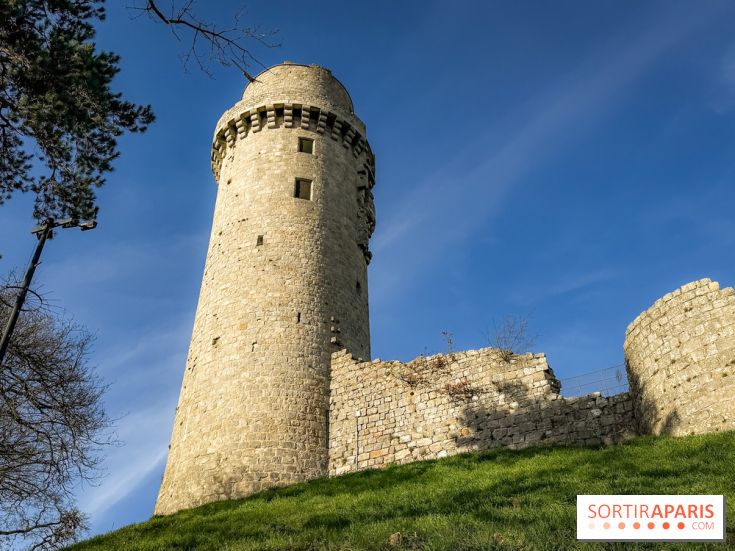
In Yvelines, at Maurepas, the remains of a 20-meter-high cylindrical keep stand as the sole remnant of a medieval fortress from the 12th century. Recognized as a historic monument since 1926, it still holds the secrets of a turbulent past. Here’s the story. [Read more]
Perched atop a 30-meter-high hill, the Montlhéry Tower offers a breathtaking panoramic view of Essonne and the Île-de-France region. This historic medieval relic, officially listed as a Monument Historique, once served as a laboratory for some of the greatest scientists of the 19th century. Whether you're interested in its history, planning a visit, or just taking a leisurely walk, here's everything you need to know. [Read more]
This page may contain AI-assisted elements, more information here.
Dates and Opening Time
Next days
Friday:
from 10:00 a.m. to 06:00 p.m.
Saturday:
from 10:00 a.m. to 06:00 p.m.
Sunday:
from 10:00 a.m. to 06:00 p.m.
Monday:
from 10:00 a.m. to 06:00 p.m.
Tuesday:
from 10:00 a.m. to 06:00 p.m.
Wednesday:
from 10:00 a.m. to 06:00 p.m.
Thursday:
from 10:00 a.m. to 06:00 p.m.
Location
Caesar Tower
Rue de la Pie
77160 Provins
Prices
à partir de : €3
Recommended age
For all
Official website
provins.net




 The only medieval keep with buttresses in Île-de-France is located in the Yvelines.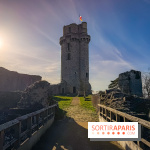

 This medieval tower, offering a breathtaking panoramic view of Essonne, was once used to measure the speed of light.