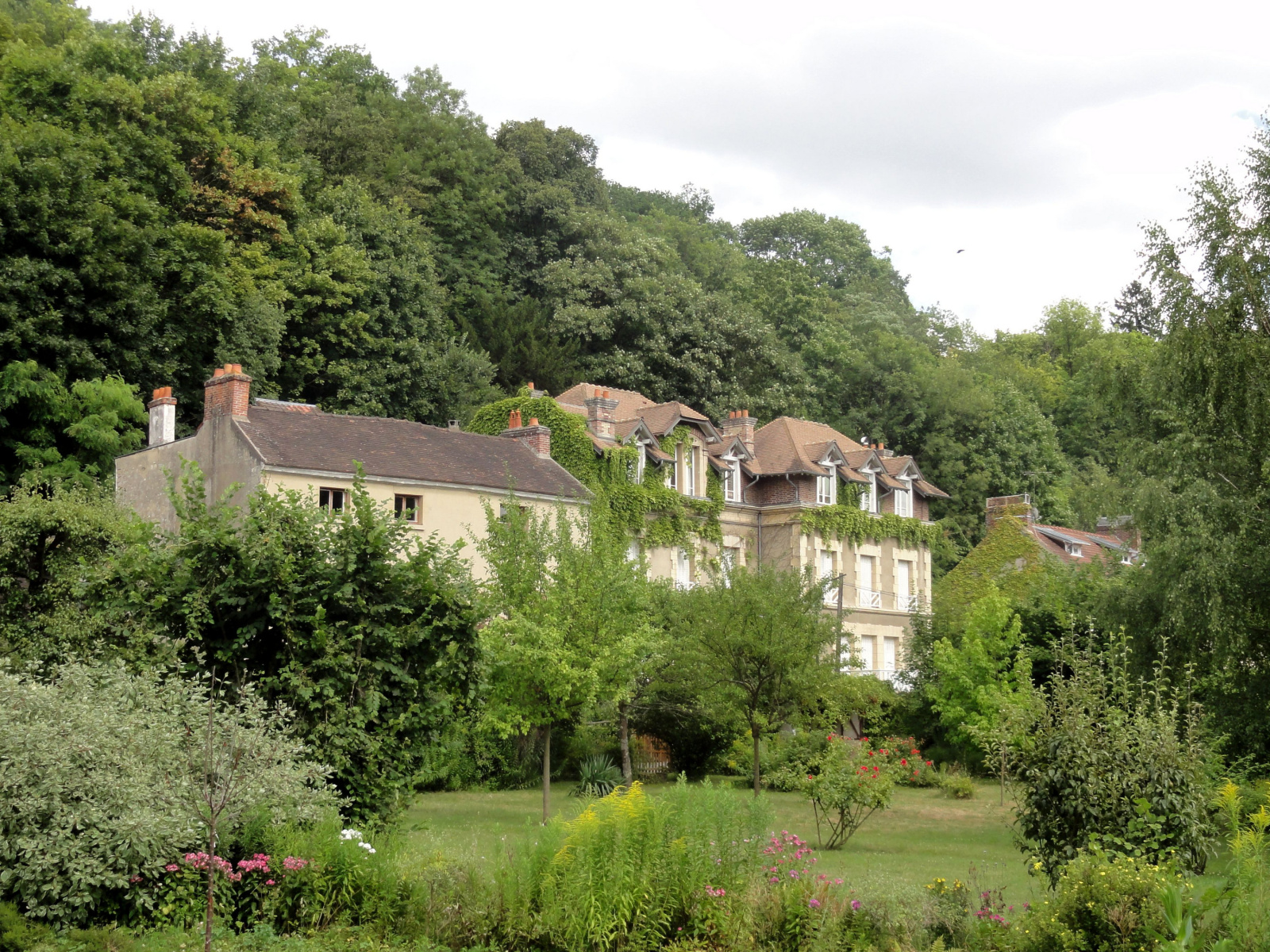
Along the banks of the Sausseron, the Moulin le Roy recalls the era when rivers powered a portion of the local economy. Labeled Patrimoine d’intérêt régional, this former mill of Valmondois, in the Val d'Oise, is one of the most evocative witnesses to the valley’s milling past. Its current buildings date mainly from the 19th century, but the site itself traces its roots much farther back, to the Middle Ages.
Its name traces back to a telling ancient reference: a 12th-century charter mentions a “moulin du roy,” or molendino regis, literally a mill owned by the king. From this origin arose the name Moulin le Roy, sometimes rendered as Moulin Leroy in common usage. The appellation, therefore, signals less a local whim than a genuine historical status tied to the site's early days.
The value of the site lies in its long-running activity. Rebuilt and modernized in the 1840s, the mill preserves a record of the major technical shifts in milling: water wheel, steam engine, cylinder machines, and later a hydraulic turbine. Behind its sober façades, it tells the story of moving from an age-old craft to more mechanized production, while remaining anchored to the power of water.
Valmondois has hosted several mills along the Sausseron, but this one stands out for how long it remained in operation. Flour production continued there until 1978, making it one of the region’s last mills to stay in business. Still a visible feature of the landscape, the Moulin le Roy today remains an important heritage landmark for understanding the rural, industrial, and hydraulic history of the Vexin.
This page may contain AI-assisted elements, more information here.