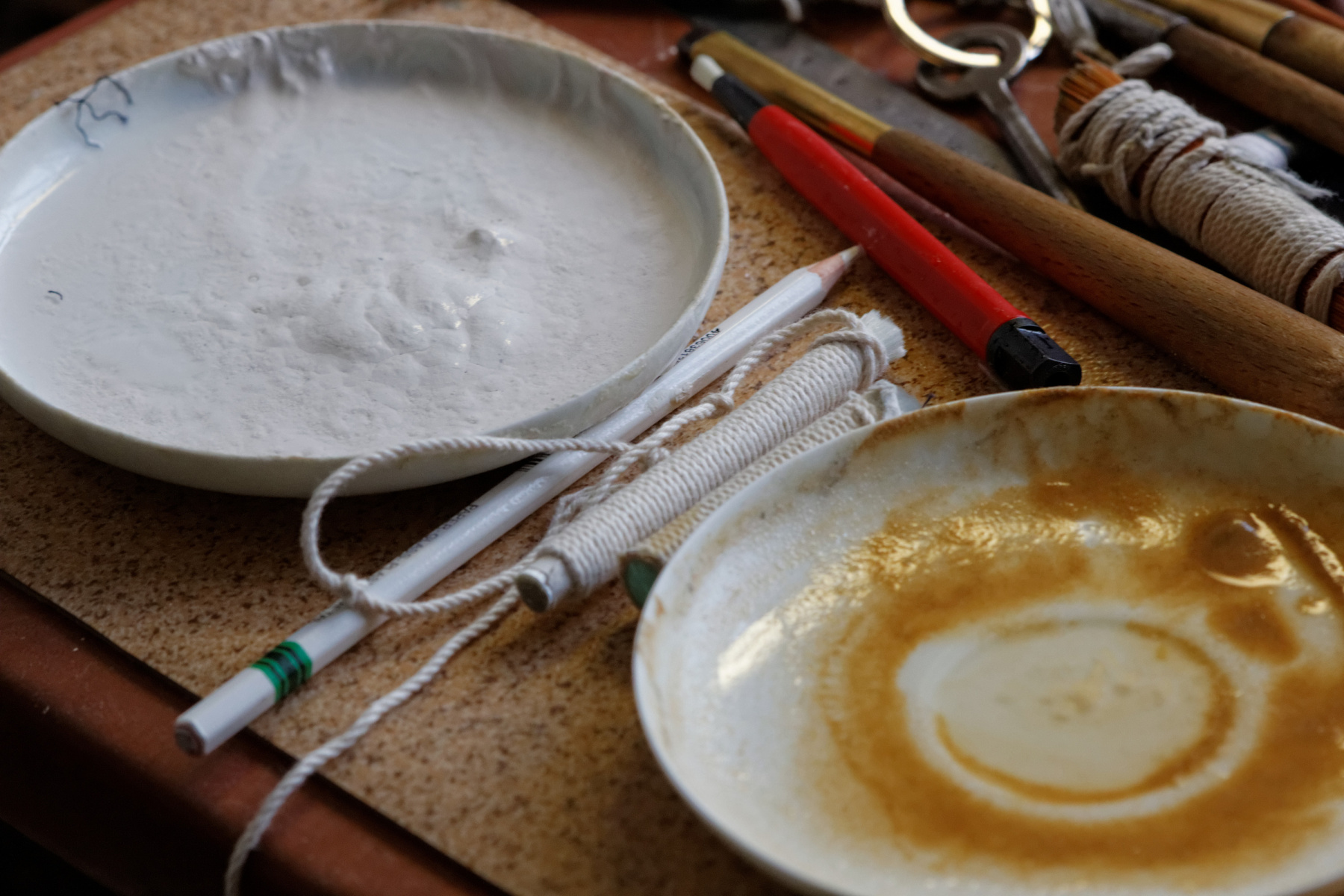
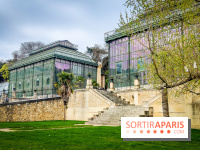
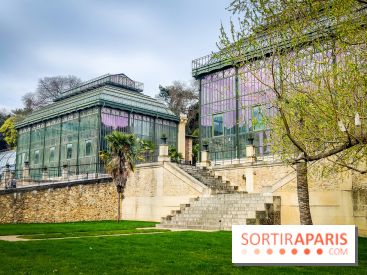
For a few summers now, the Meudon white has seen a genuine revival of interest. On social media as on the press, this natural white powder is regularly pitched as an economical solution to refresh a home without air conditioning. Behind this somewhat mysterious name lies a product well known to artisans and residents of the Paris region: a fine chalk powder sourced from the old Meudon quarries in the Hauts-de-Seine. Composed mainly of calcium carbonate, the Meudon white was once used to make paints, clean metals, or whiten shop windows. Today, it is prized for its ability to reflect sunlight.
For centuries, the Meudon Hills were mined for their exceptionally fine, white chalk. The quarries closed at the beginning of the 20th century, but the material kept its name, becoming a true reference in the world of craftsmanship and restoration.
This powder is mainly composed of calcium carbonate, with a small amount of clay. Its exceptionally fine texture has made it suitable for use in painting as well as gilding, engraving, or household cleaning. For many years, almost every home kept a packet of Meudon white to brighten silverware or scrub the windows.
The principle is rooted in a simple physical trick: light reflection. When mixed with water and applied to a pane, whitewash from Meudon white forms a temporary opaque layer. This thin coating acts like a screen, reflecting a substantial portion of the sun’s rays before they enter the home. The effect is akin to the method used in some agricultural greenhouses, whose glazing is whitened in summer to prevent crops from overheating.
This technique could shave a few degrees off indoor temperatures in the rooms most exposed to the sun. Results vary depending on window orientation, building insulation, and the intensity of the outdoor heat. In favorable conditions, drops of 3 to 7 °C could be expected. Then, you would simply rinse with water to wash this layer off the glass.
The use of Meudon white to shield against heat isn’t that new. Long before air conditioning arrived, people were already looking for simple ways to curb the sun’s effects. Market gardeners whitened up greenhouses, while some buildings were finished with pale coatings to reflect more light. Its main advantage remains its simplicity: it costs only a few euros, requires no installation, and can be peeled off easily once summer ends. As heat waves become more frequent, the Meudon white is back in the spotlight.
This page may contain AI-assisted elements, more information here.