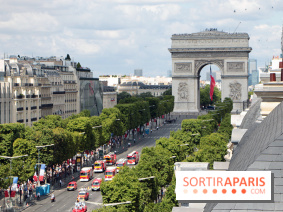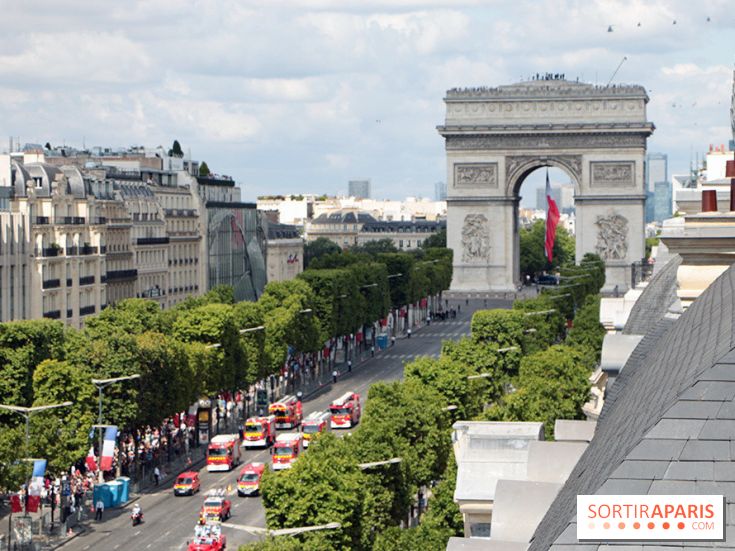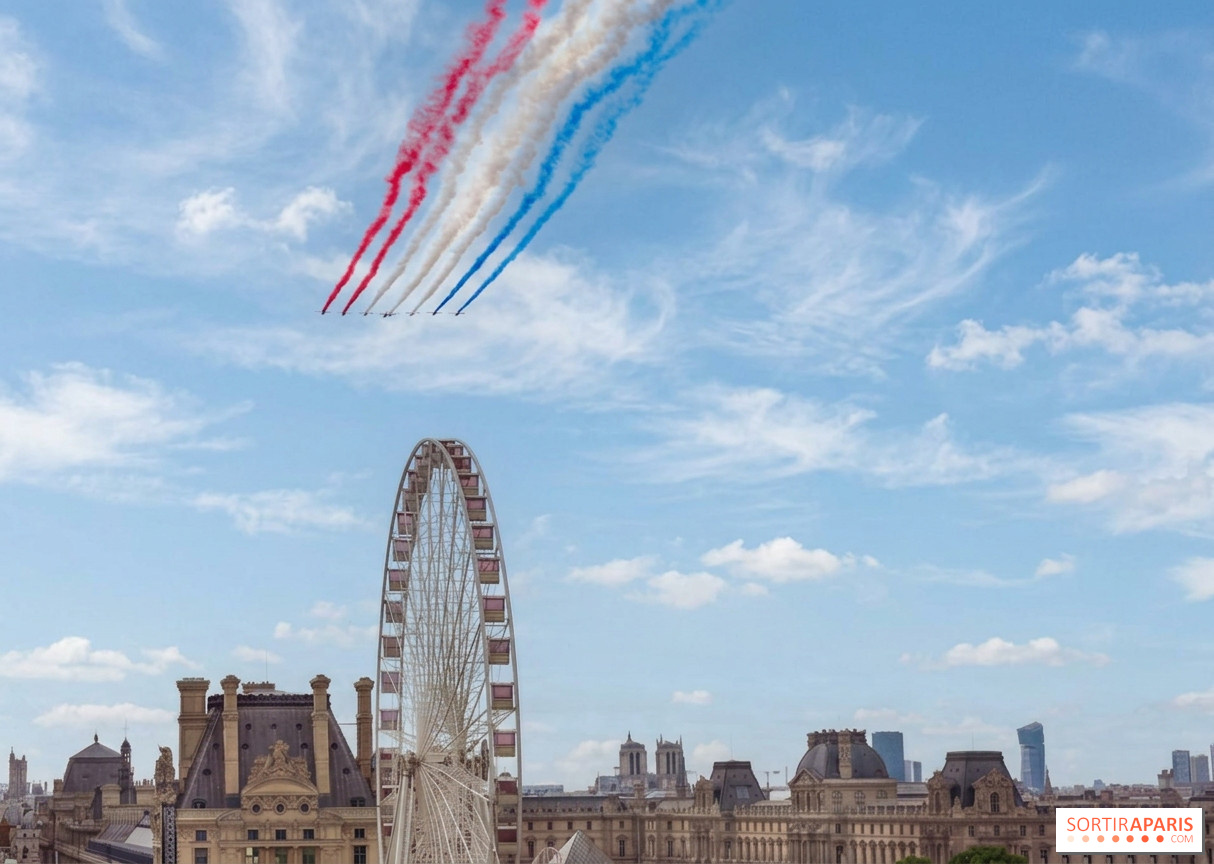
On July 14, 2026, the Paris sky is set to be especially lively. For the National Day, the air parade brings together nearly 130 aircraft and helicopters over the Champs-Élysées, featuring the Patrouille de France, more than 40 Rafale, Ukrainian Mirage 2000s, the A400M, Caracal, Caïman and Tiger helicopters. A event to follow from 10:21 a.m., between the Arc de Triomphe and the Place de la Concorde, as part of Paris’s traditional military parade.
This 2026 edition takes on a special dimension. Under the banner of the strategic wake-up call for Europe, the parade highlights the French armed forces’ projection, intelligence, support and intervention capabilities, in an educational demonstration of the modern battlefield, according to the official program of the Ministry of the Armed Forces. On the ground, about 6,700 men and women, 300 vehicles, roughly a hundred motorcycles and nearly 200 horses from the Republican Guard march down the Champs-Élysées starting at 10:30 a.m. In the sky, the show unfolds in two acts, with aircraft first, then helicopters after the troops have passed on foot.
The first major moment arrives at 10:21 a.m.. That is when the aircraft parade for July 14, 2026 gets underway. The opening phase features 84 French planes and 11 foreign aircraft, according to the Armed Forces Ministry’s overall briefing, laid out across seven segments. As every year, the Patrouille de France leads the parade. Its nine Alphajets fly in the "Big Nine" formation, a spectacle that turns the Paris sky into a tricolor postcard, weaving a blue-white-red ribbon and sending a collective thrill through the crowd.
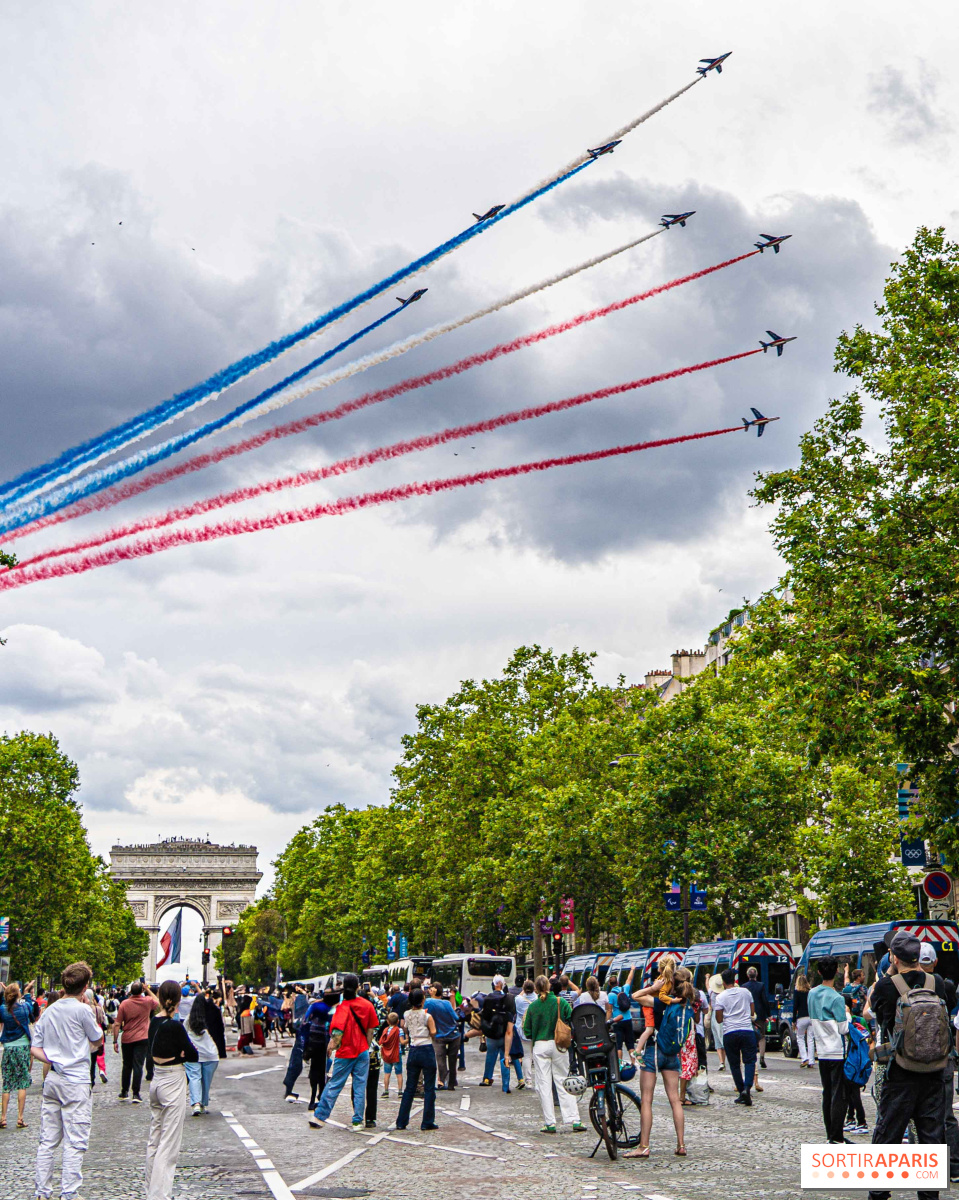
The Patrouille de France, also known as the French aerobatic team, is based at Air Base 701 in Salon-de-Provence. Created in 1953, it is part of the French Air and Space Force display teams and represents, in France and abroad, French aeronautical know-how. In 2026, it also continues its partnership with the Petits Princes association, which helps seriously ill children by making their dreams come true.
A standout feature of this edition: two Ukrainian Air Force Mirage 2000s escort the Patrouille de France during the opening. In the Paris sky, this moment carries real symbolic weight. It stays true to the year's theme, spotlighting European and allied cooperation. The display unfolds at roughly 3,000 meters? Wait—altitude given is 300 meters. The text says 300 meters, so: The performance takes place at about 300 meters above ground, between the Arc de Triomphe and the Place de la Concorde, along that majestic axis Paris reserves for its major national events.
The rest of the aerial program looks just as packed. More than 40 Rafales are slated to fly over Paris, a notable concentration for this Dassault Aviation combat aircraft. They’ll cruise at around 550 km/h, accompanied by Mirage 2000s, A400M transport planes, A330 MRTT tankers, an AWACS aircraft easily recognized by its imposing circular radar atop the fuselage, and a Navy E-2 Hawkeye. At that speed, the parade becomes almost a metal choreography: a few seconds of thunder, a formation slicing through the sky, then the echo skimming between the Haussmannian façades.
After the planes, the parade makes way for foot soldiers along the Champs-Élysées. Then, at 11:30, all eyes return to the helicopter flyover. This second sequence opens with an A400M escorted by two Caracal helicopters, aircraft commonly deployed for infiltration, extraction, and combat search-and-rescue missions.
In total, 32 helicopters are mobilized by the Air and Space Force, the Army, the Navy, the Gendarmerie, Civil Security, and Customs. Notably among them are the Caïman NH90s, Gazelles, Tigers, Panther AS565, EC135s, H145s, and even a Cougar AS532. These craft operate at roughly 330 meters in altitude, at a speed around 150 km/h. The contrast with fighter planes is striking: here the passage is slower, more legible, almost like a technical parade suspended above Paris.
For those hoping to catch the aerial parade on July 14, 2026, in Paris, the surroundings of the Champs-Élysées remain the most coveted spots. It’s best to arrive early, as access is tightly regulated and the top viewpoints fill up fast. You can also try to enjoy a clear view toward the western axis of Paris, particularly around La Défense, where some National Day festivities also offer glimpses of the parade, as highlighted in our pick National Day 2026 at La Défense.
And if you’d rather skip the crowds, you can easily follow along from home as well. The parade will be broadcast live from 10 a.m. on TF1 and France 2. To round out your day, you can also check out our guide to the animations of the 14 July 2026 in Paris and Île-de-France, as well as the program for the military parade on the Champs-Élysées for 14 July 2026.
Updated lineup for the July 14, 2026 air parade:
Our advice: if you want to enjoy the July 14, 2026 air parade under good conditions, arrive well in advance and don’t target only the Champs-Élysées, which is often packed and subject to strict security checks. The unobstructed routes in western Paris, bridges with distant views, or certain elevated spots and rooftops can offer a great alternative to glimpse the aircraft without getting swallowed up by the crowd.
Also check the road closures and subway station outages before you head out. The area around the Champs-Élysées, the Place de la Concorde, and the Arc de Triomphe is usually tightly controlled on Bastille Day. It’s wise to plan a walking route from a station a bit farther away, especially if you’re bringing children.
Timing-wise, the key moment is the flyover at 10:21 a.m. It lasts only a few minutes, but it's typically the most spectacular segment with the Patrouille de France, the Rafale jets, and the Ukrainian Mirage 2000s. The second highlight comes at 11:30 a.m. with the helicopters—slower and easier to spot. For aviation enthusiasts, both sequences are well worth the trip.
If you’d rather watch the parade at a relaxed pace, the live TV broadcast remains a solid option. It lets you enjoy the commentary and better identify the aircraft.