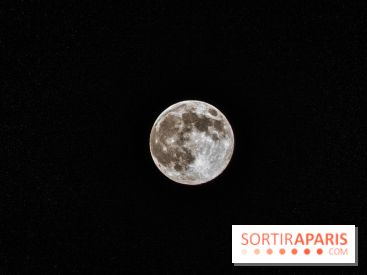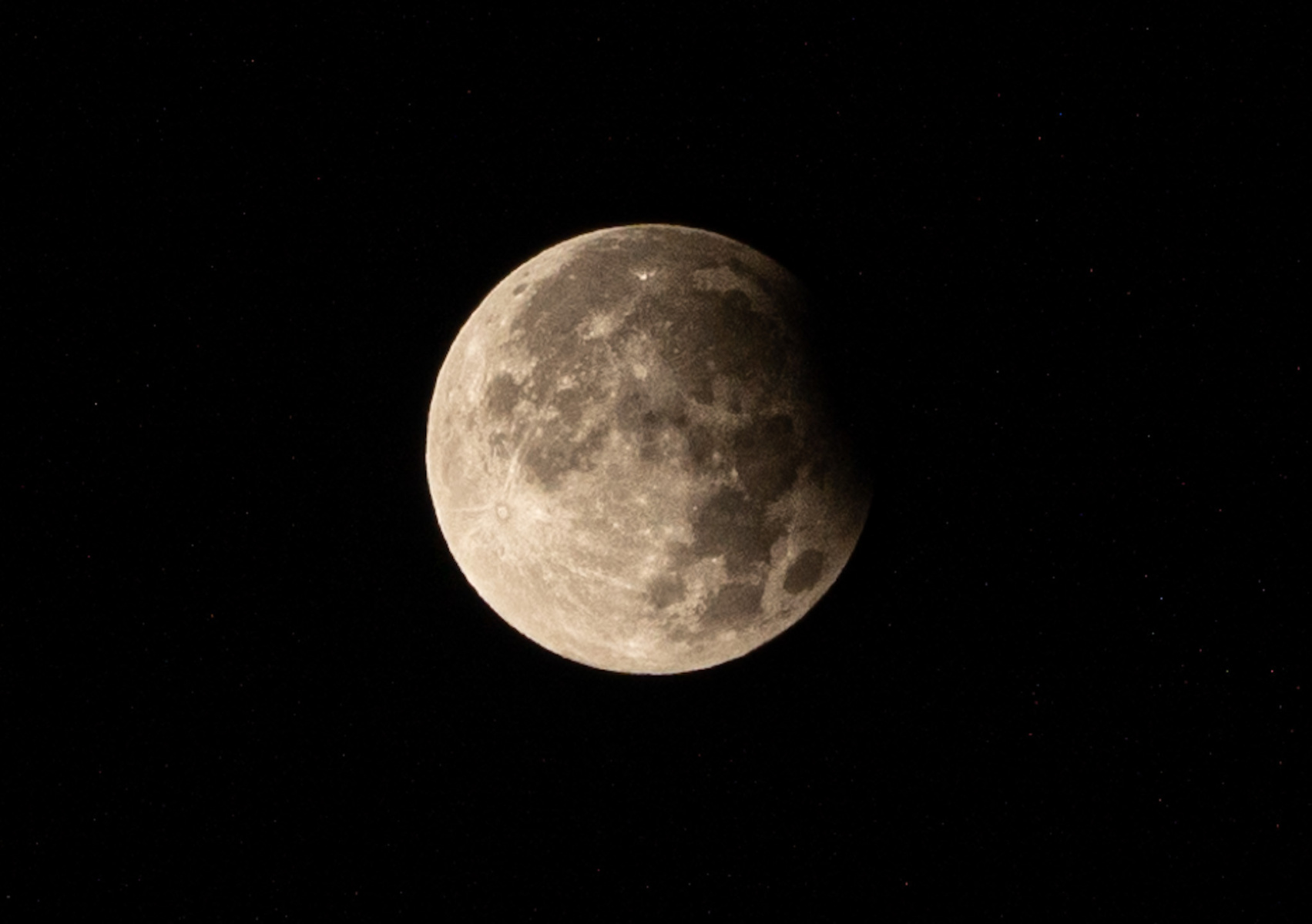
A black New Moon awaits us this weekend, and more specifically this Saturday, August 23, 2025. Are you wondering what it is exactly? This rare astronomical phenomenon, which only occurs once every 33 months or so, will plunge the skies above Paris into total darkness. This 3rd new moon of summer 2025 creates the perfect conditions for observing the stars and planets, and discovering the Milky Way in all its splendour. It's the perfect opportunity for anyone wishing to look up at the sky and take in an exceptional astronomical spectacle, whether in Paris, the Ile-de-France region or the rest of France.
A black moon, contrary to what its name might suggest, is nothing to worry about. It's simply a peculiar new moon, but one that bears this mysterious name for a good reason. According to astronomers, there are two types of black moon. The first is the second new moon to occur in the same calendar month, a phenomenon that happens approximately every 29 months.
August 23, 2025 belongs to the second, even rarer category. It's the third new moon in a season of four. Normally, each astronomical season has only three new moons, but occasionally a fourth joins the party. In the summer of 2025, we've had new moons on June 25, July 24 and August 23, and we'll have a final one on September 21, as explained by the Institut de Mécanique Céleste et de Calcul des Éphémérides. This third summer new moon, on August 23, therefore deserves the title of seasonal black moon.
The phenomenon occurs when the Moon passes between the Earth and the Sun, rendering its surface completely invisible from the Earth. So don't panic, we simply won't see anything in the sky where our natural satellite usually is.
The real spectacle begins at 10:16pm, when astronomical twilight ends and the sky reaches its maximum darkness. The total absence of moonlight makes this night a veritable godsend for all starlovers. Without the usual glare of the Moon to dazzle us, the stars shine brightly and become much more visible. It's the perfect time to discover constellations that we don't usually notice, and above all to admire the Milky Way, our galaxy that crosses the night sky like a river of stars. An experience that joins our top night-time activities in the Paris region.
To make the most of this exceptional night, a few tips are in order. First, give your eyes time to adjust to the dark. Allow a good twenty minutes for your night vision to develop fully. The best time to start observing is therefore around 10.40 p.m., some twenty minutes after the end of astronomical twilight. Then, keep as far away as possible from artificial lights that pollute the sky. If you can leave Paris for the evening, even better.
Make yourself comfortable with a blanket or deckchair, as stargazing requires a little patience. If you want to move around in the dark, use a red light rather than a white one. This will preserve your night vision and prevent you from being dazzled.
This black moon on August 23 also reveals some beautiful planetary treasures throughout the night. Saturn will be easy to spot from early evening around 9.30pm, with its characteristic yellowish glow. If you have binoculars or a small telescope, you'll even be able to make out its famous rings. Jupiter makes its appearance later in the night, at around 1 a.m., and is impossible to miss because of its brightness. As for Mars, with its distinctive red-orange color, it will be visible before dawn, at around 5:30 am, for the most courageous.
Beyond the planets, this night of total darkness reveals spectacular star clusters, depending on the time of day. The Pleiades, a small group of stars in the shape of a chariot in the constellation Taurus, can be admired with the naked eye at the end of the night around 3 o'clock. TheHercules cluster, visible with binoculars from 11 p.m. when the constellation is well positioned, offers a striking spectacle with its hundreds of clustered stars. TheBeehive cluster, containing over a thousand stars, and the double Perseus cluster complete this choice astronomical program, both visible from midnight in good conditions.
You don't have to travel miles to enjoy this black moon. Even in Paris, there are a number of places offering decent viewing conditions, as detailed in our guide to the best spots to admire shooting stars in Paris. The Marcel-Bleustein-Blanchet square behind the Sacré-Cœur, the Buttes-Chaumont lookout, the Butte Bergeyre and the Parc Montsouris are all excellent starting points for an astronomical evening. Admittedly, the capital's light pollution somewhat limits the spectacle, but you'll still be able to observe the main stars and brightest planets.
If you want to escape Paris for a while, head for the Parc Naturel Régional du Vexin. This unspoilt area north-west of the capital offers much darker skies. La Roche-Guyon is a particularly recommended spot, as its elevated position improves observation conditions. Allow around 1h30 for the Transilien line J train journey.
The Rambouillet forest also offers an interesting advantage. Located to the south of Paris, it allows you to avoid the light pollution of the capital at your back when looking south, the direction in which most of the visible planets are located. Accessible by public transport, it's a practical option for an impromptu evening out.
Finally, the Vallée de Chevreuse is well worth a visit. This area has been awarded the "starry village" label, and benefits from reduced public lighting to preserve the quality of the night sky. Accessible in 40 minutes from Denfert-Rochereau by RER B, it's one of the easiest ways to escape from Paris, and a great opportunity to discover this magnificent natural region.
If that black moon makes you want to take up astronomy, a number of associations in Paris organize regular observing evenings. The Association française d'astronomie (French Astronomy Association) takes advantage of the night-time opening of certain Paris parks to set up telescopes and offer free sessions from 9pm to 2am. No need to book, just turn up. For full details, visit their official website.
The Ivry-sur-Seine-based club Le Télescope opens its doors every Friday evening from 9pm. Membership is free and the atmosphere is relaxed. The association also organizes outings outside Paris to escape urban light pollution.
For a more intimate experience, the Sorbonne Observatory offers tours for small groups of up to 5 people. For just 7 euros, you'll have access to the university's panoramic balcony, and can use period equipment to observe the stars.
From around 8.30pm on August 24, a thin crescent Moon will appear on the western horizon, marking the gradual return of our natural satellite to the sky. This black moon on August 23 offers a unique window of opportunity for a few hours' observation, before lunar light gradually returns to illuminate our nights.
For those of you with a taste for astronomy, the next monthly black moon won't occur until August 2027. In other words, don't miss this one! In the meantime, classic new moon nights already offer great opportunities to observe the sky, even if they don't carry the poetic title of black moon.
The night of August 23, 2025 promises to be a special one for all those wishing to discover the wonders of the night sky from the Paris region. Whether you're staying in Paris or taking advantage of the opportunity for a little getaway, this black moon awaits you for an evening under the stars you won't soon forget.