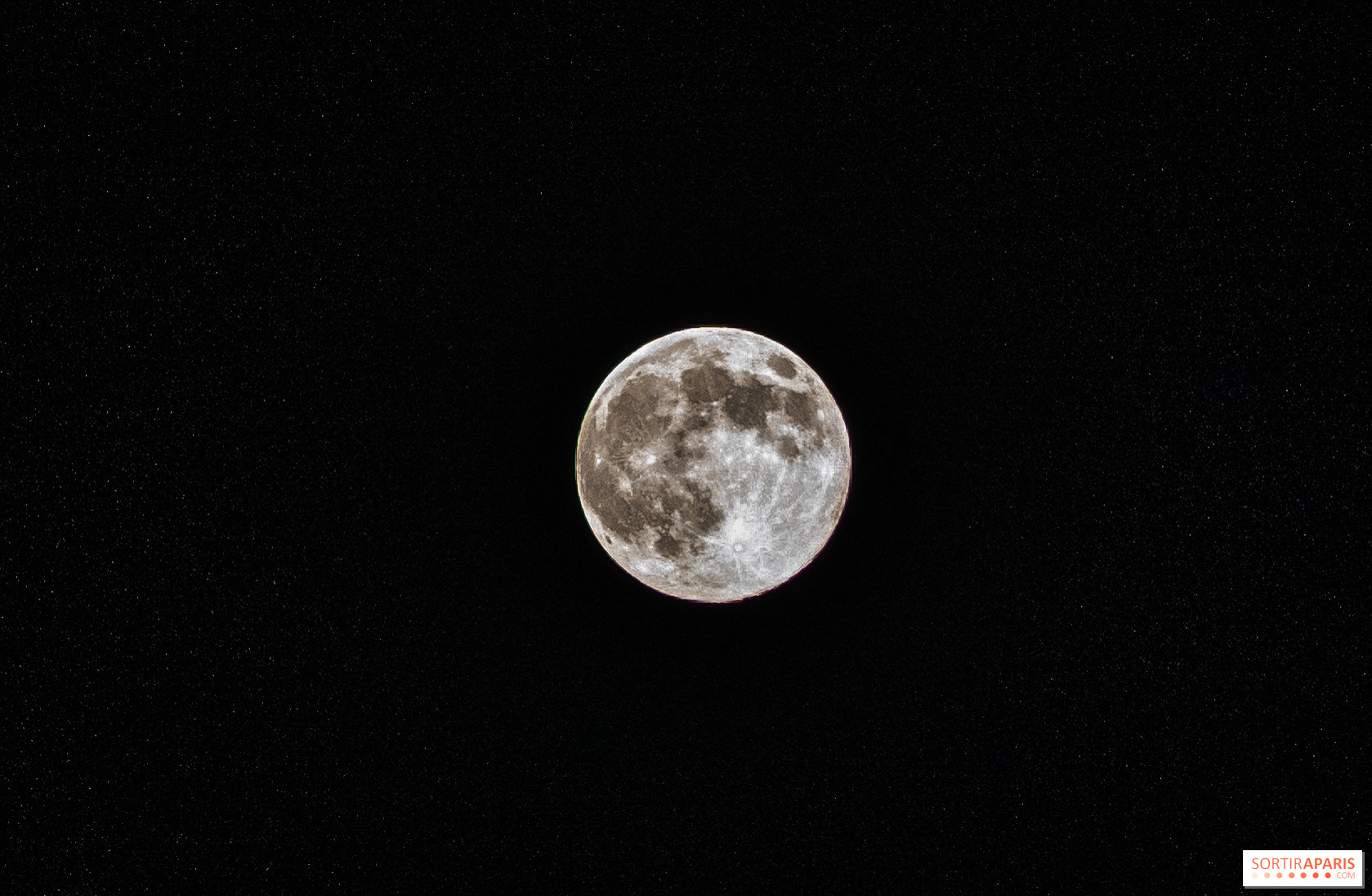
If you enjoy stargazing, you won't want to miss this Saturday, January 3rd. The first full moon of the year is an extraordinary event for several reasons. First, it's a supermoon, meaning our natural satellite is unusually close to Earth, just 362,312 km away compared to the average of 384,400 km. The result: it appears roughly 6% larger and 13% brighter than a typical full moon, as noted by Starwalk. From Paris and across the entire Île-de-France, the spectacle promises to be truly breathtaking.
This Full Moon of the Wolf takes its colorful name from the Maine Farmer's Almanac, which in the 1930s listed the Native American names for the different full moons. According to NASA, this nickname references the packs of wolves that were heard howling around villages in the middle of winter, amidst the deep January snows. A scene that reminds us winter is in full swing, even though wolves no longer prowls our forests in Île-de-France.
What truly makes this supermoon special is its celestial guest: Jupiter. The largest planet in our solar system appears just below the Moon—visible to the naked eye without the need for a telescope. Such a rare alignment is unlikely to be missed. According to National Geographic, Saturn might also make an appearance, highlighting the exceptional nature of this cosmic setup. To top it off, the Quadrantids, an annual meteor shower, will reach its peak activity right during this full moon. It’s set to turn a simple skywatching moment into a spectacular astronomical event.
Let’s seize this opportunity without delay, as the next supermoon won’t appear until November 2026. This first such event of the year is definitely worth our full attention, especially since it appears up to 14% larger and 30% brighter than a micro moon, when the Moon is at its farthest point from Earth.
The Wolf Full Moon reached its peak precisely at 11:03 AM Paris time. Clearly, observing it directly during the day wasn’t ideal. But don’t worry – it remains perfectly visible throughout the night, until Sunday morning. Experts from National Geographic offer a useful tip: try to watch the moon at sunset or sunrise, when your eyes can better perceive the celestial body near the horizon. During this time, the moon takes on stunning shades of orange, adding an extra touch of magic to the spectacle. This phenomenon can easily be admired from the heights of Montmartre, the Parc des Buttes-Chaumont, or along the Promenade Plantée in the 12th arrondissement.
To make the most of this celestial event, several ideal spots are available around Paris. The Sacré-Cœur Basilica offers an unobstructed view of the horizon, as do the banks of the Seine near the Trocadéro, facing the Eiffel Tower. If you're willing to venture outside the city, head to the Sceaux Park in the Hauts-de-Seine or the Fontainebleau Forest in Seine-et-Marne, where light pollution is much less noticeable. Astronomy enthusiasts can even bring binoculars to get a clearer view of Jupiter, which remains visible to the naked eye.
This supermoon appears about 6% larger and 13% brighter than usual. The spectacle requires no special equipment—just a bit of patience and a clear sky. However, be cautious of the potential snow and ice risks and the possible impact on the Île-de-France transit network for your travel plans.
In short, whether you're new to astronomy or a seasoned stargazer, the first full moon of 2026 is worth gazing up at the sky for. Join us tonight to observe the Wolf Moon and its lineup of celestial wonders—a free spectacle accessible to all, whether from our Parisian balconies or the many green spaces across Île-de-France. For more details about the astronomical events happening in 2026, be sure to visit the website of the French Astronomical Society.
Supermoon, shooting stars, eclipse: what you can't miss in the sky in 2026
Discover all the must-see celestial events of 2026. From supermoons and shooting stars to eclipses, the world of astronomy is set to offer us a year full of surprises and breathtaking spectacles. [Read more]




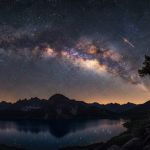 Supermoon, shooting stars, eclipse: what you can't miss in the sky in 2026