The children’s clothing giant is facing a major crisis. On Tuesday, February 3, 2026, the IDKIDS group is seeking to have most of its French brands placed in receivership before the Lille Métropole Commercial Court. The hearing is scheduled for 4 p.m. Based in Roubaix, in the Nord department, the group, which specializes in children’s products, risks joining the long list of struggling French clothing retailers, following IKKS, Camaïeu, Kookaï and Pimkie.
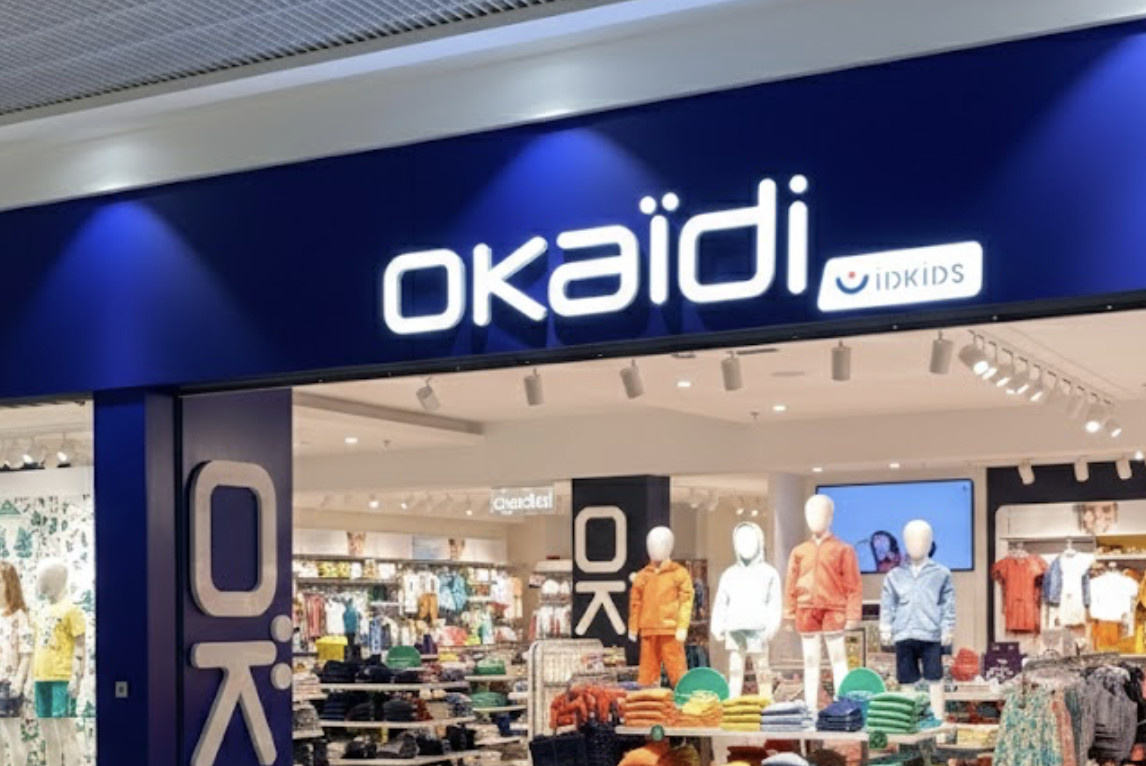
This protection request concerns the Obaïbi (clothing for ages 0–3), Okaïdi (ages 3–14) and Oxybul (educational toys) brands, as well as the IDLOG logistics platform. However, the high-end brand Jacadi Paris, foreign subsidiaries and all franchises of the IDKIDS group are not covered by this procedure. IDKIDS employs 2,000 people in France and has 6,000 employees worldwide, with global revenue of 800 million euros. The Okaïdi brand alone generates 600 million euros in worldwide revenue, including 300 million euros in France.
The group’s management is justifying the decision as necessary to “give the company more time and financial capacity” as it “accelerates its transformation.” In its statement, IDKIDS refers to a “challenging economic environment” and points to competition from “low-cost general retailers, secondhand goods, and aggressive competition from ultra-fast fashion.” The group says it is being squeezed in what it calls a “hourglass effect”: while the premium segment at the top of the market is holding up and “low-cost and ultra-fast fashion are thriving” at the bottom, mid-market chains such as Okaïdi are being squeezed. “Okaïdi needs to evolve its operating model and reaffirm what makes it distinctive in order to remain competitive,” management said.
France’s clothing sector has been going through a rough patch for several years. After the rise of online shopping, the Covid-19 pandemic and inflation, the sector is now facing competition from second-hand clothing and ultra-fast fashion, exemplified by Asian platforms such as Shein and Temu. According to the French Fashion Institute (IFM), clothing and textile activity fell by 1.3% in 2025 and by 8.5% since 2019, a decline that has hit mid-market retailers particularly hard.
For Farida Khelifi, a CGT union representative at IDKIDS, the company’s placement into receivership had been expected “for years” because of “a nine-figure debt” caused by “strategic mistakes” in a “deteriorating” sector. She also points to collections that are “less fashionable,” with a style considered “too carnival-like” and “too expensive for the middle class.” The decline in French consumers’ purchasing power and competition from online platforms are weighing heavily on sales at brick-and-mortar stores.
The announcement has alarmed the unions. Farida Khelifi fears a “payroll impact” involving “store closures,” although she does not know exactly how extensive it will be. In her view, the process will “automatically lead to store closures” and “job cuts.” It should be recalled that the retailer had already announced a “simplification strategy” in March 2024, which resulted in 250 jobs being cut across its stores and 50 at its head office, according to a group spokesperson.
In stores, customers express their attachment to the brand. The retailer is often praised for offering good value for money. But online competitors, who are “cheaper,” are hard to compete with: “everyone is watching their budget.”
Unlike its struggling retail brands, IDKIDS is celebrating the “growth trajectory” of Jacadi Paris, its premium brand, which achieved the “best performance in its history” in 2025, with profitability up 35%. The divergence in their trajectories clearly illustrates the “hourglass effect” cited by management: the high end is holding up, while the mid-market is suffering. Jacadi, positioned in the luxury segment, is thriving thanks to customers who are less sensitive to fluctuations in purchasing power.
This potential new victim would join a long list of French ready-to-wear retailers that have faced serious difficulties in recent years. Some have been liquidated, including Kaporal and Jennyfer, while others, such as Camaïeu, Kookaï, Gap France, Pimkie and Comptoir des Cotonniers, have embarked on multiple restructuring plans.
The IDKIDS group, which operates in 70 countries, will have to convince the Lille Métropole commercial court of the viability of its restructuring plan at the 4 p.m. hearing. The future of thousands of jobs and hundreds of stores will depend on the decision. The coming weeks will be crucial in determining which stores can remain open and how many jobs can be saved. To understand what is at stake in court-supervised restructuring, visit the public service website or follow developments involving struggling businesses in the region on the commercial court’s website.