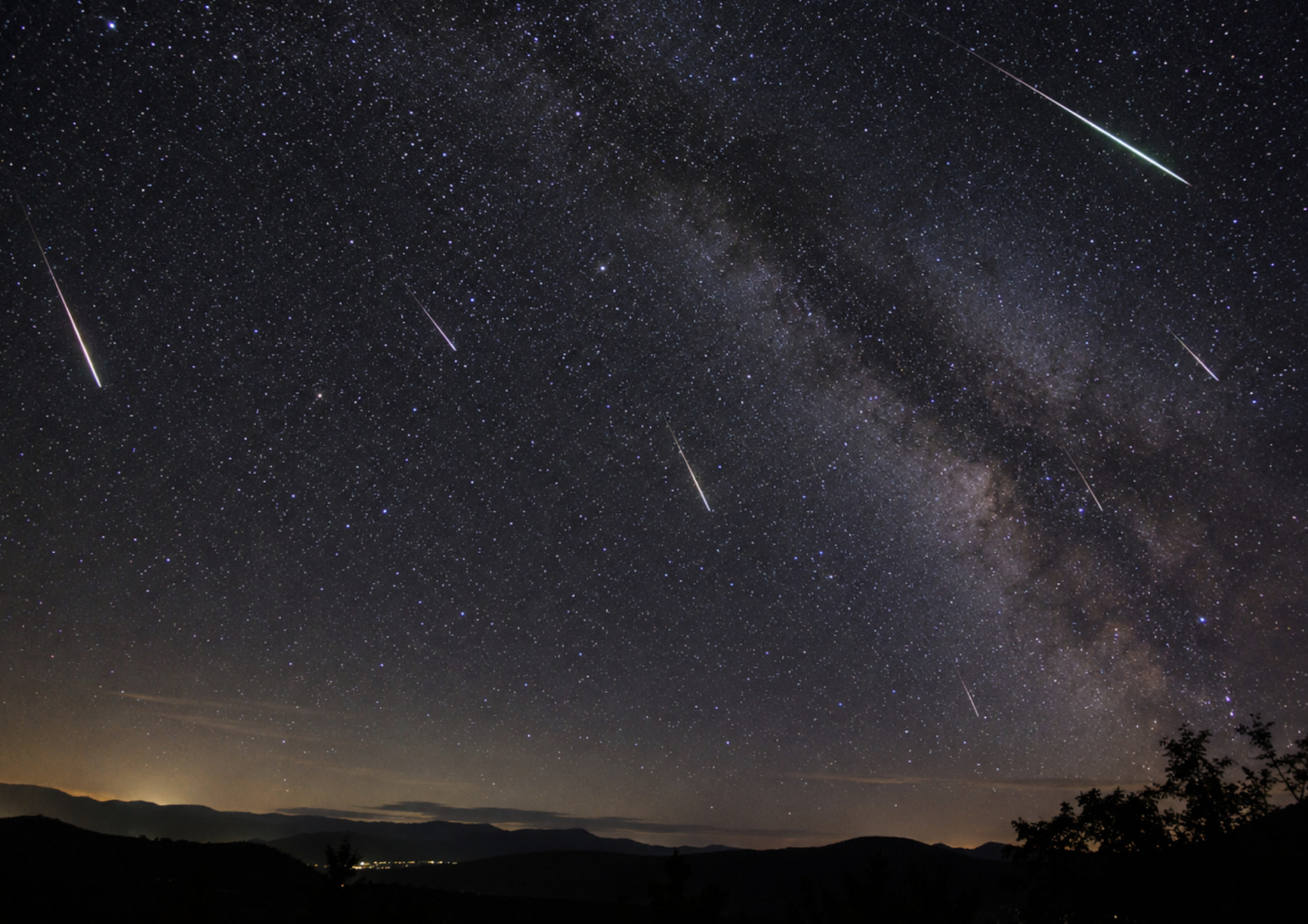
The Halloween fireballs are returning to the skies of Paris and across Île-de-France, from the heights of Montmartre (18th arrondissement) to Mont Valérien in Hauts-de-Seine (92). Behind this somewhat theatrical nickname are the Taurids, a meteor shower active throughout fall 2026, with two peaks around November 5 and 12.
We’ve combed through the astronomical calendars to tell you when to look up, where to settle in and what to expect. Spoiler: Halloween night isn’t necessarily the best time.
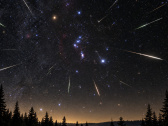
The Taurids take their name from the constellation Taurus, from which they appear to radiate. They form from dust shed by comet 2P/Encke, a small comet that completes an orbit around the Sun in just over three years. Each autumn, Earth passes through this cloud of debris, and the grains burn up as they hit the atmosphere.
One distinctive feature of this meteor shower is that it has not one but two branches. The Southern Taurids are active from September through late November, while the Northern Taurids take over from late October to early December. The latter are thought to be associated with asteroid 2004 TG10, according to EarthSky’s guide. The two streams overlap, stretching the show over several weeks.
The Taurids are not known for their numbers. The American Meteor Society estimates around five meteors per hour for each branch under a very dark sky, and about ten when they overlap. That’s a far cry from the August Perseids’ fireworks display.
Their advantage is their slowness. They enter the atmosphere at about 27 km/s, while the November Leonids streak across the sky at more than 70 km/s. As a result, some trails stretch out like a match being struck in slow motion. A small number of these meteors are fireballs, larger fragments that leave an intense glow in their wake.
Because the phenomenon occurs around October 31, Anglo-Saxon astronomers dubbed them “Halloween fireballs.” The nickname crossed the Channel, and it fits these flashes that appear without warning in the autumn night.
First tip: don’t put all your hopes in Halloween night. The full moon on October 26 is still very recent, and this Saturday, October 31, 2026, a bright, round Moon will light up the sky for much of the night. The brightest fireballs will still be visible, but fainter trails will be lost in its glow.
November’s calendar is much more favorable. Here are the dates to mark:
The Taurid peaks are broad and not very pronounced, so sources don’t always agree on the exact date. Don’t worry: the entire window from November 4 to 12 is worth watching. As for timing, Taurus rises in the east in the early evening and climbs higher in the sky as the night goes on. The best viewing window is between 11 p.m. and 3 a.m., when the constellation is high in the sky.
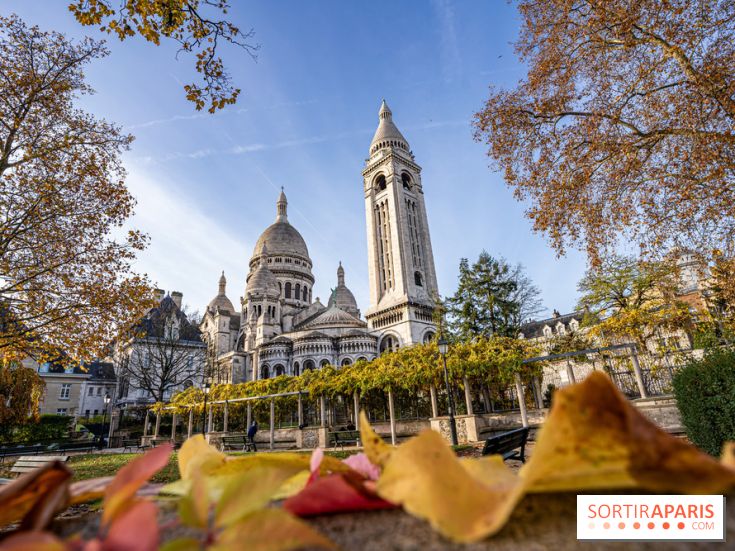
In Paris, light pollution gets in the way. Your best bet is to head somewhere higher up: the forecourt of Sacré-Cœur in Montmartre (18th arrondissement) or Butte Bergeyre (19th arrondissement), which offers an unobstructed view of the hill opposite. Bear in mind that most Parisian parks close at nightfall in autumn, so check the opening hours before heading to a viewpoint.
As soon as you get a little farther from the city, the sky grows noticeably darker. Our selection of the best places to watch shooting stars in Île-de-France includes Mont Valérien, between Suresnes, Nanterre and Rueil-Malmaison (92); Orgemont hill in Argenteuil (95); the Carrières ecopark in Fontenay-sous-Bois (94); and the Limours plateau in Essonne (91). The rural areas of Seine-et-Marne and the Vexin remain the darkest in the region.
Watching is free, open to all and can be done with the naked eye. There’s no need to bring binoculars: their narrow field of view makes it easy to miss the streaks. Give your eyes about 20 minutes to adjust to the darkness, and put your phone away: even a quick glance at the screen resets the clock.
Find Taurus and the Pleiades cluster, that little cloud of stars shaped like a mini saucepan, without focusing on this spot. Shooting stars can appear anywhere in the sky. Bring a deck chair or blanket, warm clothes and a thermos, as November nights get chilly fast.
Before setting off, check the cloud cover forecast on Météo-France. The skies over the Île-de-France region are often hazy in November, and overcast skies make any viewing impossible. Also, avoid going alone to a remote location in the middle of the night. And if you’re lucky enough to spot a fireball, you can report it to Vigie-Ciel, a citizen science program that tracks meteorite falls in France.
Not at all this year. 2026 is not a “swarm enhancement” year, when the Taurids produce more fireballs. A study cited by Futura points to closer passes of the swarm in 2032 and 2036, but these are research hypotheses. For now, the Taurids remain a beautiful spectacle with no danger.
The Taurids are mainly for the patient and curious. With just a few meteors an hour, you have to be prepared to wait, bundled up and gazing at the sky. But a single fireball is enough to make the evening unforgettable. It’s a wonderful discovery to share with the family during the Toussaint school holidays, as a couple or with friends—for example, after a Halloween night out in Paris.
To extend the meteor-shower season, we recommend watching the Leonids, expected on the night of November 17–18, 2026, and then keeping an eye on our guide to supermoons, meteor showers and eclipses: what not to miss in the sky in 2026.
Dates and Opening Time
From October 28, 2026 to November 12, 2026
Prices
Free
Recommended age
For all