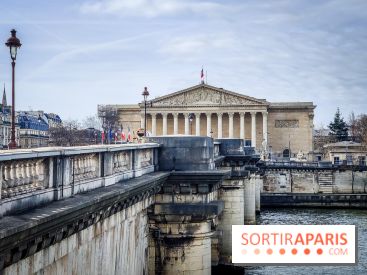
A protest on October 31, 2026 is being planned in Paris. The Yellow Vests coordination group has called for an “Act III” next Saturday, Halloween, with a renewed focus on defending civil liberties. If the call is heeded, gatherings could take place outside the National Assembly, in the 7th arrondissement, as well as outside town halls, including Paris arrondissement town halls. On Monday, October 26, speaking from Marseille, Emmanuel Macron nevertheless announced that march routes would be kept outside city centers to protect businesses.
Nothing is set in stone, however. On Tuesday, October 27, the coordinating body filed a route running from Bastille to Concorde with the police prefecture, via République and Opéra, contrary to the president’s directive. The police prefecture has not yet issued a decision. High school students, who are on Toussaint break until November 2, are being invited to join the movement. Here’s a look at what has been announced and how it could affect your travel plans next weekend, a few days before the November 5, 2026 strike.
The president addressed the nation on Monday, October 26, during a visit to Marseille, one of the cities hardest hit by the damage on October 17. He announced that the routes for the demonstrations on October 31 and then November 5 would be set outside city centers. The stated aim is to prevent further looting and protect businesses on a Saturday he himself considers high-risk.
The head of state is pointing to what happened last Saturday. On October 24, the Paris police prefecture had pushed the march to the outskirts of the capital, between Porte d'Italie and Porte de Vincennes. Emmanuel Macron said the measure had made it possible to maintain order without denying anyone the right to demonstrate. He also recalled that a fund had been set up to provide financial support to affected shopkeepers and craftspeople.
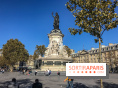
In Paris, the order could complicate the gatherings planned outside the National Assembly, in the heart of the 7th arrondissement. Shopping districts such as Châtelet-Les Halles, République and Opéra are also likely to be kept clear of any march. The strategy is sparking debate because it also puts the protesters’ demands out of public view. Above all, it runs counter to the route filed on Tuesday by the Yellow Vests, which is specifically aimed at the heart of the capital.
The appeal was read on Saturday, October 24, on the steps of the Opéra Bastille, then presented to the press at Place de la Bastille by two members of the coordinating group, Benjamin Ball and Azelma Sigaux, as reported by Brut, citing AFP. The format being considered would be different: rather than a long march, the movement would focus on static gatherings. Here is the proposed program on the coordinating group’s website, which at this stage remains a call to action:
In the capital, the crowdsourced map of protests already shows sit-ins being considered outside several arrondissement town halls, notably those of Paris Centre and the 10th, 11th, 12th, 13th, 14th and 15th arrondissements. The map is updated by participants themselves: it indicates a trend, not a confirmed schedule, and may still change before Saturday. We have already published an initial overview of the areas and routes that could be affected by Act III.
The tone has changed in two weeks. On October 17, the protests were initially focused on the high cost of living and fuel prices. For this third day of action, the Yellow Vests are denouncing what they call the government’s “authoritarian drift,” following bans on marches and curfews imposed in several cities. Their idea boils down to one slogan: protest for the right to protest.
In their statement, they call for curfews to be lifted, detained protesters to be granted amnesty, investigations into violence attributed to law enforcement, and a general convention bringing together all mobilized sectors. They also call for the creation of “assemblies of convergence” bringing together high school students, university students, workers, farmers and retirees.
This shift is also explained by what happened last Saturday, October 24. At the last minute, the police prefecture imposed a route between Porte d'Italie and Porte de Vincennes, on the outskirts of Paris, replacing the Bastille–Nation route that had initially been approved. The organizers eventually complied after their legal challenge was rejected. This scenario looks set to recur, as Emmanuel Macron wants to extend the same principle to future demonstrations: the prefecture can still regulate, relocate or ban gatherings planned for the 31st. For a look back at the day, our article on the second round of protests on October 24 is still available.
The high school student movement is the other driving force behind the protests. It began in mid-September at a high school in Créteil, in the Val-de-Marne, and has since spread across France. The Union syndicale lycéenne is calling in particular for the abolition of Parcoursup and a €10 billion plan for high schools. The condition of school buildings and timetables also feature frequently among the demands.
In Paris, young people have already taken to the streets several times: at the high school and university students’ protest on October 6, and then at the October 13 march, which set off from Place d’Italie.
The holidays have not put the movement on hold. The National High School Students’ Coordination, which says it brings together high schools mobilizing in 27 cities, also demonstrated on 22 and 24 October. As of now, we have not found any call from high school student organizations specifically for 31 October. They are, however, directly targeted by the Yellow Vests’ call for convergence, and the SUD éducation union is urging staff to support high school and student initiatives that day. Their presence will therefore depend on decisions made in the coming days.
The political calendar could also play a role. On Friday, October 23, representatives of student organizations were received by Emmanuel Macron at the Élysée Palace. Among them was Nathanaël Combary, chair of the board of the Renouveau lycéen union, who gave a fairly positive account of the meeting in La Tribune Dimanche, describing a president who was attentive to their demands.
Several proposals have been put on the table. According to him, the head of state has committed to a complete overhaul of Parcoursup, with consultations already under way. A review of the baccalaureate reform was also discussed: with too few teachers, it leaves students with timetables full of gaps, which the union representative compares to slices of Swiss cheese. A discussion on the school calendar is also set to begin.
High school students are finally calling for a €1.5 billion emergency plan for school buildings, dubbed “Neither Fridge Nor Furnace.” The union cites baccalaureate exams held in June in rooms where temperatures reached 35 or 40 degrees, moldy walls, broken furniture and classrooms without heating in winter. For Renouveau lycéen, this is above all a matter of dignity.
At this stage, these commitments are not enough to quell the protests. The movement is now waiting for concrete announcements from the government. Prime Minister Sébastien Lecornu has promised initial decisions by the end of October, and Nathanaël Combary warns that the mobilization will continue until the feedback produces results on the ground. His union says around 800,000 high school students took part in the day of joint protests with the Yellow Vests and teachers.
In his view, “high school students are ready to resume the mobilization as soon as school starts again.” The statement puts the focus above all on Monday, November 2, the day classes resume, and on the November 5 strike, rather than on Saturday, October 31. It will all depend on the substance of these announcements: if they are deemed insufficient, they could prompt some high school students to join the Yellow Vests’ demonstrations as early as next Saturday.
On Tuesday, October 27, the coordinating group officially submitted its route to police headquarters, according to Le Parisien. This time, the organizers want to march through central Paris, with the National Assembly as their destination. Here are the stages of the route requested by the Yellow Vests:
This route runs alongside several busy shopping districts around Opéra and Madeleine. That is precisely what the authorities want to avoid. On the previous two days, the police prefecture had already rejected the proposed routes. This time, David Libeskind, a lawyer and member of the movement, warns that a complaint alleging an infringement of the right to demonstrate could be filed if the route is rejected again.
The situation remains tense. Last Saturday, October 24, protests drew 410,000 people across France, including 110,000 in Paris, according to the Interior Ministry, compared with nearly 800,000, including 250,000 in the capital, according to the CGT, ICI reports. Interior Minister Laurent Nuñez said nearly 1,000 people had been arrested nationwide. In Paris, the Paris Police Prefecture recorded 142 arrests, 120 of which led to people being taken into custody, according to franceinfo. A week earlier, on October 17, the capital had seen 855 arrests amid looting in the city center. Since then, nighttime curfews have been imposed around Place de la République and Les Halles, and stations have been closed in the evenings.
The final route has yet to be confirmed as well. On the one hand, the Yellow Vests have submitted a Bastille-to-Concorde route. On the other, the president has called for marches to be held outside city centers. The Paris police prefecture will have to decide in the coming days. It can approve the route, change it or require a route on the outskirts, as it did on October 24 between Porte d'Italie and Porte de Vincennes.
As for transport, no closures have been announced for now. However, the precedent set on Saturday, October 24, calls for caution: at the request of the Paris police prefecture, 24 metro stations were closed from 9 a.m., particularly around the Champs-Élysées, the Élysée Palace, the National Assembly, government ministries and the Senate. Line 12 was no longer running between Madeleine and Notre-Dame-des-Champs, and several stations on line 1 had to be shut down.
If demonstrations outside the National Assembly on the 31st go ahead, a similar arrangement could be put in place again. Nearby stations such as Assemblée nationale and Solférino (line 12), Invalides (lines 8 and 13, RER C) or Concorde (lines 1, 8 and 12) could then be closed for part of the day. If the Bastille–Concorde route were approved, stations such as Bastille, République, Opéra and Madeleine could also be affected.
Traffic restrictions are also possible. On October 24, tram line T3 was suspended on part of its route, and around 15 bus routes were diverted or shortened. Next Saturday, a security perimeter around the Palais Bourbon could lead to the closure of the Quai d’Orsay, the Pont de la Concorde or part of Boulevard Saint-Germain to cars, along with bus diversions and parking bans. The police prefecture could also ban all gatherings in certain areas, as it has done in recent days.
These measures are generally announced the day before, or even on the morning itself. We recommend checking the orders issued by the Paris Police Prefecture and the RATP traffic updates before travelling on Saturday.
The date also falls on Halloween night, with plenty of parties planned in the capital. If you’re heading out, our pick of the Halloween 2026 parties in Paris and our ideas for celebrating without a reservation on October 31 will help you keep a plan B in mind, away from any potential gatherings.
In the minds of its organizers, Act III would serve as a springboard to a far more eagerly anticipated date: Thursday, November 5. On that day, the inter-union group (CFDT, CGT, FO, Unsa and FSU) is calling for an all-sector strike over wages, pensions and public services. Here too, Emmanuel Macron has warned that march routes would be kept out of city centers.
The turnout is expected to be massive. After a meeting at Matignon on October 21 that was deemed fruitless, the CGT called for a general strike on November 5, a move backed by the CFDT and the Snes-FSU, the leading union representing secondary school teachers. The main SNCF unions are also calling for a strike that day. The Yellow Vests are considering joining in, with a call for an open-ended strike and blockades.
Transport, schools, the route through Paris: get the latest in our article on the demonstration and strike on November 5, 2026. Unlike a Saturday sit-in, this day is likely to have a significant impact on daily life for people across the Île-de-France region.
Dates and Opening Time
On October 31, 2026
Location
Assemblée Nationale - Palais Bourbon
35 Quai d'Orsay
75007 Paris 7
Route planner
Official website
17octobregiletjaune.net