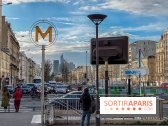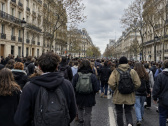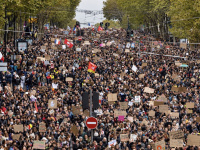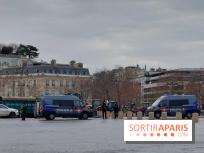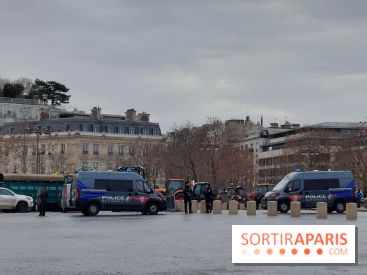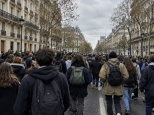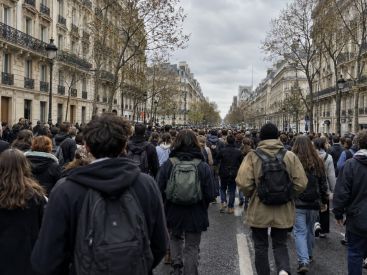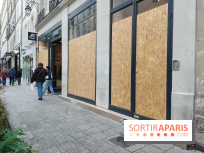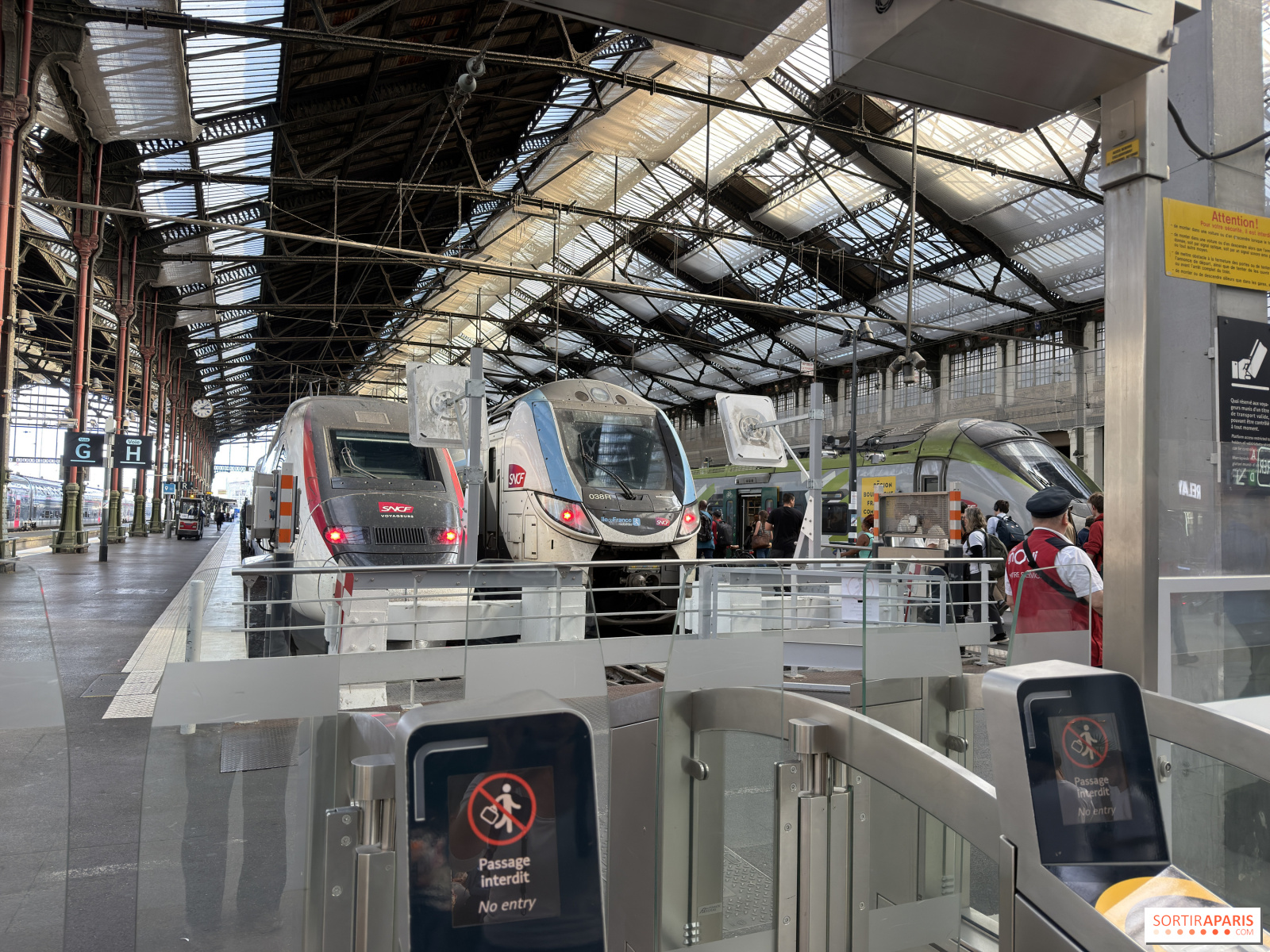
This Saturday, October 31, 2026, two of Paris’s largest train stations are having an unusual day. For the third phase of the protest against the high cost of living, the police prefecture has placed the Gare du Nord, in the 10th arrondissement, and the Gare de Lyon, in the 12th arrondissement, within a security perimeter from 8 a.m. to 11:30 p.m. Trains are running, but access to both stations and the surrounding areas is subject to heightened security checks.
A measure taking effect over the All Saints’ Day holiday weekend, on Halloween, when holidaymakers are filling the concourses on their way home. So it’s best to know what to expect before boarding your TGV, Eurostar or RER.
A security perimeter does not close a train station. It regulates access to and movement of people within an area defined by an official order. To enter or move around the perimeter, you must, if requested by police officers, agree to security pat-downs, visual inspections and searches of your luggage, as well as an inspection of your vehicle. If you refuse, you may be denied access or escorted out of the area.
The order goes further. It bans all protest gatherings within the designated area, as well as the carrying and transporting of fireworks, pyrotechnic articles, firearms (including imitation firearms) and any object that could be used as a weapon or projectile. Category 1 and 2 dogs are also prohibited, as is protective equipment intended to counter law enforcement’s crowd-control measures.
Another point to bear in mind: pedestrian access is prohibited in the area, except for residents and authorized persons. Anyone who needs to go there for personal, professional or family reasons is asked to identify themselves to the police on site so they can pass through the appropriate screening. If you’re taking a train, keep your ticket handy; it will help you justify your passage.
In practice, expect screening points at entrances, longer lines and bag checks. Since March 30, 2026, SNCF and RATP security staff have also been able to conduct pat-downs in railway stations and metro stations, subject to certain conditions, even without a prefectural order.
Order No. 2026-01482 issued by the Paris Police Prefecture sets the boundaries for Saturday, October 31, 2026, from 8 a.m. to 11:30 p.m. On the Gare du Nord side, the area is bounded by Rue de Dunkerque, the Cour des Taxis, Rue de Maubeuge, Boulevard de la Chapelle and Rue du Faubourg-Saint-Denis. In other words, it covers the entire block around the station, including the forecourt, as far as the elevated section of Metro Line 2.
On the Gare de Lyon side, the perimeter follows Place Louis-Armand, Rue de Bercy, Rue de Rambouillet and Rue de Chalon. It includes the station, its forecourt and the famous Clock Tower, with the Le Train Bleu restaurant inside. If you’re simply passing through the area, with no train to catch and no reason to be there, it’s best to avoid these streets throughout the day.
Contrary to what one might think, the order is not primarily aimed at demonstrators. It is based on the framework of the fight against terrorism, which allows the prefect of police to protect a location exposed to risk because of its nature and the number of people who frequent it. France remains under the Vigipirate plan at the “heightened vigilance” level, and the text refers to the attack on Friday, October 23, 2026, in Trappes and La Verrière, in the Yvelines, which left one person dead and four injured.
The prefecture fears that individuals may exploit the unauthorized gatherings and the deployment of law enforcement, already stretched on a Saturday of protests and Halloween, to act. It also points to advice circulating on social media on how to avoid identification, as well as tutorials on making homemade bombs.
Why these two stations in particular? First, because of the number of passengers they serve and their role as transport hubs. Gare du Nord, the busiest railway station in Europe, serves Eurostar, TGV trains to Lille and the RER B to Roissy–Charles de Gaulle Airport. Gare de Lyon connects Paris with the southeast. They are also close to the usual protest sites in northern and eastern Paris. Finally, unlike an institutional building, a railway station is not subject to strict access controls at all times, making it a prime target, according to the order.
Interior Minister Laurent Nuñez, for his part, said the risk of urban violence was very high this Saturday and called for stepped-up identity checks, particularly at train stations.
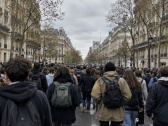
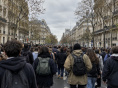
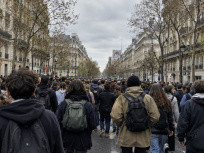
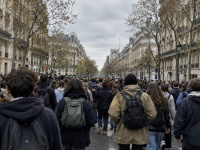
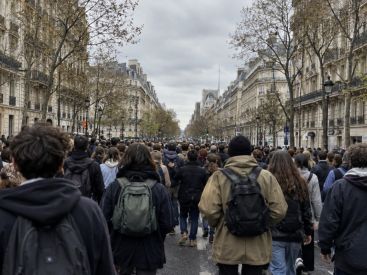
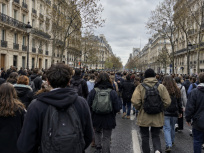
The Paris police prefecture has banned the routes submitted by the CGT (Bastille–Nation) and the Yellow Vests (Bastille–Concorde) in central Paris. It has authorized a march on the outskirts, along the Boulevards of the Marshals, between Porte de Bagnolet and Porte de Charenton, as reported by franceinfo. Paris police prefect Patrice Faure said the route was intended to avoid the city center and property damage.
Several trade union and student organizations had filed for emergency court proceedings. According to the latest information, the organizers ultimately accepted the route imposed after their appeal was rejected. The Gilets jaunes are also calling for sit-ins at 2 p.m. outside the National Assembly and town halls. For details of the route, see our article on the October 31 demonstration in Paris.
Train stations are also covered by another order. According to franceinfo, all undeclared gatherings are banned in certain areas of Paris (the Élysée, the National Assembly, the Champs-Élysées and train stations) from 8 p.m. Friday to 6 a.m. Monday. The same order imposes a nighttime curfew on unaccompanied minors in those areas, from 9 p.m. to 6 a.m.
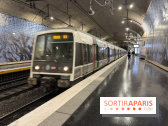
Metro station closures, meanwhile, are generally announced the day before or on the morning itself. On October 24, the RATP closed around 30 stations from 9 a.m. at the request of the police prefecture. To keep up with developments, check our live traffic updates and our metro and RER disruptions this week.
The best approach is to arrive early, carry some form of ID and keep unnecessary luggage to a minimum to speed up security checks. If you’re taking a Eurostar or a TGV, allow at least an extra hour. Check your train on SNCF Connect, line status on Bonjour RATP and published orders on the police prefecture’s website.
In the evening, it’s best to avoid major squares such as République, Châtelet or Bastille, which are particularly heavily monitored from 8 p.m. And if the metro lets you down, our tips for getting around despite the demonstrations may come in handy.
The protests do not stop there: an interprofessional strike is planned for Thursday, November 5, 2026, with a strike notice filed at SNCF. To follow the movement in full, see our articles on the Yellow Vests and news from Île-de-France.
Dates and Opening Time
On October 31, 2026
From 08:00 a.m. to 11:30 p.m.
Places
Gare du Nord
18, Rue de Dunkerque
75010 Paris 10
Route planner
Accessibility info
Gare de Lyon
Place Louis Armand
75012 Paris 12
Route planner
Prices
Free
Official website
www.prefecturedepolice.interieur.gouv.fr