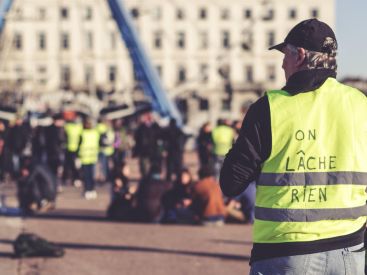
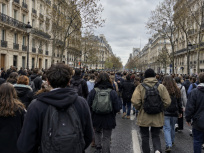
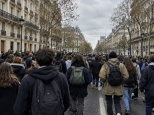
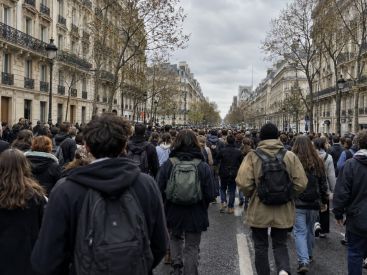
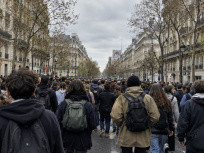
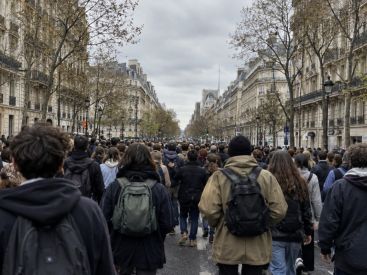
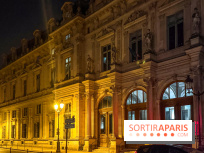
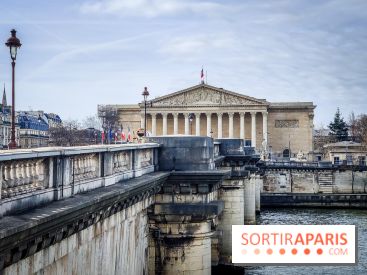
The October 31, 2026 demonstration in Paris is taking shape, and its route is already the subject of a dispute. The Yellow Vests coordination is calling for an “Act III” this Saturday, Halloween, with sit-ins planned for 2 p.m. outside the National Assembly, in the 7th arrondissement, and outside town halls, including Paris’s arrondissement town halls.
The slogan has shifted from the high cost of living to the defense of civil liberties. In response, Emmanuel Macron set out the government’s position on Monday: marches must stay out of city centers to protect businesses. High school students, still on their All Saints’ Day break, are being encouraged to join the movement, just days before the November 5, 2026 strike.
Two routes had been submitted to the Paris police headquarters for this Saturday: the CGT’s, reported by Europe 1, and the Yellow Vests’. Both start at Place de la Bastille, but head in opposite directions. The Paris police headquarters rejected both.
Earlier this week, the CGT declared a march between Place de la Bastille and Place de la Nation, in the east of the capital. This route has a history. Filed by the inter-union coalition for October 24, it had been approved by the police prefecture two days earlier, then ultimately banned in favor of a route imposed between Porte d’Italie and Porte de Vincennes.
The union was hoping to get the green light this time. No such luck: on Wednesday, October 28, the inter-union group announced that the police prefecture had again rejected this route, L'Humanité reports. According to some media outlets, the prefecture is proposing an alternative route from Porte de Bagnolet to Porte de Charenton, along the edge of Paris—an account that has yet to be officially confirmed. We take a closer look at this rejected route and the proposed new route in a dedicated article.
For reference, here is the Bastille–Nation route that had been announced for October 24, through the southern part of the 12th arrondissement, according to France 3 Paris Île-de-France:
On Tuesday, October 27, the Yellow Vests coordination group submitted its own route, according to Le Parisien. This time, the procession would cross central Paris to Place de la Concorde, with the National Assembly as its target and a 2 p.m. start planned, according to franceinfo. Here’s a closer look at the route sought by the Yellow Vests:
This route runs alongside several busy shopping districts, precisely what the authorities want to avoid. Unsurprisingly, the Paris police prefecture rejected it, according to BFMTV. The coordinating group had warned that, if the route were rejected, it would consider filing a complaint over an infringement of the right to demonstrate or seeking an emergency court ruling from the administrative court, as reported by France 3 Paris Île-de-France.
Students are already planning what comes next. This Wednesday, Interfac IDF notified the prefecture of a demonstration for Tuesday, November 3, between Place du Panthéon and the headquarters of Medef, in the 7th arrondissement. The route could still change by Saturday: prefectural orders often come out the day before, sometimes on the morning of the event itself.
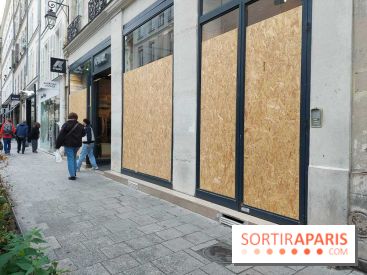
The head of state spoke on Monday, October 26, during a visit to Marseille, one of the cities hardest hit by the damage on October 17. He announced that the demonstrations on October 31 and then November 5 would be routed away from city centers to prevent further looting and protect businesses.
He is drawing on the precedent set on October 24, which he says made it possible to maintain order without depriving anyone of the right to demonstrate. He also recalled the existence of a support fund for affected shopkeepers and artisans.
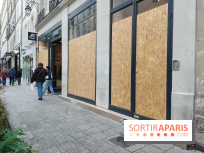
In Paris, this order keeps areas such as Châtelet-Les Halles, République and Opéra at a distance. It has sparked debate, because it also keeps protesters’ demands out of sight. And it directly clashes with the route planned by the Gilets jaunes, which is aimed precisely at the political heart of the capital.
The appeal was read on October 24 on the steps of the Opéra Bastille, then presented to the press by Benjamin Ball and Azelma Sigaux, two members of the coordination, according to Brut with AFP. The movement is focusing mainly on stationary gatherings. Here is the schedule published on the coordination’s website; it remains a call to action:
Friday evening, we took stock of the pot-banging protests by the Yellow Vests on October 30. In the capital, the participatory map of mobilizations also lists sit-ins planned outside the town halls of Paris Centre and the 10th, 11th, 12th, 13th, 14th and 15th arrondissements. Fed by participants themselves, it offers a general indication rather than a fixed schedule.
In two weeks, the message has changed. On October 17, anger was focused first and foremost on fuel prices and the high cost of living. For Act III, the Yellow Vests are denouncing an “authoritarian drift” following bans on marches and curfews imposed in several cities. Their idea can be summed up in a few words: protest to preserve the right to protest.
Their text calls for curfews to be lifted, protesters who have been arrested to be granted amnesty, investigations into violence attributed to law enforcement, and a national conference bringing together all the sectors involved in the mobilization. On the legal front, the Adelico association and the Syndicat de la magistrature filed an emergency petition for the protection of fundamental freedoms with the Conseil d'État on October 22, challenging the president’s announcements aimed at restricting certain demonstrations.
To relive the previous day, our article on Act II on October 24 is still online, as is our update on the areas that could be affected by Act III.
The student movement, which began in mid-September at a high school in Créteil, in the Val-de-Marne, has spread across France. In Paris, young people have already taken to the streets for the October 6 demonstration, then the October 13 march and the one on October 24.
At a meeting at Matignon on Monday, October 26, student and high school organizations secured an announcement that Parcoursup is to be scrapped and replaced by a new system in 2028. The 2027 admissions cycle will use a revamped version, with more transparent selection criteria, and 15,000 additional places in higher education have been promised. The timeline and the students affected are explained in detail in our article on the end of Parcoursup in 2027 and 2028.
The announcements have not quelled the anger. Several high school student representatives say they are too vague and are calling for the protests to continue this Saturday, according to franceinfo. The SUD éducation union is also urging staff to support their initiatives. How many will turn out on Saturday? It is hard to say in the middle of the school holidays. The real test is more likely to come when school resumes on Monday, November 2, with a major mobilization on Tuesday the 3rd.
Update, Thursday evening, October 29: in a letter sent to all the prefects on Thursday, revealed by BFMTV and reported by le JDD, Laurent Nuñez says the risk of urban violence is “very high” on Saturday, from early evening until late into the night. Intelligence services have spotted “numerous calls for gatherings in city centers” on social media, ostensibly for Halloween. The minister is calling for “particular attention” to gatherings in public squares from 8 p.m. and fears “unauthorized marches.” We examine the letter in detail in our article on Laurent Nuñez’s Halloween warning.
The security operation is expected to be as large as last weekend’s. On Monday, Laurent Nuñez promised an “extremely robust” operation for this Saturday, acknowledging on BFMTV-RMC that he expected another difficult day. The Interior Ministry has not yet officially announced staffing numbers, but 70,000 police officers and gendarmes were deployed across France on October 24. Measures to protect shops and shopping centers, already put in place last weekend, are to be renewed and stepped up in response to calls for looting, according to 20 minutes.
The backdrop is fraught. The day coincides with Halloween, traditionally a rowdy evening, and the terrorist threat has remained high since the racist attack in Trappes, in the Yvelines. On October 23, a man opened fire on passers-by from his car, killing one person and injuring five others. The National Anti-Terrorism Prosecutor’s Office took over the investigation.
In a telegram sent on Wednesday, the director general of the National Police has called for staffing levels to be raised to 75%, according to BFMTV and RMC. Departments can call on the operational reserve, and the CRS directorate must deploy as many units as possible. As on October 24, the Raid will protect the most exposed public buildings.
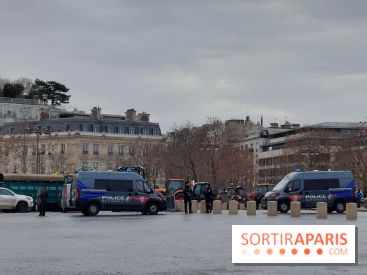
Police officers have been instructed to maintain a visible presence in public spaces as a deterrent, and to intervene quickly to protect institutions, public buildings and businesses, while safeguarding the right to protest. Drones will film the routes, and water cannon vehicles will be deployed systematically.
Enhanced identity and vehicle checks are planned in sensitive areas, particularly at train stations and on major roads. The stated aim of the French National Police Directorate General is to identify in advance people who may commit offences. Local curfews still in force will also continue to be enforced.
Prefects have been told not to authorize marches in city centers, in coordination with local authorities. In Paris, this policy has meant rejecting the two routes submitted for approval—Bastille–Concorde for the Yellow Vests and Bastille–Nation for the CGT union—according to BFMTV. If you’re passing through a major Paris train station on Saturday, it’s best to carry ID and allow a little extra time. Staffing, the RAID, drones, checks: we detail all the measures in our article on the security arrangements for the October 31 demonstration.
The situation remains tense. On October 24, protests drew 410,000 people across France, including 110,000 in Paris, according to the Interior Ministry, compared with nearly 800,000, including 250,000 in the capital, according to the CGT, reports ICI. The Paris police prefecture recorded 142 arrests in the city that day, far fewer than the 855 on October 17. Since then, nighttime curfews have been in effect around Place de la République and Les Halles. However, a curfew requiring unaccompanied minors to stay indoors from 9 p.m. to 6 a.m. in several parts of the capital was suspended by the administrative court on Wednesday, October 28, for lack of specific evidence to justify such risks.
As for transport, no closures have been announced yet as of Thursday evening, and the police prefecture has not yet issued an order for Saturday. On October 24, more than 30 metro stations were closed from 9 a.m. around the Champs-Élysées, the National Assembly and government ministries, and Line 1 was suspended along part of its route. If the sit-ins in front of the Palais Bourbon go ahead, stations such as Assemblée nationale, Solférino, Invalides and Concorde could close again. A march pushed to the outskirts of Paris would be more likely to affect the eastern gateways and tram line T3.
Traffic restrictions are also expected, with buses rerouted and a possible car-free zone around the Quai d'Orsay and the Pont de la Concorde. Before heading out, check the notices issued by the Paris Police Prefecture and RATP traffic updates. Our tips on getting around despite the demonstrations may also come in handy.
The date falls on Halloween night. If you’re planning to go out, take a look at the Halloween events that could be disrupted, then check out our selection of Halloween parties in Paris in 2026 so you have a backup plan away from crowds. Given the ministry’s warning about gatherings from 8 p.m. onward, it’s best to avoid the large squares in the city center in the evening (République, Châtelet-Les Halles, Bastille) and plan your journey home.
For its organizers, Act III is a springboard to Thursday, November 5. On that day, the inter-union coalition (CFDT, CGT, FO, Unsa and FSU) is calling for an interprofessional strike over wages, pensions and public services. Once again, Emmanuel Macron wants marches to take place outside city centers.
The main SNCF unions and Snes-FSU are also calling for a strike, and the Yellow Vests plan to join them ahead of their Act IV on November 7. Unlike a Saturday sit-in, this day could have a much greater impact on daily life for residents of the Île-de-France region. Transport, schools, route: our article takes stock of the November 5, 2026 demonstration and strike.
October 31 protests and Halloween: Nuñez warns of a very high risk of violence
In a letter sent to prefects on Thursday, October 29, 2026, Interior Minister Laurent Nuñez said the risk of urban violence this Saturday, October 31, Halloween night and another day of protests, was “very high.” Gatherings from 8 p.m. onward are under particularly close watch. Here’s what we know. [Read more]
The Yellow Vests are preparing a third day of protests in Paris on Saturday, October 31, 2026—Halloween—with a Bastille-to-Concorde route requested and then denied, according to BFMTV. As of October 29, the final route and any traffic and public transport restrictions remained to be determined. [Read more]
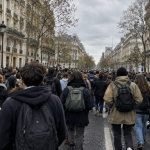
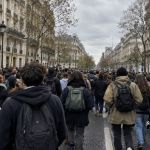
The October 31, 2026 demonstration is being prepared under heightened security in Paris and across France. Halloween, the terrorist threat and rejected routes: here’s a rundown of what law enforcement is planning for this Saturday. [Read more]
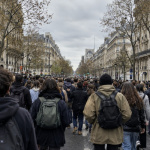
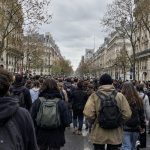
The October 31, 2026 demonstration in Paris is taking yet another turn: the Paris police prefecture has rejected the inter-union coalition’s Bastille–Nation route and proposed a route along the edge of the capital, which the unions have rejected. [Read more]
The Yellow Vests are preparing a new demonstration in Paris this Saturday, October 31, 2026. For this “Act III,” the organizers have submitted a route from Place de la Bastille to Place de la Concorde, passing through République, the Grands Boulevards and Opéra. Here is the route proposed by the Yellow Vests’ coordinating group. [Read more]
Dates and Opening Time
On October 31, 2026
Location
Assemblée Nationale - Palais Bourbon
35 Quai d'Orsay
75007 Paris 7
Route planner
Official website
17octobregiletjaune.net





































 October 31 protests and Halloween: Nuñez warns of a very high risk of violence


 Yellow Vest protest in Paris on October 31: disputed route, what impact on travel?
 October 31 protest: RAID, drones and security checks—the security operation
 October 31 demonstration in Paris: inter-union coalition’s route rejected, new route proposed


 October 31 demonstration in Paris: What route do the Yellow Vests want?