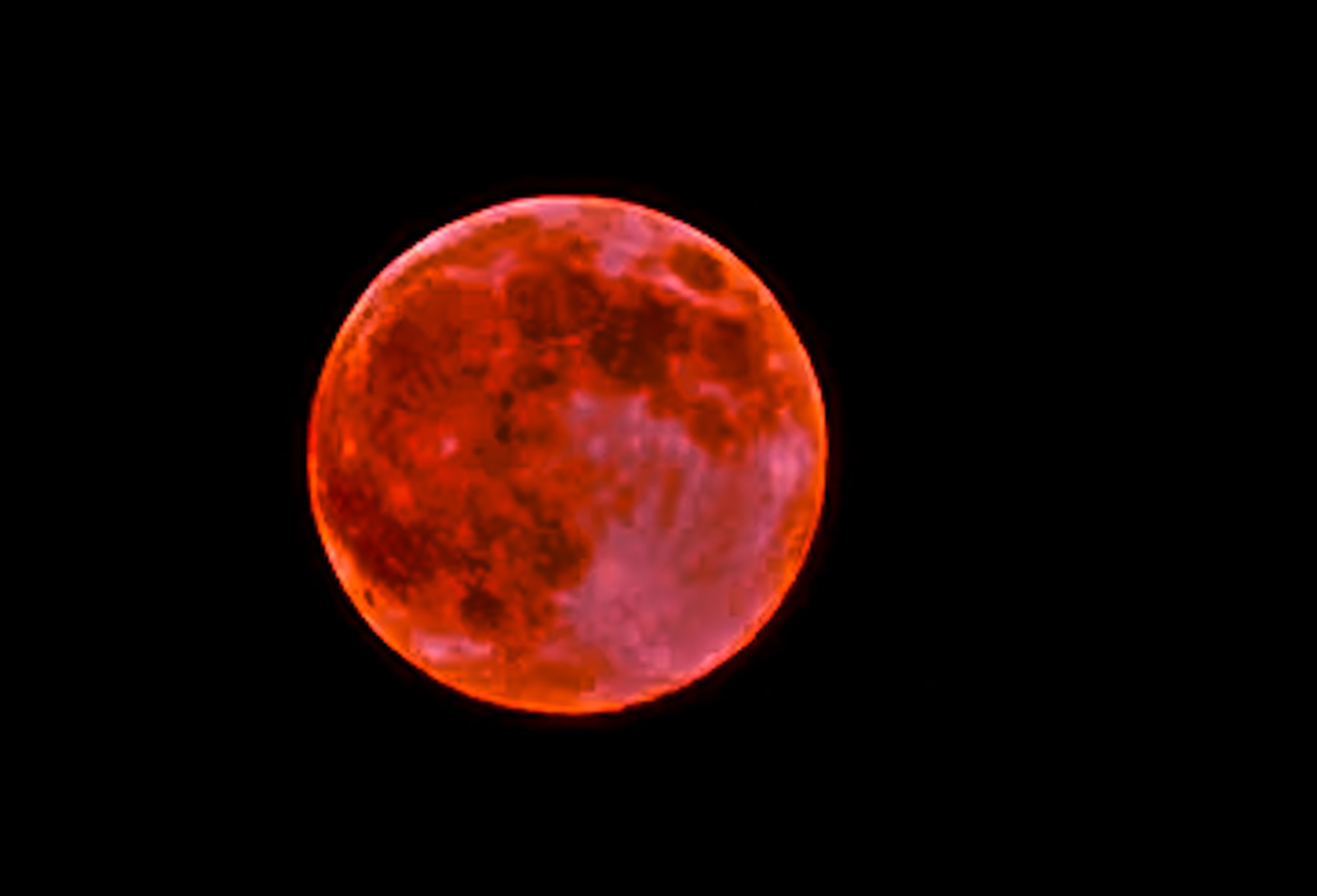
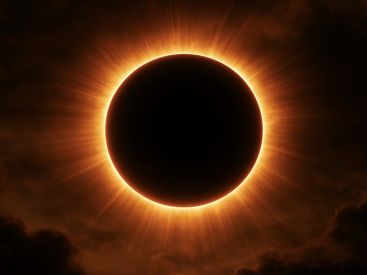
A Blood Moon will light up the night sky this Tuesday, March 3, 2026. This total lunar eclipse, a rare and breathtaking event, promises to deliver an extraordinary celestial display for skywatchers around the globe. But what about Paris and the Île-de-France? Will Parisians and residents of the surrounding region be able to look up and witness this one-of-a-kind astronomical phenomenon, the last of its kind until 2028?
This Blood Moon, as it's often called, occurs when our planet aligns precisely between the Sun and the Moon. Instead of vanishing into darkness, our natural satellite takes on a stunning reddish hue. This unique coloration is caused by Earth's atmosphere filtering sunlight and allowing only the red wavelengths to reach the lunar surface. Nearly 6 billion people worldwide will be able to witness this phenomenon, depending on their location. To better understand this astronomical event, NASA and the European Space Agency offer detailed resources on lunar eclipses.
The lunar eclipse of March 3, 2026 will last a total of 5 hours and 39 minutes, including 58 minutes of totality during which the Moon will take on its iconic blood-red hue. The peak of the eclipse is expected at 11:33 GMT, which corresponds to 12:33 in French local time. However, at that exact moment, from Paris, the Parisian suburbs, and the entire Île-de-France region, the Moon will be below the horizon, making observation impossible from that area and across mainland France. The most spectacular phases will begin at 11:04 GMT with the start of totality and will end at 12:02 GMT, when the Moon will start to emerge from Earth's shadow.
For those tuning in from the United States or Canada, visibility will vary significantly by region. On the West Coast—covering cities like Los Angeles, San Francisco, Seattle, and Vancouver—the entire spectacle will be visible, with the Blood Moon high above the horizon. In central areas such as Denver, Dallas, or Chicago, the eclipse will reach its peak, showcasing a stunning red Moon clearly visible in the sky. Conversely, on the East Coast—including New York, Toronto, and Washington—the Moon will be near totality but appear very low on the horizon, just before it sets.
To accurately determine the visibility of the March 2026 lunar eclipse from your specific location, we recommend using the Sky Tonight app. Simply open the app and type "lunar eclipse" into the search bar. The app will then show you the exact times the eclipse will be visible from your area, or notify you if it’s not viewable from your region. The detailed visibility map allows you to zoom in on your location and see which phases of the eclipse you'll be able to observe. The target icon centers the Moon on the sky map, while the compass icon helps align the map with the real sky so you know precisely where to look.
Another handy app is Eclipse Guide, specially created to help observers track lunar and solar eclipses. It automatically provides precise timings and durations for all the major phases of an eclipse based on your location — from the subtle penumbral stages to totality and peak moments. This eliminates the hassle of converting time zones or doing manual calculations.
Following the total lunar eclipse of March 2026, the next lunar eclipse will take place on August 28, 2026. This will be a partial eclipse visible from certain regions of the Americas, Europe, Africa, and nearby areas. France should be able to witness it, at least partly. However, to see another spectacular Blood Moon, you'll have to wait until December 31, 2028. That total lunar eclipse will be visible across Asia, Australia, New Zealand, Africa, and much of Europe, finally giving the French a chance to enjoy this mesmerizing celestial event.
Good news for astronomy enthusiasts in Paris: while the March eclipse slips by, there will be an extraordinary solar eclipse in France this August. An event not to be missed for those eager to witness a striking astronomical spectacle from Paris and the Île-de-France region. Just remember, you'll need to protect your eyes during this one, as you surely understand.
Unlike solar eclipses, which require specialized protection for the eyes, a lunar eclipse poses no danger and can be safely enjoyed with the naked eye. This celestial event ranks among the most stunning and accessible astronomical phenomena. No special equipment is necessary, although binoculars or a telescope can enhance the viewing experience. All you need is a clear night sky and an unobstructed view of the Moon. To make the most of the spectacle, it’s recommended to start observing at least thirty minutes before the total phase begins, during the partial eclipse, to see the Earth's shadow gradually creeping across the lunar surface.
In short, if you’re eager to witness the Blood Moon on March 3, 2026, you'll need to travel to the other side of the world or wait until 2028 for the next total lunar eclipse visible from France. In the meantime, you can find solace in the partial eclipse on August 28, 2026, and stay tuned with dedicated apps to ensure you don’t miss any celestial events. For more details on upcoming eclipses and the best viewing times, visit Star Walk Space, which offers comprehensive guides and regularly updated visibility maps.