Let's set the record straight: autumn 2026 doesn’t begin on September 21, even if many of us have penciled it into our calendars. In Paris and throughout the Île-de-France, as in the rest of the Northern Hemisphere, the changing of the season depends on the autumn equinox, which this year falls on Wednesday, September 23, 2026. So there’s still a little time left to enjoy the final days of astronomical summer.
This confusion is widespread. It likely stems from old calendars and school memories, where September 21 was treated as the official date. Yet the equinox does not occur at the same moment every year, and it is the equinox that signals it.
According to calculations by the Institute of Celestial Mechanics and Ephemeris Computation (IMCCE), affiliated with the Paris Observatory, the September equinox will occur on September 23, 2026 at 00:05 UTC. With daylight saving time, that translates to 02:05 in metropolitan France, in the night from Tuesday to Wednesday.
The equinox isn’t a full day, but a precise moment: when the Sun crosses the celestial equator. At that instant, its rays light up both hemispheres almost equally, and the length of day nearly matches the length of night. The word itself comes from Latin and means “equal night.”
Everything hinges on a matter of hours. Earth doesn’t complete its orbit around the Sun in a neat 365 days, but in about 365.2422 days—roughly 365 days, 5 hours and about 49 minutes. Each year, this tiny residual nudges the equinox by roughly six hours on the clock.
To keep the seasons from drifting gradually out of sync with the calendar, a well-known fix was found: February 29. Every four years, this extra day in the leap years catches up on the lost time and shifts the equinox back by about a day. It’s a bit like a runner taking a shortcut every four laps to stay with the pack.
The system isn't perfect, though. Since the Gregorian calendar reform of 1582, century years are leap years only if they’re divisible by 400. The year 2000 was one, but 2100 will not be. These tweaks explain why the equinox date drifts slowly across the decades.
In the current calendar, the autumn equinox most often falls on September 22 or 23, with a bit of back-and-forth. The 21 September, meanwhile, stays very discreet. According to calculations relayed by the IMCCE, we’ll have to wait until 2092 for an autumn equinox to fall again on September 21. Put bluntly, the date most of us have in mind owes more to habit than to astronomy.
A small nuance that adds to the confusion: meteorologists operate on their own calendar. For Météo-France, the meteorological autumn covers the three full months of September, October and November. It therefore began on September 1, which makes statistics and year-to-year comparisons easier. The astronomical autumn, by contrast, follows the Earth's orbit and starts with the equinox.
From September 23, nights will take the lead over days. Parisian evenings will shorten by a few minutes each day, until the winter solstice, expected on the evening of Monday, December 21, 2026. In between, the switch to winter time will occur in the night from Saturday, October 24 to Sunday, October 25, 2026. We’ll gain an extra hour of sleep, as explained in our article on the clock change in 2026.
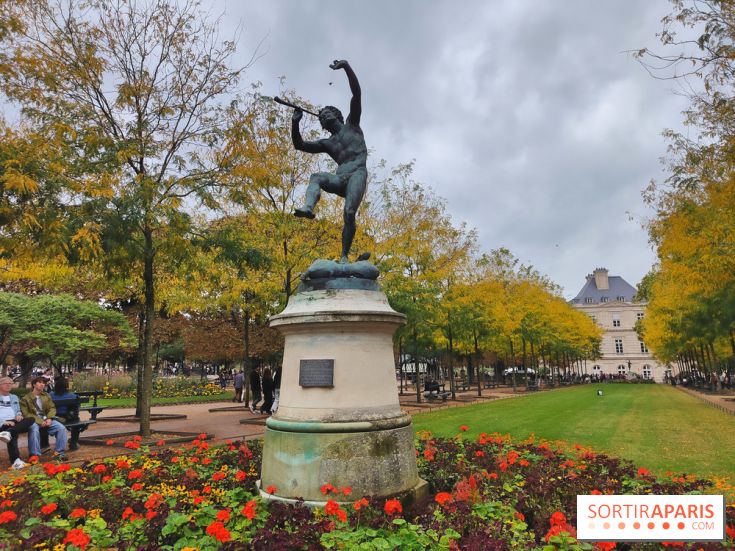
For the curious, Paris still carries a trace of this old fascination with the equinoxes. At Saint-Sulpice Church in the 6th arrondissement, the gnomon installed in the 18th century was used to pinpoint the vernal equinox by a sunbeam striking a brass line. A nice detour to slip into a back-to-school stroll, before heading over to the nearby Jardin du Luxembourg.
Want to go further on the topic? Check out our full dossier on the équinoxe d'automne 2026, and to fill your first days of autumn, take a look at our idées de sorties de la semaine.
This page may contain AI-assisted elements, more information here.
Dates and Opening Time
From September 21, 2026 to September 23, 2026