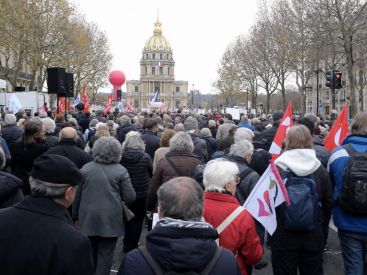
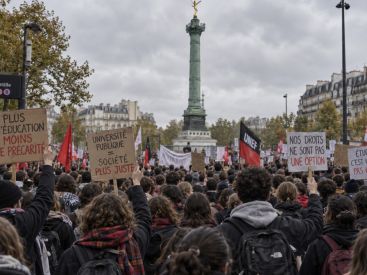
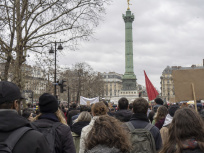
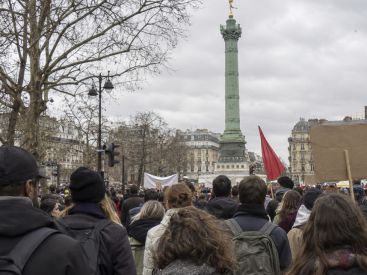
Act IV of the Yellow Vest movement takes place this Saturday, November 7, 2026. In Paris, the movement’s national coordinating body has called for a gathering at 2 p.m. at Place de la Concorde, in the 8th arrondissement. The coordination group has not got its way: the police prefecture has banned the gathering, according to Actu Paris. The organizers nevertheless insist they will come, no matter what.
Tensions rose another notch this Friday. Received at the prefecture, the coordination was asked to join the trade unions’ march between République and Nation. It flatly refused: “We’re being forced to join the union march even though our demands have nothing to do with it. This is an infringement of the right to demonstrate,” said Azelma Sigaux, spokesperson for the national Yellow Vests coordination.
On the social network X, she confirmed the movement’s position: “As planned, we will disobey and go ahead with our gathering at 2 p.m. at Concorde.” The coordination had already filed a complaint against the Paris police chief for “obstructing the right to demonstrate.” Another standoff, after four weeks of route bans in the capital.
Note: As we write, the police prefecture has banned the rally at Place de la Concorde. On Saturday, only the inter-union march between République and Nation is authorized in Paris.
On its official website, the coordinating body is calling for a “convergence rally” at Place de la Concorde and urging protesters from across France to make their way to Paris. The slogan for Act IV is summed up in three words: “for real equality.”
The spokespeople promise a “family-friendly” demonstration, joined by the children’s rights movement and the climate movement, according to ICI Paris Île-de-France. Elsewhere in France, marches, gatherings at roundabouts and blockades have been announced.
No. The organizers have not got their way: according to Actu Paris, the Paris police prefecture has banned the gathering they had notified at Place de la Concorde. The spokespeople had nevertheless been received at the prefecture on Friday morning, and left announcing that they had filed a criminal complaint the previous day for “obstructing the right to demonstrate.”
The organizers aren’t budging. “We’ll go ahead whatever happens, even if it’s banned,” Benjamin Ball, one of the members of the coordinating committee, told AFP. On its website, the movement even called for “mass civil disobedience” if the event was banned.
His lawyer, David Libeskind, himself a Yellow Vest, stands by this position in comments to Actu Paris: when the right to demonstrate is taken away, “direct, peaceful action becomes the only possible democratic response.”
The precedents leave little room for doubt. On October 31, the Yellow Vests’ route to the Place de la Concorde had already been banned. The square, wedged between the Tuileries, the Champs-Élysées and the bridge leading to the National Assembly, is one of the “seats of power” that authorities have kept protest marches away from since mid-October.
Taking part in a banned demonstration is a class-four misdemeanor under Article R. 644-4 of the French Criminal Code. In practice, participants face a fixed fine of €135. If the case is contested before a judge, the fine can rise to €750, as Le Club des juristes points out.
Penalties are harsher in some cases. Concealing one’s face at a demonstration where public disturbances are being committed or are likely to be committed becomes a criminal offense, punishable by one year in prison and a €15,000 fine. Organizers of a banned demonstration face six months in prison and a €7,500 fine.
These rules could soon become stricter. On October 27, 2026, the Senate adopted an amendment that would make simply taking part in a banned demonstration a criminal offense, punishable by a fixed fine of 500 euros, according to Juristique. The text has not yet been finalized: this Saturday, the 135-euro fine still applies.
The two calls should not be confused. That same afternoon, the inter-union group marches against the high cost of living between Place de la République and Place de la Nation, along Boulevard Voltaire. The route, filed by the unions as early as Tuesday, was approved by the police prefecture on Friday, even though it had relegated the October 24 and 31 marches to the boulevards des Maréchaux.
November 7 demonstration in Paris: police approve République–Nation route
The demonstration on Saturday, November 7, 2026, in Paris will not be pushed to the outskirts of the capital: the police prefecture has approved the inter-union coalition’s route for the fourth round of protests against the rising cost of living, along a route already used this week. [Read more]
The reference is deliberate. The “six-seven” takes up an expression that has gone viral on social media and in schoolyards. After the November 5 strike, the movement called for a “6-7”: strikes and blockades on Friday, followed by Act IV on Saturday, as ICI reported.
Behind the slogan, the aim remains serious. Bringing the country to a standstill is seen as necessary to create a power struggle with the executive, according to Yahoo News. It is also a way of reaching out to young people, who have been strongly represented at the demonstrations since mid-October.
Beyond the cost-of-living crisis, which sparked the movement in October 2026, the coordinating group wants to bring the demands of local assemblies before a national convention. It also points to a constituent process and an end to what it calls the “presidential monarchy.”
In the absence of a response from the government, the text calls for the president and his government to step down. For his part, Emmanuel Macron wants “electoral debate and the ballot box” to take precedence over street protests, a position he had already set out in his October address.
The previous Saturdays had shown a downward trend: 550,000 demonstrators on October 17 (including 110,000 in Paris), 410,000 at Act II on October 24, then 320,000 at Act III on October 31, including 70,000 in the capital, according to the Interior Ministry. The coordination, for its part, claimed that more than 500,000 people had turned out that day.
The Thursday, November 5 strike shifted the balance, with nearly 600,000 demonstrators according to the authorities and “nearly 1.6 million” according to the CGT. The signs for Saturday are more modest: on Friday, the movement’s crowdsourced map listed 65 actions across France, compared with around 550 events announced before October 31, according to Mesinfos. Follow the movement on our dedicated Yellow Vests page.
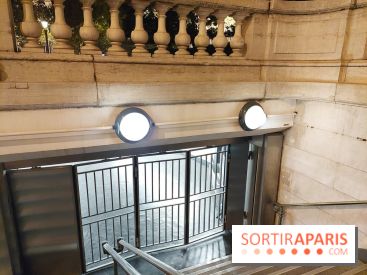
The list is out: at the request of the Paris police prefecture, the RATP is closing 14 metro stations this Saturday across eight lines. From the start of service, eight stations around Place de la Concorde and the Champs-Élysées will remain closed, including Concorde, Tuileries and Charles de Gaulle-Étoile. From 10 a.m., six more stations along Boulevard Voltaire will close, from Oberkampf to Rue des Boulets. Trains will pass through without stopping.
That's fewer than on Thursday, when the RATP closed 25 stations, and far fewer than on October 31, when around 40 metro and RER stations remained closed.
November 7 demonstration in Paris: 14 metro stations closed this Saturday, affecting 8 lines
Another day of protests is planned in Paris on November 7, 2026. Because of Act IV of the Yellow Vests movement and the inter-union demonstration announced on the streets of the capital, several metro stations will be closed this Saturday. Here are the details of the disruptions expected on November 7 across Paris’s public transport network. [Read more]
Engineering works are adding to the disruption. On Saturday, the RER B will be suspended between Aulnay-sous-Bois and Mitry-Claye, the RER D between Stade de France-Saint-Denis and Creil, and Line J between Conflans-Sainte-Honorine and Gisors. On Sunday, Metro Line 6 will be closed along its entire length.
Metro, RER: service disruptions this weekend, November 7 and 8, 2026?
Public transport in Paris and Île-de-France will remain disrupted this weekend, November 7 and 8, 2026: Metro line 6 will be closed on Sunday, several RER and Transilien lines will be suspended for work, and Act IV of the Yellow Vests movement could lead to station closures on Saturday. [Read more]
Before setting off, check our daily traffic update, as well as the websites of Île-de-France Mobilités and the RATP. Our advice on getting around despite the demonstrations still applies, as does our guide to transport in Île-de-France.
If you’d rather avoid Concorde and eastern Paris, our ideas for Saturday, November 7 and our tips for the week offer plenty to keep you busy. Also, be sure to check the weekend weather forecast.
November 7 protest in Paris: what to expect
The protest on Saturday, November 7, 2026, in Paris will extend the mobilization against the rising cost of living. Two separate events are taking shape in the capital: a union march now approved by the police prefecture, and a Yellow Vests gathering that remains up in the air. [Read more]
Dates and Opening Time
On November 7, 2026
Starts at 02:00 p.m.
Places
Paris
75 Paris
Place de la Concorde
Place de la Concorde
75008 Paris 8
Route planner
Official website
17octobregiletjaune.net






























 November 7 demonstration in Paris: 14 metro stations closed this Saturday, affecting 8 lines