The SNCF strike on Thursday, November 5, 2026 will go ahead. Tuesday’s meeting, November 3, at SNCF headquarters in Saint-Denis (Seine-Saint-Denis) failed to defuse the dispute: CGT-Cheminots, UNSA-Ferroviaire, SUD-Rail and CFDT-Cheminots are standing by their joint call, on the eve of the TGV M’s inaugural journey.
In the wake of the announcement, SNCF published its initial forecasts: TGV services are expected to be slightly disrupted, while Intercités, TER, RER and Transilien trains will be disrupted in the Île-de-France region. As for RATP, the metro is expected to run normally in Paris. The strike falls on the same day as the interprofessional strike and demonstration on November 5. Here is what we know as of the evening of Tuesday, November 3, 2026.
Late Tuesday morning, union representatives sat down across from management as railway workers gathered outside the headquarters. On the table was a specific demand: an inflation catch-up adjustment to 2026 wages, AFP reports, as cited by Boursorama.
The unions’ calculation is straightforward. The 2026 pay agreement provided for a general 0.5% raise, paid in two installments, based on an estimated inflation rate of 1.3%. According to INSEE, prices ultimately rose by 3.4% over the 12 months to October. UNSA-Ferroviaire is therefore demanding a general 2.6% raise, backdated to July 1, invoking a review clause предусмотрed for cases in which inflation overshoots.
Management set the tone that morning, presenting the meeting as a simple “progress update,” with wage negotiations for 2027 scheduled for January. Exactly one year after Jean Castex was appointed to head the group, the meeting was not enough to ease the pressure: the call for a strike remains in place.
SNCF gave an initial indication on Tuesday afternoon. Traffic will be “slightly disrupted on TGV services and disrupted on Intercités and TER services, as well as on trains and RER services in the Île-de-France region,” the company said in a statement cited by franceinfo.
The detailed forecasts, line by line, will be published late Wednesday afternoon, November 4. Travelers who provided their contact details when booking will be notified by text message or email if their train is canceled or changed.
Overall, the day looks set to be less disruptive than the joint strike on June 10, 2026, which led to the cancellation of one in three TGVs and one in two Intercités trains, La Gazette France reports. Daily commuter trains, however, are likely to be the hardest hit.
In Île-de-France, RATP expects normal service on RER A and disruptions on RER B, which it operates jointly with SNCF. The lines run by SNCF, including RER C, D and E and Transilien trains, are among the networks expected to be disrupted. Details by line will be posted on the Transilien website late Wednesday.
Evening works further complicate the picture. Until November 10, on weekdays, RER B service is suspended from 10:45 p.m. between Châtelet–Les Halles and the Mitry–Claye and Charles de Gaulle Airport branches, as detailed in our weekly roundup of metro and RER disruptions. On Thursday evening, metro line 7bis will also be completely closed from 10 p.m. to prepare for the arrival of MF19 trains, according to Bonjour RATP.
Paris’s six major train stations are being monitored: Gare du Nord and Gare de l’Est in the 10th arrondissement, Gare de Lyon and Gare d’Austerlitz in the 12th and 13th, Gare Montparnasse in the 15th, and Gare Saint-Lazare in the 8th.
Good news for travel in Paris: the RATP expects normal service on its metro, tram and bus networks this Thursday, according to franceinfo. No strike notice specifically for November 5 has been filed for these networks.
However, an open-ended strike notice filed in late September by the CGT-RATP allows any staff who wish to do so to stop working, TourMaG notes. The RATP will publish its detailed forecasts on Wednesday, as will Île-de-France Mobilités. In the meantime, the metro remains the safest fallback option, though lines connecting with disrupted RER services may be crowded.
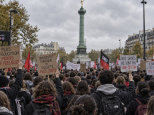
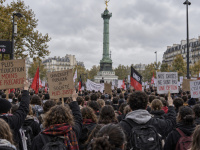
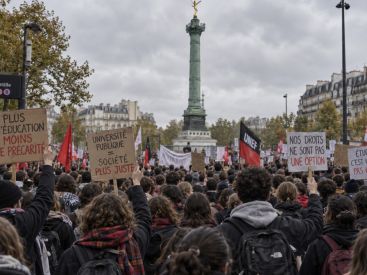
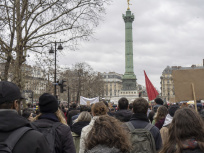
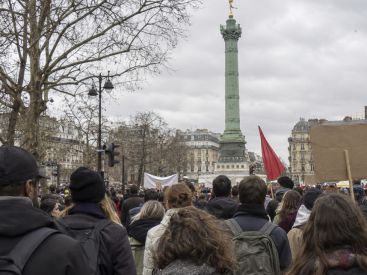
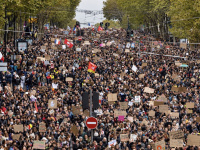
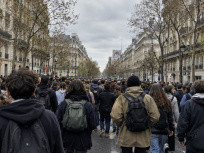
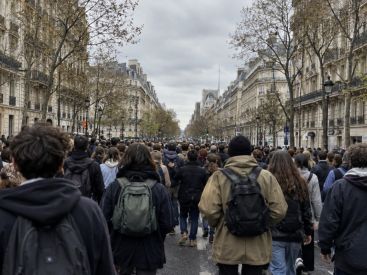
In the capital, fewer trains and a large cross-sector demonstration are expected on the same day. According to calls relayed by several unions, the protest is due to set off from Place de la Bastille at either 1 p.m. or 2 p.m., depending on the organizations, reports Paris Evous. As of November 2, the Paris Police Prefecture had not yet approved a route.
The context calls for caution. On Saturday, October 31, the prefecture imposed a route on the outskirts, far from the city center, and closed around 40 metro stations. The nighttime curfew around République and Les Halles, extended for the All Saints’ Day weekend, ended on the morning of Monday, November 2. For now, there is no indication that it will be reinstated on Thursday evening.
The week remains turbulent on other fronts: high school students have again been blocking their schools since classes resumed on November 2, students were called to demonstrate at the Panthéon on Tuesday, and the Yellow Vests have announced a new round of protests on November 6 and 7. If you have a train to catch on Thursday, allow plenty of time to get to the station.
At the heart of the dispute is purchasing power. In their joint statement of October 15, CGT-Cheminots, UNSA-Ferroviaire, SUD-Rail and CFDT-Cheminots point to rising energy, fuel and basic necessities costs, reports Dijon Actualités.
Their demands boil down to four points: an across-the-board pay rise, a substantial increase in work-related bonuses, a reform of the residence allowance, and a 13th-month salary for everyone, both permanent and contract staff. For Thursday’s action, they are also calling for “genuine pay negotiations” and for the group’s social unity to be maintained.
Beyond pay slips, the unions are denouncing staff shortages, budget cuts and the effects of opening the sector up to competition. Seeing the CGT and the CFDT, often at odds over tactics, marching in step is a little like hearing two rival stands sing the same refrain.
On Friday, November 6, the TGV M is scheduled to make its maiden journey between Paris-Gare-de-Lyon (12th arrondissement) and Marseille-Saint-Charles. The double-decker train, built by Alstom, can carry up to 740 passengers per trainset. Its entry into service has been postponed several times since the Paris 2024 Games, Made in Marseille reports.
Calling a strike on the eve of an event is like cutting the sound just before the premiere of a highly anticipated show. The message is clear, but at this stage there’s no way to say whether travel the following day will be disrupted.
There’s no need to change your ticket before Wednesday evening: until service forecasts for each line are published, it’s impossible to know whether your train will be running. The best thing to do is turn on notifications and check your journey on Wednesday, November 4, in the late afternoon on SNCF Connect for long-distance trains, or on the Transilien website for trains in the Île-de-France region.
If a train is cancelled, a TGV INOUI or Intercités ticket can be exchanged or refunded free of charge when exceptional measures are in place. Refunds are not always automatic: sometimes you need to cancel your trip yourself in your customer account. If your journey includes a TER connection, it’s best to check each train separately.
For daily commutes, working from home or setting off at a different time can help avoid a lot of trouble. Our Paris metro, RER and train traffic report, updated daily, lists the announced disruptions. For updates throughout the day, including demonstrations and schools, our full article on the November 5 general strike is updated as announcements come in.
This page may contain AI-assisted elements, more information here.