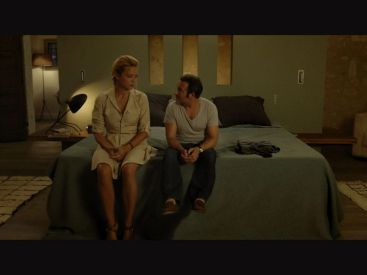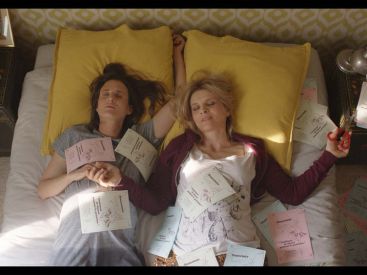
My Mother, God and Sylvie Vartan, the dramatic comedy from Ken Scott led by Leïla Bekhti and Jonathan Cohen, arrives on Prime Video on August 19, 2026. Released in theaters on March 19, 2025, the film joins the platform under the Prime Original label, seventeen months after its cinema run.
Written and directed by the Québécois filmmaker behind Starbuck, this feature film adapts the autobiographical memoir of Roland Perez. It follows the journey of a lawyer and former host born with clubfoot, and the battle waged by his mother Esther to help him outpace the doctors’ predictions and live the life she promised him.
The film also features Joséphine Japy, Lionel Dray, Jeanne Balibar, Anne Le Ny, Milo Machado-Graner and Sylvie Vartan, appearing as themselves. Coproduced by Amazon MGM Studios, Gaumont, Égérie Productions and Christal Films, it marks Prime Video’s first French production designed primarily for an initial theatrical release.
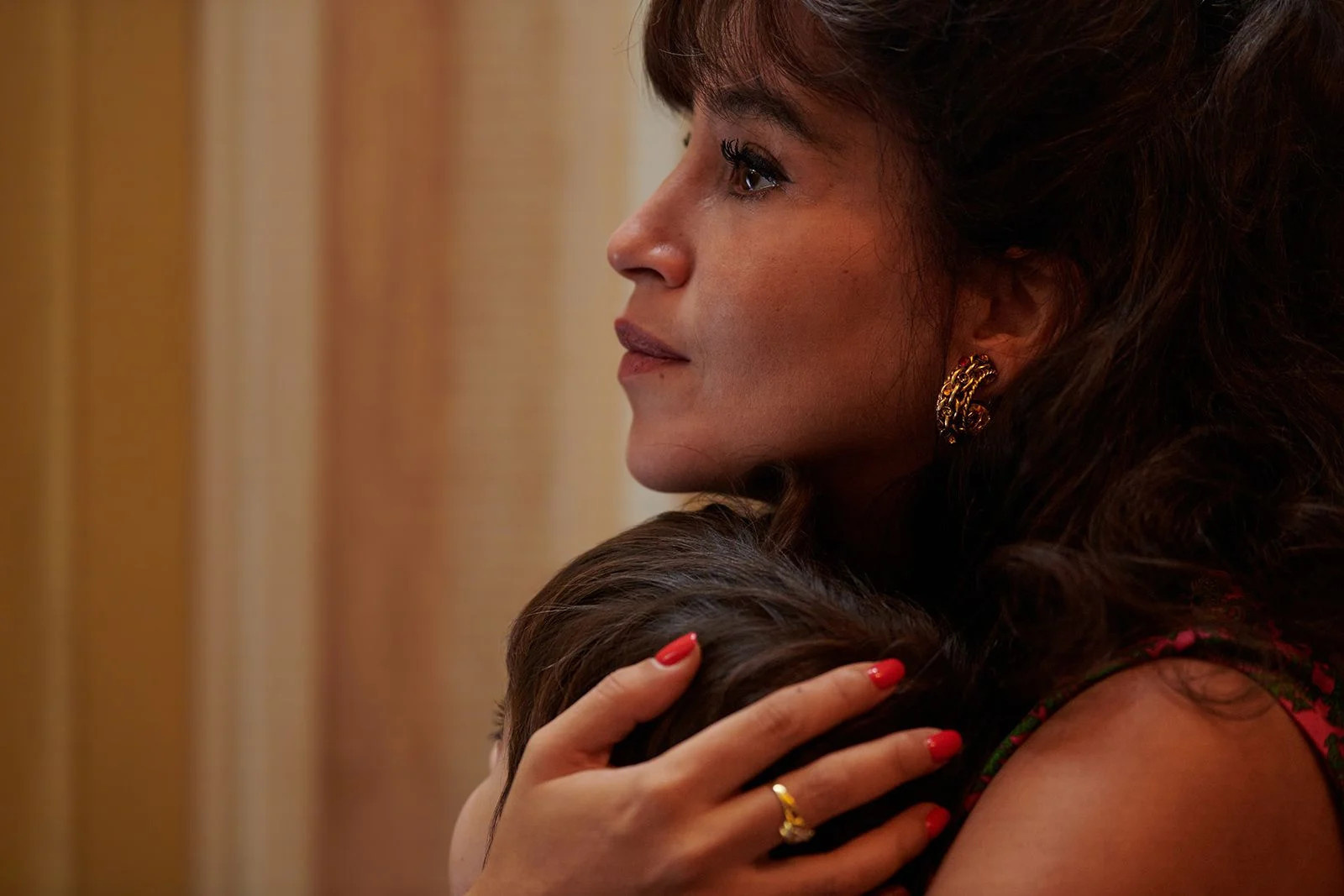
In 1963, Esther welcomes Roland, the youngest of a large brood. Born with a clubfoot that kept him from standing, the doctors are pessimistic, but his mother pledges that he will walk like everyone else and lead an extraordinary life. From then on, she pours all her energy into keeping that promise, while Sylvie Vartan’s songs soundtrack Roland’s childhood and his journey.
Our take on Ma Mère, Dieu et Sylvie Vartan
With Ma Mère, Dieu et Sylvie Vartan, Quebecois filmmaker Ken Scott (Starbuck, Un peu, beaucoup, aveuglément) delivers a nostalgic dramatic comedy, propelled by a magnetic Leïla Bekhti and a surprisingly restrained Jonathan Cohen. Inspired by true events, the film adapts the memoir of Roland Perez, in which the author recounts a life shaped by society’s gaze on his disability and by the unwavering maternal love that has guided him.
The story unfolds in the 1960s, within a large family. Esther Perez, a mother as loving as she is overbearing, refuses to let her son Roland, born with a clubfoot, be condemned to a life of suffering. Between yé-yé music, burlesque episodes and intimate moments, the film follows her fight against medical prognoses and social conventions, while narrating the making of a child buoyed by almost absolute trust in his mother.
Built in two distinct halves, Ma Mère, Dieu et Sylvie Vartan tracks the different stages of Roland’s life. The first half, anchored in the sixties, bursts with color, energy and music. Scott recreates the era’s bustle, optimism, ideals and the public fervor surrounding icons like Sylvie Vartan, a veritable beacon for the young boy.
When an adult Roland takes over the narrative, the film gradually shifts to a more introspective tone. The brisk, kinetic editing of the early years gives way to a more restrained, character-focused approach, centering on wounds and dilemmas. It’s in this second half that Sylvie Vartan appears in her own role, embodying the dream and self-improvement symbol that has accompanied Roland since childhood.
Beyond the family chronicle, the film deftly probes the complexity of the mother-son bond. Esther, portrayed by an imperial Leïla Bekhti, shines as radiant, protective and suffocating. Her wit, stubbornness and refusal to view her child as diminished push her to defy doctors and conventions to give him what she believes is a worthy life.
That resolve also turns her into a true comedic whirlwind. Her forceful take on the world yields several genuinely hilarious moments. Powered by punchy dialogue and contagious energy, the film sometimes recaptures the breath of classic French popular comedies, all while staying mindful of its characters’ fragility.
Typically more at home in comedic roles, Jonathan Cohen finds here a notable, touching precision in portraying adult Roland. His chemistry with Leïla Bekhti is evident, heightening the emotional impact of their relationship. Music also threads the narrative, weaving jazz, pop and yé-yé rock, with a central focus on Sylvie Vartan's songs, used like memories in close-up.
Ma Mère, Dieu et Sylvie Vartan should win over fans of sincere, warmly dramatic comedies. Viewers drawn to family epics like La Vie est un long fleuve tranquille or nostalgic tales akin to La Famille Bélier will relish this dive into the 1960s and this ode to maternal love.
Those seeking a purely light comedy may feel more unsettled by a second, more measured act where humor gradually yields to the consequences of such a fusion-driven bond.
Funny, tender and luminous, the film nails the trick of intelligent popular cinema. Ken Scott shifts from laughter to drama without slipping into sentimentality or caricature. Even as the second half adopts a more conventional structure, emotion persists, supported by remarkable acting and a careful direction.
To go further, also explore our guide to the Prime Video August 2026 new releases, our roundup of streaming debuts across all platforms, and our guide What to watch today on streaming.
This page may contain AI-assisted elements, more information here.