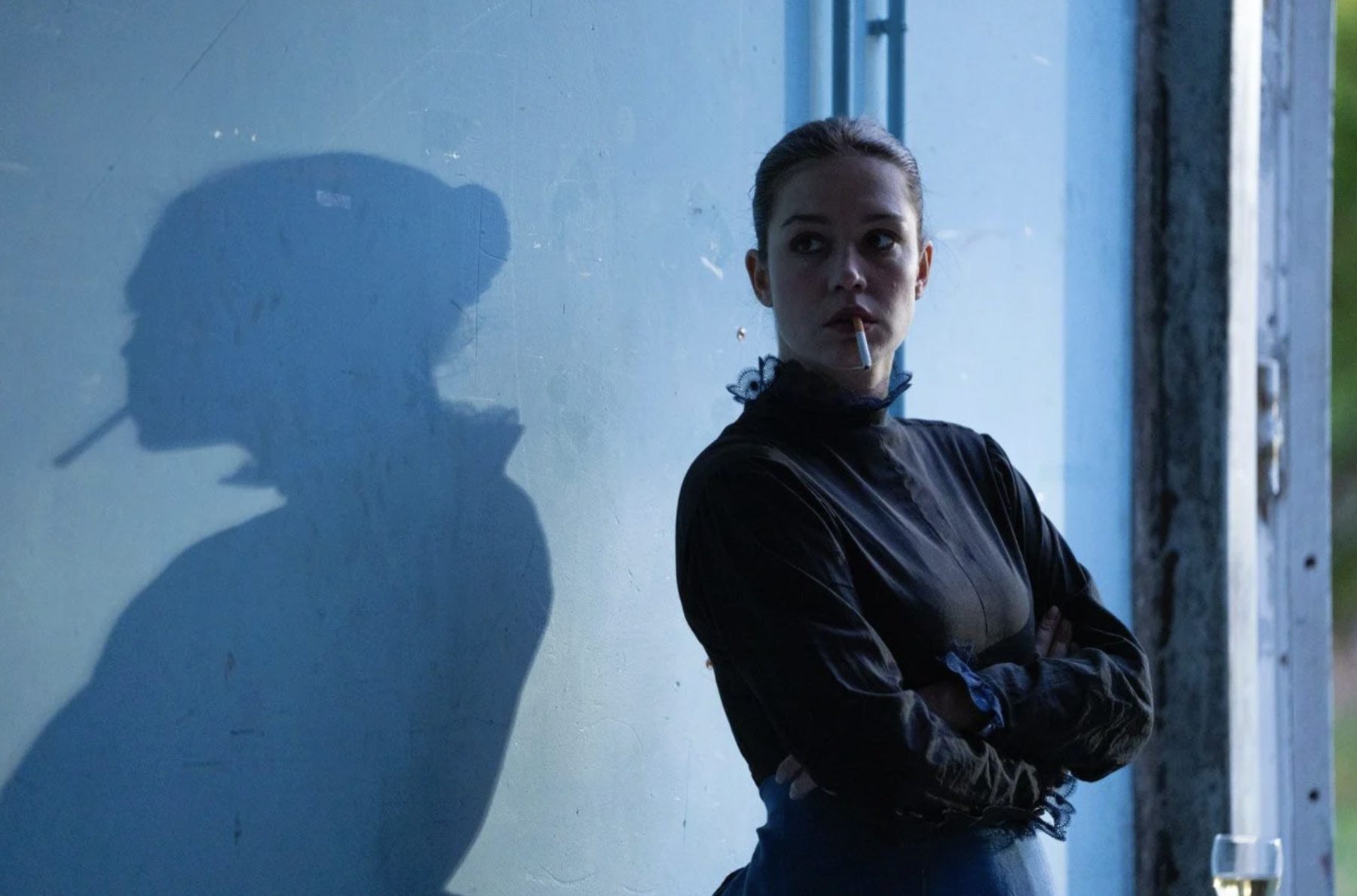
Garance, Jeanne Herry's new film, hits cinemas on September 23, 2026. Premiered in the official competition at the Cannes Film Festival 2026, this drama featuring Adèle Exarchopoulos and Sara Giraudeau tackles alcoholism through the arc of a young actress.
Between career, romance, and family ties, the film examines the fallout of this addiction, not limited to a single story of downfall. So, how does Garance fare? Here’s our take.
With Garance, Jeanne Herry reunites Adèle Exarchopoulos after Je verrai toujours vos visages and gives her even more room this time. The actress portrays a young alcoholic actress whom the film follows for several years, through work, love, parties, anxieties, and an addiction she initially neither hides nor truly fights. A raw, intimate portrait of a woman, deeply alive, carried by a masterful Adèle Exarchopoulos.
But Garance doesn’t begin her story in denial. She knows she’s an alcoholic. She says it, owns it, and keeps living with that reality as she would with any other trait of her personality. No big reveal, no immediate shame: it’s a fact, period. And that’s exactly what makes the film’s progression so unsettling.
In the beginning, Garance works, plays, loves, jokes, goes out and drinks. A lot. Her drinking can still blend into a social, festive life where a glass is always close at hand and doesn’t necessarily set off alarms. Then, almost imperceptibly, the balance starts to slip. What she considers her way of life becomes something those who care about her can no longer watch without pain.
Jeanne Herry avoids the spectacular image of the fall. Garance's world doesn’t crumble in a single scene: it falls apart around her, gradually. Her theatre colleagues gradually keep their distance, not because they stop loving her, but precisely because they still do. “The only thing we can do is stop watching you sink,” they tell her, in effect. A line that fairly captures one of the film’s most delicate questions: what can you really do for someone who is self-destructing without asking to be saved?
The question runs through Garance without ever getting a definitive answer. There are those who try to intervene, those who give up, those who accompany, and those who discover too late the gravity of the situation. Her mother sums up, on her own, a form of collective blindness when she concedes that, for her, “the danger was the drugs, not the alcohol.” Because it’s ordinary, available, linked to parties as well as meals or a simple drink among friends, alcohol can remain invisible as a threat for a long time.
Jeanne Herry uncannily nails this everyday banality. She doesn’t try to manufacture a Garance who’s constantly miserable to make her addiction feel real. On the contrary, her heroine is brimming with life. She’s funny, excessive, in love, sometimes unbearable, often moving. She can wonder, with disarming humor, about the possibility of being « sous l’emprise maléfique d’un être médiocre », and then, a few scenes later, hint at a much deeper fragility.
That's where Adèle Exarchopoulos makes her mark. She is exceptional in her naturalness, precision, and presence. Garance could easily have become a demonstrative character, entirely built around her addiction. The actress, on the contrary, makes her a complete woman, beautiful even in her contradictions, capable of an almost euphoric energy as well as a much quieter exhaustion. Even when her character becomes hard to follow or to understand, Exarchopoulos never tries to coax artificial sympathy from us.
The film hinges on this lack of judgment. Garance isn’t spared nor condemned. Her loved ones aren’t either. When they’ve had enough, Jeanne Herry doesn’t turn them into traitors. When they stay, she doesn’t make them saviors. Everyone moves forward with what they can give, with their own limits and contradictions. A single line almost sums up this philosophy: “We do what we can.”
This is especially true of Pauline, played by Sara Giraudeau. Once again, the character could easily have become the all‑powerful savior whose love would steer Garance back onto the right path. Garance fortunately avoids that trap. Pauline loves this woman as she is, without constantly telling her how she should live, without reducing her to her alcoholism, and above all without imagining herself as the one who must repair her.
Sara Giraudeau brings a remarkable gentleness to this relationship. Pauline supports, accompanies, and helps shape it, but never judges. She also understands that respecting someone doesn’t necessarily mean deciding for them. In the face of Adèle Exarchopoulos’s sometimes overwhelming energy, her calm provides the film with a particularly moving counterpoint. Their love story works because it is never framed as a fix.
This nuance is crucial in a film that spends so much time on how we live with others. How far should you stay by someone’s side? When should you step in? When do you protect yourself? Jeanne Herry withholds simple answers, and even care isn’t treated as a sermon. When a doctor reminds Garance that a life without anesthesia can still be deeply tedious, the film dares to acknowledge something rarely stated as plainly: getting better doesn’t mean you suddenly enter an exhilarating life.
This franchise adds greatly to the beauty of Garance. The film can be tough without being sordid, funny without diminishing what it’s saying, and tender without tipping into complacency. Humor routinely emerges where you least expect it, not to lighten the heavy subject artificially, but as a way for the characters to keep going amid the chaos.
Jeanne Herry also keeps a fairly restrained directorial hand, prioritizing faces, dialogue and human connections over flashy formal tricks. Some may find the choice a touch too prudent, especially after Je verrai toujours vos visages, but it leaves ample room for her actresses here. The characters live in their hesitations, their awkwardness, their contradictions, and, at times, simply in the way they look at one another.
Garance never really tries to lay out alcoholism in a methodical way. The film is more interested in what the addiction pushes aside in someone's life: work, friendship, family, love, trust, and the way others perceive her. Her alcoholism is central, but Garance herself remains larger than it.
Perhaps that’s why Adèle Exarchopoulos makes such an impression. She never plays “an alcoholic” before stepping into Garance. She embodies a woman full of life who can also be on the verge of destroying herself, without these two realities canceling each other out. A magnificent performance, raw and exquisitely delicate, powered by an equally perceptive partnership with Sara Giraudeau.
Garance speaks directly to viewers who appreciate finely drawn character portraits, human dramas that resist easy judgments, and Jeanne Herry’s cinema, which remains keenly attentive to how people try to live with one another. Those hoping for a very dark, flashy, or purely clinical depiction of addiction may be surprised by its vitality and humor.
Because despite the alcohol, the breakups, and the damage, Garance remains above all a film that’s alive with life. Its characters sometimes love badly, make mistakes, drift apart, come back, try to help or realize they can’t. They’re flawed, generous, exhausting, funny, and deeply human. And amid them, Adèle Exarchopoulos delivers one of those performances that makes you almost forget the actress and see only the woman standing before us.
To extend your cinema experience, check out the September movie releases, the films to watch right now, and our pick of the year's dramas.
This page may contain AI-assisted elements, more information here.