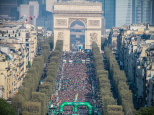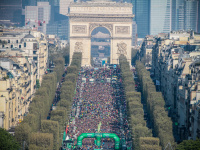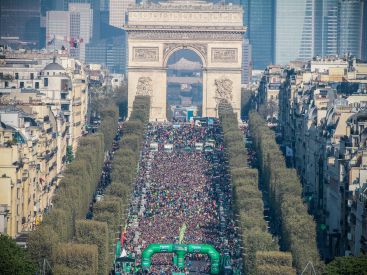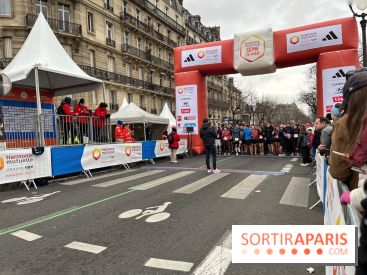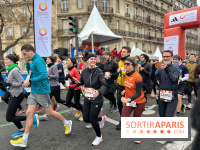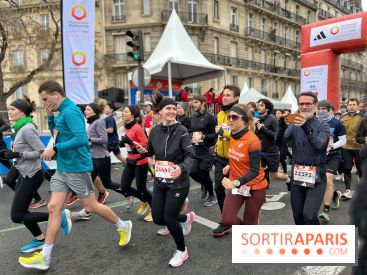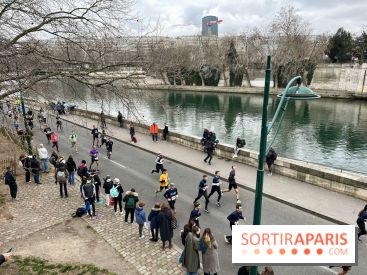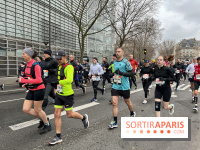
The verdict is in: this Sunday, April 7, at around 10.50am, I set off on the Paris Marathon circuit with my golden number, reserved for first-time marathoners, of which I'm one. After months of physical preparation to ensure that I start in the best possible conditions, it already feels like a small personal victory.
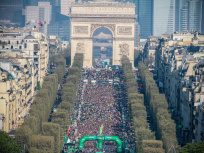
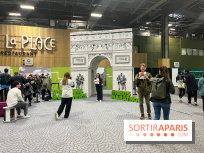
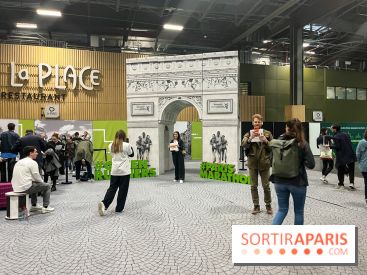
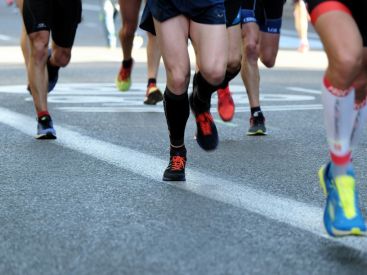
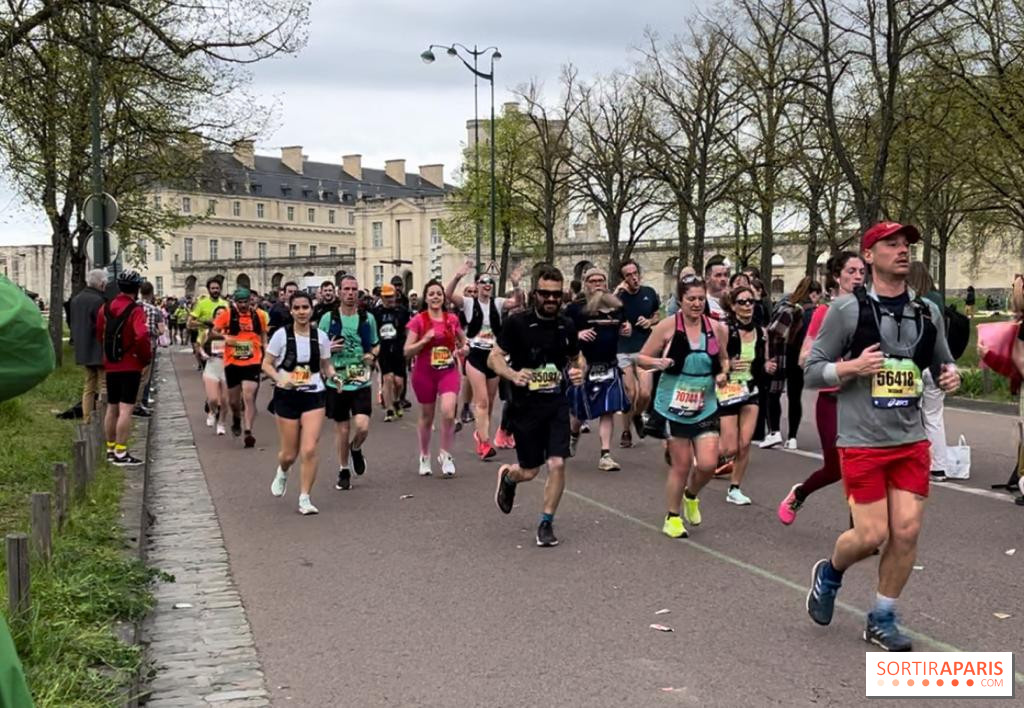
This Sunday morning, more than 55,000 runners lined up for the start of the Paris Marathon, one of the world's greatest marathons, renowned for its demanding nature and its ups and downs at the end of the race. The marathon is commonly referred to as the "queen distance" for runners, due to its demanding nature: on a marathon, anything can happen, from the best to the worst, no matter how well-prepared you are. After picking up my race number a few days beforehand at the Run Expérience trade show, it was time for the long-awaited race.

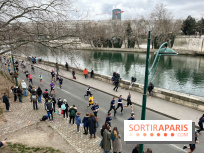
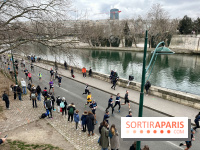
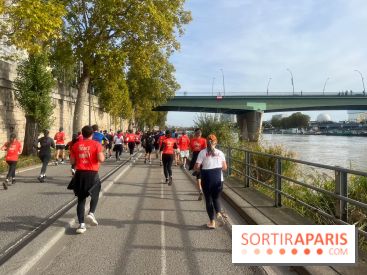
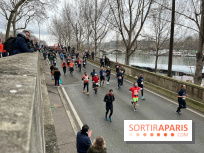
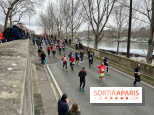
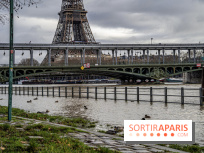
Back to the start, I set off on avenue des Champs-Elysées, turn off at Concorde, and off we go: the beginning of the route takes us through some of the most beautiful monuments in Paris. The Opéra Garnier, the Louvre carrousel we cross, the Place de la Bastille, the Château de Vincennes... We pass the 10-kilometre mark just before the portée Dorée, before rushing into the Bois de Vincennes, from where we emerge some ten kilometers later to validate the symbolic 21.1 km mark: the first half is over! The kilometers then roll by one after the other, with a glimpse of Notre-Dame-de-Paris just after kilometer 25. This year's special feature is that we don't pass through the Tuileries tunnel, because of the flooding on the lower banks of the Seine.
A little after kilometer 27, I start to get tired, the next refreshment point is a good two kilometers away and I'm looking forward to a little break. Fortunately, my sister joins me for the last few kilometers. The crowd of runners rushes into the first tunnel, and the going gets tougher as more and more athletes walk to try and get over the hills at the end of each tunnel. Here again, the atmosphere is great, and a remixed version of Tropiques' Sunlight carries us to the exit.
Arriving at the Place du Trocadéro, the Iron Lady is on our left, and it's time to pass the 30th kilometer marker, famous for the "marathon wall", a moment when many runners find themselves at the end of their tether. The refreshment station is just around the corner, a short break and we're off again, but not without pain: the kilometers that follow are going to be (very) long. Legs are tired, and the desire to walk takes hold, so we continue on, slowing the pace: kilometer 34 passes, "only 8 kilometers to go" shouts a announcer to the sound of Juliette Armanet, and we continue into the Bois de Boulogne and its long, flat, rising straights. The last few kilometers seem interminable, and we finally emerge from the woods at kilometer 38, passing through the Porte de la Muette: with kilometer 39 gone, we've done the hardest part, all that's left is to hang on at the end.
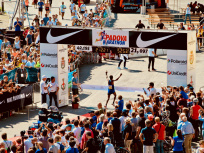
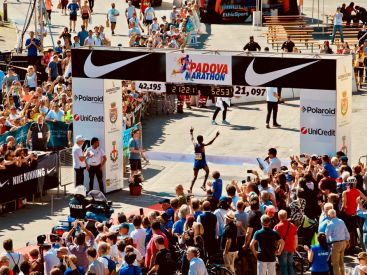
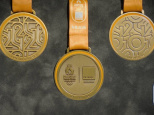
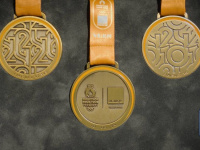
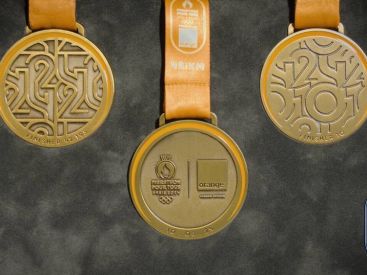
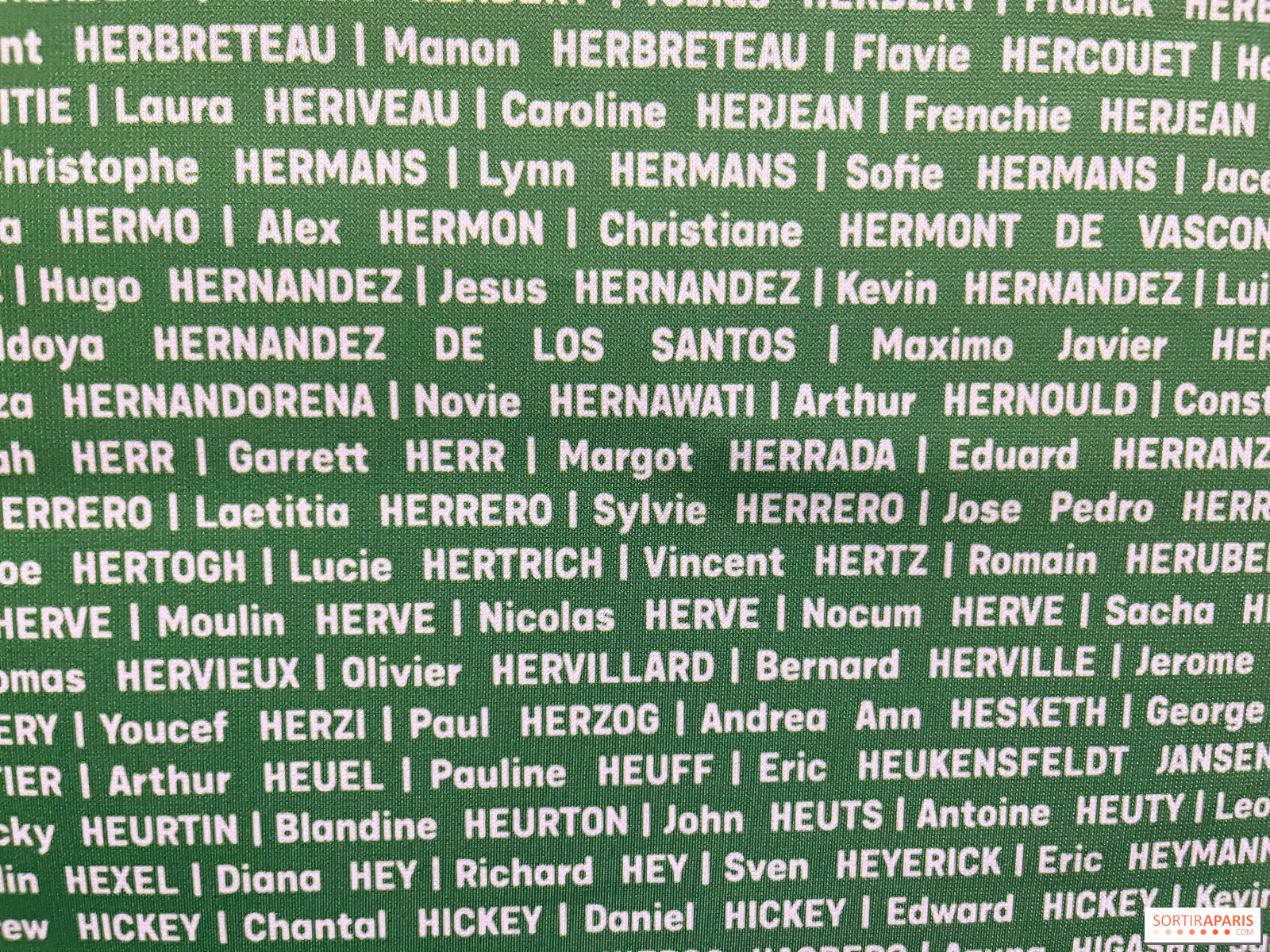
The 40th kilometer passes with difficulty, with its steep climb. "It's exceptional what you're doing," shouts a supporter into her megaphone. The noise intensifies, you can feel it, it's almost the end, the emotion rises, the legs continue, the 41st kilometer passes, there's nothing left, everyone speeds up, the finish is within reach! We arrive at Porte Dauphine, head down Avenue Foch, there's just one more bend, and a sign indicates that there are only 350 metres to go. It's a real joy, a deliverance after more than 4h30 of running (at least for me): We arrive in front of the Arc de Triomphe, I sprint, it's time to give it my all, my loved ones are there, it's magnificent, we cross the finish line with my sister, hand in hand, after 4h39 of running! I pick up my medal and my finisher's T-shirt, that's it, the marathon is behind me, I'm officially a marathoner, the circle is complete.

A total of 54,175 runners crossed the finish line at the end of a day that was as festive as it was sporting, with Paris vibrating to the rhythm of its marathon.
Running a marathon is a real sporting challenge, a physical ordeal that many runners want to complete in order to challenge themselves. Also known as the "distance reine", the 42.195 km marathon is far from being a smooth ride, especially the last ten kilometers, which tend to be particularly physically demanding. Nevertheless, once you've crossed the finish line, the feeling of having completed a marathon brings immense pride, the satisfying sensation of having gone all the way and become a marathoner in your own right.
No! It may seem surprising, but you don't necessarily have to have run 42 km to hope to complete a marathon, especially as this requires a great deal of fatigue. In general, good preparation will enable you to do a long session of between 25 and 32 km at the most.
The preparation guides offered by the Paris Marathon are based on 10 to 12 weeks' preparation, provided you're already a regular runner. However, you can opt for a longer preparation period, up to more than 20 weeks, using free applications such as Decathlon Coach or paid applications such as Campus Coach or RunMotion.
The maximum time is 6 hours, starting from the last SAS departure (the 4:30 a.m. SAS).
To get into top shape for a marathon, opt for physical preparation and, above all, don't start running 12 weeks beforehand! To be able to run such a long distance, your body needs to be used to running to avoid injury, which could jeopardize your chances of crossing the finish line.
The second piece of advice you'll always find before embarking on a marathon is to test your refreshments. You can, of course, choose to feed yourself entirely from on-course refreshments (located every 5 km from start to finish until the 42nd km), but runners generally opt for their own refreshments with fruit pastes, compotes and other energy gels to provide your body with carbohydrates throughout the race. Whatever your preferences, there's only one rule: test your supplies beforehand! Your body needs to be used to ingesting gels and digesting them properly to avoid intestinal upsets.
The same goes for your running gear as for your supplies: your outfit and sneakers must already have been worn. After all, a seam, a label or a pair of pants that fall down a little can be a real nuisance on race day. Yes, every little detail counts!
You don't become a marathon runner overnight! Some athletes do, and that's up to them, but the vast majority of runners prefer to try their hand at a half-marathon or 10-kilometre race beforehand, to see how they manage their race.
If there were only one item to invest in in your outfit, it would obviously be your sneakers! Running shoes require a certain budget (between €100 and €200 for the most expensive pairs), but it's these that will ensure your comfort during the race and your training sessions. What's more, some people also advise you to have a pair for preparation and a pair for the marathon (which you'll wear about ten outings beforehand), for maximum bounce on D-day (and to take some of the strain off your legs).
We hope we've answered any questions you may have, and inspired you to take on the Paris Marathon next year!