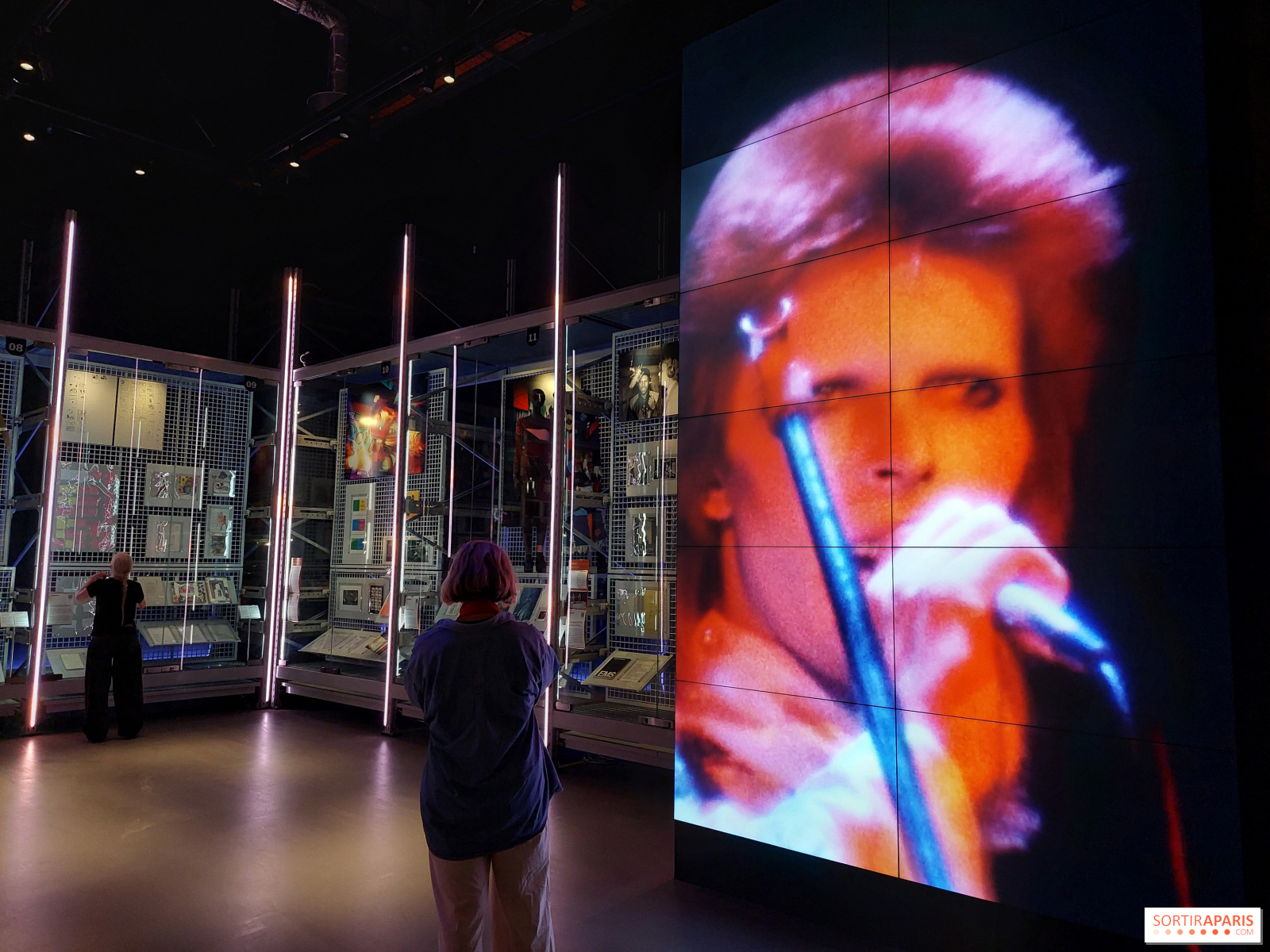
On January 10, 2016, at the age of 69, David Bowie passed away. Ten years to the day later, tributes and commemorative events continue to multiply. From concerts featuring his former bandmates to exhibitions, as well as films, documentaries, and special broadcasts... London even opened the David Bowie Centre on September 13, 2025. Nestled within the V&A East Storehouse in the east of the British capital, this venue houses over 80,000 items belonging to the legendary artist. It offers visitors—whether dedicated fans or simply curious—a unique chance to explore David Bowie’s creative process and legacy.

To mark the 10th anniversary of his passing, we invite you to revisit the incredible catalog of David Bowie. It wasn’t an easy task to pick just a few, but we’ve selected 10 iconic tracks that still echo in our minds today.
Excerpt from "Space Oddity", David Bowie’s second studio album released in 1969, the eponymous track references Stanley Kubrick’s film "2001: A Space Odyssey", which premiered the previous year. This song marked Bowie’s first major hit with the wider public. "Space Oddity" remains one of his most iconic songs. Featured on numerous compilations, it’s a staple of his live performances. Bowie performed it for the very last time on July 5, 2002, at the Horsens Festival in Denmark. In the meantime, in 1995, "Space Oddity" was selected by the Rock and Roll Hall of Fame as one of the "500 Songs That Shaped Rock and Roll."
Taken from the album "Hunky Dory", “Life on Mars?” was inspired by Claude François's legendary hit "Comme d'habitude". Although the song was created in 1971, it was only released as a 7-inch single in June 1973, with “The Man Who Sold the World” on the B-side. Meanwhile, David Bowie had adopted his Ziggy Stardust persona, and the artist was at the height of his UK fame. Considered one of Bowie’s most iconic and beloved tracks, “Life on Mars?” ranked third on a list of the greatest songs of all time compiled by British magazine Q in 2007, behind The Beatles’ “Strawberry Fields Forever” and The Rolling Stones’ “Sympathy for the Devil”.
Released in 1972 and featured on the album "The Rise and Fall of Ziggy Stardust and the Spiders from Mars", which introduced the character of Ziggy Stardust, the song "Starman" marked David Bowie's return to the top of the charts, three years after "Space Oddity". The single reached number 10 in the UK and 65 in the US. Although not one of his most covered tracks, "Starman" nonetheless influenced a number of British musicians in the 1980s. Boy George, Siouxsie Sioux, Ian McCulloch of Echo and the Bunnymen, and even Dave Gahan of Depeche Mode have all publicly stated how Bowie’s performance of the song on Top of the Pops, broadcast on July 6, 1972, left a lasting impression on them.
Originally released in April 1972 as the B-side to the single "Starman", "Suffragette City" later appeared on Bowie’s fifth studio album, The Rise and Fall of Ziggy Stardust and the Spiders from Mars. Reissued as a single in 1976 with the American version of "Stay" on the B-side, the track was recorded at London’s Trident Studios with his band, the Spiders from Mars (Mick Ronson, Trevor Bolder, and Mick Woodmansey). A brilliant blend of glam rock, proto-punk, and hard rock, "Suffragette City" remains one of Bowie’s enduring classics more than 50 years after its release.
Initially released as a single before appearing on the 1973 album "Aladdin Sane," the song "The Jean Genie" portrays a flamboyant character inspired by Iggy Pop. It reached number two on the UK charts and quickly became one of David Bowie's most popular tracks, to the point that it became a staple in his live performances. "The Jean Genie" was included in the setlists of many of his major tours: "Ziggy Stardust Tour" (1972-1973), "Diamond Dogs Tour" (1974), "Isolar Tour" (1976), "Isolar II Tour" (1978), "Serious Moonlight Tour" (1983), "Glass Spider Tour" (1987), "Sound + Vision Tour" (1990), "Earthling Tour" (1997), and "A Reality Tour" (2003-2004).
Released during one of the most prolific phases of David Bowie's career, the song "Rebel Rebel" is from his 1974 album "Diamond Dogs." Demonstrating its enduring popularity, Bowie re-recorded the track in 2003 for a limited edition of his album "Reality" and also for the 30th anniversary edition of "Diamond Dogs."
Regarded as one of David Bowie's most iconic tracks, "Heroes" was released in 1977 on the album of the same name. Produced by Bowie himself alongside Tony Visconti, it was written and composed by the British legend in collaboration with Brian Eno. Demonstrating its lasting influence, "Heroes" is frequently cited as the singer’s second most covered song after "Rebel Rebel". Over the years, artists like Nico, Oasis, Hollywood Vampires, Apocalyptica, Depeche Mode, Peter Gabriel, and even Motörhead have put their spin on this legendary tune. In 2004, Rolling Stone ranked it as the 46th greatest song of all time. The track has also enjoyed commercial success, featuring in numerous advertisements and appearing in the credits of various TV series, including the climactic finale of "Stranger Things."
Released in 1980 on the album Scary Monsters (and Super Creeps), the track Ashes to Ashes is presented as a sequel to Space Oddity, David Bowie's first major hit from eleven years earlier. The song, covered by bands like Tears for Fears, reached number one on the UK charts, driven in part by its groundbreaking music video, directed by Bowie himself alongside David Mallet. With an estimated budget of $250,000, it became the most expensive music video ever produced at that time.
Featured in several feature films ("Frances Ha", "Swing Kids", "Bridget Jones: The Edge of Reason"...), the song "Modern Love" was chosen to open the album "Let's Dance", released in 1983. Composed of 70 free-form verses written by David Bowie, the track explores themes of love and faith. Like many other Bowie singles, "Modern Love" climbed the charts in numerous countries, reaching as high as No. 2 in the UK. The song experienced a renewed surge of interest in France in 2024, following a captivating rendition by Zaho de Sagazan during the opening ceremony of the Cannes Film Festival.
Released as a single in December 2015 and later featured on the album Blackstar in January of the following year, Lazarus is the second single from the record, following the title track. The song even inspired the name of the musical 'Lazarus'. Recorded at the Magic Shop and Human Worldwide Studios in New York, this track was the final single released by David Bowie before his passing on January 10, 2016.
Please note that this list is not comprehensive—many other songs have defined David Bowie's career, such as Changes, Let's Dance, China Girl, and Ziggy Stardust. So, what's your favorite track by the British icon?