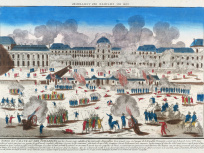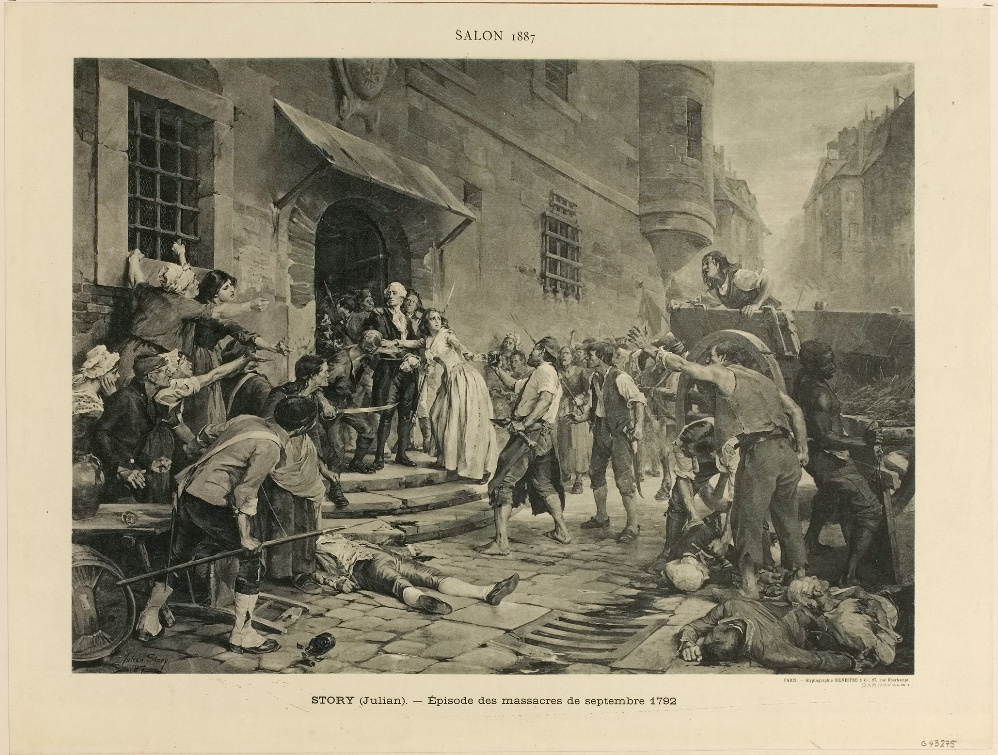
On Sunday September 2, 1792, fearing a prison plot and a Prussian invasion, the Sans-culottes storm the Parisian prisons and brutally massacre hundreds of detainees deemed counter-revolutionaries. This marks the beginning of the Massacres of September, which would unfold from September 2 to 6, 1792 in Paris and the provinces.
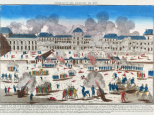
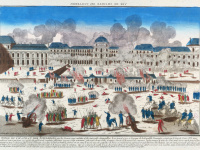
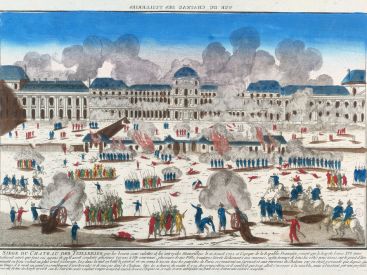
A little over a month has passed since the Sans-culottes stormed the Palais des Tuileries, signaling the abolition of the monarchy and the fall of the monarchy, a system a thousand years old in France. This August 10, 1792 marks, effectively, the start of the second French Revolution, in response to the coalition of European monarchies that have shown unwavering support for the French monarchy and to the invasion of France by the Prussians and the Austrians.
From 20 April 1792, France had, in fact, declared war on two of the European monarchies allied with the French royal family: Austria and Prussia. In July 1792, the Prussian and Austrian armies finally crossed into France, and on 25 July 1792, the Brunswick Manifesto, attributed to the head of the Prussian army, Charles-Guilma ld-Ferdinand, Duke of Brunswick, was addressed to the people of Paris.
In truth drafted by a French nobleman who had fled at the time of the Revolution, the knight Geoffroy de Limon, this manifesto, aimed at dismaying Paris, makes clear the Allies’ aim to restore the King to his throne, grant him full powers, and threatens the monarch’s opponents with the harshest consequences, arguing that anyone who resists would be deemed a rebel and liable to the death penalty under martial law.
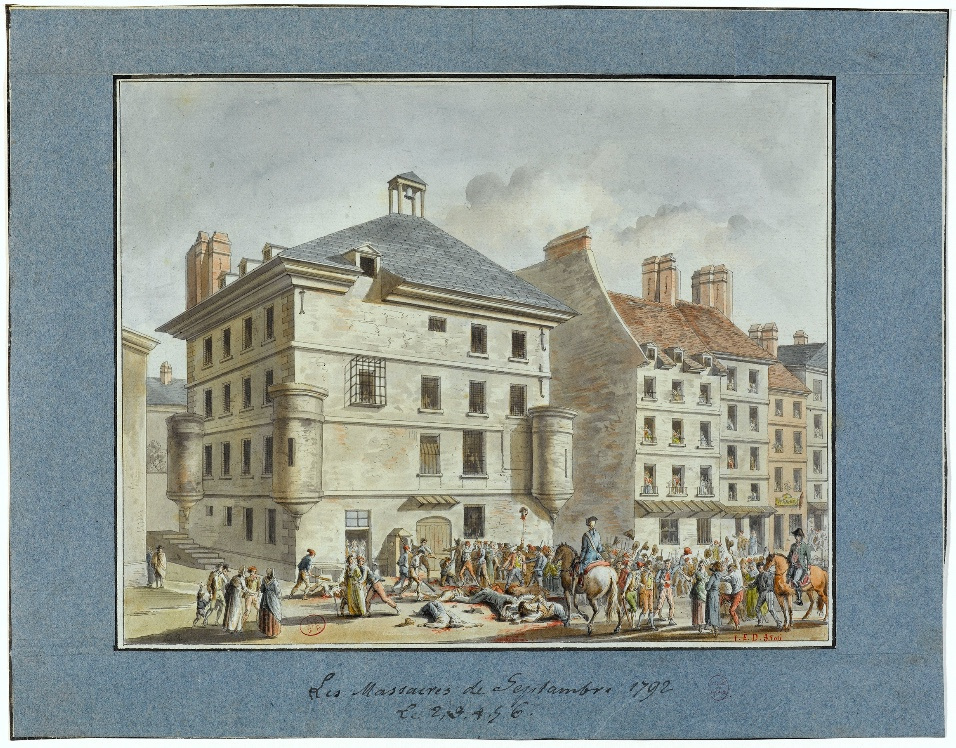
In Paris, tensions flare and instability takes hold. Since the capture of the Palais des Tuileries, three powers have been vying for control of the capital: the Paris Insurrectionary Commune, the body that sparked the Tuileries uprising and is now led by Robespierre; the Legislative Assembly, born from the September 1791 elections; and finally the Provisional Executive Council, headed by Danton, Minister of Justice and Prime Minister.
However, while awaiting the election of a National Convention, the Commune of Paris asserts itself. To try to curb its power, the Assembly hardens its political stance and, on August 17, 1792, establishes a extraordinary criminal tribunal to try the defenders of the king. In turn, the nobles and the Swiss Guards who defended the royal family and fired on the crowd during the storming of the Tuileries are condemned and imprisoned in Parisian prisons.
But this new court is deemed too lenient by the insurrectionary Commune. A member of the Commune’s surveillance committee, the journalist Jean-Paul Marat, has posters posted on September 1, 1792 calling for justice by the people and urging them to "purge the Nation before rushing to the front". Fearing a rebellion by prisoners and at a moment when the capital has been deserted by many volunteers who left to join the front at the border, leaving behind women and children unprotected, fear takes hold.
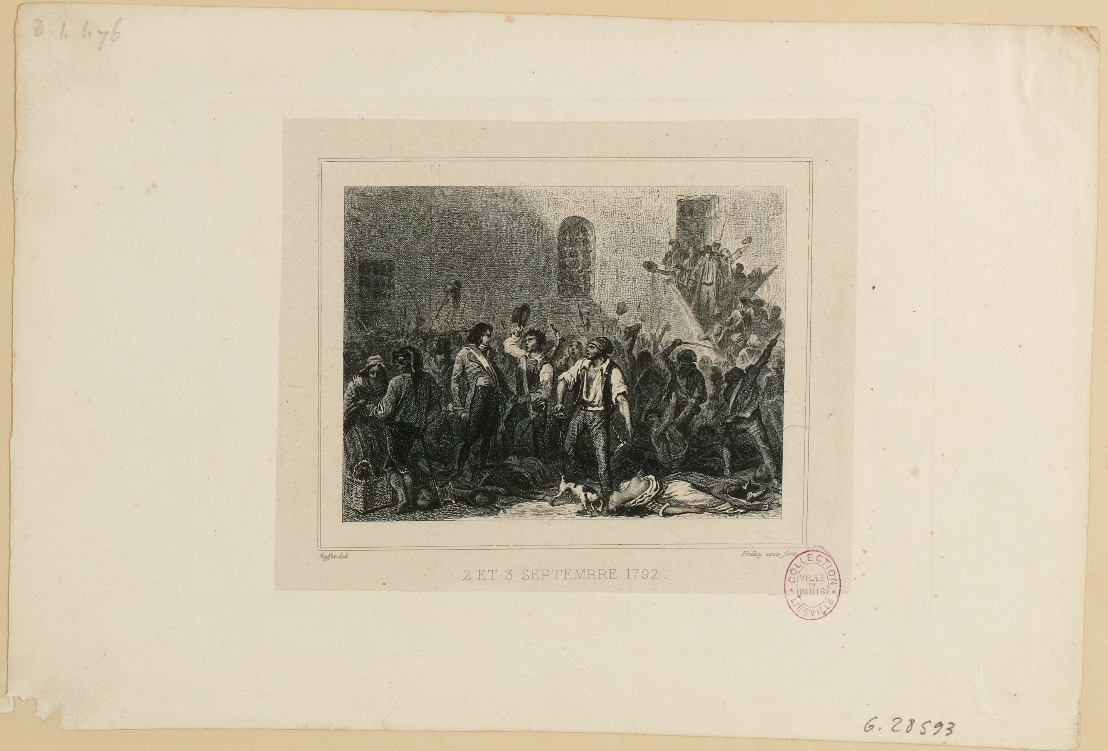
The news of the surrender of the great fortress in the northeast, Verdun, on August 29, just a few days after the surrender of Longwy, only sharpens the climate of terror. The people are certain: a foreign invasion of the capital is imminent, while a "prison plot" is being hatched in secret: in a capital deserted by 30,000 volunteers, the counter-revolutionaries detained will manage to s'évader des prisons, égorger les patriotes, libérer Louis XVI détenu à la prison du Temple, et livrer la capitale aux Prussiens.
That was the last straw for the Sans-culottes, who decide to take matters into their own hands. On September 2, 1792, several sections, led by the Faubourg Poissonnière, storm the prisons of Paris, armed with clubs, axes, maces, sabres and pikes. For five days, the septembriseurs stage sham trials before a people's court at the Abbey Prison, and mercilessly massacre prisoners deemed to favor the return of the king, at the Abbey Prison, the Carmes Convent, Saint-Firmin, the Conciergerie, the Force, the Tour-Saint-Bernard, the Châtelet, the Salpêtrière hospital-prison and the Bicêtre Hospital.
In total, more than 1300 victims, among them numerous aristocrats, Swiss guards and refractory priests but also many common prisoners and ordinary citizens were murdered by the septembriseurs. Prisoners jailed for debts, for family disputes, or for minor offenses are, by contrast, usually released, as are most women. Neither the authorities, nor the National Guard, nor the government, nor the Assembly, nor the Commune opposed these killings and did not intervene at one of the peaks of revolutionary violence.
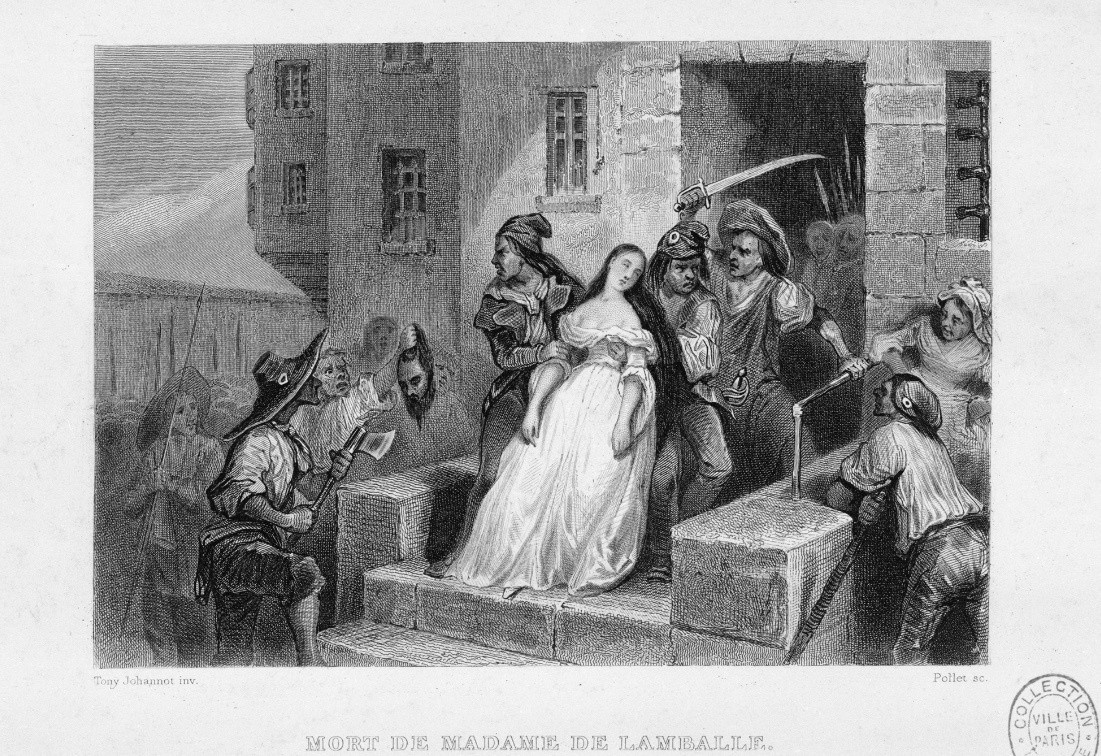
Among the most famous victims is Princess Marie-Thérèse of Lamballe, former confidante of the queen and governess to her children, who was imprisoned at the Prison de la Force after accompanying the royal family to the Temple. Massacred by the sans-culottes, torn to pieces, her head was fixed on the end of a pike and paraded beneath the queen’s cell window. The clashes quickly spread to the provinces—Meaux, Lyon, Caen, Gisors, and Reims—picking up 150 more victims.
Prelude to the First Terror, the September Massacres usher the French Revolution into its most violent phase.
For more information:
Dates and Opening Time
On September 2, 2026
Location
Conciergerie
2 Boulevard du Palais
75001 Paris 1
Route planner
Access
Metro line 1 "Chatelet" station, line 4 "Cité" station
Booking
Book your tickets with Paris je t'aime here
More information
Iconographies: Header: Episode des massacres de septembre 1792, Sylvestre et Cie, Musée Carnavalet Les massacres du 2 au 7 septembre 1792 à la prison de l'Abbaye, Jules-Adolphe Chauvet, Musée Carnavalet Massacres des 2 et 3 septembre 1792 des prisonniers par les septembriseurs, tribunal arbitraire dans la prison, Auguste Raffet, Musée Carnavalet Death of Madame de Lamballe, Antoine Johannot, Musée Carnavalet